



Pottery Tea Cups Everyday Mug Rotation Product Shortlist Guide: 3 Picks
Reading time: about 10 minutes
On the shelf behind our packing table, three cups do most of the work: a 170 ml cup that only ever sees oolong, a 200 ml cup that quietly became the house coffee cup, and a 250 ml handled mug that never makes it back to the kitchen. Different shapes, same job description. They get picked up daily and they fit the space they live in.
That is the whole test, and it is the spine of this pottery tea cups everyday mug rotation product shortlist guide: three current ceramic-body cups, three listed capacities, and one plain reason to choose or skip each one. No twelve-cup cabinet fantasy. No glaze poetry.
The pottery tea cups everyday mug rotation product shortlist guide: three roles, not seven
A rotation is not a collection. A collection grows because a cup is interesting; a rotation stays small because every cup in it gets used. In our experience most people land on three roles — a short tea cup, a default daily cup, and a larger cup for long sessions. Anything beyond that competes for the same square of shelf.
Two numbers decide which cups survive. The first is the pour you finish without tipping the last third down the sink. The second is the footprint: shelf depth, vertical clearance, and whether the cup drops into a drying rack slot without knocking its neighbour. Answer those two and everything left is finish preference.
Our unique coffee mugs collection is where those shapes live. When we sort it, we go by role first and looks second, because the cup that gets skipped at 7 a.m. is the one that ends up as decoration.
170 ml, 200 ml, or 250 ml: which pour do you actually finish?
Capacity is the easiest variable to compare and the hardest to judge from a photograph. All three cups below are ceramic body; the numbers are the listed capacities, so compare them to your own pour rather than to how large they appear on screen.
| Cup | Listed capacity | Rotation role | Skip it if… |
|---|---|---|---|
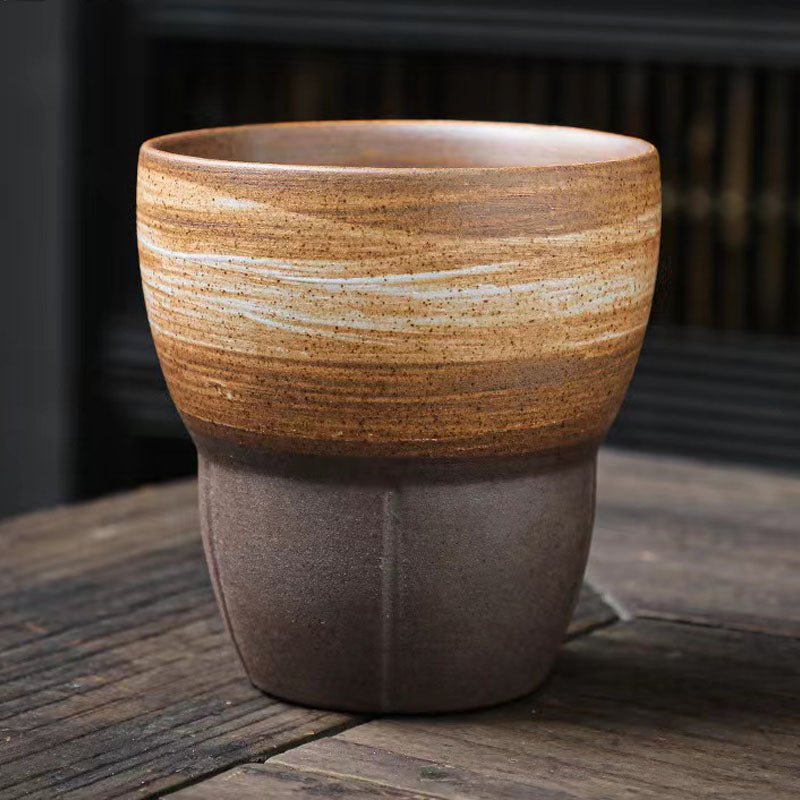
| Retro Coffee & Tea Cup | 170 ml | Short tea sessions, tasting pours, tight shelf | You routinely finish a 12 oz mug, or you drink milky, high-volume coffee |
| Pleated Coffee & Tea Cup | 200 ml | Default daily cup for tea or coffee | You want one big pour, or a handle is non-negotiable and the current listing does not show the grip you need |
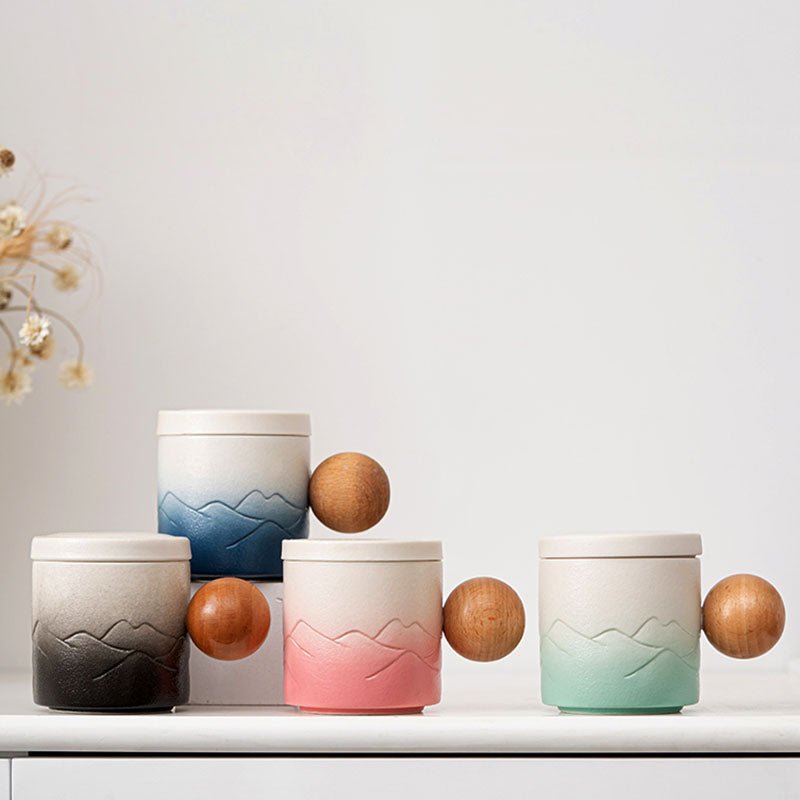
| Ball Handle Coffee & Tea Mug | 250 ml | Longest pour of the three; desk and sofa sessions | Your shelf is shallow, you dislike handles, or a bigger cup tempts you to brew past what you drink |
200 ml is not automatically the compromise pick. It sits close to a standard tea serving but leaves a little headroom for milk or a longer steep. The 170 ml cup keeps a small pour hot and stops you brewing more than you plan to drink — and it is the wrong cup for anyone who refills a 12 oz mug twice before lunch. The 250 ml mug suits people who find refills more irritating than they find a larger cup.
Which cup matches your week? A scenario shortlist
Here is the shortlist by reader situation, with the reason to buy and the reason to walk away. A cup that is wrong for your counter stays wrong no matter how good the glaze looks in a styled photo.
- You brew small, focused teas and hate pouring half a cup away. The Retro Coffee & Tea Cup lists 170 ml, which suits a short session and takes the least shelf space here. Skip it if your normal serving is a full mug, or if you sip tea across an hour of desk work — you will be walking back to the kettle constantly.
- You want one cup that handles tea most mornings and coffee some mornings. The Pleated Coffee & Tea Cup lists 200 ml, enough for a standard tea serving without becoming a mug, and the pleated form reads clearly on an open shelf. Check the current listing for handle and rim details before you commit, and skip it if you already know you want a single large pour.
- You drink at a desk and want fewer trips to the kitchen. The Ball Handle Coffee & Tea Mug lists 250 ml, the largest capacity in this shortlist, and the handle is the detail to check for knuckle clearance and a confident grip. Skip it if your cabinet is tight, you prefer handleless cups, or a bigger cup pushes you to brew more than you finish.
If green tea anchors your rotation, our green tea mug sizes guide pairs neatly with this list. Read it after you have measured your own pour, not instead of measuring.
Shelf depth, handle clearance, and the storage math that sinks a shortlist
The most common exchange reason in our store is not colour. It is "it doesn't fit where I wanted it." A 250 ml cup with a handle can need more shelf depth and more vertical clearance than a 170 ml cup, and a handle you cannot wrap your fingers around is a handle you stop using.
- Desk rotation: a wide, stable base matters on a mousepad or a slightly wobbly laptop stand. Measure the footprint, not just the capacity.
- Small kitchen shelf: the 170 ml and 200 ml cups are the safer bets; leave an inch above the rim so you are not scraping the shelf every time you reach in.
- Shared kitchen: a distinct rim or pleat makes a cup easy to claim, but it does not replace checking the drinking surface.
- Gift unboxing: match capacity to the recipient's pour, not yours. A 170 ml cup looks dainty to a 16 oz drinker and stingy to someone who takes coffee by the pint.
Frequency matters as much as fit. A cup you reach for five mornings a week gets washed five times a week, lands in the sink, and takes the occasional bump. Buy the size you will actually carry back to the kitchen, not the one that photographs best on a shelf you do not have.
Glaze, lip feel, and the questions a product photo can't answer
This is where a shortlist gets serious. A pottery tea cup touches your mouth twice a day, and "ceramic" on a listing does not tell you whether the glaze is intact, how the piece was fired, or what it was tested for. We cannot verify a finished-piece leach test from a product name, so we treat it as a question to ask the seller rather than a box to tick.
The FDA's guidance on traditional pottery explains why the question matters: lead can be present in glazes and decorations, and if a piece is not manufactured and fired properly, lead can leach into food or drink. Fired at the right temperature for the right time, essentially all of that lead is bound into the glaze — and no amount of washing or boiling removes it from a piece that contains it. The agency flags higher-concern ware as antique, damaged or heavily worn, crudely made or irregular in shape, of unknown maker, or brightly decorated in orange, red, or yellow, and notes that everyday commercial factory pottery is far less likely to present a problem.
For cups and mugs specifically, FDA guidance sets a lead guideline of 0.5 micrograms per mL of leaching solution across six units, with a separate cadmium guideline for small hollowware. Its reference cup is roughly 240 ml with a handle — close to our 250 ml mug, and a reminder that a handleless 170 ml tea cup is not the shape that general guidance was written around. None of those numbers certify the cup in your cart. Only the seller can tell you whether a test report matches the finished piece you are buying.
- Look at the drinking surface, not the outside. Bare clay, pinholes, rough patches, or decoration right at the lip all deserve a question before the first pour.
- Separate crackle from a crack. Fine crazing under a smooth surface is one thing; a line your fingernail catches, or one that runs through the wall, retires the cup from daily drinking.
- Read the label literally. A "not for food use" warning means decorative, however cup-shaped the piece is.
- Ask about heat and appliances. Dishwasher and microwave suitability is maker-specific. Keep metallic or overglaze decoration out of the microwave unless the seller says otherwise.
- Ask what the test covers. A glaze sample is not the finished cup. If nobody can answer, treat the piece as display-first.
Weighing clay-bodied mugs against glazed ceramic generally? Our clay pottery coffee mugs shortlist goes deeper on that trade-off. For this rotation the rule is simpler: buy the cup whose drinking surface you can inspect and whose care instructions you can follow.
The first-week trial we run before a cup joins the rotation
Give a new cup a trial week before it takes a permanent slot. This is not about babying it — it is about finding out whether the rim, the weight, and the listed capacity work with the tea you actually make.
- Wash it by hand first, then inspect it dry. Run a fingertip around the rim and look inside under a bright light. Note any rough spot, bare patch, or sharp lip before you fill it.
- Warm it gradually. Skip pouring boiling water into a cold, thick-walled cup straight off the shelf; add a little warm water first, then fill. That is a thermal-shock precaution, not a guarantee against every crack.
- Drink what you normally drink. A cup that feels fine with water can feel different with hot tea at drinking temperature. Check the rim, the balance in your hand, and whether 170, 200, or 250 ml leaves you wanting a refill.
- Watch the glaze and the foot ring. Dry the cup fully after washing, especially underneath. If the glaze shifts, crazes, or the foot stays damp, stop daily use and ask the seller before continuing.
- Confirm appliance care before the first dishwasher cycle. Ceramic does not automatically mean dishwasher safe or microwave safe. Follow the seller's instructions for that specific cup, and keep metallic decoration out of the microwave.
By Thursday, the trial has told you more than the first five minutes ever will. A cup slightly too small for your pour announces itself. A cup that is awkward to store ends up living on the counter. A cup with a rough lip gets pushed to the back of the shelf and quietly leaves the rotation.
Frequently asked questions
How many pottery tea cups do I need for an everyday mug rotation?
Three is a practical starting point: a small 170 ml cup, a middle 200 ml cup, and a larger 250 ml cup. That covers short tea sessions, a default daily cup, and a longer desk pour without turning your shelf into a collection. If you only ever drink one size, buy one good cup and skip the rotation entirely.
Is a 170 ml pottery tea cup too small for daily use?
It is too small if you regularly finish a 12 oz mug or sip tea for an hour at a desk. It is a good size for short sessions, concentrated brews, and small kitchens. Match it to your pour, not to the photo.
Can I put ceramic tea cups in the dishwasher or microwave?
Do not assume either from the word "ceramic." Suitability is maker-specific and can change with glaze and decoration. Check the current listing or ask before the first cycle, and keep metallic or overglaze decoration out of the microwave unless the seller says otherwise.
How do I tell intentional crackle from a damaged glaze?
Use a fingernail. Fine crackle sitting under a smooth, intact surface is different from a line you can catch a nail in or one that runs through the wall. If the surface feels rough, the line widens, or the cup weeps, retire it from drinking.
What should I ask before buying handmade pottery tea cups?
Ask about the clay and firing, whether the glaze is intended for food contact, whether any test report matches the finished cup, and how to wash or heat it. In a pottery tea cups everyday mug rotation product shortlist guide, those answers outrank the word "handmade" on the listing.
If the shortlist still feels close, start with the cup that matches your most frequent pour: 170 ml for short tea sessions, 200 ml for a default daily cup, or 250 ml for a longer desk mug. Then open the unique coffee mugs collection and run each candidate against four checks — listed capacity, storage footprint, drinking surface, and care instructions. That beats adding a fourth cup you are not sure you will use.
More from our blog
Ready to pick your mug? Two ways to save on today's order:
Ordering 1–3 mugs? Get an extra 10% off your 1st order with code 10_OFF Apply 10% Off & Shop Wooden-Handle Mugs →
Gifting 4+ mugs? Buy 3, Get the 4th Free applies automatically at checkout (no code needed; offers do not stack) · Free standard shipping (Nov pre-Christmas delivery: 15–20 calendar days US) · Free replacement if chipped in transit.
Popular mug buying guides: Ceramic Tea Cups & Infuser Mugs · Ceramic Mugs with Lids Compared · Wooden-Handle Tea Infuser Mugs Compared · Christmas & Secret Santa Mugs 2026 · Espresso & Cortado Cups Guide · Cup & Saucer Gift Sets · All 25 Mugs Spec Table · Mug Size Guide · Shipping & Promo FAQ
FIRST ORDER 10% OFF (CODE: 10_OFF) · OR BUY 3, GET THE 4TH FREE


Read more
Wide Based Coffee Mugs Everyday Mug Rotation Product Shortlist Guide
Three mugs, three capacities, and a shortlist built around how often you brew, where the mug actually sits, and how many you need between dishwasher cycles. Includes the measurements to take before...
Read more
Coffee Mugs With Big Handles: Everyday Rotation Product Shortlist
A scenario-based shortlist for building a mug rotation that fits your hand: what the 250 ml, 400 ml and 480 ml sizes are each good for, how to judge handle clearance a photo can't show, and the bre...
Read more
Leave a comment
This site is protected by hCaptcha and the hCaptcha Privacy Policy and Terms of Service apply.