

Black Tea Mug Everyday Mug Rotation Product Shortlist Guide: 3 Fits
Reading time: about 9 minutes
At 10 a.m., one mug is half-full beside the laptop, yesterday's mug is drying near the sink, and the decorative favorite is still wedged behind the bowls. That is where an everyday rotation succeeds or stalls: not at the first pour, but in the spaces between uses. This black tea mug everyday mug rotation product shortlist guide compares three catalog-backed options we sell for tea: the Round at 390 ml, plus the Gradient and The Flow at 400 ml each. In our store, we keep the decision tied to listed capacity, visible handle shape, and everyday fit. We do not turn those details into unsupported claims about steeping, temperature retention, material performance, or durability.
How many mug slots does your tea day really use?
Before comparing designs, name each place where a mug waits during a normal weekday. In our experience, this exposes unnecessary purchases quickly. A practical rotation is a set of jobs, not an arbitrary number of mugs.
- Active slot: the mug beside the kettle, breakfast plate, or computer.
- Clean backup: the mug ready while the active one is in the sink or drying.
- Second-person or guest slot: a mug that has a regular user instead of waiting indefinitely in the cabinet.
If you can name only one real slot, start with one mug. Use it through several tea days before duplicating it. This is especially useful in a small kitchen, where an extra handle can consume more shelf width than the capacity figure suggests.
390 ml or 400 ml: which capacity fits your usual pour?
The three options sit in a very narrow capacity band. That matters because the numbers can look more different on a product page than they feel during use.
| Product | Listed capacity | What the number tells you |
|---|---|---|
| Round Coffee Tea Mug | 390 ml | It holds 10 ml less than the other two listed options. |
| The Gradient Coffee Tea Mug | 400 ml | It shares the largest listed capacity in this shortlist. |
| The Flow Coffee Tea Mug | 400 ml | Its capacity matches the Gradient, so handle preference becomes the stronger distinction. |
Ten milliliters is roughly two teaspoons. We would not present that as a meaningful small-versus-large divide. Instead, fill your current mug to its normal drinking level with cool water, then transfer that water to a measuring jug. Include the headroom you leave for carrying the mug and adding milk. A listed capacity is not the same as a comfortable fill line, and a mug filled to the rim is awkward on the walk from kettle to desk.
Which handle profile works for kitchen, desk, and cabinet use?
Because the capacities are close, handle shape does more of the selection work. The Round has the most conventional rounded, C-shaped profile. The Gradient presents a more open-looking grip area. The Flow uses a longer, more elongated curve. Those are useful comparison points, but none proves universal comfort.
- Finger clearance: compare how many fingers you put through your current handle and whether your knuckles touch the mug body.
- Carry pattern: a quick lift from counter to table can suit a different grip from repeated trips between an office kitchen and desk.
- Storage width: measure from the outer edge of your current handle to the opposite rim. Internal capacity does not reveal this dimension.
- Drying-rack position: check whether a longer handle would meet plates, cutlery, or the rack frame.
When we handle mugs for everyday-fit comparisons, we pay attention to the grip used naturally, not the grip that works only after rearranging the fingers. Use a favorite mug as your physical benchmark. Product images can show the direction of a handle design, but they cannot reproduce your hand size or cabinet clearance.
Black tea mug everyday mug rotation product shortlist guide: three daily fits
Each option below starts with a real use pattern. The choose-or-skip reasons stay within the verified differences rather than assigning performance that the catalog facts do not establish.
Round: quick kitchen pours and a familiar handle
Reader situation: your mug stays near the kettle, moves to the breakfast table, and returns to the sink before the next work block. Why it fits: the Round Coffee Tea Mug provides a listed 390 ml capacity and the most conventional rounded handle profile of the three. Choose it if your measured pour leaves sensible headroom below 390 ml and a familiar C-shaped grip matches the mug you already reach for. Skip it if: you specifically prefer a more open or elongated handle. Do not assume it stacks or occupies less cabinet space without checking the current product details and comparing its full silhouette with your shelf.
Gradient: one mug moving between counter and desk
Reader situation: tea starts in the kitchen, then the mug spends the next hour beside a keyboard or notebook. Why it fits: The Gradient Coffee Tea Mug combines a listed 400 ml capacity with a more open-looking handle area. It belongs on the shortlist if that profile resembles handles that already give your fingers enough clearance. Skip it if: a compact cabinet opening or narrow mug rail is non-negotiable and you have not confirmed the exterior measurements. The extra 10 ml over the Round is only a small volume change, so capacity alone is a weak reason to switch.
The Flow: a fixed desk mug with an elongated grip
Reader situation: the mug usually remains at a desk or reading chair and returns to the kitchen mainly for refills and washing. Why it fits: The Flow Coffee Tea Mug offers the same listed 400 ml capacity as the Gradient but a more elongated handle curve. Choose it when that grip shape, rather than extra volume, is the deciding variable. Skip it if: the mug must fit a tight cubby, crowded drying rack, or closely spaced hanging rail and you cannot verify total width first. An elongated profile should not be treated as proof of comfort or compact storage.
How do cabinet space and washing habits change the shortlist?
A mug in frequent rotation spends considerable time outside the cabinet. We check the counter, sink, drying area, and storage shelf as one route rather than judging only the clean mug on display.
- Measure the widest point: use a mug that already fits and record its total width, including the handle. Do not substitute the 390 ml or 400 ml capacity for an exterior measurement.
- Do not assume stackability: none of the supplied facts establishes that these mugs nest or stack. Buy for side-by-side shelf space unless the current product information says otherwise.
- Reduce crowded-sink contact: rinse away black tea residue after use, use a non-abrasive cleaning tool, and keep metal cutlery away from the interior and handle. The protruding handle and rim are common impact points on handled drinkware.
- Verify machine-care instructions: this comparison does not assert dishwasher or microwave compatibility. Check the current product page or care label before placing any mug through those cycles; hand washing is the conservative choice until compatibility is confirmed.
These checks matter more than an unsupported promise of toughness. Frequent use increases handling opportunities, but it does not establish how a specific mug will respond to impacts, abrasion, or repeated machine washing.
When should you skip all three mugs?
This shortlist is deliberately narrow. A different drinkware style will serve you better if any of these requirements controls the purchase:
- You need a capacity meaningfully above 400 ml.
- You need a built-in tea infuser or another confirmed steeping accessory.
- You need a sealed lid for commuting or spill control in a shared office.
- You need verified insulation or specific temperature-retention performance.
- You need exact exterior dimensions for a fitted shelf, cup holder, or mug rail.
- You require confirmed dishwasher or microwave compatibility before buying.
For a wider visual comparison, open our unique coffee mugs collection and verify the capacity, dimensions, included pieces, and care information on the current listing. The collection is a next comparison step, not proof that every mug meets the requirements above.
Should your rotation use matching mugs or mixed roles?
Matching mugs simplify refills because the capacity and grip stay consistent. A mixed rotation can make more sense when the mugs have different jobs.
- One repeated kitchen job: test one model first, then add a matching second mug if it clears the shelf, rack, and sink routine.
- Separate kitchen and desk jobs: consider the Round for the familiar rounded grip, then choose the Gradient or Flow for the handle profile you prefer at the desk.
- Two regular tea drinkers: let each person choose by hand fit. The 10 ml capacity difference is unlikely to settle a genuine grip preference.
For gifts, handle preference and storage space are harder to predict from an unboxing alone. If you do not know the recipient's usual mug size, one carefully selected mug is a more practical starting point than an assumed set.
Frequently asked questions
Is 390 ml noticeably smaller than 400 ml for black tea?
The difference is 10 ml, or roughly two teaspoons. That is small enough that handle shape, comfortable headroom, and the mug's storage fit may matter more. Measure your normal pour instead of treating the two capacities as separate size categories.
Which black tea mug is best for a small cabinet?
Capacity alone cannot answer that because 390 ml and 400 ml describe internal volume, not total width or height. The Round has a more conventional rounded handle profile, but this guide does not claim it is stackable or provide unverified exterior dimensions. Compare the current listing with a mug that already fits your cabinet.
Can the Round, Gradient, and The Flow go in a dishwasher?
The catalog facts supplied for this shortlist do not establish dishwasher compatibility. Check the current product page and the care label delivered with the mug before using a dishwasher. If neither confirms machine washing, use a non-abrasive tool and wash it by hand.
Which mug should I buy for an everyday black tea rotation?
This black tea mug everyday mug rotation product shortlist guide points to the Round for a conventional rounded handle and 390 ml capacity, the Gradient for a more open handle profile at 400 ml, and The Flow for an elongated handle at 400 ml. Choose the model that matches a measured pour and a handle shape you already like. If storage is tight, test one mug in the full counter-to-sink routine before adding another.
Your next step: write down three facts before opening a product page: your usual fill volume, your preferred handle profile, and the maximum space available at the mug's widest point. Use those answers with the shortlist above, order one mug for its named job, and expand the rotation only after it fits the real routine.
More from our blog
Read more
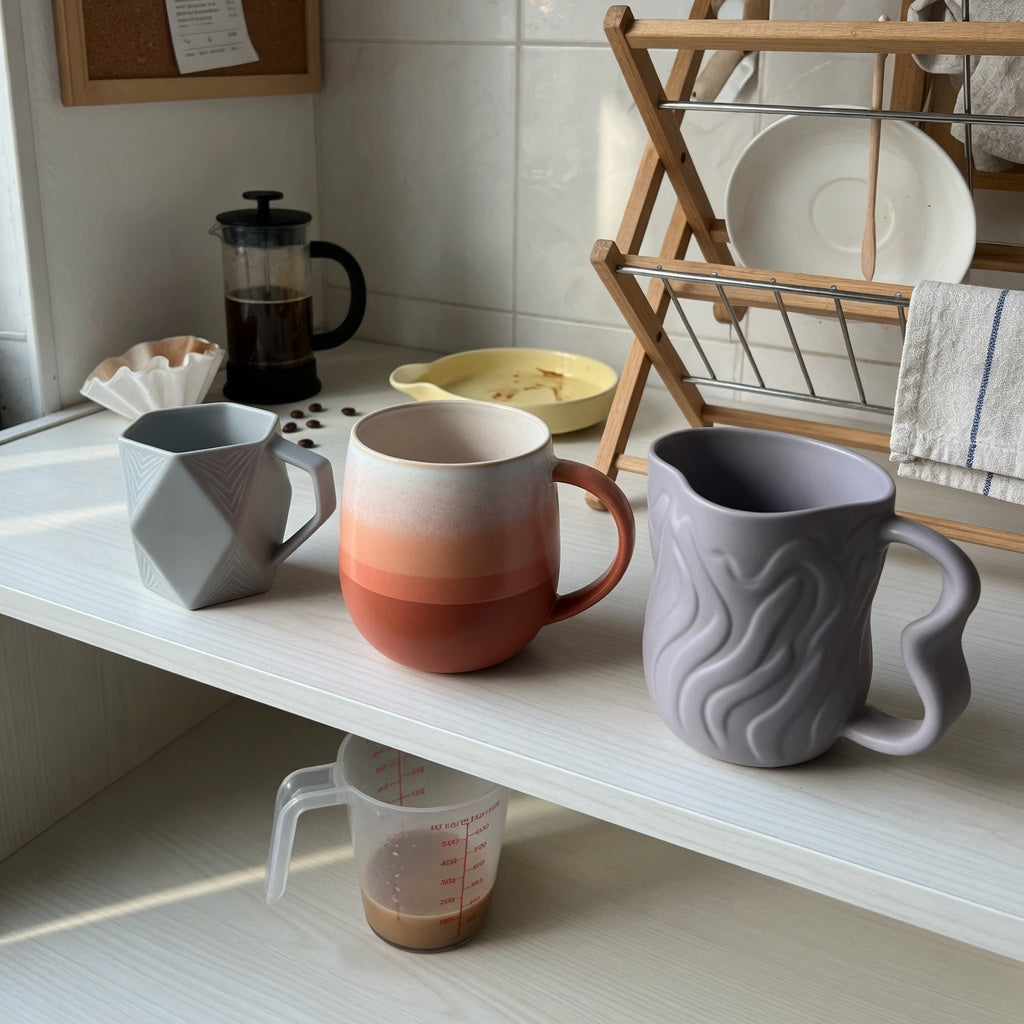
Abstract Coffee Mug Everyday Mug Rotation Product Shortlist Guide
Compare Rhombus, Gradient, and The Flow by verified capacity, visual form, storage fit, and drink routine. Each recommendation includes a reason to choose it, a reason to skip it, and a practical n...
Read more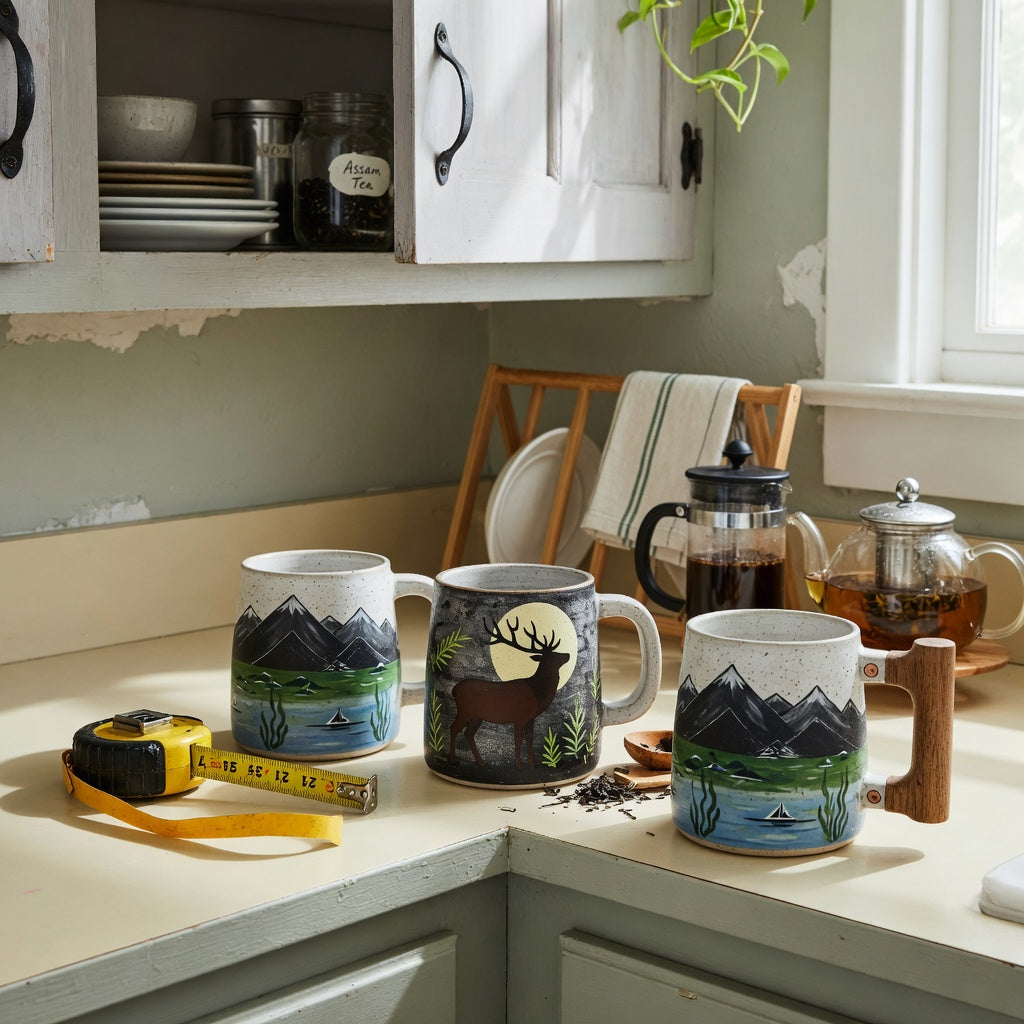
Rustic Ceramic Coffee Mugs Everyday Mug Rotation Product Shortlist Guide
Match three CoffeifyMug designs to weekday, weekend, desk, storage, and care scenarios. This guide separates confirmed product details from shopper checks, with clear reasons to choose or skip each...
Read more
Leave a comment
This site is protected by hCaptcha and the hCaptcha Privacy Policy and Terms of Service apply.