



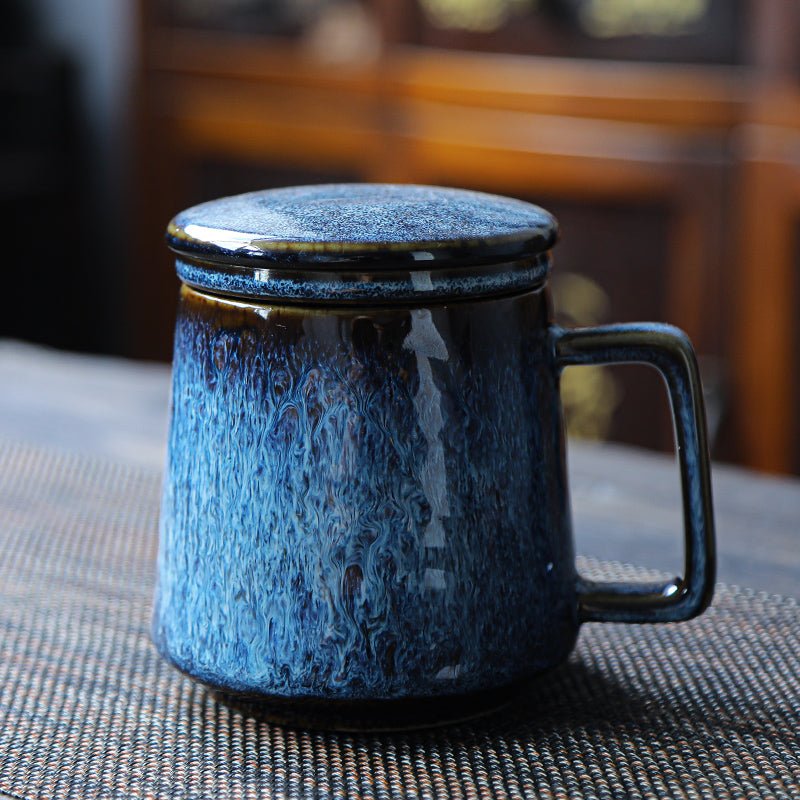
Coffee Mugs With Big Handles: Everyday Rotation Product Shortlist
Reading time: about 11 minutes
A customer sent us a photo of her counter last month: four mugs, three she never reaches for, and one she can only get two fingers through. Large hands, a 7 a.m. start, and no appetite for a fourth return. That is the problem this coffee mugs with big handles everyday mug rotation product shortlist guide is built for — not ranking mugs best to worst, but matching three sizes to the three jobs a working rotation actually does.
We pack and ship these mugs daily, so the pattern is familiar. People buy the largest mug first, then discover it will not clear the coffee maker, will not fit the shelf gap, or simply feels wrong once it is full. Handle shape gets judged from a photo. Handle clearance never does.
What does “big handle” actually mean once you are past the photo?
Big, large and wide handle all get used for one thing: a loop that several fingers, or a whole hand, passes through, rather than a tight two-finger pinch. Capacity is a separate axis. A 250 ml mug can carry a loop that swallows an adult hand; a 480 ml mug can have one that does not. Shopping on capacity alone gets people the wrong mug more often than handle style does.
Four things decide whether a loop feels generous in your hand, and only one of them tends to appear in a listing:
- Opening area — the clear space inside the loop, not how substantial the handle looks against a white background.
- Bar thickness — a thicker bar spreads pressure across the fingers, but it also eats into the opening it creates.
- Standoff — how far the loop sits from the hot wall, which decides how close your knuckles come to the ceramic.
- Wrist angle — whether you can hold the mug with a neutral wrist or have to cock it outward to clear the body.
A 2023 study of cups for care-home residents put numbers on the first item. Focus groups preferred cups that were light and had a large handle, and the authors named cup mass, diameter, handle length and handle opening area as the critical dimensions for people with reduced strength and dexterity. Citing earlier hand-clearance work, they estimated roughly 650 mm² of opening to pass two fingers and about 950 mm² for three. Almost no retail listing publishes that figure — ours included. If four-finger clearance is the reason you are shopping for coffee mugs with big handles, ask for the internal measurement rather than trusting the word large.
How many mugs are actually in your rotation — and which slot needs the wide handle?
Most customers describe a working rotation of two to four mugs. Not eight. That reframes the question from “which mug is best” to “which mug is this one for,” and it is where a shortlist beats a top-ten list.
- The 6 a.m. mug. Reached for on autopilot, usually before the coffee has kicked in. Handle comfort matters most here, because a pinching loop gets felt hundreds of times a year.
- The desk mug. Sits next to a keyboard, gets refilled mid-morning, sometimes goes cold. Capacity and a stable base beat a dramatic handle.
- The slow weekend mug. Larger, carried to the sofa, and often asked to hold hot chocolate or soup as readily as coffee.
- The backup. Lives in the cabinet for guests. Storage footprint outranks everything else.
One mug in rotation? Buy for the handle. Three mugs? Buy the handle on the daily driver and capacity on the other two. That split drives everything below, and it is why we rarely suggest buying three of the same size — you end up with three mugs competing for the same job, which is how counters fill with mugs nobody reaches for.
Coffee mugs with big handles everyday mug rotation product shortlist guide: which mug takes which slot
Listed capacities first, because that is the one number every listing gives you. Compare visible handle shape in the product photos; treat internal handle clearance as a question to send us before you commit.
| Mug | Listed capacity | Rotation slot it fits | Skip it if |
|---|---|---|---|
| Ball Handle | 250 ml | Short coffee, afternoon tea, bedside or desk sipping | You want one fill to last an hour |
| The Flow | 400 ml | Standard morning coffee, office desk, the daily driver | You routinely drink 16 oz in one sitting |
| The Rock | 480 ml | Long coffees, hot chocolate, soup, soup-and-iced-drink duty | Shelf space is tight, your brewer sits low, or grip is limited |
The 250 ml Ball Handle — the short-pour mug
The smallest of the three. We point people here when the complaint is that their current mug holds too much coffee, not that it is too heavy to lift. It suits a short black coffee, an afternoon tea, a bedside sip, or an espresso drink you finish standing at the counter.
- Choose it if you drink small servings through the day, or you like a mug that empties before it goes cold.
- Skip it if you routinely pour 12 to 16 oz, or you want one vessel to double as a soup bowl.
At this size a refill is a real event: a two-cup morning means two trips to the kettle. Read the 250 ml Ball Handle coffee and tea mug page and ask us for the loop measurement instead of assuming the handle scales up with the body. On smaller bodies, makers often shrink the handle along with the wall — which is exactly how a mug sold as big-handled ends up fitting two fingers.
The 400 ml Flow — the desk mug
400 ml is what most shoppers mean by a normal large mug, and it covers the most common rotation job: one mug, one desk, one morning. It is the size we suggest when someone wants one mug that handles most days rather than three that each handle a specific one.
- Choose it if you want a first purchase unlikely to fight your brewer, your shelf gap or your wrist, or you drink 12 to 14 oz in a sitting.
- Skip it if you finish 16 oz before it cools, or you want capacity for iced drinks, cereal or soup.
Put it on a coaster beside a laptop and it reads as an office mug rather than a novelty. The 400 ml Flow coffee and tea mug is the one we would hand a first-time buyer without a second thought.
The 480 ml Rock — the all-morning mug
480 ml tops our range: the mug for one very large coffee worked through slowly, or for hot chocolate, soup and iced coffee on different days in the same vessel. This is the jumbo slot, and the one that most often collides with real kitchens.
- Choose it if you want the longest gap between refills and you genuinely drink in volume.
- Skip it if shelf gaps are tight, your single-serve brewer sits low, or you have grip or wrist limits. A bigger pour means more weight in the hand, and no handle shape removes that.
Read the 480 ml Rock coffee and tea mug page with a tape measure in hand, and treat the height as the deciding number rather than the capacity. If it clears your brewer and your shelf, you will likely love it. If it does not, it becomes a very handsome pen pot.
Which fit checks rule a mug out before the handle even matters?
In our experience, fit questions outnumber looks questions by a wide margin. Run these five before you fall for a loop:
- Single-serve brewer clearance. Measure from the drip tray to the dispenser. Tall, high-capacity bodies are the usual casualty, and a 480 ml mug is often taller than a 250 ml one.
- Mug warmer plate diameter. A warmer only heats what sits on the plate. A base wider than the plate wastes heat and perches unsteadily.
- Shelf gap plus handle projection. Measure the gap between shelves, then add how far the handle sticks out sideways. That projection, not body height, is usually what stops a mug fitting.
- Dishwasher tine spacing. Broad handles eat rack space. Read the care instructions on the exact listing rather than assuming, and be honest about whether a crowded rack means you will hand-wash in practice.
- Car cup holder. Handled mugs generally do not drop into a standard cup holder, so a commute rotation needs a separate answer.
A wide handle also stops mugs nesting. Three big-handle mugs can occupy the shelf space of five standard ones, which matters more than most people expect in a small kitchen.
When the loop is wide enough but the filled mug still feels wrong
A larger opening helps only until the filled mug becomes the problem. The care-home study is direct on this: the cups that performed best were lower-mass, with an opening wide enough for at least two fingers while still allowing thumb and ring-finger support and limiting wrist moment. Loop size, mug mass and the distance from your wrist pull against each other, and you cannot optimise all three at once.
The same direction shows up in a biomechanics study of people with rheumatoid arthritis using spoons: larger handle diameters were associated with less finger-joint flexion than a slender handle, and most participants chose a 1.50-inch built-up handle over a 1.00-inch option. Spoons are not mugs and the loads differ, but the pattern holds — thicker and more open helps, up to the point where weight takes over.
Try this before committing to the 480 ml size. Fill a mug you already own to 480 ml with water, hold it by the handle for thirty seconds, and notice whether your grip shifts or your wrist cocks outward. If it does, size down and refill more often.
One oversized loop is not the only answer, either. Two handles let you lift with both hands or swap sides when one wrist is tired, at the cost of width and shelf space. T-handles and upright posts suit a fist grip rather than a finger loop, but they are rarely cup-holder friendly. Swivel or rotating handles change the grip angle rather than the size of the opening — useful for reach, useless for a swollen knuckle that needs more room.
What should you verify on a large handle ceramic mug listing before it joins the rotation?
Two safety details matter more on oversized mugs than on a standard cup, ours included.
Metallic coatings and microwave use. On 21 March 2024 the U.S. Consumer Product Safety Commission announced a recall covering about 440,500 Starbucks-branded holiday gift-set mugs after reports that certain ceramic mugs with a metallic coating could overheat or break when microwaved or filled with extremely hot liquid. The agency recorded 12 incidents and 10 injuries, including burns or blisters and one cut. A metallic rim is not a microwave-safe signal, and no handle design compensates for a coating that is not rated for the microwave.
Glaze and lead. The FDA notes that lead in glazes or decorations on some traditional pottery can leach into food or drink if the piece is not manufactured and fired properly, and that washing or boiling does not remove it. Everyday factory-made commercial ware is described as much less likely to be a concern than handmade, antique, damaged or uncertain-source pieces, and a lead-free label is not permitted where extractable lead exceeds FDA action levels. If you buy oversized ceramic from an unknown maker, ask for the test documentation rather than accepting the phrase in a listing title.
Care instructions. We will not guess on your behalf. Check the microwave and dishwasher guidance printed on the specific listing you are buying, because glaze recipes and coating choices vary between styles and change over time.
Frequently asked questions
Will a big handle actually fit all four fingers, or is “large” just a photo description?
Only the interior opening decides that, and most listings never publish it in millimetres. Hand-clearance research puts the minimum at roughly 650 mm² for two fingers and about 950 mm² for three, so ask the seller for that measurement if a full-hand grip is the reason you are shopping. One email sorts a real coffee mugs with big handles everyday mug rotation product shortlist guide from a wish list faster than any product photo.
Is the 480 ml Rock too much coffee for one person?
It is a large single serving or a comfortable two-cup pour, depending on how you drink. The real limit is not volume but whether the filled mug is still comfortable one-handed and whether it clears your brewer and shelf gap. If either answer is no, the 400 ml Flow is the more livable size.
Are large handle ceramic mugs microwave and dishwasher safe?
Not automatically, and not as a category. Metallic coatings on ceramic have been recalled over overheating and breakage in the microwave, so check the care instructions on the exact listing before you buy. Dishwasher performance depends on the glaze and how the handle is joined, and a broad handle takes more rack space than the body suggests.
Do big handles make a mug more likely to tip?
A loop that sits far from the wall shifts the balance point, and a tall, wide body amplifies it. A wider base helps more than a bigger handle ever will. If stability is the main worry, that is a base question rather than a handle question.
Which of the three should I buy first?
For most people, the 400 ml Flow, because it covers a standard morning coffee without pushing brewer clearance or shelf height. Size up to The Rock only if you know you want a full 480 ml, and drop to the Ball Handle if a small serving is genuinely your habit.
Before you order, measure three things tonight: the gap between your shelves, the clearance under your brewer, and the internal opening of the mug that currently pinches your fingers. Then browse the unique coffee mugs collection, match the size to the slot it will fill, and message us if handle clearance is the deciding factor. We would far rather answer a tape-measure question than process a return.
More from our blog
Ready to pick your mug? Two ways to save on today's order:
Ordering 1–3 mugs? Get an extra 10% off your 1st order with code 10_OFF Apply 10% Off & Shop Wooden-Handle Mugs →
Gifting 4+ mugs? Buy 3, Get the 4th Free applies automatically at checkout (no code needed; offers do not stack) · Free standard shipping (Nov pre-Christmas delivery: 15–20 calendar days US) · Free replacement if chipped in transit.
Popular mug buying guides: Ceramic Tea Cups & Infuser Mugs · Ceramic Mugs with Lids Compared · Wooden-Handle Tea Infuser Mugs Compared · Christmas & Secret Santa Mugs 2026 · Espresso & Cortado Cups Guide · Cup & Saucer Gift Sets · All 25 Mugs Spec Table · Mug Size Guide · Shipping & Promo FAQ
FIRST ORDER 10% OFF (CODE: 10_OFF) · OR BUY 3, GET THE 4TH FREE


Read more
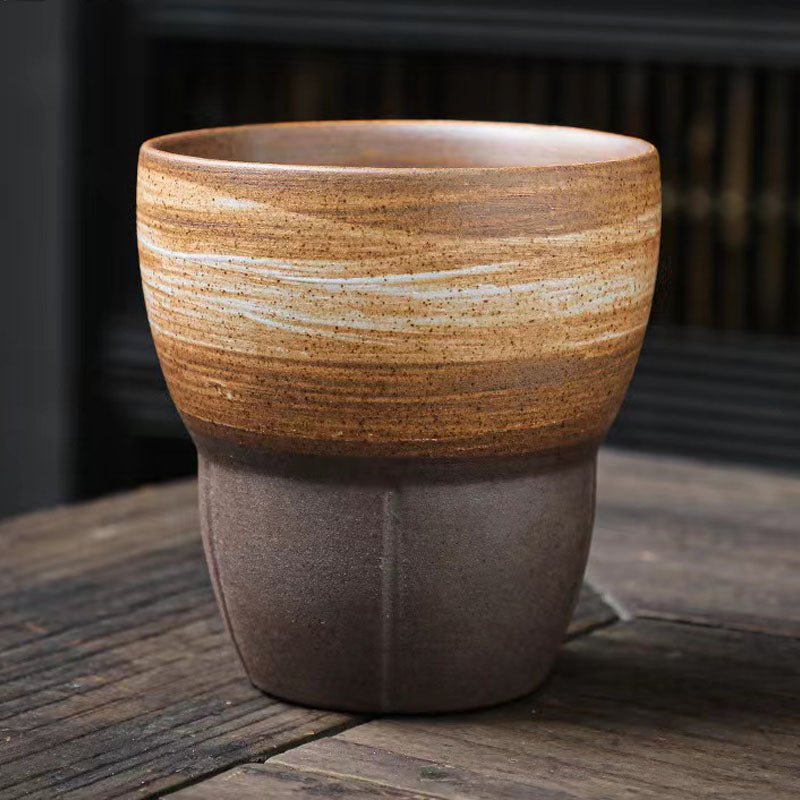
Pottery Tea Cups Everyday Mug Rotation Product Shortlist Guide: 3 Picks
Three ceramic-body pottery tea cups — 170 ml, 200 ml, and 250 ml — matched to the pour you actually finish, the shelf you actually have, and the care checks a daily cup needs before it earns counte...
Read more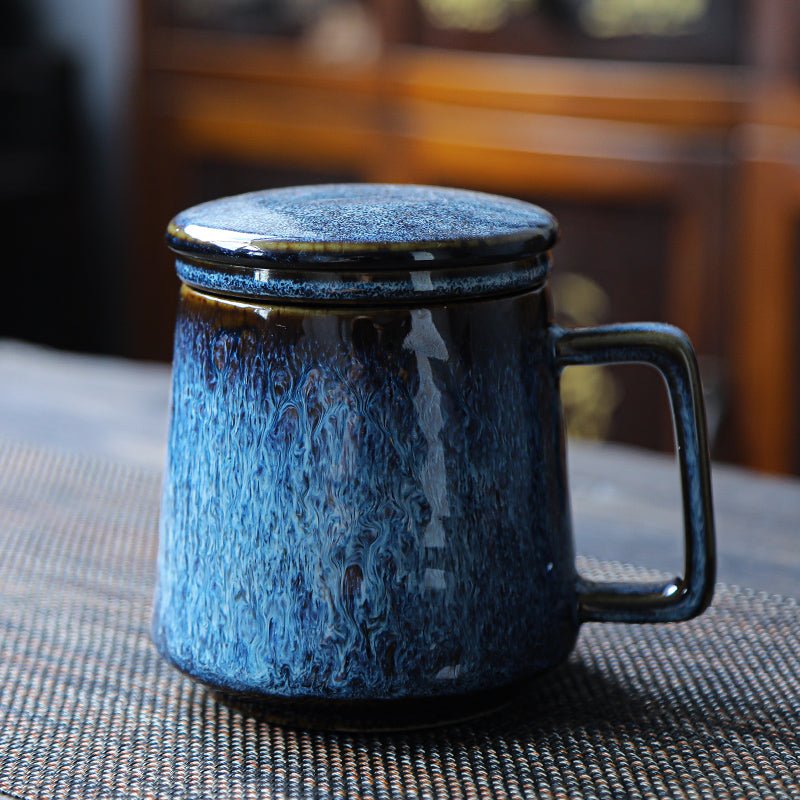
Large Round Coffee Mugs Everyday Mug Rotation Product Shortlist Guide
A short, scenario-based shortlist of three large round coffee mugs at 400, 440 and 480 ml — with the fill-line math, fit checks and glaze questions that decide which one actually earns a daily slot.
Read more
Leave a comment
This site is protected by hCaptcha and the hCaptcha Privacy Policy and Terms of Service apply.