



Pottery Tea Cups Compact Kitchen Practical Purchase Checklist
Reading time: about 11 minutes
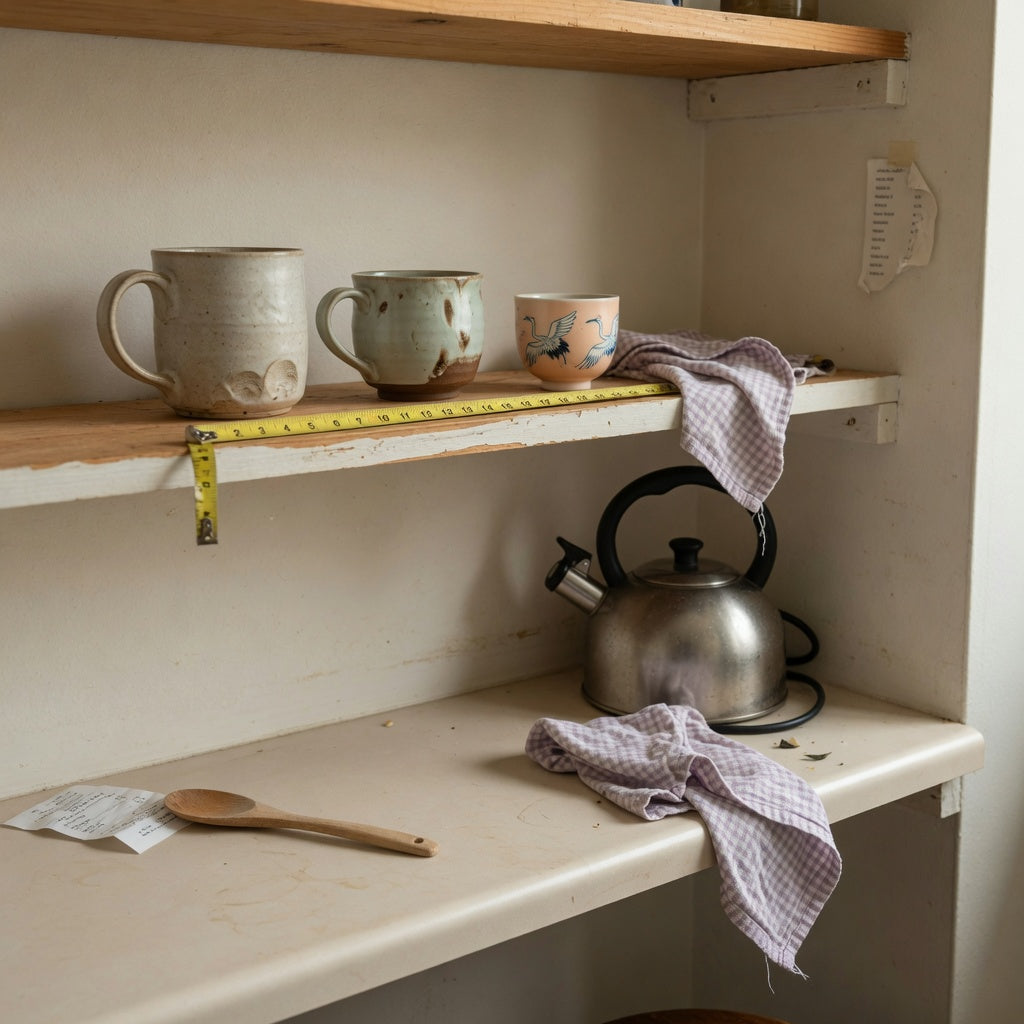
The cup that gets returned from a small kitchen is rarely the ugly one. It is usually the one that cleared the shelf edge but clipped the cabinet door, or the one whose handle pushed past the shelf line so the door never shut cleanly. We have packed and re-packed enough of these to know that compact-kitchen shopping is a measuring job before it is a style job, which is why this pottery tea cups compact kitchen practical purchase checklist starts at the shelf and works backward to the cup.
Our store carries three ceramic tea and coffee cups with different listed capacities: Retro at 170 ml, Pleated at 200 ml, and Ball Handle at 250 ml. Those capacities are the only measurements we can confirm for you here. Everything else that decides fit — outer height, rim diameter, base width, handle projection, food-contact statements, and care instructions — has to come from the current product page for the exact cup you are considering. Below is the order we would work through if we were buying for our own kitchen.
Measure first: a pottery tea cups compact kitchen practical purchase checklist starts at the shelf
Capacity tells you nothing about footprint. A 250 ml cup and a 170 ml cup can eat very different amounts of shelf real estate depending on wall thickness, base flare, and whether there is a handle to park. Take these three measurements before you look at another product photo.
- Cabinet opening height. Measure from the shelf surface to the underside of the shelf above, not the cabinet's overall height. A cup you have to tilt to remove is a cup that ends up at the back of the shelf.
- Usable shelf depth, minus the door. Note how far a door or drawer front swings into the space when open. Cups stored at the front of a shallow shelf are the first ones to get clipped.
- Side clearance. If you want two cups in a row, or a cup beside a sugar jar, measure the gap rather than the shelf. Handle projection is the detail that turns a two-cup row into a one-cup row.
Then measure the landing zone where the cup actually sits while you brew. Twenty-four inches of counter looks generous until a kettle, an infuser basket, and a phone take their spots. We suggest taping out the intended footprint for an afternoon; it is a cheap test that prevents a return.
Which listed capacity matches how you actually drink tea?
Capacity is the one number you can compare across all three options, so use it as a first filter and let the other questions narrow the field. Two caveats: a tea bag or infuser basket displaces volume, and nobody should fill a cup to the rim before carrying it across a kitchen.
| Option | Listed capacity | Routine it tends to suit | Verify on the current listing |
|---|---|---|---|
| Retro Coffee Tea Cup | 170 ml | Short, measured pours; a desk or tea station where a full mug feels like too much | Outer height, rim diameter, base width, handle presence |
| Pleated Coffee Tea Cup | 200 ml | One cup covering both a quick afternoon tea and a slower morning | Whether the ridged exterior changes wiping, drying, or side clearance |
| Ball Handled Coffee Tea Mug | 250 ml | Replacing a familiar handled mug without upsizing the shelf | Handle projection, total width, cabinet clearance |
Read those numbers as relative, not descriptive. The 250 ml Ball Handle lands close to the size FDA describes as a typical handled cup or mug — normally around 240 ml — which makes it the easiest mental swap if you are retiring a worn everyday mug. The 170 ml Retro is a smaller, more deliberate pour. The 200 ml Pleated is the middle option, and middle options are usually the ones people keep using after the novelty fades.
How do the Retro, Pleated, and Ball Handle forms change what fits where?
Product names describe visible form. They do not publish dimensions, so treat each name as a set of questions rather than a promise.
The Retro Coffee Tea Cup carries the smallest listed capacity of the three, which makes it the sensible first comparison for a narrow tea station or a shallow shelf. Its visible draw is the retro styling; its hidden variables are height and base width. On a shelf with limited headroom, put this one at the top of your shortlist and then confirm the actual numbers.
The Pleated Coffee Tea Cup adds a ridged exterior. In a compact kitchen that texture has a maintenance side: ridges gather dust and dried tea film, and wiping between them takes longer than a smooth wall. That is not a reason to skip it — it is a reason to plan open shelving where the cup is visible and easy to reach, and to know how you intend to dry it upside down without trapping water in the recesses.
The Ball Handled Coffee Tea Mug offers the largest listed capacity and a named handle form. Handles are storage-hungry. They need side clearance on the shelf, a clear swing when you lift a full cup, and enough room that they do not catch the kettle handle on a crowded counter. If a familiar one-handed grip matters to you for hot tea, this is the shape to investigate — after you confirm projection and total width on the listing.
If none of the three silhouettes appeals, the unique coffee mugs collection is the place to browse other forms. Keep your measurements in hand while you do, because a different shape brings a different footprint, and similarly named cups elsewhere will not share these capacities or care instructions.
What must the listing answer about ceramic, glaze, and food contact?
A ceramic body describes a material family, not a safety status. Glazes and decorations on pottery can contain lead or cadmium, and how a piece was fired and finished determines whether those elements stay locked into the surface. FDA guidance explains that properly fired pottery binds essentially all the lead into the glaze, while improperly made or fired ware can release lead into food and drink — and no amount of washing or boiling removes it afterward.
FDA also flags where risk concentrates: handmade ware with a crude appearance or irregular shape, antiques, damaged or heavily worn pieces, items from flea markets, street vendors, or an unidentifiable maker, and bright orange, red, or yellow decoration. Everyday commercial factory pottery is treated as much less likely to be a problem. A finished, store-bought cup sits in a different bracket from an unmarked souvenir mug — but a different bracket is not the same as no questions needed.
Five questions worth asking before you pay:
- Is this exact cup intended for contact with tea and lips? Decorative ceramic that looks drinkable is treated as foodware unless it carries a permanent not-for-food warning, so an ambiguous answer is a red flag rather than a neutral one.
- Does the food-safe or lead-free statement cover the finished piece, including any decoration or lip band?
- Was a leach test run on a finished sample, and does the report identify the same product or batch rather than a generic reference?
- Are both lead and cadmium addressed? For cups and mugs, FDA's lead guideline is 0.5 micrograms per millilitre of leaching solution; the cadmium guideline for small hollowware under 1.1 liters is the same figure.
- Are there bare clay patches, pinholes, or metallic overglaze details that change how the cup should be used or washed?
Those thresholds are testing benchmarks, not a certificate for any individual cup. A listing that says lead free without saying which piece was tested tells you less than it appears to, and FDA has stated that ware with extractable lead should not carry that label at all.
Dishwasher, microwave, and heat: which care questions can you actually settle?
We cannot confirm appliance compatibility for these three cups, and we would rather say so than guess on your behalf. Ceramic care depends on clay maturity, glaze fit, and decoration, so a blanket claim that ceramic cups are dishwasher safe is not something a careful seller should make.
- Dishwasher: ask about the exact cup, not the category. Repeated detergent and high heat can dull a glaze and stress a poor glaze fit over months, and washing one cup by hand takes about as long as loading it.
- Microwave: never assume. Any gold, metallic, or overglaze decoration should stay out unless the maker explicitly says otherwise for that piece.
- Thermal shock: skip the boiling-water-into-a-cold-cup move. Warm the cup with a splash of hot water first — a habit worth keeping regardless of what the listing says.
- First inspection: run a fingertip around the rim and look inside for chips, rough glaze, pinholes, or flaking decoration, since the rim and interior touch your tea and your mouth.
Crazing needs its own paragraph. A fine web of lines beneath a glossy surface can be an intentional crackle finish, or it can be a glaze-fit problem that shows up after a few washes. A line that catches a fingernail, runs through the rim, or darkens over time is a different matter from decorative crackle. If the seller cannot give you a clear answer about a cracked or heavily crazed cup, retire it from drinking duty and use it for display.
One limitation we will state plainly: these are drinking cups, not insulated travel vessels. If your day involves a tote bag, a cup holder, or a desk where a cup gets knocked twice before lunch, a lidded mug will serve you better and a pottery cup belongs on a shelf at home.
Daily use, gifting, or display: which cup for which job?
Most disappointment we see comes from a mismatch of job rather than a defect. Decide which of these you are actually buying for.
- Everyday tea at home: capacity first, shelf fit second, care clarity third. The 200 ml Pleated is the middle-of-the-road starting point; confirm care before you commit it to a dishwasher routine.
- Desk or tiny counter: the 170 ml Retro, provided you check outer diameter and where the handle sits.
- Replacing a worn everyday mug: the 250 ml Ball Handle, after confirming handle projection and total width against your shelf gap.
- Gift: capacity and care information matter more than the box. If the recipient has a small kitchen, pass along the care answer and the shelf depth you measured.
- Display only: anything with unclear food-contact status, a chip, or a crack you cannot have assessed. A not-for-food piece stays decorative, no matter how much it looks like a teacup.
Flavor is a separate conversation. Buyers often ask whether unglazed or porous clay changes the taste of tea; we have not found a standards source that settles that claim, and it should never stand in for documented food-contact and care information. Buy the glaze and the fit you can verify, and treat taste claims as preference rather than evidence.
Frequently asked questions
How do I measure a compact kitchen shelf for a pottery tea cup?
Measure the opening height from shelf to shelf above, the usable depth, and the side gap where the cup will sit. Then compare those numbers with the current product page, because capacity is not the same as outside height or diameter. If the listing does not show those dimensions, ask before ordering.
Are the Retro, Pleated, and Ball Handle cups dishwasher or microwave safe?
We can confirm their listed capacities (170 ml, 200 ml, and 250 ml), their ceramic bodies, and their visible forms. Appliance compatibility is product-specific and is not confirmed here, so check the current listing or contact us for the exact item. Never assume one cup's care instructions carry over to another shape.
Does a pottery tea cups compact kitchen practical purchase checklist prove a cup is food safe?
No. A pottery tea cups compact kitchen practical purchase checklist tells you which answers to demand — food-contact status, glaze condition, firing information, and any finished-piece testing — but it cannot substitute for a product-specific statement from the seller or maker. If those answers are missing, that is a buying decision, not a detail to skim past.
Is fine crazing on a ceramic tea cup a reason to stop drinking from it?
It depends on what you are seeing. Intentional crackle under a sound glaze is a finish; a line that catches a fingernail, crosses the rim, or darkens with use is a structural concern. If the maker cannot clarify which one you have, use the cup for display.
Which of the three is best for an office desk with very little room?
Start with the 170 ml Retro if you prefer small pours and a smaller footprint, and confirm its outer diameter before you buy. The 250 ml Ball Handle holds more but needs room for the handle and a wider landing zone beside a keyboard or monitor stand.
Before checkout, write down four answers: cabinet opening height, usable shelf depth, your preferred pour in millilitres, and how you will wash and heat the cup. Then compare those four lines against the individual Retro, Pleated, and Ball Handle listings, or browse the full CoffeifyMug collection of unique coffee mugs if a different shape suits your shelf better. Where a detail is missing, ask us before you order rather than inferring it from a photograph.
More from our blog
Ready to pick your mug? Two ways to save on today's order:
Ordering 1–3 mugs? Get an extra 10% off your 1st order with code 10_OFF Apply 10% Off & Shop Wooden-Handle Mugs →
Gifting 4+ mugs? Buy 3, Get the 4th Free applies automatically at checkout (no code needed; offers do not stack) · Free standard shipping (Nov pre-Christmas delivery: 15–20 calendar days US) · Free replacement if chipped in transit.
Popular mug buying guides: Ceramic Tea Cups & Infuser Mugs · Ceramic Mugs with Lids Compared · Wooden-Handle Tea Infuser Mugs Compared · Christmas & Secret Santa Mugs 2026 · Espresso & Cortado Cups Guide · Cup & Saucer Gift Sets · All 25 Mugs Spec Table · Mug Size Guide · Shipping & Promo FAQ
FIRST ORDER 10% OFF (CODE: 10_OFF) · OR BUY 3, GET THE 4TH FREE


Read more
Unique Coffee Mug Gift Practical Enough to Use: Buyer Checklist
A unique mug gift only works if it survives daily use. We compare capacity, handle clearance, care labels, glaze safety, and shape—then map three silhouettes to real drinkers.
Read more
Wide Based Coffee Mugs Compact Kitchen Practical Purchase Checklist
A measurement-first checklist for comparing wide based coffee mugs in a compact kitchen: listed capacity, base geometry, brewer and shelf clearance, handle fit, and the care details still worth con...
Read more
Leave a comment
This site is protected by hCaptcha and the hCaptcha Privacy Policy and Terms of Service apply.