



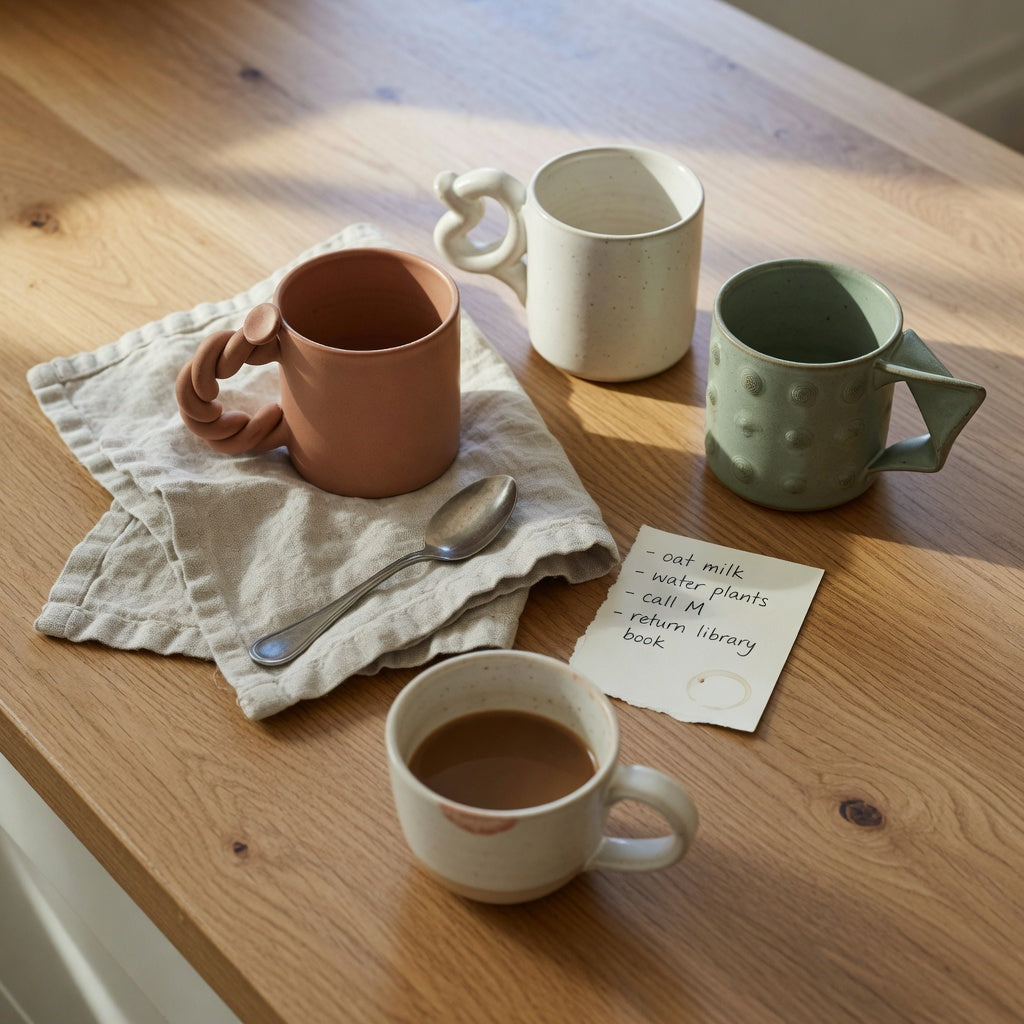
Unique Coffee Mug Gift Practical Enough to Use: Buyer Checklist
Reading time: about 12 minutes
Open a friend's mug cabinet and you can often spot the gift mugs without being told. They sit on the top shelf, still glossy. The mug that actually gets used is rarely the strangest one in the house. It is the one with a handle that fits a real hand, a rim that does not dribble, and a glaze that has survived a hundred dishwasher cycles. The test of a unique coffee mug gift practical enough to keep is whether the recipient reaches for it on an ordinary Tuesday, not whether it looks good in a photo.
We talk through that trade-off with customers every week. Here is the order we compare things in, because a beautiful glaze cannot rescue a mug that is too tall for the shelf.
Why do so many unique mugs end up on the top shelf?
Most people who drink coffee or tea already own a mug they like. A gift mug competes with a mug that already works, not with nothing. A unique coffee mug gift practical enough to earn counter space usually solves a small, specific problem.
We ask buyers one blunt question before anything else: does the recipient have a complaint about their current mug? Too small. Handle too narrow. Gets cold. Cannot go in the microwave. Does not fit the car. If you can name the complaint, you can buy a mug that solves it, and that mug will get used even if it looks unusual.
If there is no complaint to solve, buy for the routine. A home mug and a commuting travel mug are different products with different failure modes. Mixing them up is the most common gifting mistake we see in our store.
What capacity makes a unique coffee mug gift practical for a real pour?
Capacity is the number shoppers skim past and then regret. FDA compliance guidance describes cups and mugs as small ceramic hollowware that normally, though not exclusively, holds about 240 mL (8 fl oz) and is made with a handle. That is the regulatory category, not what most people pour.
Plenty of everyday drinkers use a 12–16 oz mug, and the gap between 8 and 16 oz is the difference between "one cup" and "I forgot I made this." Two rules matter:
- Match listed ounces to the real pour, not the ideal one. If they drink a large milky coffee, the milk takes volume. A mug that is perfect for black coffee can overflow with a latte.
- Check height against the brewer and the shelf. Tall sculptural mugs look wonderful in photos and can foul a drip tray or a low cabinet shelf. Measure the space above the brewer before you fall in love with a silhouette.
If the recipient genuinely wants a big mug, start with our unique coffee mugs collection and read the listed capacity on each page instead of judging from the photo.
Which handle, rim, and base checks decide whether a mug gets used?
We have watched customers pick up a mug and put it down in under two seconds. That is the whole evaluation. Their hands are checking:
- Handle opening. Can an index finger pass through comfortably, or does the handle force a pinch grip? Larger hands, and anyone with arthritis or reduced grip strength, need real clearance, not a decorative loop.
- Handle orientation. A strongly shaped or offset handle can feel wrong in a left-handed drinker's hand. It is a small thing that decides whether the mug gets used.
- Rim thickness and shape. A thick, rounded rim drinks differently from a thin, tapered one. Very thick rims feel clumsy with tea; very thin rims feel fragile to some drinkers.
- Empty weight versus full weight. A heavy stoneware mug that feels reassuring empty becomes a workout full. If the recipient has wrist or shoulder issues, weight is a genuine usability spec.
- Base diameter and stability. A narrow base on a tall mug tips easily, and a wide base may not sit in a car cup holder or on a small coaster.
None of this shows up in a product title. It is why we tell buyers to look at the handle in listing photos and ask us directly when the measurements are not published.
Can a gold-rimmed or luster-glazed mug go in the microwave?
A mug that must be hand washed is a mug that gets used twice and then retired. If the recipient runs their dishwasher most nights, dishwasher-safe labeling is a hard requirement, not a nice-to-have. Repeated cycles also dull metallic lusters and surface-printed decoration over time, even when the mug is technically safe to wash.
Microwave safety is a separate question. USDA food safety guidance says only cookware made for microwave use should go in a microwave, and it specifically lists china with metallic paint or trim as not safe. A gold or silver rim, a metallic band, or a luster glaze is a microwave no, however practical the mug looks otherwise. USDA also describes a home check for unlabeled pieces: microwave the item for one minute next to, but not touching, a cup of water. If the piece feels warm or hot, it contains metal in the material or glaze and is not microwave safe.
We also watch for structural wear. The Consumer Product Safety Commission has recalled ceramic mugs that cracked or broke when filled with hot liquid, and separately recalled mugs whose handles could break. A hairline crack or a crazed glaze is not cosmetic once hot coffee is involved. If a gifted handmade mug has been microwaved hard for years and the glaze is webbed with fine cracks, retire it from drink duty rather than treasure it into an accident.
Is the glaze food-safe, and what does "lead free" actually prove?
This is the part of mug gifting that gift roundups skip, and it matters most for anything handmade or vintage.
FDA action guidance for extractable lead in ceramic cups and mugs is 0.5 micrograms of lead per milliliter of leaching solution, with enforcement action recommended if any one of six tested units exceeds that level. Cadmium guidance for ceramic small hollowware sets the same 0.5 micrograms per milliliter action level. The agency notes that extractable lead and cadmium from ceramic ware used with food over time can cause chronic poisoning.
The nuance buyers miss: a properly fired glaze largely binds lead into the glaze, but improperly fired pottery can leach it into coffee or tea. FDA has also found traditional pottery labeled "lead free" that still contained extractable lead at or above action levels, and washing, boiling, or similar home processes cannot remove lead from pottery. A "lead free" sticker is not proof on its own.
FDA advises extra caution with ceramicware that is handmade with a crude or irregular look, antique, damaged or worn, bought from flea markets or street vendors or an unidentified maker, or brightly decorated in orange, red, or yellow. It also notes that commercially made everyday pottery is much less likely to have lead problems, and that anything labeled not for food use, or carrying a required warning such as "Not for Food Use. May Poison Food," should not hold drinks at all.
The buyer's takeaway is simple and unglamorous: buy from a seller who states the piece is intended for food contact and tells you how to care for it. If a listing is silent on both, ask before you gift it. Decorative pottery belongs on a shelf.
Which of our three shapes fits an at-home coffee, tea, or desk drinker?
Once the practical questions are answered, shape becomes the fun part. Three designs in our catalog are useful starting points for the gifting requests we get most often. Treat each as a match for a personality, not as a shortcut around the checks above.
The handbag coffee tea mug: for the person who treats a mug as an object
Some recipients genuinely enjoy a mug that reads as a small sculpture on a desk. If that is your person, the handbag coffee tea mug is the shape we point to first, because the silhouette itself is the gift. Before ordering, confirm on the current listing what the capacity is, whether the handle opening suits their grip, whether it is labeled dishwasher and microwave safe, and whether the seller states food-contact use. A sculptural shape is not automatically a compromised one, but you should not assume either way.
The rhombus coffee tea mug: for modern kitchens and geometric tastes
Faceted, angular forms suit people whose kitchen already leans minimal. The rhombus coffee tea mug is our pick for that reader. Two things to check on the listing: how the rim feels where the facets meet, because sharp interior edges are a genuine dealbreaker for daily drinkers, and whether the base sits flat and stable on a counter. Also confirm the care instructions; angular interiors can be fussier to hand wash if that is required.
The ball-handled coffee tea mug: for the handle complainer
If the recipient's complaint is "my handle is too small," a handle-forward design is the answer. The ball-handled coffee tea mug is the one we suggest for that conversation. Verify the handle opening dimensions or at least the scale in the photos, and check how the mug balances when full. A large handle on a light body can feel oddly front-heavy. Confirm capacity and microwave labeling on the page as well.
If none of these three match the person you have in mind, the rest of the unique coffee mug range is organized so you can compare shapes side by side. For a broader look at size and gift fit, our guide to large unique coffee mugs for gifts goes deeper on capacity trade-offs.
Home ceramic or commuting travel mug—which routine are you shopping for?
These are not interchangeable, and the mismatch is the fastest way to waste money on a thoughtful idea.
| Routine | Type to consider | What to verify on the listing |
|---|---|---|
| Home, slow mornings | Ceramic or stoneware with a full handle | Listed capacity, dishwasher and microwave labeling, food-contact statement |
| Desk, all-day sipping | Insulated or double-wall, lid optional | Base diameter vs. their coaster, lid seal quality, whether the lid is dishwasher safe |
| Commute by car | Travel mug | Cup-holder base width, leak resistance, whether replacement seals are sold |
A home ceramic mug is the wrong gift for someone who drinks their coffee in a car; it will scald a lap. Equally, a stainless travel mug is the wrong gift for someone who works from a kitchen table, because some sensitive drinkers notice a metallic taste from a bare stainless interior and the lid adds cleaning work. Buy for the routine, then choose the shape.
When does a novelty feature make the gift worse?
Self-heating bases, color-change glazes, and self-stirring mechanisms are the features most likely to impress at unboxing and frustrate by month three. They add batteries or charging, they often cannot be fully immersed or dishwashed, and when the mechanism fails the mug is finished as a mug.
That does not make them bad products. It makes them specialist gifts. Buy one for someone who explicitly wants the gadget. Buy a well-made mug for everyone else.
What should you confirm on the listing before you check out?
- Capacity in ounces or millilitres, matched to their actual pour including milk.
- Height and base diameter, checked against their brewer clearance, shelf gap, and cup holder.
- Handle opening—big enough for a real grip, and comfortable for a left-handed drinker.
- Dishwasher and microwave labeling, and no metallic trim if they microwave.
- A food-contact statement and care instructions from the seller, not just the maker's marketing.
- Packaging and returns—a gift box if it is going straight to the recipient, and a gift receipt if sizing or taste is uncertain.
- Whether to pair it with beans, tea, or filters. Only do this if you know their preferences; a bag of the wrong roast undercuts a good mug.
Our ceramic mug gift guide for coffee lovers walks through six comparison points in more depth if you want a second pass.
Frequently asked questions
What size makes a unique coffee mug gift practical for daily use?
There is no single size. FDA guidance describes a cup or mug as normally about 240 mL (8 fl oz), but that is a regulatory category, not a rule for gifts. A 12–16 oz mug suits many everyday drinkers, while a smaller mug suits someone who drinks espresso or tea in small amounts. Match the listed ounces to their real pour, including milk.
Can a mug with a gold or metallic rim go in the microwave?
No. USDA food safety guidance lists china with metallic paint or trim as not safe to microwave. If a mug has a gold band, silver luster, or metallic decoration, reheat the drink in something else and treat the mug as hand-wash-only unless the seller says otherwise.
How can I tell whether a handmade mug's glaze is food-safe?
Look for a seller statement that the piece is intended for food contact, plus care instructions. FDA has found traditional pottery labeled "lead free" that still leached lead above its action levels, and home washing or boiling cannot remove lead from pottery. Extra caution is warranted for antique, damaged, flea-market, or unidentified-maker pieces, and for brightly decorated orange, red, or yellow wares.
What is a sensible unique mug gift for a coworker?
Skip personalisation unless you know them well, and prioritise dishwasher-safe labeling, a plain food-contact glaze, and a handle that suits a shared office kitchen. A distinctive but sturdy shape reads as thoughtful; a mug that needs hand washing in an office sink reads as a chore.
Should I check whether the mug fits their coffee maker?
Yes, and it is the check most buyers forget. Measure the clearance under the brewer and the height of the shelf where the mug will live, then compare against the listed dimensions. A tall sculptural mug that fouls the drip tray tends to become a decorative object rather than a daily one.
Start with the full unique coffee mugs collection and run each candidate through the seven checks above: capacity, height, handle, care labels, food-contact statement, packaging, and pairing. The mug that passes all seven is the one still in the front row of the cabinet a year from now.
More from our blog
Ready to pick your mug? Two ways to save on today's order:
Ordering 1–3 mugs? Get an extra 10% off your 1st order with code 10_OFF Apply 10% Off & Shop Wooden-Handle Mugs →
Gifting 4+ mugs? Buy 3, Get the 4th Free applies automatically at checkout (no code needed; offers do not stack) · Free standard shipping (Nov pre-Christmas delivery: 15–20 calendar days US) · Free replacement if chipped in transit.
Popular mug buying guides: Ceramic Tea Cups & Infuser Mugs · Ceramic Mugs with Lids Compared · Wooden-Handle Tea Infuser Mugs Compared · Christmas & Secret Santa Mugs 2026 · Espresso & Cortado Cups Guide · Cup & Saucer Gift Sets · All 25 Mugs Spec Table · Mug Size Guide · Shipping & Promo FAQ
FIRST ORDER 10% OFF (CODE: 10_OFF) · OR BUY 3, GET THE 4TH FREE


Read more

Yellow Coffee Mug Gift: What to Compare Before You Buy
A yellow coffee mug gift usually fails on details the photo hides: shade, real fill volume, glaze versus print, and a care claim nobody checked. Here is the compare-first order we use in our store ...
Read more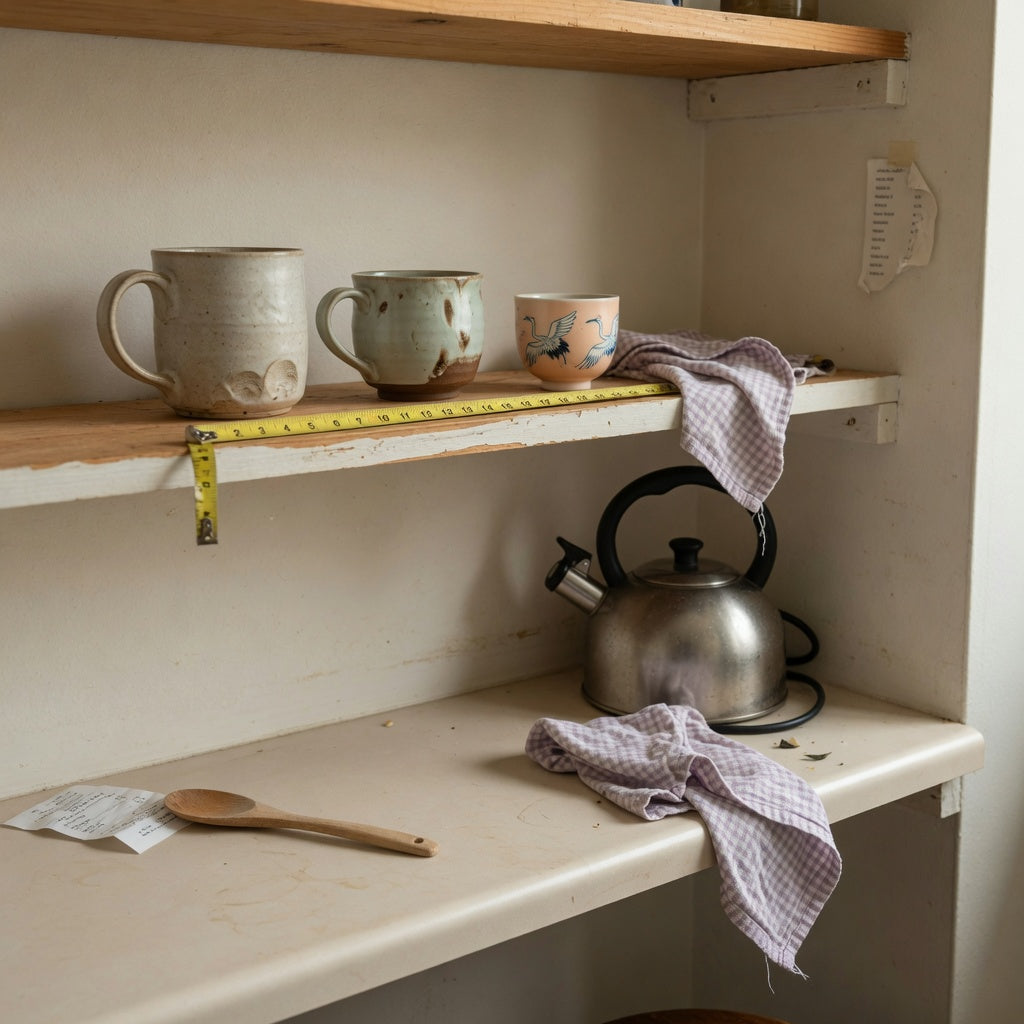
Pottery Tea Cups Compact Kitchen Practical Purchase Checklist
A shelf-first checklist for small kitchens: measure the cabinet opening, match 170, 200, or 250 ml to your tea routine, and settle the glaze and care questions before the cup ships.
Read more
Leave a comment
This site is protected by hCaptcha and the hCaptcha Privacy Policy and Terms of Service apply.