
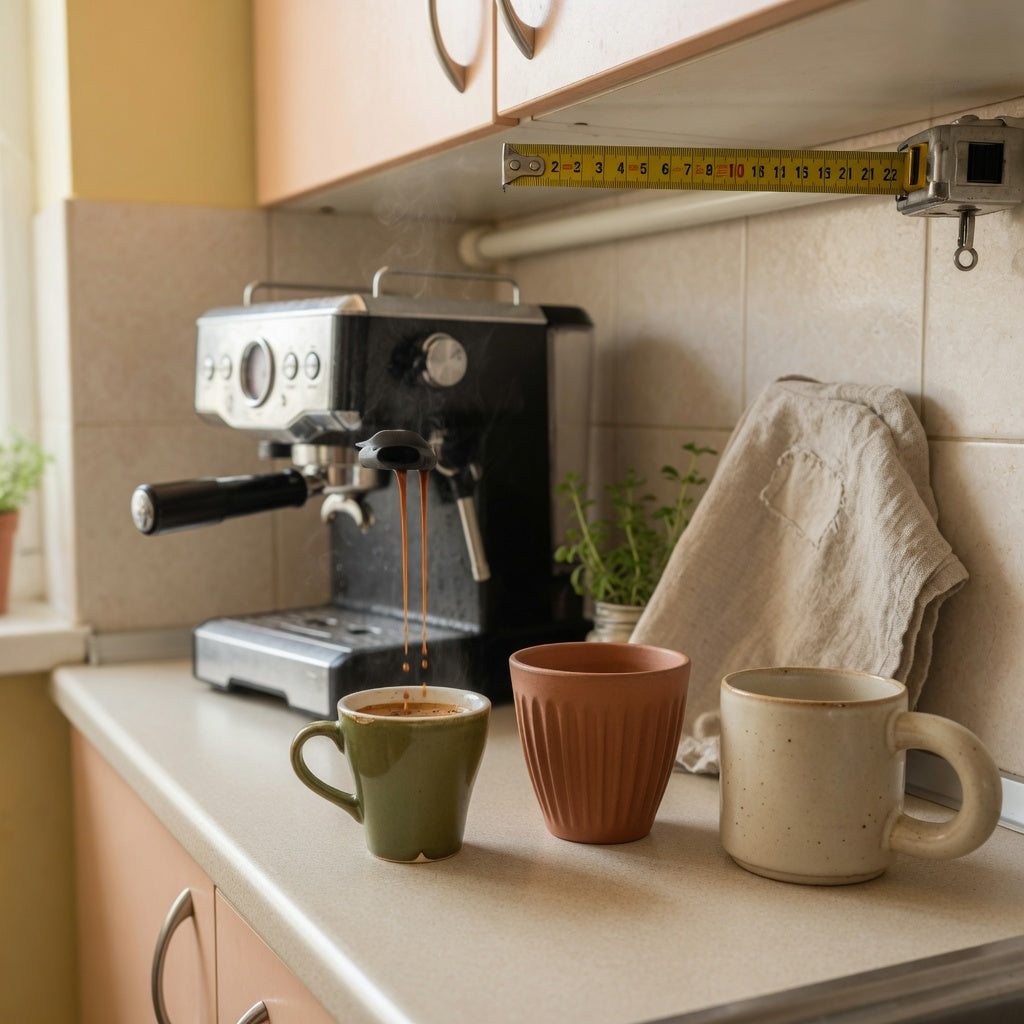
Cute Espresso Cups Compact Kitchen Practical Purchase Checklist
Reading time: about 10 minutes
A tape measure sits on our packing bench, and it has saved more orders than any styled product photo. The returns we handle are rarely broken cups — they are cups that never cleared the group head, or cups that sat three-quarters empty because the buyer pictured a 2 oz demitasse and ordered something far larger. So this cute espresso cups compact kitchen practical purchase checklist runs in the order the decision actually happens on a narrow countertop: measure, size, then style.
What does 170 ml look like next to a real 50 ml demitasse?
A traditional Italian single shot is often described as roughly 25 ml, served in a china cup of about 50 ml. Modern specialty practice usually pulls a double at about a 1:2 brew ratio, which lands near 36 g of liquid. Hold both numbers beside our three sizes: the Retro Coffee & Tea Cup at 170 ml, the Pleated Coffee & Tea Cup at 200 ml, and the Ball Handle Coffee & Tea Mug at 250 ml.
All three are ceramic, and all three are sized well above the cup most shoppers picture when they type "espresso cup" into a search bar. That is a deliberate shape decision, not a misprint — and it is the single biggest reason a first-time buyer ends up disappointed at the sink.
Pour a 36 g double into 170 ml and you are looking at a cup that is roughly four-fifths empty. Crema spreads thin across a wide surface and cools faster than it would in a 50 ml china cup, and the brim-full look that makes a demitasse photograph so well never appears. What you get in exchange is headroom: space for a splash of steamed milk, a short macchiato, or a bag of tea on the afternoon the espresso machine stays switched off.
If a true single shot in a tiny cup is the goal, none of these is that cup, and we would rather say so on the listing than let you discover it after delivery. The smaller end of our unique coffee mugs collection covers that range, and our notes on a small ceramic coffee cup for a compact kitchen go deeper on true demitasse sizing.
Which four measurements decide fit before style gets a vote?
"Will these espresso cups fit under my machine?" is the question that fills our inbox, and no published standard answers it. Spout-to-tray clearance varies machine to machine, so measure your own setup:
- Spout-to-tray height, taken twice. Measure from the underside of the group head to the drip tray with the tray in place, then again with it lifted out. On compact machines, pulling the tray often frees a couple of extra centimeters — frequently the difference between clearing and jamming.
- Widest point, handle included. A cup body is almost always narrower than the handle sticking out of it. Use that full width against the gap between cabinet shelves, and compare cup height against the space between shelves rather than the whole cabinet interior.
- Rim diameter against your stream spread. A double spout drops two streams a short distance apart. A rim that is too narrow pushes one stream over the edge and onto the tray.
- Base footprint on the counter. A broad bowl on a small foot tips on a crowded counter or a wobbly desk, and a tipped cup is a scalded wrist.
If a listing does not state height, rim diameter, and width with handle, treat those figures as unknown rather than assuming the optimistic case. Ask before you order. Answering a measurement email takes us two minutes; a return takes two weeks.
Which of the three cups matches your counter, cabinet, and daily drink?
Same family, three capacities, three different jobs. Match the cup to the drink you make most often — not the one you make once at Christmas.
| Cup | Listed capacity | Buyer it suits | Where it stops working |
|---|---|---|---|
| Retro Coffee & Tea Cup | 170 ml | One double most mornings, sometimes with a splash of milk; small macchiato; tea for one | Too much empty space for a neat single shot; crema spreads wide |
| Pleated Coffee & Tea Cup | 200 ml | Milk-forward drinks: cortado, small cappuccino, dessert coffee | Reads as a small coffee cup rather than an espresso cup |
| Ball Handle Coffee & Tea Mug | 250 ml | Cappuccino, cocoa, tea, affogato-style dessert servings; the longest drink menu | Largest capacity of the three, so verify spout clearance first |
Standing in front of the shelf, here is how we would steer someone. If you pull one double a day and nothing else, the Retro at 170 ml gives the most headroom without turning into a coffee mug. If your drinks run milk-forward, the Pleated at 200 ml leaves room for the milk without overflowing the rim. If one cup has to cover cappuccino at breakfast and tea at four, the ball-handled mug at 250 ml earns its shelf space. And if the traditional tazzina look is what you are chasing, none of these — go smaller.
Dessert is a separate calculation. Our affogato cup checklist covering 170–270 ml walks through gelato-to-espresso ratios in more detail.
Handle, rim, and interior color: what should you verify on the listing?
These are the details that ruin unboxings, because a straight-on product photo hides every one of them. We do not publish a finger fit for the cups in this article, since handle openings vary by shape and batch. Check the current listing, or ask us directly:
- Handle opening. Wide enough for two fingers, or one? A loop that only takes a fingertip forces you to grip the hot body instead.
- Handle-to-body clearance. A handle set flush against the wall puts knuckles on ceramic that just held near-boiling coffee.
- Rim thickness. A thick rim holds heat and feels sturdy, but it can dribble more on the pour and sit clumsily against the lip.
- Interior color. Plain white shows crema and the color shift as milk goes in; a dark or busy interior hides it. If you care how the shot looks, the inside of the cup matters more than the pattern outside.
- Foot ring. A fully glazed foot slides on a wet countertop; an unglazed ring grips.
Worth asking too if you are short on shelf space: do the cups nest, or does the handle block stacking? In a narrow cabinet, three cups that stack beat six that do not.
Will a decorated glaze survive a dishwasher in a small kitchen?
Ceramic is the sensible material for this job — it holds heat longer than thin glass and feels more substantial in the hand than most double-wall options. It also raises care questions worth settling before you buy.
On food contact, the U.S. FDA explains that lead in ceramic glaze is bound when pottery is fired correctly; if it is not fired properly, the lead may not fuse and can contaminate food. The agency also warns that some traditional pottery labeled lead free has still shown extractable lead, and that ceramicware intended only for decoration must be identified so it is not used with food. That is why we flag display-only pieces instead of letting them pass as drinkware.
On dishwasher wear, painted and hand-finished glazes are where complaints cluster. In our experience the failure is rarely the glaze giving up on its own — it is rim chips from cups knocking into each other or saucers dropped into the rack. Habits that help:
- Hand wash anything with a painted, speckled, or metallic-looking finish; heat and detergent dull those surfaces over time.
- If a cup does go in the machine, skip heated dry and load it upright so it cannot rattle against its neighbors.
- Avoid thermal shock: no boiling water into a cup straight from a cold cabinet, no cold rinse into a warm one.
- Stack no more than two deep, with a soft cloth between rims.
None of that overrides the care line on the specific listing. If a page does not say dishwasher safe, treat the cup as hand wash only — the same advice applies to floral espresso cups and saucers as to plain white china.
Gift set or daily rotation: which one changes the shortlist?
Answer that honestly and the rest of the decision collapses into place. Daily use needs a usable handle, a stable base, and forgiving care. A gift needs a complete set, presentable packaging, and a style that reads intentional rather than random. A display piece can be as delicate as you like, provided it is labeled correctly for food contact.
Pretty sets photograph beautifully and then disappoint when the saucer turns out to be sold separately or the scale is smaller in a real kitchen than in the styled shot. Check what is actually in the box on the listing you are buying from — we would rather answer that question than have you assume. If you are shopping for a housewarming or a wedding, browsing our unique coffee mugs collection side by side beats guessing from a single product page.
Cute espresso cups compact kitchen practical purchase checklist
Run this before checkout. Eight checks, about five minutes.
- Measured spout-to-tray height, with the drip tray in and out.
- Measured the cabinet shelf gap and shelf depth, handle included.
- Confirmed the rim is wide enough for your double spout's stream spread.
- Matched listed capacity to how you actually drink: 170 ml for doubles with headroom, 200 ml for milk-forward drinks, 250 ml for cappuccino, cocoa, or dessert servings.
- Accepted that all three are ceramic vessels sized well above a traditional single-shot cup.
- Checked handle opening and interior color instead of judging on the outside pattern.
- Confirmed food-contact status and care instructions on the exact listing.
- Decided whether the cup is for daily rotation, gifting, or display, and bought accordingly.
Frequently asked questions
What belongs on a cute espresso cups compact kitchen practical purchase checklist?
Four numbers, in this order: spout-to-tray height, shelf gap including the handle, rim diameter against your spout spread, and listed capacity against your usual drink. Style comes last, because a beautiful cup that jams under the group head gets used once and then lives in a cupboard.
Is 170 ml too big for a single espresso?
For a traditional single shot, yes. A 25–50 ml espresso looks lost in a 170 ml cup, and the crema spreads thin across the surface. That capacity makes far more sense for a modern double with headroom, a macchiato, or a cup of tea.
Are these ceramic cups dishwasher safe?
Check the care note on the individual listing rather than assuming — we do not publish a blanket answer across the range. Where a cup carries a painted or hand-finished glaze, we suggest hand washing to protect the finish, and skipping the heated dry cycle if it does go in the machine.
How do I know a cup will fit under my espresso machine?
Measure the gap from the spout to the drip tray on your own machine, then compare it with the height stated on the listing. Lifting the drip tray often buys extra clearance. If a listing does not state a height, ask us before ordering.
Can I use these for macchiato, cortado, or tea?
Yes — the extra capacity is largely what it is for. The 170 ml and 200 ml sizes handle a macchiato or short cortado comfortably, and the 250 ml ball-handled mug is the better fit for cappuccino, cocoa, or tea.
Start with the measurement that disqualifies the most cups
Height, not pattern, kills most compact-kitchen purchases. Measure the spout gap, then the shelf gap, then pick the capacity that matches your daily drink — 170 ml if doubles and milk splashes are the routine, 250 ml if cappuccino and cocoa are regulars.
From there, the unique coffee mugs collection is the fastest way to see every shape in one place before you commit. And if you are still weighing ceramic against other materials, our ceramic espresso cup checklist covers that comparison without repeating this one.
Read more
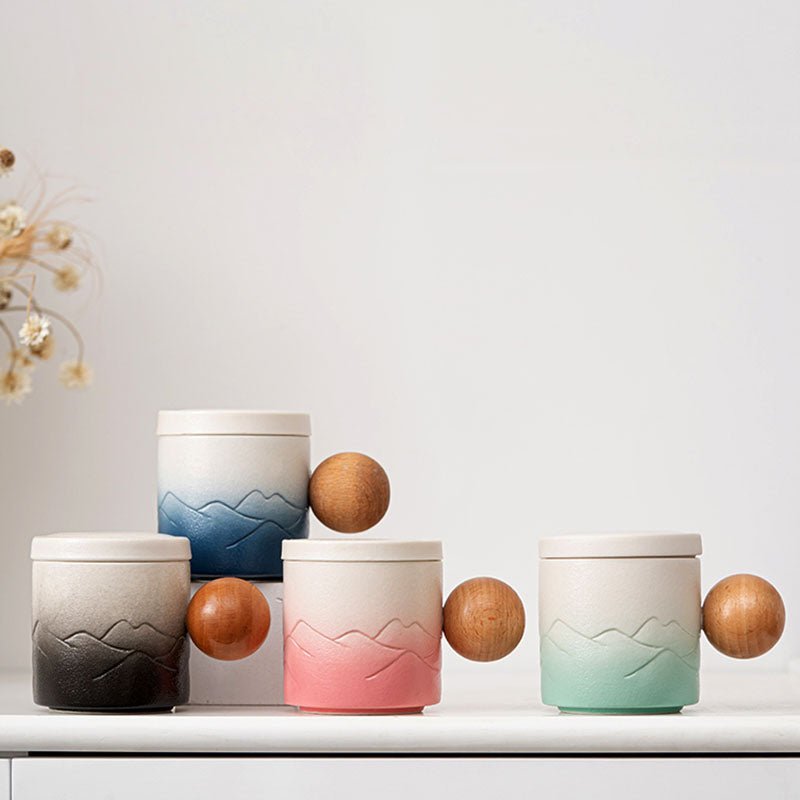
Cute Espresso Cups Shape and Handle Guide: 170, 200, 250 ml
Our three current ceramic cups — 170 ml Retro, 200 ml Pleated, and 250 ml Ball Handle — compared on listed capacity, handle form, crema visibility, and machine fit, including the cases where a true...
Read more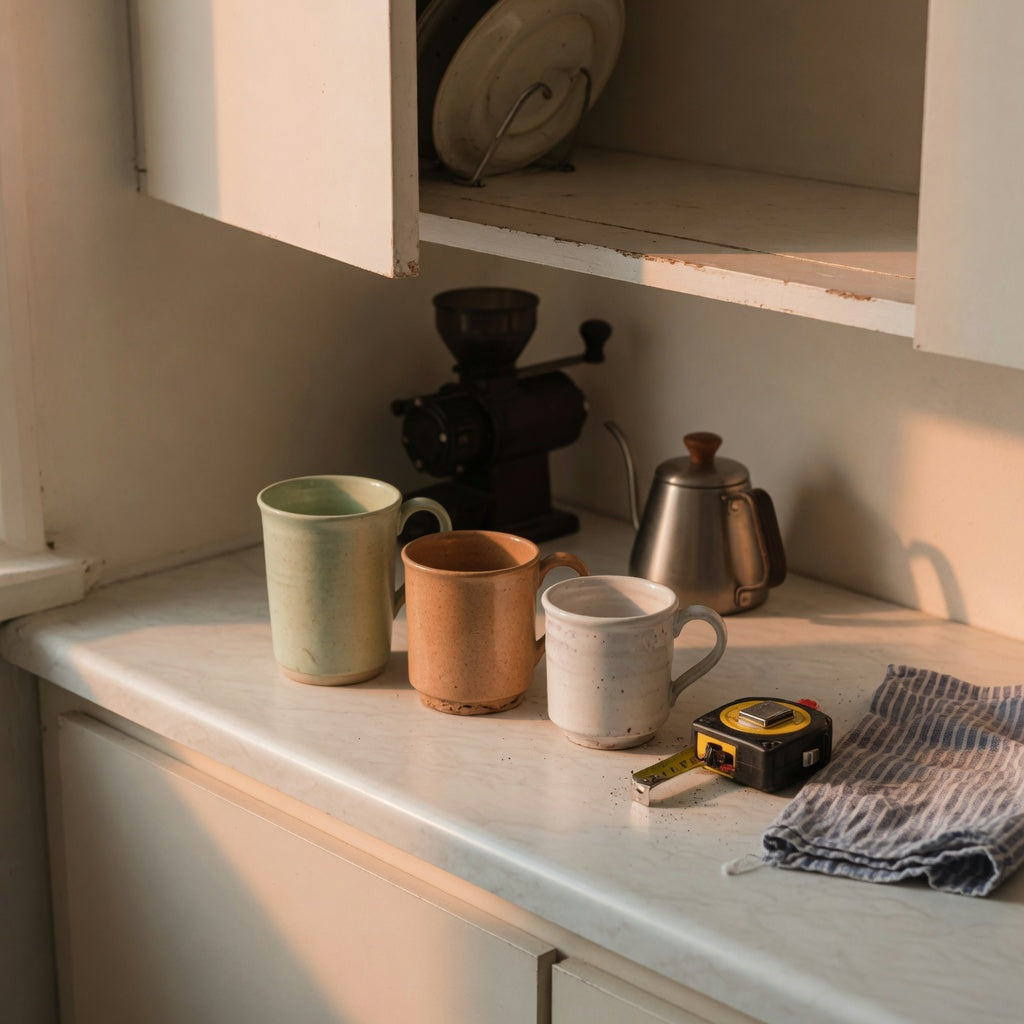
Ceramic Latte Cups Compact Kitchen Practical Purchase Checklist
A measurement-first ceramic latte cups compact kitchen practical purchase checklist: shelf gap and handle swing, what 250 ml, 400 ml and 440 ml pour, stacking behavior, and what a lead-free glaze l...
Read more
Leave a comment
This site is protected by hCaptcha and the hCaptcha Privacy Policy and Terms of Service apply.