
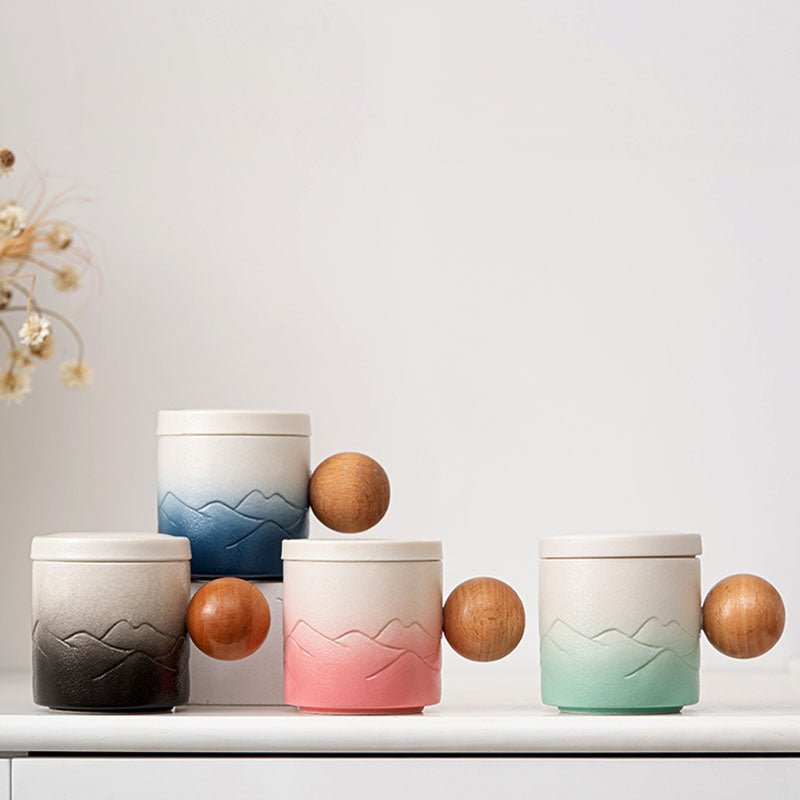
Ceramic espresso cup compact kitchen practical purchase checklist
Reading time: about 9 minutes
The cup fits the drink, but the cabinet door clips the handle every morning. Or it parks beside the espresso machine and leaves no room for your fingers to lift it. Our ceramic espresso cup compact kitchen practical purchase checklist starts with those failures, because nominal capacity alone does not tell you whether a cup will work on a narrow counter or crowded shelf.
We sell and handle this category, and the useful facts here are deliberately narrow: the current Retro is listed at 170 ml, the Pleated at 200 ml, and the Ball Handle at 250 ml. All three are ceramic vessels with their named visible forms. These capacities may be larger than a traditional single-shot demitasse, and we do not treat them as proof of outside dimensions, stackability, espresso-machine clearance, included accessories, or dishwasher and microwave suitability.
The ceramic espresso cup compact kitchen practical purchase checklist: six space checks
Start with the kitchen rather than the cup. Two details shoppers regularly miss are the path used to lift a cup from a shelf and the extra clearance required by a handle. Record the following before opening a product page:
- Usable shelf opening: Measure the clear opening after accounting for the cabinet frame, hinges, shelf lip, and anything stored beside the cup.
- Vertical removal path: A cup can fit while parked but still be awkward to remove if your hand cannot rise above it.
- Counter parking zone: Mark the area beside your machine or kettle and leave room to grasp the vessel without moving another appliance.
- Door and hinge sweep: Check whether a projecting handle would meet the door before it closes fully.
- Machine clearance: Measure from the drip tray to the lowest obstruction in the actual brewing position. Capacity does not reveal cup height.
- Nonstacked storage count: Plan as if each cup needs its own spot unless the current listing expressly confirms stackability.
If your first filter is the lowest listed capacity, the Retro 170 ml ceramic cup is the relevant starting point because it is the smallest of the three by listed volume. That does not prove it has the smallest footprint. If visible form matters more than capacity, compare the current unique ceramic coffee mug collection before narrowing your shortlist.
170, 200, or 250 ml: what does capacity actually tell you?
Capacity helps match a vessel to the amount you usually pour. It does not establish exterior height, rim diameter, base size, or maximum width across the handle. Here is the decision-safe comparison based on the verified catalog facts.
| Current option | Verified product facts | Reader situation and why it fits | What still needs checking |
|---|---|---|---|
| Retro Coffee Tea Cup | Ceramic vessel; 170 ml; visible retro form | You want the lowest listed capacity and prefer retro styling. It fits that brief because 170 ml is the smallest current listing. | Exterior dimensions, stacking, care compatibility, and equipment clearance |
| Pleated Coffee Tea Cup | Ceramic vessel; 200 ml; visible pleated form | You want the middle listed capacity and a visibly textured form. It sits between the 170 and 250 ml options by volume. | Rim and base size, pleat depth, stacking, and appliance-safe care |
| Ball Handled Coffee Tea Mug | Ceramic vessel; 250 ml; visible ball-handle form | You want the highest listed capacity and the distinctive handle is part of the appeal. It provides the most nominal volume in this group. | Maximum width including handle, finger room, shelf fit, and machine clearance |
A coffee cup for espresso can have substantially more nominal room than a shopper expects from a demitasse. If your mental picture is a very small espresso cup for a single shot, even the 170 ml listing may feel larger than expected. Conversely, 250 ml offers the most listed beverage room here, but it is not evidence of a particular outside footprint or drink-specific performance.
Choose capacity for your serving habit. Verify exterior geometry for your cabinet, counter, and machine.
Retro, pleated, or ball handle: which form is easier to store?
Visible form affects daily handling, but it should not be converted into unverified size claims. We would assess each option this way:
- Retro form: Shortlist it if the retro appearance and lowest listed capacity match your routine. Do not assume the word retro means compact, smooth-sided, or stackable.
- Pleated form: The visible pleating creates surface transitions that deserve attention during wiping and inspection. It may suit a shopper who accepts a little more surface detail in exchange for that textured look.
- Ball-handle form: Treat the handle as a dedicated clearance point. Check cabinet-door sweep, neighboring cups, and your preferred grip rather than assuming the unusual handle is automatically ergonomic.
A compact kitchen often rewards simple geometry. If guaranteed stacking is non-negotiable, a different cup explicitly listed as stackable is a better purchase than guessing. For a closer examination of the current silhouettes, use our ceramic espresso cup shape and handle guide.
Will the cup clear your machine, cabinet door, and office setup?
Each location creates a different failure point. Run the checks that match where the cup will actually live:
- Under an espresso machine: Compare the machine’s measured clearance with a confirmed cup height. None of the listed capacities establishes equipment fit.
- Behind a cabinet door: Check the closed-door depth and hinge area. A cup body may clear while its handle does not.
- On an office desk: Mark a parking spot away from the keyboard, charging cables, and notebook edge. Any projecting handle needs a collision-free side.
- For ice-heavy drinks: The listed 170, 200, and 250 ml capacities may become restrictive once ice is added. A larger tumbler would suit that routine better.
The 250 ml Ball Handle option has the highest listed volume if you want more room for coffee or tea, but we cannot promise that it fits a particular machine or occupies more or less counter area than the other forms. Confirm exterior measurements before making clearance the deciding factor.
Which care and delivery checks matter for ceramic?
Ceramic is rigid and can chip when crowded against another hard object. For a personal order or gift unboxing, complete these checks before putting the cup into regular use:
- Inspect the rim in angled light. Look for chips, hairline cracks, or a sharp irregularity. Do not run a finger over an area that already looks sharp.
- Check handle junctions. Inspect where any handle meets the vessel, paying particular attention to the visible ball-handle form.
- Use a level, dry counter. Set the empty cup down and check for unexpected rocking before filling it.
- Confirm care instructions. Ceramic material alone does not prove dishwasher or microwave suitability. If that information is not confirmed, a non-abrasive sponge and cautious hand wash avoid making an unsupported appliance assumption.
- Store without forced contact. Do not force cups into a stack unless stackability is stated. Leave rims and handles from pressing against neighboring ceramic pieces.
If dishwasher use is expressly allowed by the current instructions, place the cup so it cannot knock another ceramic item during the cycle. With a pleated exterior, inspect and rinse the recessed transitions rather than wiping only the most exposed surfaces. Our guide to ceramic cup shipping and receiving mistakes provides a broader delivery-day routine; use it as an inspection checklist, not as a promise of an unlisted packaging feature.
Which current option suits a one-cup kitchen?
For a kitchen with room for only one everyday vessel, start with the serving pattern and then verify the unknown dimensions:
- Smaller serving and retro appearance: Shortlist the Retro 170 ml cup. It fits because it has the lowest listed capacity, but you still need exterior measurements for shelf fit.
- Middle capacity and visible texture: Shortlist the Pleated 200 ml cup. It fits because it occupies the middle capacity position and offers the named pleated form.
- Highest listed capacity and distinctive handle: Shortlist the Ball Handle 250 ml cup. It fits because it provides the most listed volume and the visible handle form you are seeking.
- Tiny demitasse, confirmed stacking, or guaranteed machine clearance: Pause. These verified facts do not establish those requirements, so a differently specified style may be the better buy.
If serving volume is still the main uncertainty, compare the practical differences in our 170, 200, or 250 ml ceramic espresso cup capacity guide before returning to the storage checklist.
Which facts still need confirmation before checkout?
The verified facts used here establish the ceramic vessel, listed capacity, and visible form. They do not establish the following details:
- Overall exterior height
- Rim and base diameter
- Maximum width including the handle
- Item weight and balance
- Stackability
- Dishwasher or microwave suitability
- Included saucers or other accessories
- Compatibility with a named espresso machine
- Professional testing or certified drink-specific performance
If any one of these is decisive, confirm it on the current product listing or with the store before checkout. Capacity is useful for comparing beverage room, but it cannot answer a shelf-clearance or equipment-fit question.
Frequently asked questions
What should I measure for an espresso cup in a compact kitchen?
Use the ceramic espresso cup compact kitchen practical purchase checklist in this order: usable shelf opening, vertical removal room, counter parking area, cabinet-door sweep, and machine clearance. Plan nonstacked storage unless the product is expressly listed as stackable.
Is a 170 ml ceramic cup the same as a traditional single-shot demitasse?
Not necessarily. The Retro is listed at 170 ml, which may be larger than a traditional single-shot demitasse. Its exterior dimensions are not established by capacity alone.
Can I assume the 170 ml cup takes less shelf space than the 200 ml cup?
No. The 170 ml listing confirms less nominal volume than 200 ml, not a smaller exterior footprint. Shape, wall profile, base, and handle projection can change storage needs.
Will the Ball Handle 250 ml cup fit under my espresso machine?
That cannot be confirmed from the listed capacity or visible handle form. Measure your machine’s working clearance and compare it with a verified exterior cup height before purchasing.
Are these ceramic cups dishwasher- and microwave-safe?
Those care claims are not established by the verified facts used in this checklist. Check the current listing or care instructions rather than assuming appliance compatibility from ceramic material alone.
Use this five-point checkout test
- Pick the listed capacity that matches what you actually pour: 170, 200, or 250 ml.
- Write down your shelf, counter, door, and machine clearances.
- Decide whether the retro, pleated, or ball-handle form suits your daily handling.
- Confirm any missing exterior dimensions, stacking details, and care instructions.
- Reject the purchase if a non-negotiable requirement remains an assumption.
If all five answers are clear, open the matching product page. If the visible form is still your deciding variable, compare the current unique coffee mugs collection side by side and pause until every space-critical detail has been confirmed.
Read more

Americano Coffee Cup Home Office Product Shortlist Guide: 3 Sizes
Compare CoffeifyMug’s current 200, 270, and 350 ml options by desk-break rhythm, meeting routine, refill preference, and desired headroom. Each option includes a reason to choose it and a clear rea...
Read more
Cappuccino Coffee Mug Compact Kitchen Practical Purchase Checklist
Compare the verified 170 ml Retro, 200 ml Pleated, and 270 ml Emerald capacities against cabinet clearance, handle space, serving volume, and care requirements. This checklist also shows which prod...
Read more
Leave a comment
This site is protected by hCaptcha and the hCaptcha Privacy Policy and Terms of Service apply.