



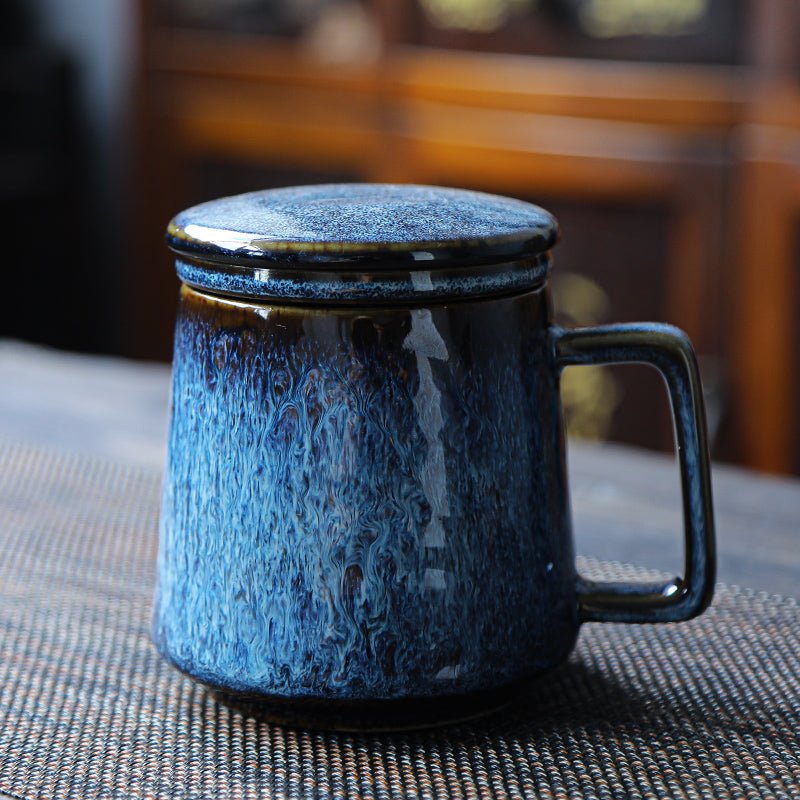
Coffee Mugs With Big Handles: Everyday Rotation Checklist
Reading time: about 11 minutes
The mug that fails you rarely fails in the product photo. It fails at 6:40 in the morning, when your hand goes around a loop that looked generous onscreen and finds that three fingers fit, the fourth does not, and your knuckles are parked against a wall of ceramic holding coffee hot enough to sting. That exact disappointment is what a coffee mugs with big handles everyday mug rotation practical purchase checklist is meant to head off — not by adding more adjectives to a listing, but by checking the few dimensions and daily habits that decide whether a mug earns shelf space for years. We pack and handle these mugs every week, and the pre-order questions we get are almost never about colour. They are about fingers, filled weight, and whether the thing will fit under the brewer.
Why does a “big handle” mug still pinch your knuckles?
“Big handle” is a photo caption, not a measurement. Two mugs can look identical in a styled shot and differ by a centimetre of interior clearance — which is the difference between a relaxed four-finger hold and a two-finger pinch that puts the entire load on your fingertips.
Ergonomic work on drinking vessels treats opening size and vessel mass as design variables rather than marketing language. A 2023 care-home cup study found that participants preferred cups that were light and generously handled, and the authors identified cup mass and handle orifice area as critical dimensions for people with reduced strength or dexterity. The same study, citing earlier hand-clearance work, put the minimum mean cross-sectional opening at roughly 650 mm² for two fingers to pass through and about 950 mm² for three.
Those numbers are your first filter. If a listing will not state the interior opening height and width of the loop, treat the handle as unverified and ask. We would rather answer a measurement question than take back a mug that never left the cupboard.
Thickness matters as much as the hole. A biomechanics study of people with rheumatoid arthritis using spoons found that larger handle diameters were associated with less finger-joint flexion than a slender standard handle, and most participants chose a 1.50-inch built-up handle over a 1.00-inch option. A thin ceramic loop concentrates the load into a narrow strip across your fingers; a rounder, thicker section spreads it out.
The third dimension is standoff — the gap between the inside of the handle and the hot wall of the mug. There is no industry standard for it, and it is rarely published. If the loop hugs the body, your fingertips end up on the hottest part of the vessel and you start curling your hand away from the ceramic without realising it. A top-down photo tells you more than a beauty shot ever will.
The filled-weight maths for 250 ml, 400 ml, and 480 ml
Coffee is mostly water, so a millilitre weighs about a gram. A 480 ml mug carries roughly 480 g of liquid — a little over a pound — before the ceramic is counted. A 400 ml pour is about 400 g. A 250 ml pour is about 250 g. Those figures matter because lifting effort depends less on the total mass than on how far that mass sits from your hand.
A loop that stands far out from the body increases what biomechanics researchers call the wrist moment: the filled mug behaves like a lever, and your forearm works harder to keep it level. This is the trade-off that never makes it onto a product page. A wide, airy handle that clears your knuckles beautifully can make a full 480 ml mug feel heavier than a tighter handle on a smaller cup. A bigger loop is not automatically an easier lift.
Empty weight is the number shoppers ask for most and listings show least. If wrist strain is your concern, request it before ordering and compare it against a mug you already own and trust. That single comparison is more useful than any comfort label.
Which of our three handle shapes fits how you actually drink?
We stock three profiles. The two facts we can state plainly are the listed capacity and the handle silhouette you can see in the photos. Interior clearance, empty weight, and appliance ratings are questions to confirm on the current listing or by asking us directly — so read each one as a starting point, not a specification sheet.
- Ball Handle, 250 ml — a compact pour for espressos, flat whites, and afternoon tea. The handle is a rounded ball form rather than a conventional vertical loop, so the grip changes: it tends to sit in the hand rather than being threaded with four fingers. At this capacity the liquid load stays modest, which suits a sculptural shape. If you want four fingers fully through a loop, ask us for the opening measurement first. See the Ball Handled Coffee Tea Mug.
- The Flow, 400 ml — the middle of the rotation, sized for a double latte or a generous pour-over. The handle is a flowing, contoured loop rather than an angular one, and the sweeping curve is what most people picture when they search for a wide handle mug for four fingers. Confirm clearance before you commit to it as your main desk mug. See The Flow Coffee Tea Mug.
- The Rock, 480 ml — the largest listed capacity we carry, aimed at long mornings and people who refill too often. Its handle is faceted and geometric, with flat contact planes instead of a smooth curve. That shape gives fingers something to brace against when the mug is close to full, which is useful at nearly half a litre of liquid. See The Rock Coffee Tea Mug.
If none of those silhouettes matches your grip, the wider unique coffee mugs collection shows the other handle forms we carry side by side, which is a faster comparison than opening six product pages in separate tabs.
The coffee mugs with big handles everyday mug rotation practical purchase checklist
Run any candidate mug through this before it becomes a daily habit. It takes about ten minutes with a ruler and your own kitchen.
| What to check | Where to find it | Why it decides the rotation |
|---|---|---|
| Interior opening area | Ask for loop height × width; aim for about 650 mm² for two fingers, 950 mm² for three | Separates a real four-finger handle from a two-finger pinch |
| Handle thickness | Photo, or ask for the cross-section | Thin loops dig in; thicker sections spread the load |
| Standoff from the wall | Top-down photo | Keeps knuckles off hot ceramic on a fresh pour |
| Listed capacity and filled mass | Product listing in ml; liquid ≈ 1 g per ml | A 480 ml mug carries over a pound of coffee before the ceramic |
| Height under the brew head | Your machine plus the listed mug height | Tall mugs often will not clear a single-serve spout |
| Dishwasher rack space | Count your top-rack prong gaps | Wide handles claim a slot and a half and crowd glasses |
| Shelf and hook width | Measure handle span plus body | Decides whether four mugs fit a shelf or two do |
| Glaze and trim | Listing description; ask if unstated | Metallic luster or foil rims are a microwave no |
- Measure your brewer clearance first. Distance from spout to drip tray, in millimetres. A mug you cannot brew into is a mug you will not use.
- Audit one dishwasher load. Watch how your current widest-handled mug sits among the prongs. Big loops need room; they also block water reaching the mug beside them.
- Name your grip style. All four fingers through the loop, or two in and the pinky cradling the base? The first wants a tall D-shaped or rectangular opening, the second tolerates a rounder curve.
- Look at the joint, not the loop. In product photos, check that the handle blends smoothly into the body without a thin waist. Abrupt, narrow joints are where stress concentrates on a heavy lift.
- Weigh the cup you love now. Fill it, weigh it, and use that as your ceiling when comparing capacity. It is the only benchmark calibrated to your own wrist.
Microwave, dishwasher, and glaze questions to settle before the first pour
Heat and washing are where a comfortable mug quietly stops being safe or stops looking new. Two published warnings are worth knowing.
The FDA notes that lead in glazes or decorations on some traditional pottery can leach into food and drink if the piece was not manufactured and fired properly, and that washing or boiling will not remove it. Factory-made commercial ware is described as far less likely to be a problem than handmade, antique, damaged, or uncertain-source pieces — and brightly orange, red, or yellow decorations are called out as a category to treat carefully. A seller's “lead free” line is a statement, not a test report; if food-contact safety drives your purchase, ask what backs it.
The U.S. Consumer Product Safety Commission recalled about 440,500 Starbucks-branded holiday gift-set mugs with a metallic coating on 21 March 2024, after 12 reported incidents and 10 injuries, including burns and one cut, when the mugs overheated or broke in the microwave or with very hot liquid. The general lesson holds beyond that recall: metallic rims, luster glazes, and foil decoration do not belong in a microwave.
For our own mugs, check the current listing or ask us before assuming microwave or dishwasher suitability — glaze and production details can change, and we will not state a rating a listing does not. Handle temperature is the other thing to test yourself: a short, thin loop transfers heat quickly from the body, while a longer, thicker one stays cooler in the hand.
When one oversized loop is the wrong answer
A single large C-loop is the best default for most people, but it is not universal. Be honest about the cases where it loses:
- Very small hands. A loop sized for a large palm can force a small hand to grip at an awkward span. Two smaller handles or a shorter loop usually wins.
- Tremor or one-sided weakness. A two-handled cup lets both hands share the load; a rotating or swivel handle lets you drink without repositioning your wrist. Neither is a feature of our ceramic range, so it is worth saying plainly: if that is your need, a specialised adaptive cup serves you better than a pretty stoneware mug.
- Commuting. Wide ceramic handles do not fit car cup holders, which are shaped for straight or tapered tumblers. Our mugs are desk and kitchen mugs; for the car, choose a travel mug with an elevated or detachable handle.
- Microwave reheating. If you rewarm coffee three times a day, a mug with any metallic trim is the wrong pick no matter how good the handle feels.
Frequently asked questions
How many fingers should a big-handle mug actually fit?
Aim for at least two fingers through the loop on a 250 ml cup and three to four on a 400 ml to 480 ml mug, with the thumb and little finger able to support the body. Published hand-clearance work puts the minimum opening at roughly 650 mm² for two fingers and 950 mm² for three, so ask for those numbers rather than trusting the word “large”.
Does the coffee mugs with big handles everyday mug rotation practical purchase checklist change for smaller hands?
Yes — the clearance targets stay the same, but the upper limit matters more. An opening sized for a big palm can leave a smaller hand gripping at a wide, tiring span, so favour a shorter loop and a lighter filled weight over the largest available hole.
Will a 480 ml mug fit under my single-serve coffee maker?
Not always, and capacity tells you nothing about height. Measure the gap between the brew spout and the drip tray, then compare it with the mug's listed height plus a little clearance. If the number is not published, ask before ordering — brewing into a tilted mug is how countertop spills happen.
Is a heavier mug with a bigger handle better for arthritic hands?
Usually not. The care-home cup research points toward lower-mass cups with an opening large enough for at least two fingers, so the hand can hold without a tight pinch. A generous loop on a very heavy, high-capacity mug can be harder to lift than a smaller cup with a well-shaped handle.
Do wide handles survive the dishwasher?
Wide loops survive fine in most racks, but they take up more room and can block water from reaching neighbouring items. Check the listing for the maker's dishwasher guidance, load the mug so the handle is not wedged against a prong, and keep metallic-trimmed pieces out of both the dishwasher and the microwave.
Pick your rotation before the next coffee goes cold
Tonight, take the mug you reach for most and measure three things: the interior gap of the handle, the height under your brewer, and the filled weight on a kitchen scale. Those three numbers turn a vague preference into a filter you can apply to any listing. Then browse the unique coffee mugs collection with those figures beside you, and choose the handle shape that matches your grip rather than the one that photographs best.
More from our blog
Ready to pick your mug? Two ways to save on today's order:
Ordering 1–3 mugs? Get an extra 10% off your 1st order with code 10_OFF Apply 10% Off & Shop Wooden-Handle Mugs →
Gifting 4+ mugs? Buy 3, Get the 4th Free applies automatically at checkout (no code needed; offers do not stack) · Free standard shipping (Nov pre-Christmas delivery: 15–20 calendar days US) · Free replacement if chipped in transit.
Popular mug buying guides: Ceramic Tea Cups & Infuser Mugs · Ceramic Mugs with Lids Compared · Wooden-Handle Tea Infuser Mugs Compared · Christmas & Secret Santa Mugs 2026 · Espresso & Cortado Cups Guide · Cup & Saucer Gift Sets · All 25 Mugs Spec Table · Mug Size Guide · Shipping & Promo FAQ
FIRST ORDER 10% OFF (CODE: 10_OFF) · OR BUY 3, GET THE 4TH FREE


Read more
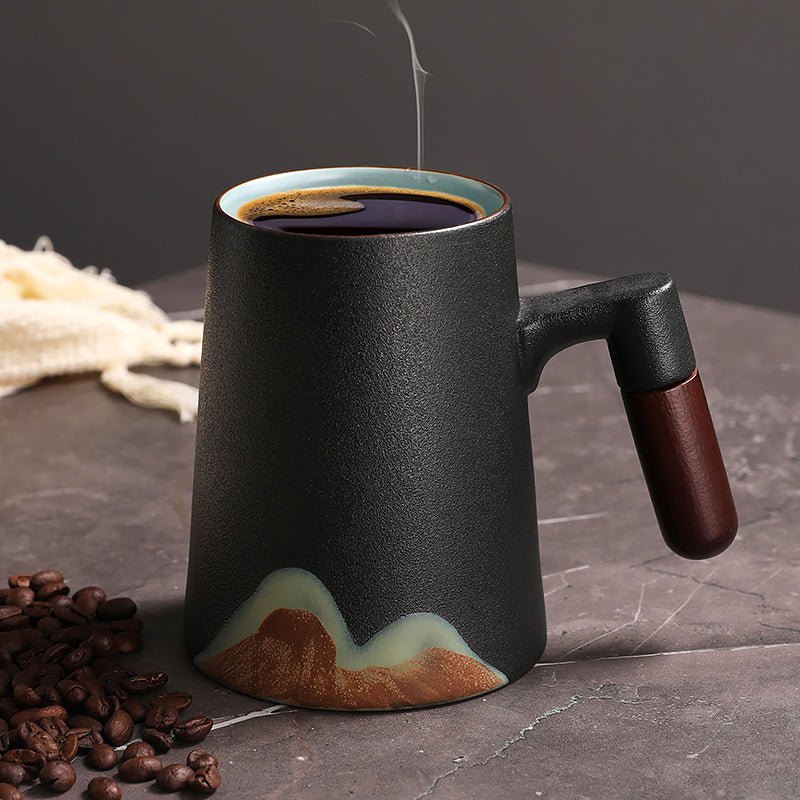
Latte Mugs Tall: Home Coffee Station Product Shortlist Guide
A scenario-based shortlist for tall latte mugs on a home coffee station: how to measure clearance, match 400 ml, 440 ml and 480 ml to the drink you actually make, and which option to skip.
Read more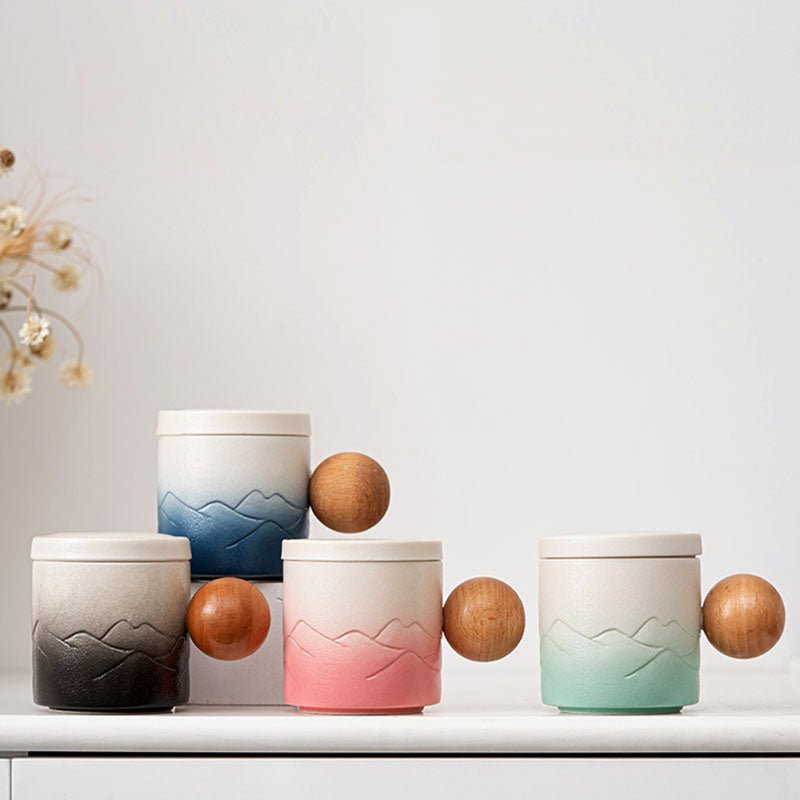
Wide Based Coffee Mugs Home Coffee Station Product Shortlist Guide
A scenario-based shortlist for wide based coffee mugs on a home coffee station: which listed capacity suits which counter, brewer clearance, and shelf, plus the four measurements that settle the de...
Read more
Leave a comment
This site is protected by hCaptcha and the hCaptcha Privacy Policy and Terms of Service apply.