
Art Coffee Mugs Everyday Mug Rotation Practical Purchase Checklist
Reading time: about 9 minutes
A cabinet shelf can make a beautiful mug impractical in one morning. The handle catches the cup beside it, the rim barely clears the shelf opening, or your normal coffee pour leaves no room for milk. This art coffee mugs everyday mug rotation practical purchase checklist starts with those ordinary friction points because they determine which mugs get used and which drift to the back of the cabinet.
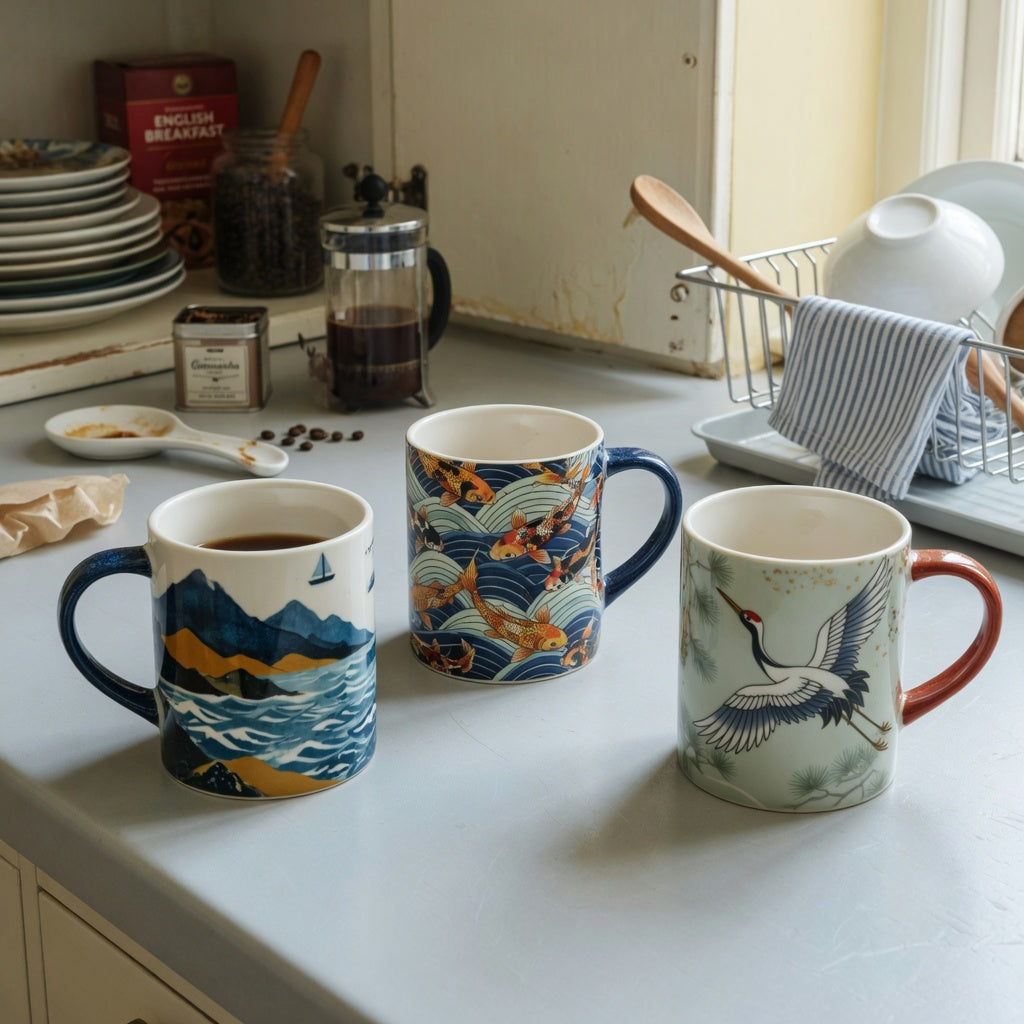
We sell art-motif mugs, and our store separates what the current product listings show from what an online shopper still needs to verify. For the products discussed here, we can compare visible mountain-and-sea, koi fish, and crane imagery along with the shape, material, and capacity stated on each listing. We do not assign an artist, art movement, edition status, production method, provenance, or institutional connection. Photos also cannot fully establish filled balance, grip comfort, cabinet fit when dimensions are absent, or appliance compatibility unless the listing states it.
How many mugs does your wash-and-storage routine support?
Start with frequency of use, not the number of designs that catch your eye. A one-person kitchen where the same mug is rinsed after morning coffee and reused for afternoon tea has different needs from a shared office where each person wants an identifiable cup.
- Count drink occasions between washes. Include the mugs that remain on desks, beside the sink, or in the dishwasher overnight.
- Count active users. A shared household may need visually distinct mugs even if everyone drinks the same beverage.
- Decide whether you reuse or switch. Reusing one rinsed mug may call for one active mug and one backup. Using a fresh mug for every pour requires more cabinet and drying-rack space.
- Set a storage limit. Choose the number that fits without turning handles sideways or hiding one mug behind another.
A three-mug rotation can cover morning coffee, desk use, and evening tea, but three is not a universal target. Two well-fitted mugs are more practical than a larger set that exceeds your wash schedule or shelf width.
Which visible art motif fits each part of your routine?
Art preference is personal, so we map each design to a shopper situation rather than declaring one motif better. The useful question is where you will see the mug most often and what imagery you already enjoy living with.
| Reader situation | Why the motif may fit | Relevant next step | Verify on the listing |
|---|---|---|---|
| Morning coffee on a busy kitchen counter, with a preference for landscape subjects | Mountain-and-sea imagery gives the mug a clear visual identity without requiring matching tableware. | Review the Mountain Sea Coffee Tea Mug. | Current shape, listed material, listed capacity, and care information |
| Shared office or household where a distinct cup is easier to identify | The repeating fish imagery is visually different from plain cups and from the other motifs in this group. | Compare the Koi Fish Coffee Tea Mug. | Handle profile, listed capacity, material, and available care statements |
| Evening tea or a gift for someone who already likes bird imagery | The crane subject offers a more open visual direction than the repeating koi pattern. | Inspect The Crane Coffee Tea Mug. | Visible form, material description, capacity, and gift-relevant details shown on the page |
Use the motif as a style lens, not as evidence of authorship or cultural provenance. If you are undecided among subjects, the unique coffee mugs collection lets you compare the current forms and imagery in one place before narrowing the practical variables.
What do listed material and capacity tell you?
Read the material wording exactly as it appears on the current product page. A glossy surface in a photograph is not enough to identify ceramic, porcelain, stoneware, or another material. If a listing says ceramic, ceramic is the supported description; it should not be silently upgraded to porcelain or stoneware based on appearance.
Material also does not automatically answer the care questions. Microwave suitability, dishwasher suitability, and tolerance for repeated appliance use should each be confirmed from the listing or care instructions. A product described as a coffee and tea mug is not automatically approved for every heating or washing method.
Capacity deserves the same restraint. Measure your usual drink with a kitchen measuring cup rather than estimating from your current mug. If your normal pour is 10 fluid ounces before adding milk, compare that amount with the listed capacity and leave practical headroom. Unless the page explains its measuring method, do not assume a capacity figure represents the comfortable fill line rather than volume near the brim.
Iced coffee creates another constraint because ice takes up space. A capacity that works for hot coffee may produce a much smaller drink once ice and milk are added. Shoppers who need a large iced serving, a sealed lid, or insulation should compare a purpose-built tumbler instead of assuming an open coffee-and-tea mug will fill that role.
Will the shape and handle clear your cabinet, rack, and desk?
Online photos can show general form, but they do not replace measurements. Before ordering a multi-mug rotation, measure the cabinet opening rather than only the distance between shelves. Shelf lips, hinges, and door frames can reduce usable clearance.
- Height: Measure from the shelf surface to the lowest obstruction at the cabinet opening.
- Width: Count the mug at its widest point, including the handle, not just the body diameter.
- Depth: Confirm that the mug can sit fully on the shelf without blocking the cabinet door.
- Drying-rack fit: Consider the base, rim, and handle position. An awkward fit on the rack often leads to a mug remaining beside the sink.
- Desk footprint: Leave a stable area away from a keyboard, notebook edge, or frequently moved work materials.
Do not assume a mug is stackable unless the listing states it or the product imagery clearly demonstrates it. A tapered body may appear nestable while the handle or rim prevents practical stacking. Handle comfort and balance when filled are also difficult to prove from photos, so shoppers with strict grip requirements should favor familiar handle forms and review the store policy before ordering.
What should you inspect at unboxing and during care?
At our store, we recommend checking functional contact points before focusing on how the mug looks on a shelf. Place the unpacked mug on a flat counter, rotate it under good light, and inspect it before the first hot drink or before wrapping it as a gift.
- Check the rim for chips or rough damage that could contact the mouth.
- Look at both handle attachment points for hairline cracks or transit damage.
- Set the mug on a flat surface and check for unexpected rocking.
- Feel the foot ring for a rough area that could mark a table or desk.
- Compare the decorated surface with the product imagery and description for damage that was not shown or disclosed.
Not every visible variation is automatically a defect; the current listing should guide that judgment. Damage at the rim, base, or handle deserves more attention because those areas affect normal use.
For routine care, follow the instructions supplied with the product. A prompt rinse reduces the need to scrub dried coffee or tea residue, and a soft, non-abrasive sponge is a sensible choice for decorated surfaces. Let the mug dry fully before returning it to a crowded cabinet. If dishwasher or microwave use is not stated, treat it as unknown rather than assuming permission. A dishwasher-safe statement allows that care method, but it is not an unlimited-lifespan guarantee for any mug or decoration.
Use this art coffee mugs everyday mug rotation practical purchase checklist before checkout
Run each candidate through the same screen so the artwork does not distract from a missing practical detail:
- Routine: Name the exact use slot, such as morning coffee, afternoon tea, shared desk, guest service, or gifting.
- Frequency: Count how many mugs you need between hand washing or dishwasher cycles.
- Motif: Choose imagery you want to see repeatedly, not a design that works only in a styled product photo.
- Material: Record the material exactly as listed and avoid inferring a more specific category.
- Capacity: Compare the listed figure with a measured real-world pour, including milk or displaced space from ice.
- Storage: Check cabinet opening height, shelf depth, total width, and handle clearance.
- Handling: Use the visible handle profile as a guide while acknowledging that filled comfort and balance remain difficult to confirm online.
- Care: Verify dishwasher and microwave wording separately, then follow the supplied instructions.
- Unknowns: Pause if an absent dimension, care statement, or capacity detail is essential to your routine.
Decision rule: Buy when the motif gives you a reason to reach for the mug and the supported product details fit your routine. Treat missing information as unknown, not as a favorable assumption.
When is an art mug the wrong tool for the routine?
An art coffee mug is not the best choice for every drink. Choose a sealed, insulated travel mug for commuting; a product with a larger listed capacity for ice-heavy drinks; or a clearly stackable set where cabinet density is the main concern. Plain mugs may also suit a formal table or highly coordinated kitchen better if visual neutrality matters more than an individual motif.
Gift buyers should be equally selective. The Mountain Sea, Koi Fish, and Crane designs make sense when the recipient already enjoys the relevant landscape, fish, or bird imagery. If you do not know that preference, a simpler mug or a broader comparison from the collection is the lower-risk choice.
Frequently asked questions
Does the art coffee mugs everyday mug rotation practical purchase checklist start with cabinet size or artwork?
Start with cabinet space, normal pour size, and wash frequency. Those variables establish what can work before the motif becomes the deciding factor. Once the practical limits are clear, choose the art you will enjoy seeing during the assigned drink or time of day.
Are the Mountain Sea, Koi Fish, and Crane mugs the same material and capacity?
Do not assume they match. Check each current product listing for its stated material, capacity, shape, and care details before building a set. Similar product names or related imagery do not prove identical specifications.
Can I use an art coffee mug for iced coffee?
Yes, if the listed capacity accommodates your beverage after ice is added and the care information fits your routine. Ice displaces liquid, so measure a normal iced serving before choosing. Do not assume a standard coffee-and-tea mug includes travel insulation or a sealed lid.
How many art coffee mugs should I keep in an everyday rotation?
Base the number on users and mugs consumed between washes. One person who rinses and reuses a mug may need one active mug plus a backup, while a shared household may need a distinct mug for each person. Stop adding pieces when handles begin colliding or mugs become difficult to reach.
Are art coffee mugs automatically dishwasher and microwave safe?
No. Material, dishwasher suitability, and microwave suitability are separate product details. Confirm each one on the current listing or supplied care instructions, and treat an unstated feature as unknown.
Measure your cabinet opening, record your actual coffee or tea pour, and choose one use slot for each mug. Then compare the visible motifs and current listing details in the CoffeifyMug unique mug collection before adding a piece to your everyday rotation.
More from our blog
Read more
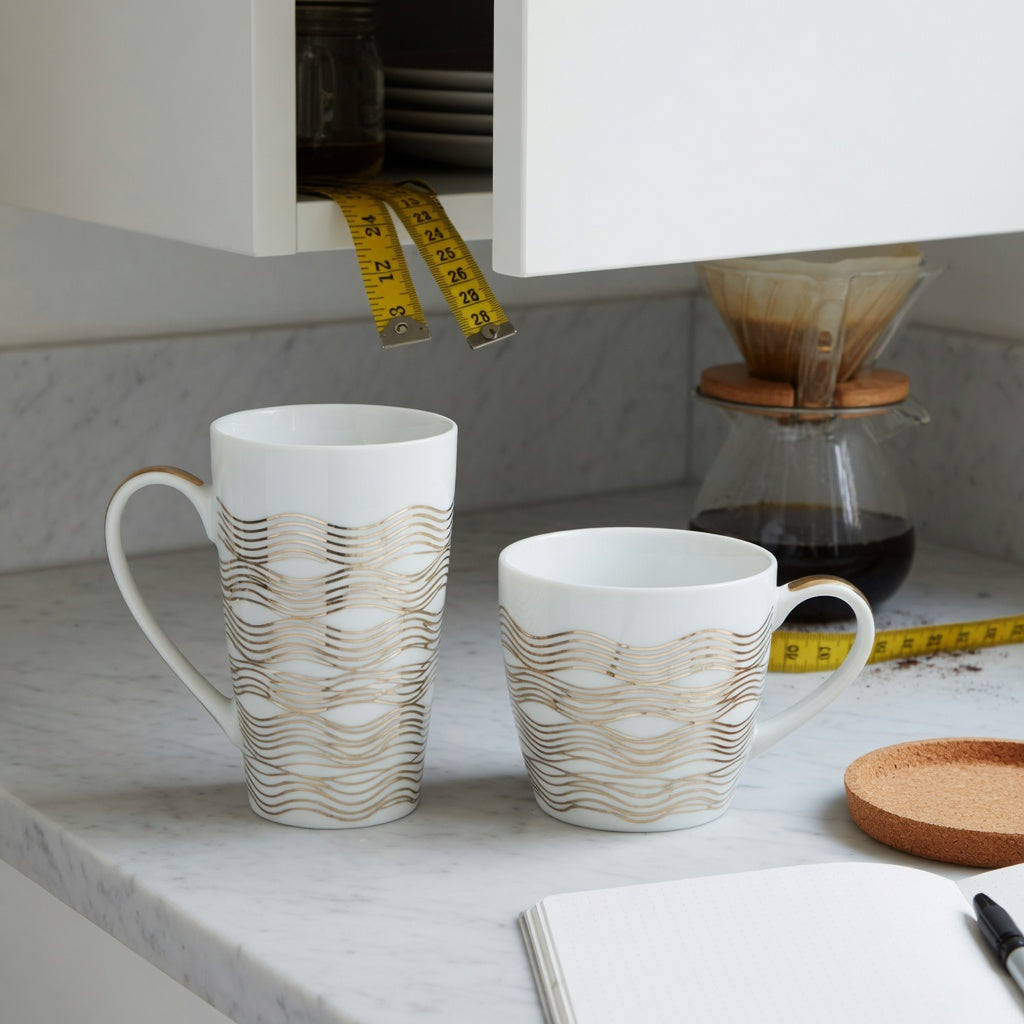
White and Gold Coffee Mug: Everyday Rotation Purchase Checklist
Compare the Tall and Kio wave forms using your measured serving, cabinet opening, brewer clearance, handle fit, and verified care details. The checklist also identifies cases where a different mug ...
Read more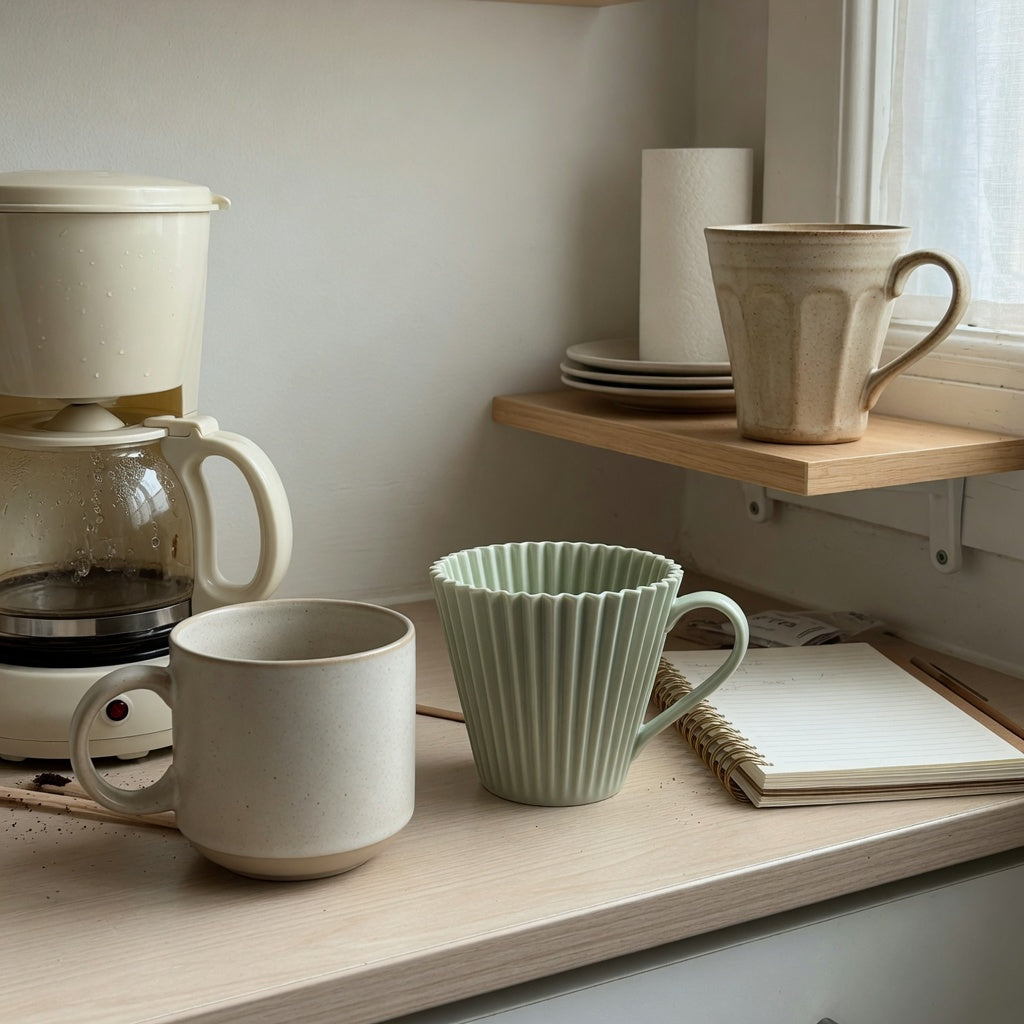
Minimalist Ceramic Mug Everyday Mug Rotation Product Shortlist Guide
Compare three ceramic mug forms by daily role, shelf space, listed capacity, and handle style. Each option includes a clear reason to choose it, a reason to skip it, and a practical product next step.
Read more
Leave a comment
This site is protected by hCaptcha and the hCaptcha Privacy Policy and Terms of Service apply.