



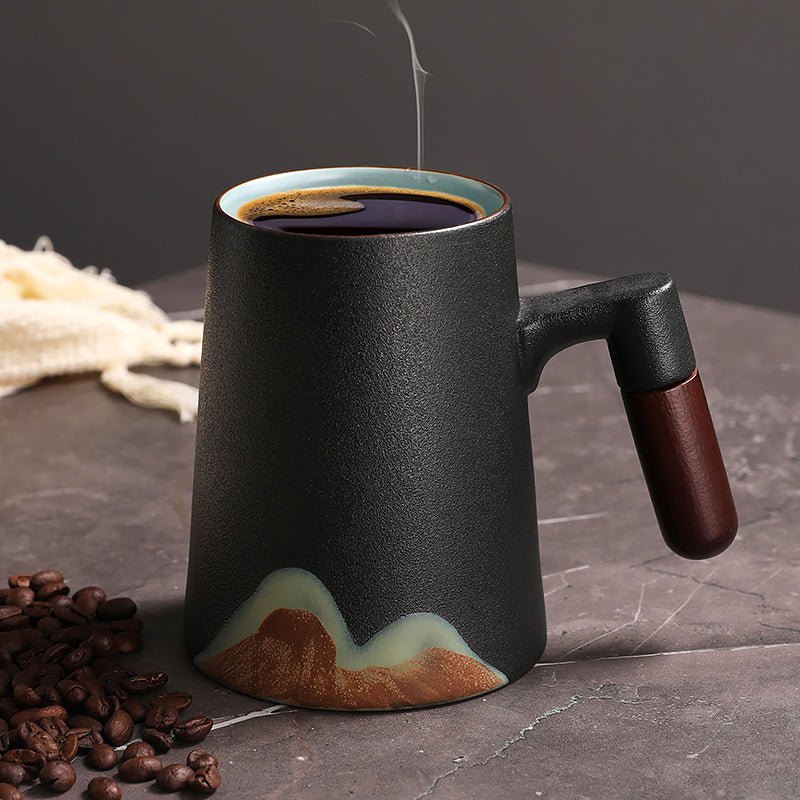
Latte Mugs Tall: Home Coffee Station Product Shortlist Guide
Reading time: about 10 minutes
A 400 ml mug looks generous in a product photo. On the counter, with the portafilter locked in and the group head sitting low, it can be the one vessel in the cupboard that will not slide underneath. The reverse happens too: you pull a double, steam a small pitcher, and the latte spreads thin across a rim so wide the foam never builds. Both problems start with the same mistake — shortlisting on ounces alone. That is why this is a latte mugs tall home coffee station product shortlist guide rather than another broad buying manual: three capacities, the measurements that actually decide fit, and a straight reason to skip each option.
Why two mugs both sold as tall can differ by half a cup
Tall is a shape word, not a size. Two mugs can both be described as tall and still be separated by 200 ml or more, because the seller is describing a silhouette — a higher wall relative to the rim — and not a standard anyone enforces.
The conversions worth keeping in your head, using NIST's approximate factor of 29.57 ml per US fluid ounce:
- 8 fl oz is roughly 237 ml
- 12 fl oz is roughly 355 ml
- 16 fl oz is roughly 473 ml
For context, the FDA's ceramic hollowware guidance describes a cup or mug as a handled vessel that normally, though not exclusively, holds about 240 ml (8 fl oz), with a mug having cylindrical sides and a cup having a base and curved sides. That is a regulatory category used for lead-leaching rules. It is not a ruling that a latte belongs in 8 oz. Tall latte mugs on the market run from roughly 10 to 17 fl oz, and the conical photo-gift style sits at the top of that range.
Then there is the gap between brim capacity and usable fill. A mug measured to the very top has no room for foam, and steamed milk expands as it aerates. When a listing quotes one number and no fill line, assume the comfortable pour sits meaningfully below the rim and plan around that.
Which measurements decide fit before capacity even matters?
Four numbers settle whether a mug works at your station. Capacity is the fifth.
| Measurement | Why it decides fit | How to check it |
|---|---|---|
| Height, rim to base | Group head and spout clearance; upper cabinet and shelf height | Measure from the drip tray to the lowest point of the group head with the portafilter locked in, then from counter to the underside of the cabinet |
| Rim diameter | Sipping comfort, latte art surface, how quickly the drink loses heat at the top | Compare against a mug you already drink from daily |
| Base diameter | Stability on the drip tray, car cup-holder fit, warming tray contact | Check the cup holder and the footprint of your machine's tray |
| Handle span | Knuckle clearance against the machine body or a side wall | Matters most when the station is pushed into a corner |
| Weight empty and full | One-handed carry from counter to desk | Full weight is the number that matters; 480 ml of milk is heavy |
Machine clearance is model-specific, so no guide can promise a mug will fit under your spout. Measure the gap yourself, with the portafilter in place if you use one. If the answer is tight, a shorter, wider cup is the smarter purchase — height is the one spec you cannot work around.
Latte mugs tall home coffee station product shortlist guide: three setups, three picks
Our range is short on purpose. Three vessels, three listed capacities, and the real difference between them is how much milk you steam. All three sit in the same place in the store: the unique coffee mugs collection. Here is how we split them when a customer asks.
A tight counter and a 10 to 12 oz latte: The Flow, 400 ml
The situation: one espresso, a small pitcher, a machine on a narrow counter, and a drink that has to clear an upper cabinet.
Why it fits: 400 ml is about 13.5 fl oz at the brim, which leaves working headroom for a 10 to 12 oz latte without foam cresting the edge. It is the smallest listed capacity of the three, so if volume rather than height is your constraint, start here.
Skip it if: you routinely pour 16 oz drinks or build iced lattes. Ice displaces volume, and a 400 ml vessel with ice, espresso and milk gets crowded fast.
Next step: open The Flow 400 ml and check its listed height and rim diameter against the gap you measured. Those two figures decide the purchase, and they belong on the listing, not in a guide.
Two people, two drink sizes: Morning and Night, 440 ml
The situation: a shared station where one person wants a modest latte and the other wants a bigger one, and you would rather not rotate four mugs through the dishwasher.
Why it fits: 440 ml is about 14.9 fl oz. A 12 oz latte has comfortable headroom and a 14 oz pour still works, so one mug covers both habits.
Skip it if: you want the biggest mug in the range outright, or the smallest. This is the compromise pick, not the maximum.
Next step: see Morning and Night 440 ml and compare its profile with the other two listings side by side.
Large pours and iced drinks: The Rock, 480 ml
The situation: 16 oz lattes, cold brew over ice, or a long morning drink you carry to a desk.
Why it fits: 480 ml is roughly 16.2 fl oz, so a full 16 oz build plus a little breathing room fits inside the wall.
Skip it if: machine clearance is tight or your upper cabinets are low. Of the three, the largest listed capacity is the one most likely to run out of headroom under a spout, and no amount of good finishing fixes a mug that will not sit on the drip tray.
Next step: check The Rock 480 ml and confirm the height first, before anything else on the page.
One caution across all three: we state the listed capacity plainly, but silhouette differs across the range, and height, rim and base measurements are the details worth confirming on the live listing before you order. If a figure is missing, ask us. A quick message beats a return.
Where does the pour actually go wrong: fill line, foam and pitcher size
Overflow is usually a pitcher problem, not a mug problem. Milk expands as it is steamed, so a pitcher filled too high foams over before it ever reaches the cup. Barista guidance from La Marzocco and elsewhere ties pitcher size to drink size for exactly that reason: match the pitcher to the volume of milk you need, not to the largest one in the drawer.
A sequence that works on a home station:
- Pull the shot into the mug first, so you can see how much room is left.
- Steam slightly more milk than the drink needs, then stop pouring at your chosen fill line.
- Leave about a centimetre of headroom so the foam settles into the rim rather than over it.
Preheat the mug with hot water while the machine comes up to temperature. It is the cheapest improvement to drink temperature available and it costs nothing. In our experience it is also the step most people skip on a workday morning, right before they wonder why the last third of the drink went cold.
Tall and narrow, or short and wide? The latte art trade-off
Tall vessels show layers — espresso at the bottom, milk through the middle, foam on top — and that is a genuine visual advantage for a gift or a photo. Wide, shallower cups make latte art easier, because the pitcher spout can come close to the surface and the milk lands on a broader canvas.
You can pour art into a tall mug. It is just less forgiving: the drop from spout to surface is longer and the surface area is smaller. If art matters more than height, buy a wider cup. If the layered look matters more, accept that your rosetta will come out tighter. Our notes on comparing tall coffee mugs at 350 ml go deeper on how wall thickness and glaze interact with height, and the mug size guide is the fastest place to check a capacity against your usual drink.
Care and food-contact claims worth checking before checkout
Care claims are product-specific, and we would rather you verify than assume. Here is what the standards actually say, and where a listing has to speak for itself.
- Microwave: the USDA says only cookware manufactured for microwave use should go in, and that microwave-safe glass and ceramic are usually labeled as such. China with metallic paint or trim is listed as not safe. For an unlabeled piece, the USDA test is to heat it for one minute beside a cup of water — if the vessel itself gets hot, it is not microwave safe.
- Dishwasher: read this on the listing rather than assuming it. Printed decoration and metallic trim are the usual weak points, and a claim made for one mug in a range does not automatically cover another.
- Lead and food contact: the FDA's action level for leachable lead in cups and mugs is 0.5 micrograms per millilitre in any one of six units tested. The agency flags extra caution for handmade or crude pottery, antiques, damaged or worn pieces, unknown makers, and brightly colored orange, red or yellow decoration. Everyday commercial factory pottery is described as much less likely to have lead problems — but a piece marked not for food use is not a drinking vessel, whatever it looks like.
A ten-minute shortlist checklist
- Measure the gap from drip tray to group head or spout, with the portafilter in place.
- Measure counter to the underside of the cabinet.
- Write down your usual drink volume in millilitres, then add headroom for foam.
- Check rim diameter against a mug you already like drinking from.
- Check base diameter against your cup holder and drip tray.
- Confirm the care claims on the listing: microwave, dishwasher, food contact.
- Pick one capacity, not three. A shortlist that ends with three mugs has not ended.
If your measurements point to 400 to 480 ml, start with the unique coffee mugs collection and open the listing that matches your drink size. If clearance rather than volume is the constraint, go shorter and wider instead. That is a better outcome than buying the tallest mug and storing it in a cupboard.
Frequently asked questions
Will a 480 ml tall latte mug fit under my espresso machine?
That depends on your machine, not the mug. Measure from the drip tray to the lowest point of the group head with the portafilter locked in, then compare that figure to the listed height. If the gap is close to the mug's height, choose a shorter vessel rather than gambling on it.
How many ounces should a tall latte mug hold?
For a 10 to 12 oz latte, a mug in the 400 to 440 ml range leaves usable headroom for foam. For a 16 oz build, look at 480 ml. Brim capacity is not the same as the amount you can comfortably pour, so budget about a centimetre of headroom on top of your drink volume.
What should a latte mugs tall home coffee station product shortlist guide include?
Clearance and fill lines, not glaze trends. Height, rim and base measurements matter more than an ounce count, because a mug that will not sit under your spout is unusable at any capacity. It should also tell you which option to skip, which most shortlists avoid.
Can I use these mugs for tea or iced coffee?
Capacity-wise, yes. A 480 ml vessel handles a long iced drink with ice, and a 400 ml one suits a standard tea serving. Confirm the microwave and dishwasher claims on the specific listing first, and think about whether the rim shape suits how you drink.
Do taller mugs keep coffee hotter?
Not automatically. A taller, narrower vessel exposes less surface area, which helps, but preheating the mug and the ratio of milk to coffee matter more. A wide rim loses heat at the surface noticeably faster.
More from our blog
Ready to pick your mug? Two ways to save on today's order:
Ordering 1–3 mugs? Get an extra 10% off your 1st order with code 10_OFF Apply 10% Off & Shop Wooden-Handle Mugs →
Gifting 4+ mugs? Buy 3, Get the 4th Free applies automatically at checkout (no code needed; offers do not stack) · Free standard shipping (Nov pre-Christmas delivery: 15–20 calendar days US) · Free replacement if chipped in transit.
Popular mug buying guides: Ceramic Tea Cups & Infuser Mugs · Ceramic Mugs with Lids Compared · Wooden-Handle Tea Infuser Mugs Compared · Christmas & Secret Santa Mugs 2026 · Espresso & Cortado Cups Guide · Cup & Saucer Gift Sets · All 25 Mugs Spec Table · Mug Size Guide · Shipping & Promo FAQ
FIRST ORDER 10% OFF (CODE: 10_OFF) · OR BUY 3, GET THE 4TH FREE


Read more
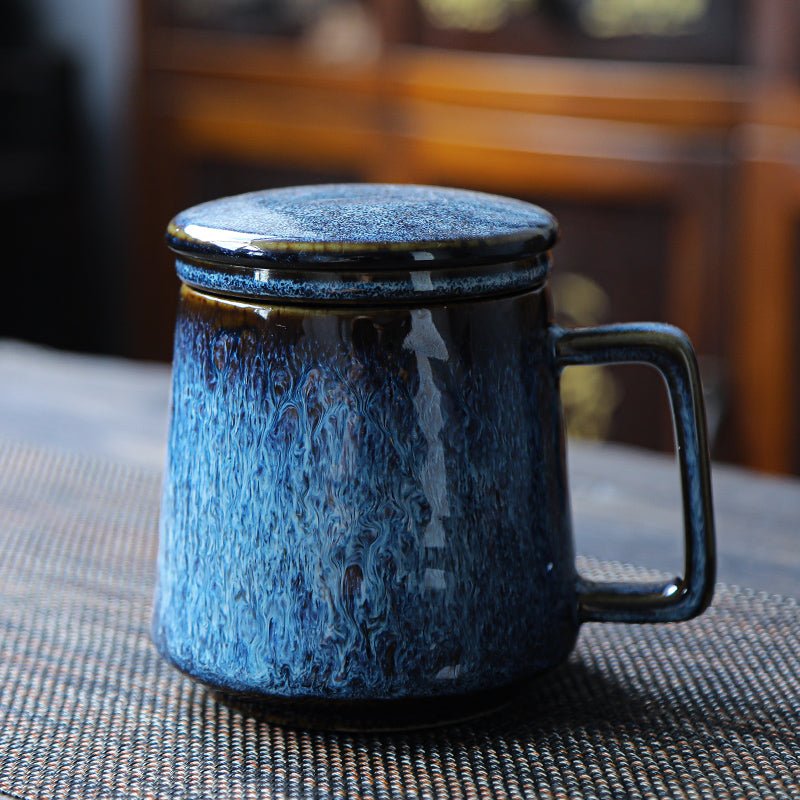
Coffee Mugs With Big Handles Home Coffee Station Product Shortlist Guide
A shortlist built around the handle opening rather than the ounce count. We walk through the 250 ml Ball Handle, 400 ml Flow and 480 ml Rock by real morning scenario, with explicit reasons to choos...
Read more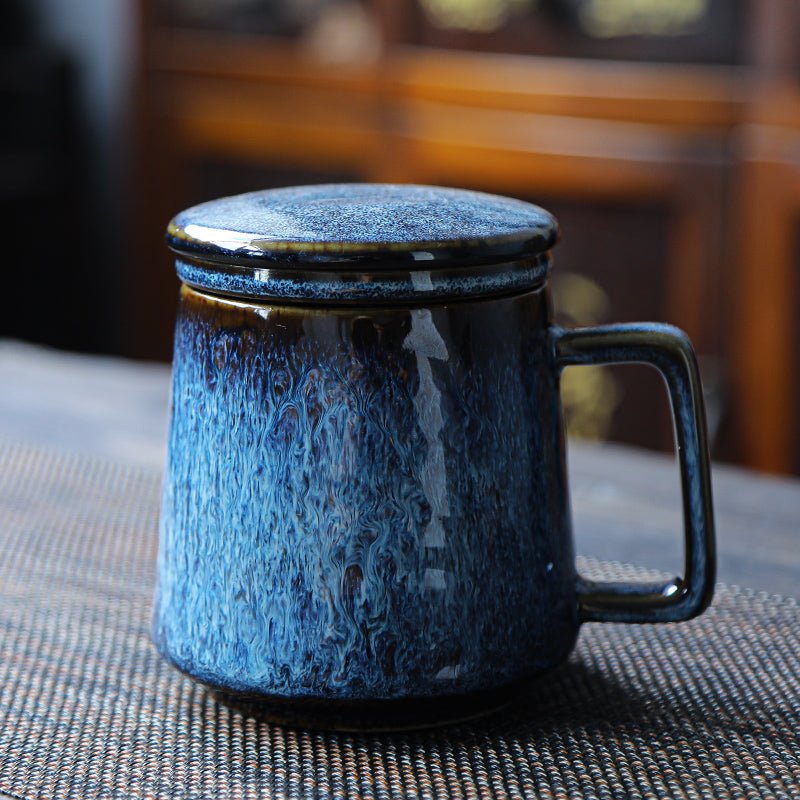
Coffee Mugs With Big Handles: Everyday Rotation Checklist
A working checklist for choosing coffee mugs with big handles you will actually keep in rotation: how to judge finger clearance, why a 480 ml mug feels heavier than it looks, and what to verify bef...
Read more
Leave a comment
This site is protected by hCaptcha and the hCaptcha Privacy Policy and Terms of Service apply.