



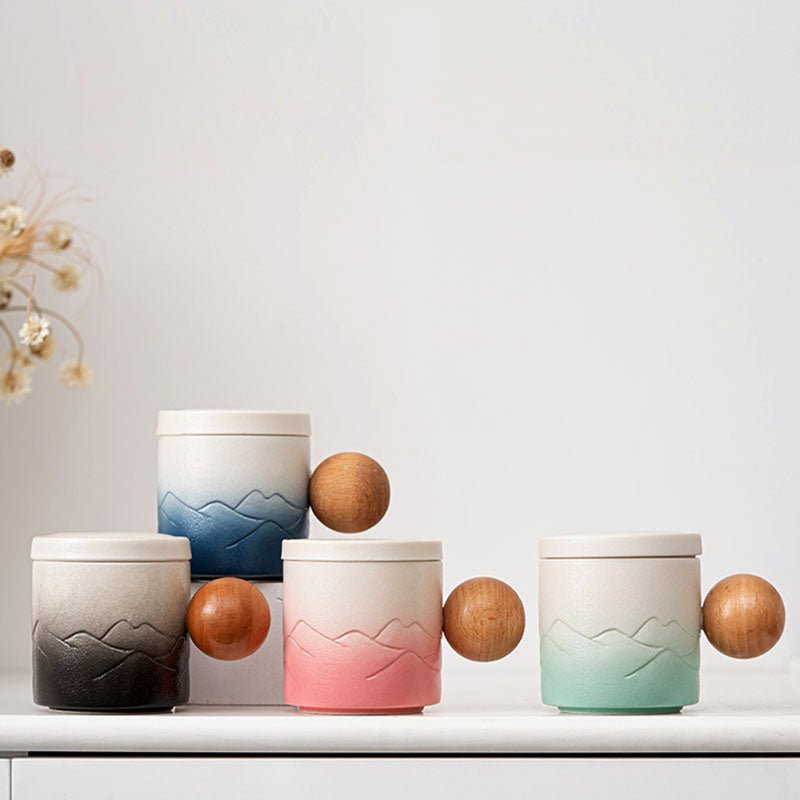
Wide Based Coffee Mugs Home Coffee Station Product Shortlist Guide
Reading time: about 11 minutes
Three mugs sit on the same counter. One gets clipped by a sleeve every morning. One clears the brewer spout but overhangs the coaster, so it gets shifted every time someone wipes the surface. The third feels planted until it is two-thirds full and somebody lifts it by the handle from the side. This wide based coffee mugs home coffee station product shortlist guide starts exactly there, because the mug that survives a real counter is rarely the one that looked best in a product photo.
Here is the part most listings skip: there is no agreed minimum diameter for the phrase wide base, and no public benchmark that measures how far a commercial mug tips before it falls against its base diameter, height, and fill level. Tip-proof is a marketing word. Geometry, listed capacity, and fit against your own setup are the things you can actually check.
We sell three mugs at three capacities, and the conversation we have with customers is almost never about which one is best. It is about what job the mug has to do, what it has to sit under, and what it has to sit next to.
Wide foot, wide mouth, tall body: three shapes that get confused
A mug stays upright while its center of gravity sits inside its base of support — the footprint traced by the foot ring. Widen the foot and you widen that footprint. That is plain physics, and it is why a broad-footed mug feels steadier on an uneven surface.
Then the other variables arrive.
- Height raises the center of gravity. A tall mug with the same footprint as a short one is easier to push past its tipping edge, because more mass sits higher above the counter.
- Fill level moves it again. An empty mug and a full mug do not behave the same way, and a mug that feels settled on a shelf can feel different at ninety percent full.
- Handle mass is off-axis. Weight and grip on one side create a lever. A heavy handle on a light body is a worse combination than the base diameter suggests.
- A rocking foot cancels a wide foot. If the foot ring has a high point, the mug pivots on it and the extra diameter buys nothing. Set any mug on a flat surface and press alternate edges before you trust it.
Keep the two wide features apart, too. A wide foot is about stability. A wide mouth is about sipping, aroma, and whether a dripper or AeroPress will sit on top. A stable mug can have a narrow rim, and a wide rim can perch on a small foot. Shoppers blend the two constantly, and it is the fastest route to buying the wrong mug.
Four measurements that decide the shortlist before you open a product page
Do this once, with a tape measure and a measuring jug, and the rest of the decision gets much shorter.
- Your usual pour, in milliliters. Fill the mug you reach for today, then pour it into a jug. Most people guess wrong by a third in one direction or the other.
- Brewer clearance. Measure from the drip tray or counter up to the lowest point of the spout or brew head. For pour-over or AeroPress, the opening is the constraint rather than the height — measure the dripper base or the press diameter, not the mug foot.
- Coaster and shelf footprint. Trace your coaster on paper and lay the mug base over it. A mug that overhangs a coaster gets moved, and a moved mug is a spilled mug.
- Cup holder width at its narrowest point. Holders taper. Measure the bottom of the well, not the rim, and measure the holder rather than a travel mug you already own.
Add one grip check: how many fingers fit through the handle opening, and where your knuckle lands against the body. In our store, the most common reason a mug comes back is not the base at all — it is a handle that looked generous in a photo and turned out to be a two-finger squeeze once the mug was full.
Wide based coffee mugs home coffee station product shortlist guide: 250, 400, or 480 ml?
Listed capacity is the one hard number we can give you with confidence for each mug. Base geometry you judge yourself from the product photos, held against the four measurements above. Sort by capacity first, footprint second — the two do not scale together automatically. All three live in our unique coffee mugs collection if you want to compare the shapes side by side.
| Mug | Listed capacity | Job it suits on a coffee station | Reasonable reason to skip |
|---|---|---|---|
| Ball Handle | 250 ml | Short pours, espresso-length drinks, shallow shelves, tight landing zones | Your measured pour is a full 10–12 oz cup |
| The Flow | 400 ml | Everyday drip or immersion cup, one mug that covers most mornings | You already own a 12 oz mug you like |
| The Rock | 480 ml | Desk sessions, long calls, one fill instead of two | Small coaster, tight cabinet, or short brew-head clearance |
Ball Handle 250 ml — pick it when the counter is the constraint
Small enough to sit on a shallow shelf and under a low brew head, and that is its whole argument. If your station is the end of a rental kitchen counter, if your morning cup is a short one you drink standing up, or if you take tea in small refills rather than one long mug, 250 ml keeps the landing zone clear.
Skip it if your measured pour lands near 350 ml. You will pour twice, and no base width compensates for the extra trips. Skip it as well if you want to wrap both hands around a warm mug on a cold morning — 250 ml does not offer much body to hold.
The Flow 400 ml — pick it when you want one mug to cover most mornings
400 ml sits in the range most drip machines and immersion brewers are built around, and this is the mug we hand people who say they just want a normal cup that does not wobble. Middle capacity, middle footprint, easiest to live with when no measurement is pulling you strongly in either direction.
Skip it if you already own a 12 oz mug you like. 400 ml and 12 oz overlap closely, and you would be duplicating rather than adding. Skip it too if you have measured a tight gap between counter and brew head — check the listed height, not the capacity.
The Rock 480 ml — pick it when the mug lives at the desk
The desk mug. If the mug's whole day happens beside a keyboard and the coffee has to last through a call, 480 ml buys time between refills. Bigger fills also mean a heavier lift near the end, and no base width changes that.
Skip it if any of these are true: your cabinet gap is tight, your coaster is small, the clearance under your brew head is short, or you have small hands and prefer a three-finger grip. A 480 ml mug two-thirds full is genuinely heavy. Before you commit, look at the base footprint in the photos rather than assuming the largest capacity also has the widest stance.
What a broad foot costs you: storage, weight, and the recessed foot ring
Counter real estate is the constraint nobody budgets for. A working station usually has four zones: the machine, the drip or knock area, the scale and spoon zone, and the mug landing zone. Broad-footed mugs belong in the last one, and they take more of it than a narrow mug does. You are trading footprint for stability, and that trade is real.
- Stacking is usually out. Wide-footed mugs stacked two high in a cabinet tend to sit at an angle. Plan for shelf headroom, not a stack.
- Empty weight runs higher. More material at the foot generally means more grams before coffee goes in. If you carry a mug from kitchen to office, weigh that in the decision.
- Recessed feet trap water. A concave or deeply recessed foot ring can hold water after a wash cycle. Tip the mug and check — a quick towel dry solves it, but only if you remember.
- Care claims belong to the listing. Whether a specific mug is dishwasher safe or microwave safe is a fact about that exact product page, not about the category. Read the care line for the model in your cart.
If finish and foot-ring construction are part of your decision, our ceramic wide bottom coffee mug shape and fit guide goes deeper on glazed feet than this shortlist needs to.
When a wide base mug is the wrong purchase
Being specific about the bad fit saves a return label and an afternoon.
- Commuting with it in a bag. These are surface mugs. If a mug has a lid, splash-resistant and leakproof are different claims, and only the maker's specification settles which one applies to the mug in your hand.
- Car cup holders. Measure the well before you buy. Plenty of wide handled mugs are explicitly listed by their makers as not cup holder compatible, and a wide base is not a fit guarantee.
- Tight cabinets. Broad bases eat shelf space and resist stacking, which matters more in a small kitchen than stability matters on a level counter.
- Anyone who wants a light mug. Stability usually costs weight, and there is no way around that trade.
- Setups where the mug must drop into a specific holder or bracket. Match the base diameter to the opening; a wider foot is not automatically the better answer.
Glazed ceramic and the lead question: what the FDA guidance actually says
This is the section most shortlists leave out, and it is the one that matters most if you are buying a glazed or imported glazed mug for hot coffee.
The FDA has published guidance noting that some ceramic foodware can leach lead from food-contact surfaces, and that continued food use of lead-leaching ware can cause adverse health effects including chronic lead poisoning. For cups and mugs, the action level is 0.5 micrograms of lead per milliliter of leaching solution in any one of six units, tested using methods that include ASTM C738.
The same guidance notes that lead in improperly fired traditional pottery glazes can leach into food or drink, and that washing, boiling, or other household processes do not remove lead from pottery. glazed, antique, damaged, and brightly orange-, red-, or yellow-decorated pieces are the higher-concern categories. Ordinary commercial factory tableware is described as much less likely to present the problem, and anything labeled not for food use should never be used for drinking.
We are not a lab and we do not test glaze batches here. What we can tell you is what to read on a listing: the material line, the care line, and whether the piece is described as food-contact ware at all. If the origin of a glazed or imported mug is unclear, treat the glaze as an open question rather than assuming it is fine.
Frequently asked questions
Does a wider base actually stop a mug from tipping over?
It helps, because a wider footprint puts more distance between the tipping edge and the mug's center of gravity. It does not make a mug tip-proof. Height, fill level, handle weight, and whether the foot ring sits flat all change the outcome, and there is no public benchmark that rates commercial mugs on tip angle.
Will a wide based mug fit a car cup holder?
Possibly, but do not assume it. Cup holders vary in diameter and most taper toward the bottom, and some makers list wide handled mugs as not cup holder compatible. Measure your holder at its narrowest point and compare that number to the base diameter on the product page.
Does a wide base mean the mug holds more coffee?
No. A broad foot can sit under a modest interior. Our Ball Handle is listed at 250 ml and The Rock at 480 ml, and both read as wide-footed shapes in the photos. Capacity is a listed number, not a visual impression, so use the spec line and ignore how large the mug looks in a styled shot.
Which capacity should I start with on this wide based coffee mugs home coffee station product shortlist guide?
Measure your usual pour once, in a jug, using the mug you reach for now. Near 250 ml, start with the Ball Handle. Near 400 ml, The Flow. Near or above 480 ml, The Rock. Then subtract for brew-head clearance, coaster size, and shelf height before you commit.
Is a wide base mug better at keeping coffee hot?
Base width alone is not evidence of heat retention, and we do not claim it. Heat loss depends on material, wall thickness, whether there is a lid, and how hot the drink was at the start. If retention is your priority, look for a maker-specified insulation claim rather than a broad foot.
Before you add to cart: the five-minute measurement pass
Write down four numbers: your usual pour in milliliters, the clearance from counter to your brew head or spout, the diameter of your coaster, and the narrowest width of the cup holder you actually use. That is the entire shortlist, in four lines on a sticky note.
Then open the unique coffee mugs collection and hold each listing against those numbers. If two mugs pass, take the smaller one — easier to store, easier to lift, easier to live with. If the mug's day happens at a desk with room around it, the 480 ml The Rock is the one we would hand you. Tight counter and short pours? Start with the Ball Handle. And when you genuinely cannot call it, The Flow at 400 ml is the middle answer that fits most mornings.
Ready to pick your mug? Two ways to save on today's order:
Ordering 1–3 mugs? Get an extra 10% off your 1st order with code 10_OFF Apply 10% Off & Shop Wooden-Handle Mugs →
Gifting 4+ mugs? Buy 3, Get the 4th Free applies automatically at checkout (no code needed; offers do not stack) · Free standard shipping (Nov pre-Christmas delivery: 15–20 calendar days US) · Free replacement if chipped in transit.
Popular mug buying guides: Ceramic Tea Cups & Infuser Mugs · Ceramic Mugs with Lids Compared · Wooden-Handle Tea Infuser Mugs Compared · Christmas & Secret Santa Mugs 2026 · Espresso & Cortado Cups Guide · Cup & Saucer Gift Sets · All 25 Mugs Spec Table · Mug Size Guide · Shipping & Promo FAQ
FIRST ORDER 10% OFF (CODE: 10_OFF) · OR BUY 3, GET THE 4TH FREE


Read more
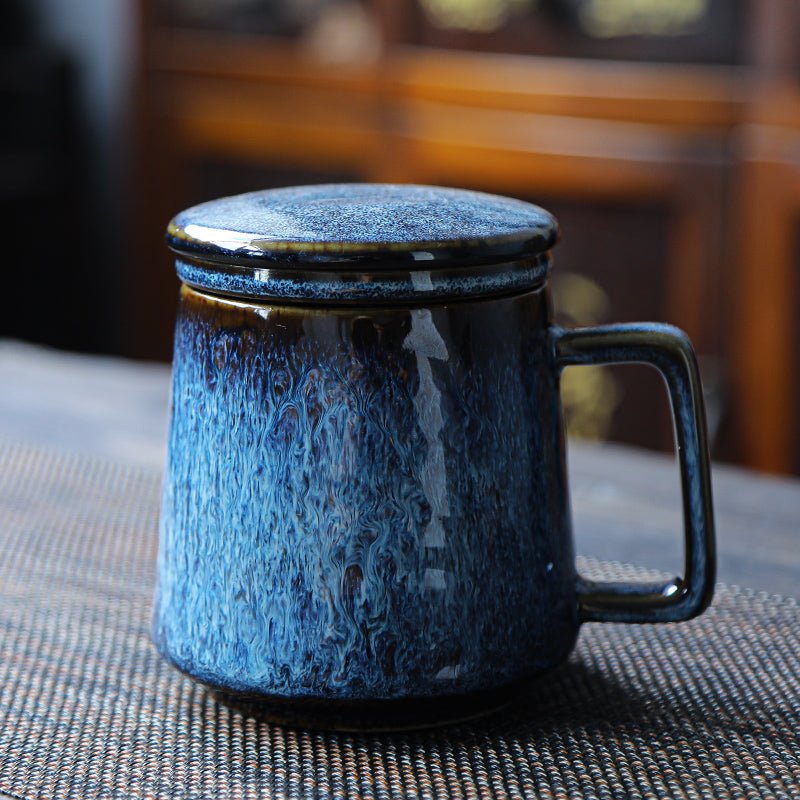
Coffee Mugs With Big Handles: Everyday Rotation Checklist
A working checklist for choosing coffee mugs with big handles you will actually keep in rotation: how to judge finger clearance, why a 480 ml mug feels heavier than it looks, and what to verify bef...
Read more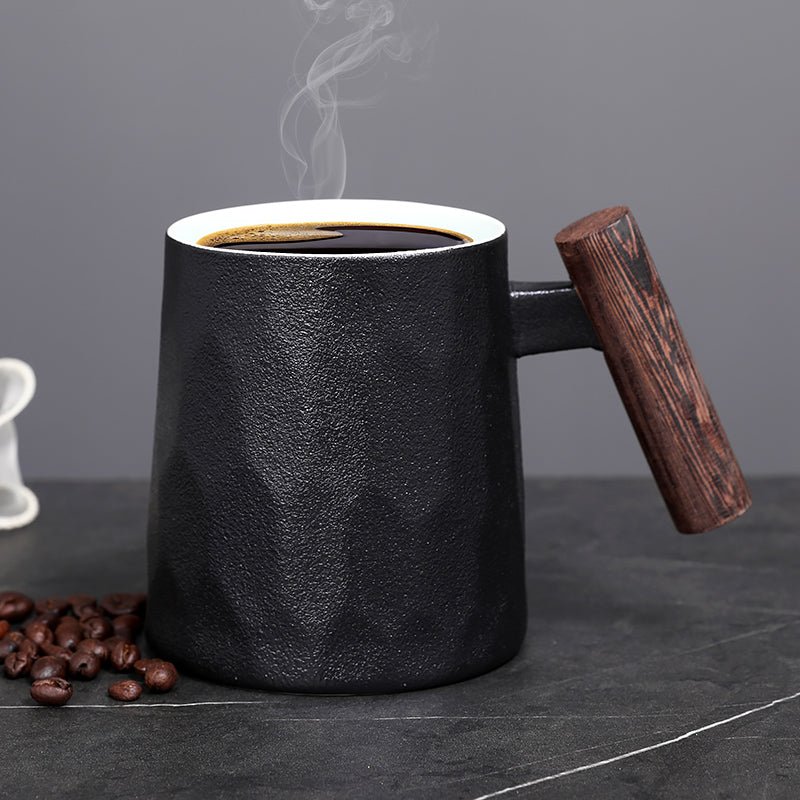
15 oz ceramic coffee mugs home coffee station product shortlist guide
A mug labeled 15 oz and a 15 oz pour are not the same thing. Our shortlist pairs three exact capacities — 400 ml, 440 ml, and 480 ml — with the routines each one suits, plus the cases where you sho...
Read more
Leave a comment
This site is protected by hCaptcha and the hCaptcha Privacy Policy and Terms of Service apply.