
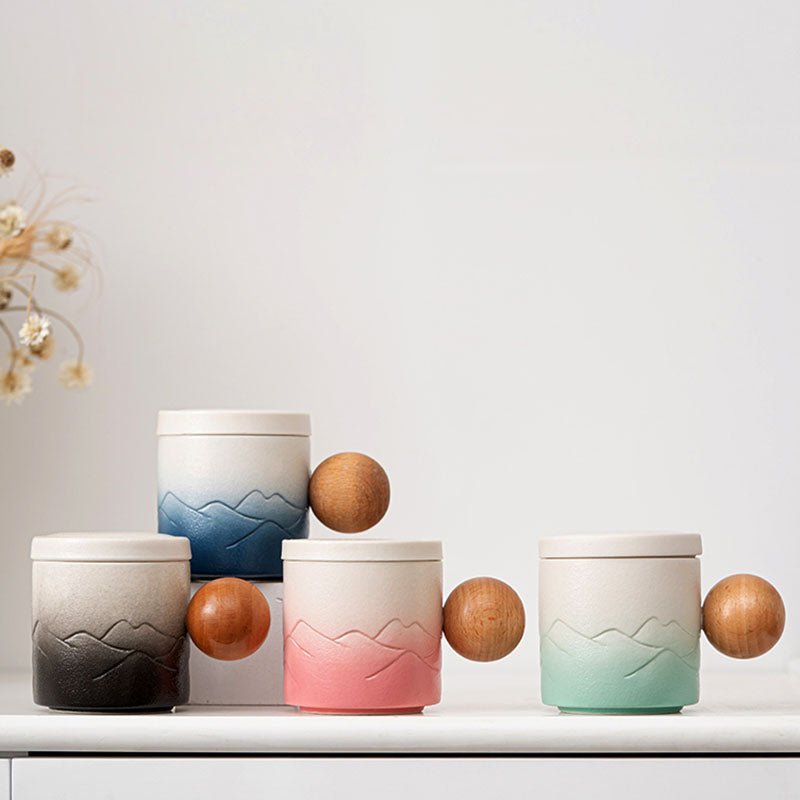
The cacao cup morning routine product shortlist guide: 250–400 ml
Reading time: about 8 minutes
The first cacao of the day may spend five minutes beside a cutting board, then another twenty on an office desk. If the last third is routinely left cold, the problem is often excess capacity rather than appearance. This cacao cup morning routine product shortlist guide compares three CoffeifyMug listings using the facts we can verify: 250 ml, 390 ml, and 400 ml capacities, the visible opening, and one listed diameter. We treat these as everyday drinkware, not as traditional, ritual, certified, or purpose-built cacao vessels.
A cacao cup morning routine product shortlist guide for three schedules
Start with the finished volume you actually drink, not the largest recipe you might make occasionally. In our store, we would rather see a shopper choose around a repeatable weekday serving than buy unused capacity for a rare slow Sunday. A listed capacity is also a comparison figure, not a target fill line; stirring, foam, milk, and toppings all require headroom below the rim.
- Measure one normal serving. Prepare cacao as usual, measure the finished drink, and include anything added after mixing.
- Time the cup. Note whether it is normally finished in ten minutes at the counter or carried to a desk for a longer session.
- Set your refill tolerance. Decide if one small refill is acceptable or if the full morning drink needs to fit at once.
| Option | Verified capacity | Situation that puts it on the shortlist | Reason to skip it |
|---|---|---|---|
| Ball Handle mug | 250 ml | A measured serving that stays comfortably below 250 ml | Your recipe approaches 250 ml before leaving stirring room |
| Round mug | 390 ml | A longer desk drink without a refill | You usually stop after a small serving |
| Spittoon mug | 400 ml | Your measured recipe is near the top of this shortlist | You expect a major size increase over 390 ml |
If none of those scenarios sounds right, compare other shapes in our unique coffee mug collection instead of forcing the nearest capacity to work.
250 ml before work: Ball Handle for a measured serving
The Ball Handle 250 ml mug is the practical first candidate for someone who makes a modest serving, drinks it while breakfast is underway, and does not want a mostly empty larger cup. It is also the only option here with a verified listed diameter: 11.2 cm. Confirm on the live listing whether that diameter refers to the opening or the widest part before using it as a cabinet measurement.
Choose it when your finished recipe sits comfortably below 250 ml and the distinctive ball-handle format suits the way you grip a cup. Skip it if you mix directly in the cup and your ingredients already total close to 250 ml, or if you require the finger clearance of a conventional loop handle. Online photos cannot substitute for a grip test.
390 ml at the desk: Round for one longer drink
The Round 390 ml mug adds 140 ml of listed capacity over the Ball Handle option. That difference matters when a normal recipe exceeds 250 ml or when a smaller first pour would create an unwanted refill halfway through email or a morning meeting.
Choose it for a measured serving below 390 ml that needs useful stirring headroom. Skip it if your usual drink is much closer to 250 ml, since additional empty space does not improve the routine. Capacity alone also tells us nothing reliable about heat retention; material, wall thickness, opening, starting temperature, and room conditions all contribute.
400 ml with few refills: Spittoon for maximum listed capacity
The Spittoon 400 ml coffee and tea mug is the largest verified option in this set. Its scenario is specific: you make a substantial cacao, carry it to a fixed desk or table, and would rather avoid returning to the kitchen. The product name describes the listing's design; it should not be taken as evidence of traditional or specialized cacao use.
Choose it if your measured drink genuinely needs capacity near 400 ml and you prefer its visible profile. Skip it if size is the only reason you favor it over the Round mug. The difference is just 10 ml, so opening, handle format, overall dimensions, and appearance are more useful tie-breakers. It should not be assumed to have a sealed lid or travel-mug protection for a commute.
Visible opening, stirring room, and cooling behavior
A cacao cup has to accommodate more than liquid. A teaspoon needs room to move without striking the rim, while a handheld whisk requires even more clearance and headroom. A visibly open profile can make access easier to assess, but product photography is not a measuring tool: images may use different crops and scales.
The Ball Handle's listed 11.2 cm diameter is the only verified diameter in this comparison. We do not have equivalent verified dimensions for the Round and Spittoon options in the source facts used here, so check their current product pages before planning shelf clearance. Do not assume that the widest-looking cup has the largest exact opening.
An open surface may also allow a drink to cool differently from a narrower form, but we cannot promise a cooling rate from shape alone. If a 250 ml serving already matches your morning, the 200–270 ml flat white cup shortlist offers another way to think through compact drink volumes. Households that alternate cacao and tea can also compare the same broad capacity range in our 250–400 ml loose-leaf tea mug routine guide, while remembering that tea strainers and lids are separate requirements.
Cabinet fit and care checks before daily use
Capacity does not establish height, total width, handle projection, material, or appliance compatibility. Those details affect real kitchens: a handle can catch a neighboring mug in a crowded cabinet, and a wide body may not suit a narrow office shelf. Check current listing dimensions and the supplied care information before ordering around a fixed space.
- Confirm the material. Do not infer ceramic composition, microwave suitability, or dishwasher suitability from a photograph.
- Inspect the rim and handle on arrival. Look under side light for a rim chip, hairline crack at a handle joint, or other shipping damage before filling the mug.
- Check the interior and foot. If the item is confirmed as glazed ceramic, examine the food-contact surface for unusual pinholes or crazing and make sure the foot will not scrape the desk.
- Follow the care label. Wash before first use and do not begin repeated dishwasher or microwave cycles unless the product instructions permit them.
Cacao residue often becomes easier to miss where the wall meets the base. Rinse after use, then clean with the method approved for the stated material. A non-abrasive sponge is the conservative choice for many finished drinkware surfaces, but the product's own instructions remain the source of truth.
Your five-point shortlist before opening the product pages
Write down these five answers. They turn a visual preference into a defensible purchase decision.
- My normal finished cacao volume is: ___ ml.
- I usually finish it in: ___ minutes.
- I will accept a refill: yes or no.
- I stir with a spoon, whisk in the cup, or mix elsewhere: ___.
- My cabinet and care requirements are: ___.
A serving comfortably below 250 ml points first to the Ball Handle. A drink too large for 250 ml but below 390 ml makes the Round the more logical capacity step. A recipe that truly approaches 400 ml puts the Spittoon on the shortlist, although its 10 ml advantage over the Round should not decide the purchase by itself. If you cannot state your normal volume yet, measure before ordering.
Frequently asked questions
Is a 250 ml cup large enough for morning cacao?
Yes, if your measured finished drink stays comfortably below 250 ml after milk, water, or other additions. If the recipe nearly reaches that capacity, the Ball Handle option may leave too little room for stirring or carrying without spills. Move to 390 ml or mix in a separate vessel.
Is there a meaningful difference between a 390 ml and 400 ml cup?
The listed capacity difference is only 10 ml. For most shortlists, that is less useful than the opening, handle format, overall dimensions, and the shape you prefer to use every morning. Choose 400 ml only if that small extra margin or the Spittoon profile solves a specific need.
Which cacao cup is best if I do not want a morning refill?
In this cacao cup morning routine product shortlist guide, the 400 ml Spittoon has the highest verified capacity, with the 390 ml Round close behind. Pick the smallest one that holds your measured recipe with headroom. A larger cup is not automatically better if part of the drink is routinely left unfinished.
Can I whisk cacao directly in these cups?
That depends on your finished volume, whisk size, and the cup's actual opening. The Ball Handle has a listed 11.2 cm diameter, but confirm what that measurement describes on the product page. For vigorous mixing or a recipe close to the cup's capacity, prepare the cacao separately and pour it into the cup.
Are these mugs dishwasher and microwave safe?
Those properties are not established by the verified capacity and dimension facts used in this comparison. Check the current product listing, packaging, or care label for each mug before using either appliance. Do not treat appearance as proof of material or appliance compatibility.
For the next morning, measure one normal serving and decide whether a refill is acceptable. Then open the CoffeifyMug unique mug collection and keep only the options that pass your volume, opening, and storage checks.
More from our blog
Read more
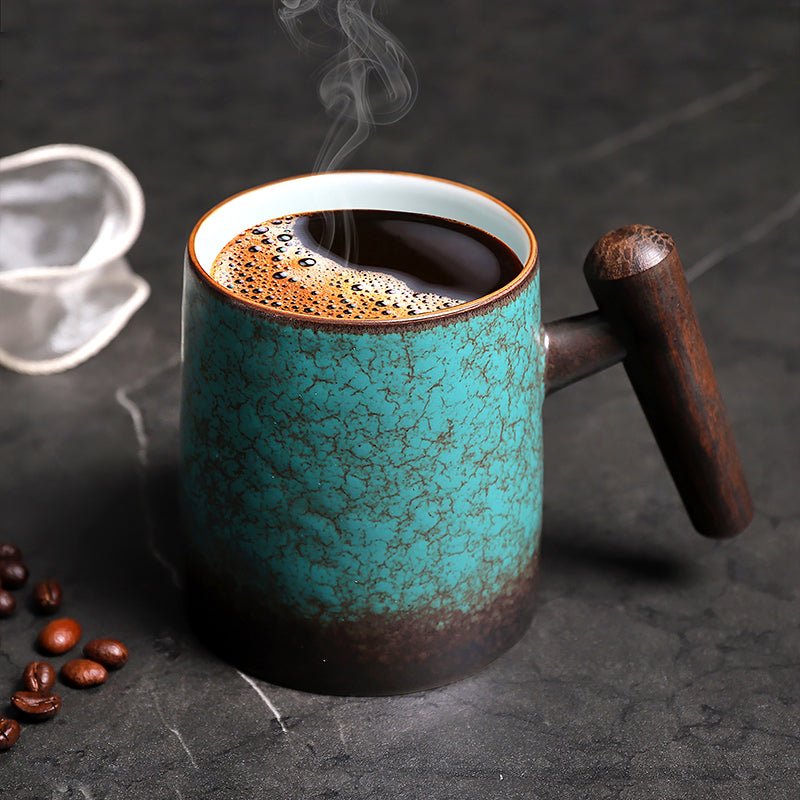
Small Ceramic Coffee Cup Morning Routine Product Shortlist Guide
Measure your usual pour, available morning minutes, and willingness to refill, then compare the Pleated, Emerald, and Retro listings without assuming capacity or care details.
Read more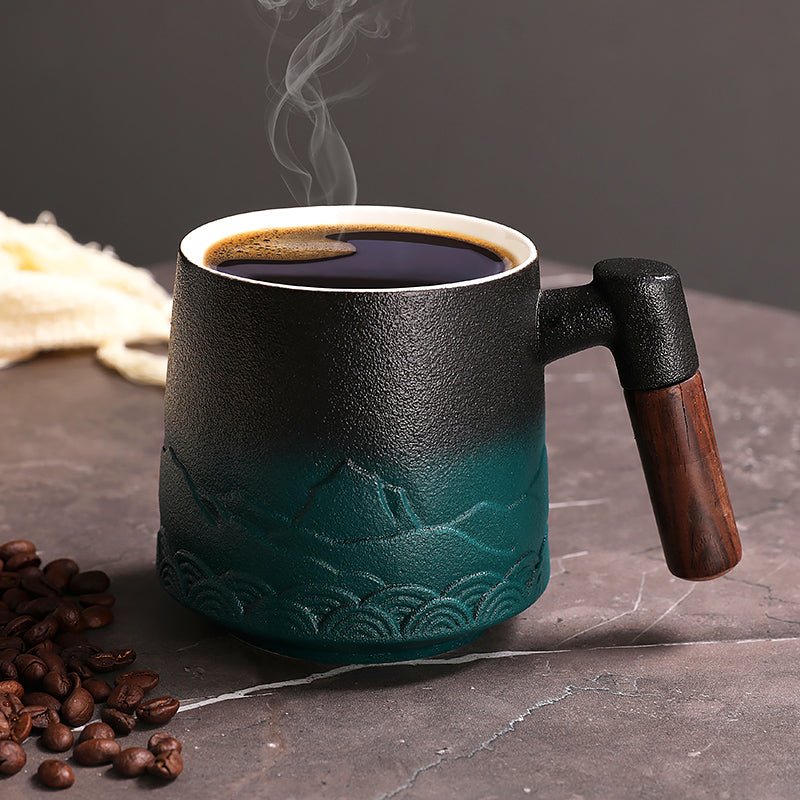
Coffee Mug Gift Ideas for Him Morning Routine Product Shortlist Guide
Build a three-mug shortlist by matching his first-cup timing, measured drink volume, and willingness to refill. We compare Mountain & Sea, The Rock, and Elk and Moon, with clear reasons to choo...
Read more
Leave a comment
This site is protected by hCaptcha and the hCaptcha Privacy Policy and Terms of Service apply.