
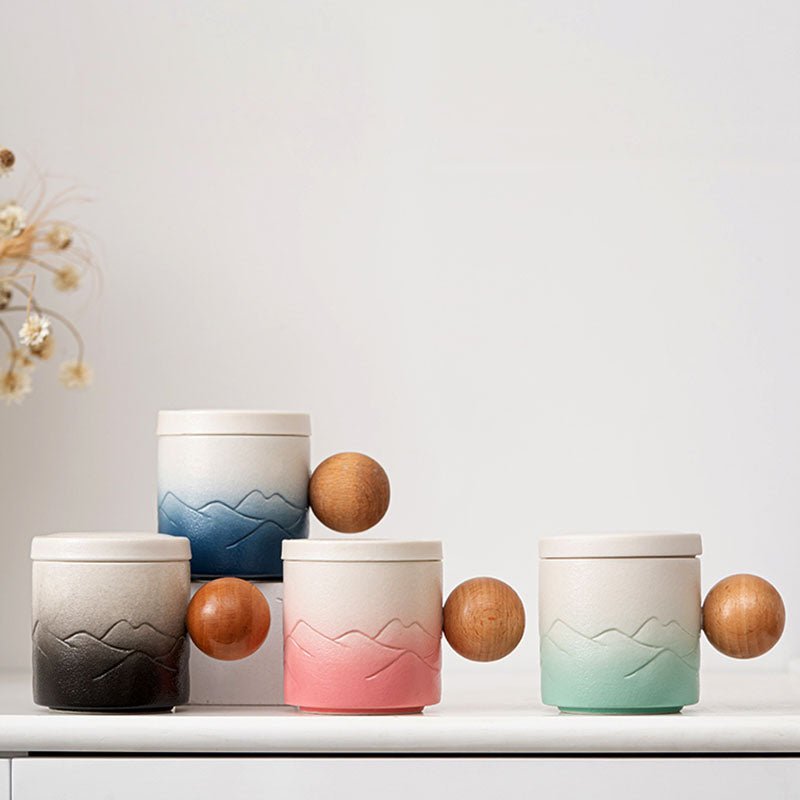
170–250 ml: macchiato cup morning routine product shortlist guide
Reading time: about 8 minutes
The first coffee often happens in a narrow window: the grinder is running, toast is on, and there are ten minutes before you need to leave. Our macchiato cup morning routine product shortlist guide starts with that pressure point. The useful questions are not how many cup styles exist, but how much you actually pour, how much empty space you need above the drink, and how willing you are to make a second coffee.
In our store, we often see shoppers compare compact cups using their full-size mug habits. That can lead to too much unused cup, or a short cup filled so close to the rim that the walk from machine to table becomes awkward. Macchiato commonly refers to an espresso-forward drink with a smaller milk component, but proportions vary by café, machine, and home recipe. Treat that description as context rather than a universal standard. Your finished morning volume is the better buying input.
For a quick visual baseline, open the Retro Coffee Tea Cup at 170 ml, then scan our unique coffee mugs collection to see how compact cups compare with larger forms. Keep capacity ahead of styling during the first pass.
Use this macchiato cup morning routine product shortlist guide by volume
Use the listed capacities as filters, not as target fill lines. A cup filled close to its maximum leaves little working room for foam, a spoon, or the walk from the espresso machine to the breakfast table.
| Morning situation | Shortlist option | Why choose it | Why skip it |
|---|---|---|---|
| You make a genuinely short, espresso-forward drink and are comfortable preparing another later. | Retro Coffee Tea Cup, 170 ml | It is the smallest verified capacity here, limiting unused space around a short pour. | Your usual milk, foam, or sweetener brings the finished drink close to 170 ml, or you need generous carrying room. |
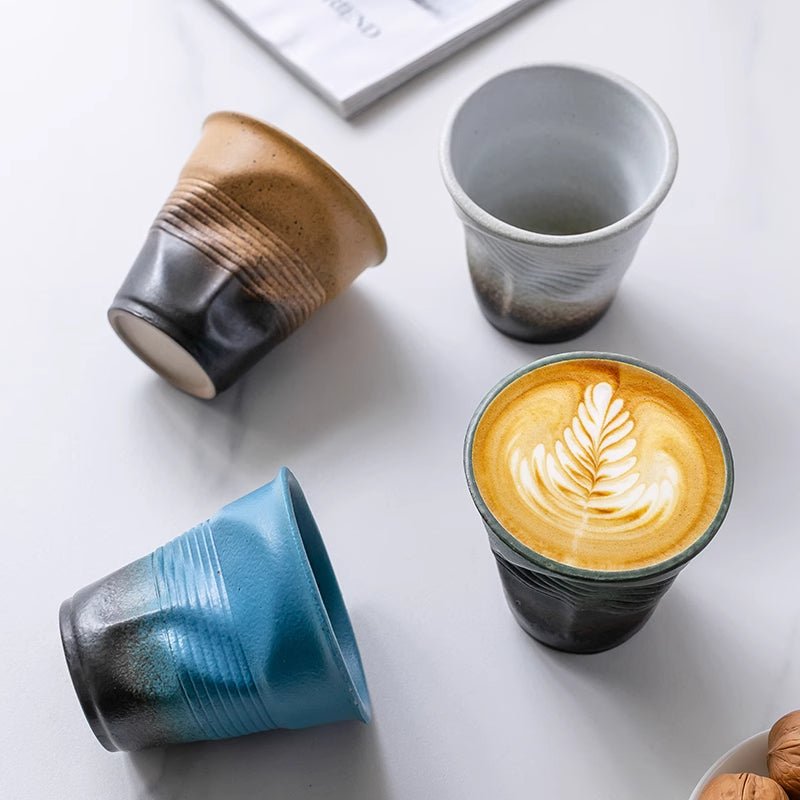
| Your recipe needs modest working room, but you still want a compact cup. | Pleated Coffee Tea Cup, 200 ml | It adds 30 ml over the Retro option and has a visibly pleated exterior. | Your morning pour regularly approaches 200 ml, or you prefer a plain, unpleated form. |
| You prefer one larger morning serving and have little tolerance for an immediate refill. | Ball Handled Coffee Tea Mug, 250 ml | It provides 50 ml more listed capacity than the Pleated cup and 80 ml more than the Retro cup, with a visible ball-handle form. | You usually drink only a short shot-based serving or prefer the silhouette of a conventional loop handle. |
Those 30 ml and 50 ml jumps sound small beside a full-size mug, but they are meaningful within a compact-cup shortlist. Capacity does not establish external dimensions, espresso-machine clearance, thermal performance, microwave compatibility, or dishwasher suitability. Confirm those details on the current product page and care information rather than inferring them from volume or shape.
How much headroom do milk, foam, and a spoon need?
Headroom is the unfilled space between the drink and the rim. Foam occupies volume, a spoon displaces liquid, and even a careful walk across the kitchen can make a brim-level drink slosh. You do not need to guess your normal volume or transfer hot coffee into a measuring jug.
- Prepare your usual complete drink, including milk, foam, sugar, or syrup.
- Place a small piece of removable tape on the outside of your current cup at the normal liquid level.
- After drinking and rinsing the cup, refill it with cool water to the tape and pour that water into a measuring jug.
- Compare the result with 170, 200, and 250 ml, then move up a capacity if your measured fill sits close to one of those limits.
If your drink is comfortably below 170 ml, style and refill preference can decide the choice. A result close to 170 ml points toward 200 ml; a result close to 200 ml points toward 250 ml. If your usual fill is already near 250 ml, none of these compact options provides practical headroom.
How does refill tolerance change the best capacity?
Two shoppers can make the same coffee and still need different cups. One treats the first macchiato as a quick, deliberate serving before breakfast. The other wants a single cup to last through getting dressed, packing a bag, and checking the morning calendar.
- Choose 170 ml: Your first coffee is intentionally short, and making a later drink is part of the routine. The Retro 170 ml cup is the direct next step.
- Choose 200 ml: Your volume changes slightly from day to day, and an extra 30 ml over the smallest option helps you avoid filling near the rim. Compare the Pleated 200 ml cup.
- Choose 250 ml: Avoiding an immediate refill matters more than selecting the smallest capacity. Start with the Ball Handled 250 ml mug.
If the cup also needs to cover afternoon drinks, the capacity decision extends beyond one morning serving. Our macchiato cup daily-use capacity guide compares the same compact range across a longer day.
What changes when the cup leaves the kitchen counter?
A cup used beside the espresso machine can tolerate a higher fill than one carried upstairs or placed beside a keyboard. Capacity still matters, but so do clearance, visible form, and the way you normally hold and move a cup.
- Check machine clearance: Millilitres describe internal volume, not cup height or width. Verify current dimensions before ordering if the cup must fit beneath a low espresso-machine group head.
- Match the handle form: The Ball Handled mug has a visibly unconventional handle. Skip it if your routine depends on slipping a finger through a familiar loop-style handle.
- Consider the exterior: The Pleated cup suits shoppers who want a textured visible form. Choose another option if you prefer a smooth, visually quiet exterior.
- Protect desk headroom: Leave more room below the rim when crossing a hallway, climbing stairs, or working near electronics. Extra capacity is useful only if you resist filling it completely.
For a morning cup that regularly moves from kitchen to workstation, use our 170, 200, and 250 ml macchiato cup desk comparison to make the second-stage decision.
What should you verify before the first wash?
Material and care directions should be checked on the selected product page, packaging, or insert. We do not assume a decorative cup is microwave-safe or dishwasher-safe based on its appearance. In our experience handling compact drinkware, a short inspection before use also catches practical problems more reliably than noticing them after the first dishwasher cycle.
- Inspect the rim in angled light. Look for a chip, rough spot, or hairline crack before drinking from the cup.
- Check the handle junction. Apply only gentle pressure and look for visible cracking or movement where the handle meets the cup body, including around a ball-handle form.
- Test the base on a level counter. The cup should sit without obvious rocking before it is filled with a hot drink.
- Follow the stated wash method. If dishwasher use is explicitly allowed, leave enough separation that the handle and rim cannot knock against neighbouring items.
- Match care to material. If the selected cup is listed as ceramic, avoid abrupt changes from a very cold environment to very hot liquid. Check a pleated exterior for retained droplets before putting it in a closed cabinet.
These checks are especially useful for gift unboxings. Inspect the cup while the packaging is still available, then confirm that the recipient's usual drink and care habits suit the listed capacity and material.
Who should skip all three compact capacities?
A compact macchiato cup is not the right tool for every morning. Move beyond this shortlist if any of these situations describes your normal drink:
- Your finished serving regularly exceeds 250 ml before adding foam.
- You make iced coffee, where cubes use a significant share of the available volume.
- You need a travel lid, insulation, or a cup designed for commuting.
- Your usual drink is a long Americano, a large tea, or another serving that needs full-mug capacity.
In those cases, browse the unique coffee mugs collection for a larger form. Forcing a tall morning drink into a compact cup usually creates either a refill you did not want or too little room below the rim.
Frequently asked questions
Is 170 ml large enough for a morning macchiato?
Yes, if your complete drink sits comfortably below 170 ml and leaves room for carrying or stirring. Recipes vary, so measure your own espresso, milk, and additions rather than relying on a universal proportion. Move to 200 ml if your normal fill is close to the listed capacity.
Should I choose a 200 ml cup if I add milk and sugar?
The 200 ml option is practical if those additions push your drink beyond the comfortable range of a 170 ml cup. It gives you exactly 30 ml more listed capacity, but it can still feel tight if your finished drink is already close to 200 ml.
Is a 250 ml cup too large for a traditional macchiato?
It may be more cup than you need for a very short espresso-forward recipe. Home and café proportions differ, so choose from your measured pour rather than the name alone. The 250 ml option makes more sense when extra headroom or avoiding a refill matters more than minimum capacity.
Which macchiato cup is best if I do not want a refill?
Within this macchiato cup morning routine product shortlist guide, the 250 ml Ball Handled option is the clearest fit for low refill tolerance because it has the largest listed capacity of the three. It still will not replace a larger mug if your complete drink is near or above 250 ml.
Your 30-second checkout check
- Volume: Measure the complete drink, not the espresso portion alone.
- Headroom: Allow for foam, stirring, and the distance from machine to table or desk.
- Refills: Decide if a second preparation is welcome, acceptable, or irritating.
- Form and care: Confirm the visible handle or exterior suits you, then read the current material and wash directions.
Open the 170 ml Retro option, 200 ml Pleated option, and 250 ml Ball Handled option side by side. Eliminate any capacity that leaves no practical headroom, then return to the unique coffee mugs collection if none matches your measured morning pour or preferred form.
More from our blog
Read more
The ceramic cortado cup home office practical purchase checklist
Compare CoffeifyMug's verified 170 ml, 200 ml, and 270 ml ceramic options by finished drink volume, desk routine, headroom, and care questions. This checklist also flags unsupported features to ver...
Read more
12 oz ceramic coffee mugs morning routine product shortlist guide
Compare three current 12 oz ceramic mug options by morning timing, usual pour, refill tolerance, physical fit, and care. Every pick includes a reason to choose it and a reason to skip it.
Read more
Leave a comment
This site is protected by hCaptcha and the hCaptcha Privacy Policy and Terms of Service apply.