
A flat white cup morning routine product shortlist guide: 200–270 ml
Reading time: about 9 minutes
The cup that feels right at 7:00 a.m. can become annoying by 7:20: too full to carry to a desk, too small to avoid a second pour, or much larger than the drink you actually make. This flat white cup morning routine product shortlist guide starts with the decisions behind those daily annoyances—morning timing, finished drink volume, and refill tolerance.
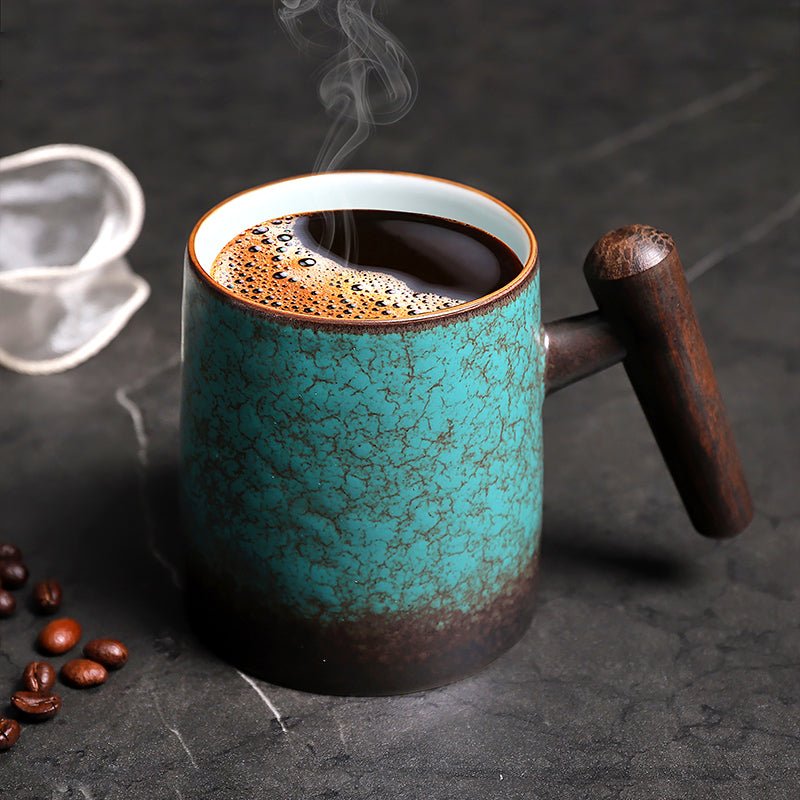
In our store, we compare the current options by verified listed capacity: Pleated at 200 ml, Ball Handle at 250 ml, and Emerald at 270 ml. We do not treat one size as a required drink ratio or a barista standard. The useful question is simpler: which capacity leaves sensible room for your drink and the way you move through the morning?
How does the flat white cup morning routine product shortlist guide work?
Run through one ordinary morning before comparing colors or decorative details. Record three things:
- Timing: Note the minutes from pouring to your last sip. A drink finished at the counter places different demands on a cup than one carried between rooms for half an hour.
- Finished volume: Use a marked measuring jug once to estimate the drink you normally prepare, including your usual additions. You do not need laboratory precision; knowing that you make roughly 160 ml rather than 220 ml can eliminate an unsuitable size.
- Refill tolerance: Decide if a second trip to the kitchen is harmless or a genuine interruption once work, school preparation, or childcare begins.
Treat listed capacity as a comparison ceiling, not a recommended fill line. For example, a 180 ml drink leaves 20 ml of nominal room in a 200 ml cup, 70 ml in a 250 ml cup, and 90 ml in a 270 ml cup. The practical margin will also depend on how the capacity was measured and how far you plan to carry the cup.
Which cup fits a quick counter drink, a desk transfer, or a slow start?
The shortlist below deliberately stays at three options. Each recommendation starts with a morning situation, explains the capacity fit, and gives you a reason to skip it.
Quick counter finish: Pleated 200 ml
The Pleated 200 ml cup is the smallest listed capacity in this group. If your usual finished drink is around 140–170 ml and you consume it beside the coffee setup or at breakfast, it leaves roughly 60–30 ml of nominal room.
- Choose it if: You prefer a close capacity match, finish your drink while stationary, and do not mind making another cup later.
- Skip it if: Your regular drink is closer to 180–200 ml or you carry a nearly full cup across the house. At those volumes, the remaining margin is only 20–0 ml.
Remember that the smallest capacity does not automatically mean the smallest exterior dimensions. Check the current measurements if machine clearance or cabinet space is critical.
Kitchen-to-desk transition: Ball Handle 250 ml
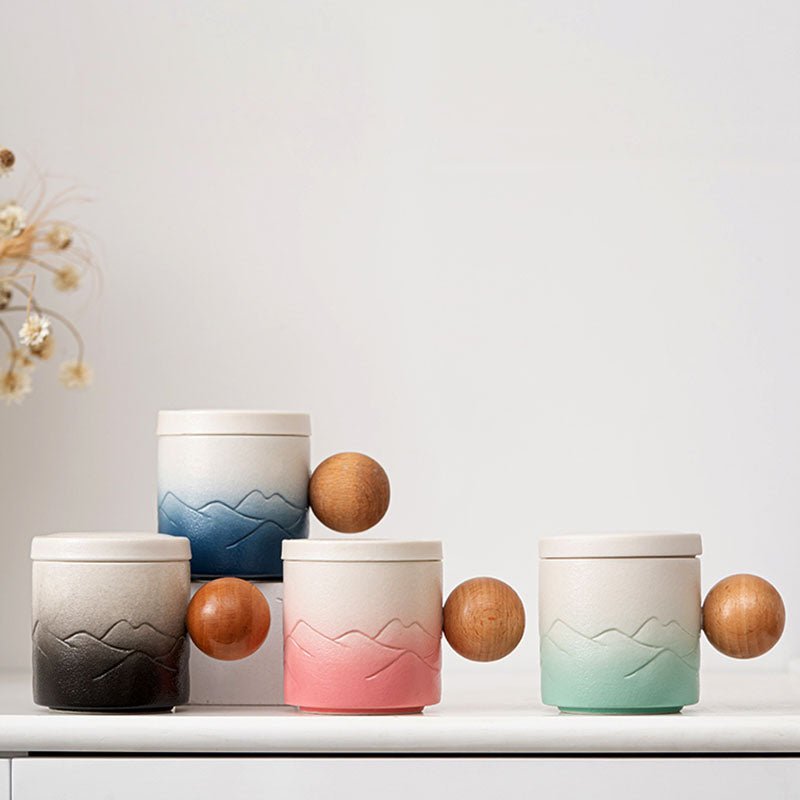
The Ball Handle 250 ml mug is the middle-capacity option. A 160–200 ml drink leaves approximately 90–50 ml of nominal headroom, which can be useful if you pour coffee, pack breakfast, and then move to a desk.
- Choose it if: You want more carrying margin than 200 ml provides without automatically moving to the largest option.
- Skip it if: You consistently make only 120–140 ml and prefer a closer capacity match, or you prepare more than 220 ml and strongly dislike refills.
The ball-handle design is a visible style choice, not a promise that it will suit every hand. Review the product images with your normal grip in mind.
Single longer pour: Emerald 270 ml
The Emerald 270 ml mug has the largest verified capacity of the three. For a finished drink around 180–220 ml, that works out to approximately 90–50 ml of nominal room.
- Choose it if: Avoiding a refill matters more than keeping capacity close to a smaller serving, or you routinely carry the cup before sitting down.
- Skip it if: Your normal drink is under 150 ml and unused capacity bothers you, or your ice-heavy or larger coffee needs more than 270 ml plus headroom.
If none of these scenarios matches cleanly, browse our unique coffee mugs collection rather than forcing a compact option into a routine that needs more capacity.
How much headroom do 200, 250, and 270 ml leave?
Subtract your approximate finished drink volume from the listed capacity. This simple calculation does not establish an ideal serving size; it shows which cups will be tight, moderate, or roomy for the drink you already make.
| Usual finished drink | 200 ml capacity | 250 ml capacity | 270 ml capacity | Practical reading |
|---|---|---|---|---|
| 150 ml | 50 ml room | 100 ml room | 120 ml room | All three fit; 200 ml is the closest capacity match. |
| 180 ml | 20 ml room | 70 ml room | 90 ml room | 200 ml may feel tight if the cup is carried. |
| 200 ml | 0 ml room | 50 ml room | 70 ml room | Do not treat 200 ml as having a practical carrying margin. |
| 220 ml | 20 ml over capacity | 30 ml room | 50 ml room | 250 ml is tighter; 270 ml leaves the larger buffer. |
The figures are nominal. Capacity measurements can vary by method, and foam or other additions occupy space in a flat white coffee cup. Planning to fill any cup to its stated limit is particularly inconvenient if you walk with it. For a wider comparison beyond breakfast, see our flat white cup daily-use guide for 200, 250, and 270 ml.
Where will the cup go between the kitchen and your first task?
A cup does not need the same margin in every morning location. Follow its actual route rather than judging capacity at the coffee machine alone.
- Coffee setup to breakfast table: A short, steady move can make the 200 ml option reasonable when your drink volume also fits.
- Kitchen to home office: The 250 or 270 ml option may provide a more forgiving buffer around the same drink. Keep cables and paperwork out of the carrying path.
- Busy family kitchen: If you repeatedly put the cup down while packing lunches or answering questions, prioritize the capacity that avoids an unwanted refill after the routine becomes busy.
- Car or public transport: Do not assume an open coffee cup is spill-resistant. A sealed, lidded travel vessel is a better style if the drink must move with you.
- Under a coffee machine or inside a low cabinet: Capacity cannot tell you height, width, or handle reach. Confirm current product dimensions before buying for a restricted space.
If breakfast regularly turns into a work session, our flat white cup desk-use comparison covers the additional questions raised by keyboards, paperwork, and limited desktop space.
How much refill friction will you tolerate?
Refill tolerance often settles a close decision more effectively than appearance. Think about the moment the drink runs out, not only the first pour.
- Refills are easy: Shortlist 200 ml if your measured drink fits and you like a closer capacity match.
- You want a middle option: Shortlist 250 ml when 200 ml looks tight but 270 ml adds more unused room than you need.
- A second kitchen trip breaks your routine: Shortlist 270 ml if your usual volume fits with a useful margin.
That is the value of the flat white cup morning routine product shortlist guide: it removes options that create a predictable annoyance before style decides the purchase. The best cup for flat white is not automatically the largest one; it is the capacity that fits your measured drink and your tolerance for interruptions.
What should you inspect before the first morning use?
Capacity is the confirmed comparison point used here. Before checkout, verify the current product listing for material, height, diameter, weight, microwave compatibility, and dishwasher guidance. Material labels such as ceramic, porcelain, stoneware, and glass are not interchangeable, so appearance alone is not enough to establish care requirements.
- Inspect the rim and base: Unbox over a clear, level counter and look for chips, hairline cracks, or noticeable rocking.
- Check handled pieces: Examine both handle attachment points. If the handle moves or a crack is visible, do not fill the cup with a hot drink; contact our team.
- Wash before use: Unless the current care directions say otherwise, use mild dish soap, warm water, and a soft non-abrasive sponge.
- Confirm appliance care: Do not assume dishwasher or microwave suitability from a smooth or glossy finish. Follow the current product instructions.
- Avoid abrupt temperature changes: Unless the listed care guidance confirms otherwise, do not take a very cold cup and immediately fill it with very hot liquid.
For a gift unboxing, complete the inspection before discarding protective packaging. If handle form is a major part of your choice, use our flat white cup shape and handle guide alongside the current product photographs.
Frequently asked questions
Is a 200 ml cup too small for a morning flat white?
Not if your measured finished drink leaves the margin you need. A 160 ml drink leaves about 40 ml of nominal room in a 200 ml cup, while a 190 ml drink leaves only 10 ml. Choose 250 ml instead if you make the larger drink and regularly carry it.
Should I choose 250 ml if I do not know my usual drink volume?
This flat white cup morning routine product shortlist guide treats 250 ml as a middle-capacity hedge, not an automatic winner. It provides 50 ml more listed capacity than 200 ml and 20 ml less than 270 ml. Measuring one normal drink is still the more reliable next step.
Is 270 ml the best cup for flat white if I hate refills?
Among these three products, 270 ml has the largest verified capacity and therefore the most room around the same drink. It is a practical candidate for roughly 180–220 ml servings, but it may feel unnecessarily large if you normally prepare less than 150 ml. If your drink exceeds 220 ml and you want generous headroom, consider a larger mug style.
How much headroom should I leave in a flat white coffee cup?
There is no required headroom figure. A stationary breakfast drink can work with less margin than a cup carried upstairs or around a desk. Treat zero nominal headroom as a brim-level calculation rather than a practical fill target.
Are the Pleated, Ball Handle, and Emerald cups dishwasher safe?
Check the current care instructions on each product page before using a dishwasher or microwave. We have not applied unverified appliance-care claims to this shortlist. Hand washing with mild soap and a soft sponge is the cautious default when compatibility is not stated.
Your 60-second checkout checklist
- Write down your usual finished drink volume.
- Subtract it from 200, 250, and 270 ml.
- Remove any option that leaves too little carrying room.
- Decide if one refill is acceptable after your morning becomes busy.
- Use a lidded travel vessel instead if spill resistance is essential.
- Confirm current material, dimensions, handle form, and care directions on the product page.
Open the unique coffee mugs collection with those answers beside you, then compare appearance only among the capacities that survive the checklist.
Read more
Your flat white cup morning routine practical purchase checklist
Compare CoffeifyMug's verified 200, 250, and 270 ml options using your actual morning pour, carry distance, headroom needs, and refill tolerance. Also check handle fit, care unknowns, delivery cond...
Read more
A coffee mug gift idea morning routine product shortlist guide: 3 picks
Build a gift shortlist around the recipient's first-drink timing, usual pour, and patience for refills. We compare three ceramic mug options at 400, 440, and 480 ml, with clear reasons to choose or...
Read more
Leave a comment
This site is protected by hCaptcha and the hCaptcha Privacy Policy and Terms of Service apply.