
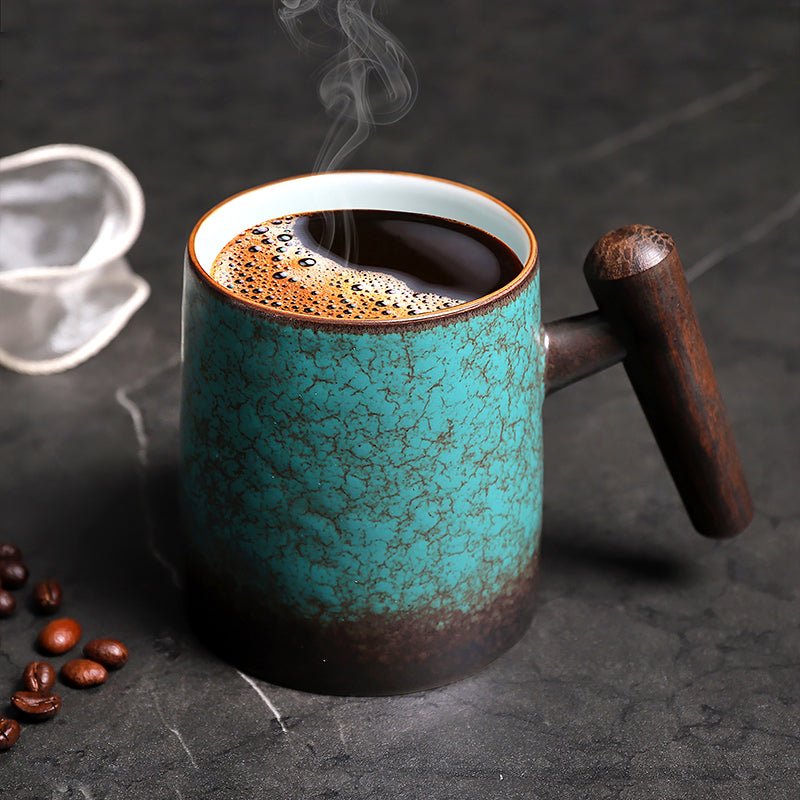
Small Ceramic Coffee Cup Morning Routine Product Shortlist Guide
Reading time: about 9 minutes
A cup can be technically suitable and still be wrong by 7:20 a.m. The first pour may be too large to finish before the school run, or the cup may demand a refill before the laptop wakes. Our small ceramic coffee cup morning routine product shortlist guide starts with the amount you actually pour, the minutes you normally have, and your tolerance for refilling. Those three facts are more useful than treating small as a fixed catalog size.
In our store, we see clearer decisions when a shopper opens one concrete candidate, such as the Pleated Coffee Tea Cup, and compares it against the broader unique coffee mugs collection. The live product page supplies the current product facts. The routine tests below are general selection guidance, so a care instruction, dimension, or capacity from one listing should never be transferred to another.
Three inputs for a small ceramic coffee cup morning routine product shortlist guide
Write down three answers before comparing shapes or colors. This takes less time than browsing several pages and prevents an attractive cup from advancing on style alone.
- Available drinking time: A 5-12 minute counter routine favors a modest serving that can be finished promptly. A 15-30 minute breakfast allows more volume. A drink expected to sit through a 45-minute meeting may be better served by insulated drinkware rather than a small ceramic cup.
- Usual drink volume: Measure the recipe you make, including added water or milk. Drink names are unreliable sizing tools because two households may prepare the same named coffee at different volumes.
- Refill tolerance: Mark this as zero, one, or several. A planned second pour can keep each serving fresh, but it is a poor fit for someone who cannot leave an office call.
These time bands are sorting prompts, not performance claims about any listed cup. The job of a small ceramic coffee cup morning routine product shortlist guide is to remove options that conflict with the routine before appearance settles the final choice.
Claim boundary: Use each live listing to confirm its current material, capacity, dimensions, selected variant, care directions, and included pieces. Catalog details can differ between products and variants, and a style name alone does not establish any of those specifications.
How many millilitres reach your cup on a normal morning?
Do one real measurement. Prepare the coffee exactly as usual, including milk or added water, pour it into a graduated kitchen jug, and read the liquid line rather than the top of any foam. Repeat on a weekday and on a less hurried morning if your recipe changes with your schedule.
- Record the smallest and largest normal serving in millilitres.
- Add enough room to carry the cup without sloshing. As a practical test, pour water into your current cup until it sits roughly 10-15 mm below the rim and see if that feels comfortable.
- Compare that working fill with the wording on each product page. If a figure describes a brim fill, it is not the same as a comfortable carrying volume.
- Reject any option that misses the required volume unless a refill is already part of your plan.
A kitchen scale can help when a marked jug is unavailable. Tare the empty vessel and weigh the same volume of plain water; for this kitchen-level comparison, one gram of water is approximately one millilitre. Do not calculate capacity from exterior height and width alone. Wall thickness, taper, and the curve of the base all change the usable interior.
For example, a shopper who normally pours 220 ml and refuses a refill should not keep a 160 ml candidate merely because its exterior looks compact. Someone who drinks 120 ml and enjoys a second fresh pour has more freedom. These numbers illustrate the decision rule; the live listing must provide the actual product measurement.
Three morning scenarios: which listing earns a place?
Each recommendation below is conditional. We are matching a routine to the visible design direction of a listing, then requiring the current specifications to pass the measured-volume test.
Pleated cup for a short counter routine
Situation: You have one compact serving, roughly 5-15 uninterrupted minutes, and usually finish it beside the toaster or coffee machine.
Why it fits: The visible pleated styling gives a dedicated morning cup a distinct profile, which is useful if it sits among several plain mugs. It remains on the shortlist only if the current capacity holds your measured serving with carrying room.
Skip it if: Exterior contours are more cleaning detail than you want, stackability is essential, or the listed care method conflicts with your dishwasher routine. Pleating is a style benefit, not proof of grip, thermal performance, or capacity.
Next step: Check the selected variant, measurements, and care information on the Pleated Coffee Tea Cup product page.
Emerald mug for the kitchen-to-desk handoff
Situation: Your drink moves from the kitchen to an office desk, and a refill during the first work block would be disruptive.
Why it fits: The emerald color and mug designation make this the clearest style route for a familiar desk setup. Its place is still conditional: the listed capacity must cover the entire usual pour, and the listed dimensions must suit your shelf and desk space.
Skip it if: The current volume is larger than your real serving, you prefer a neutral cup that blends with an existing set, or the live page does not answer a care requirement you consider mandatory. The word mug does not automatically mean that it holds more than either cup listing.
Next step: Compare your measured serving against the current Emerald Coffee Tea Mug listing.
Retro cup for a planned second pour
Situation: Your morning has room for a refill, and the visual ritual matters as much as carrying the whole drink at once. This can also suit a style-led gift, provided the recipient actually drinks smaller servings.
Why it fits: The retro direction gives this option a clear reason to exist on a three-item shortlist. With refill tolerance already established, it does not need to win by maximum volume; it needs to hold the intended serving and match the buyer's taste.
Skip it if: You need one-and-done capacity, coordinated minimalist dinnerware, or confirmed stackability. For gifting, also confirm the included quantity and pieces so the unboxing matches expectations.
Next step: Review the selected option and current specifications on the Retro Coffee Tea Cup product page.
Which option should you skip?
A useful shortlist removes products. Apply these disqualifiers before debating color or decorative detail.
| Routine requirement | Remove from the shortlist | Reason |
|---|---|---|
| No morning refill | Any listing below your measured working volume | A repeated top-up conflicts with the routine. |
| Dishwasher use every day | Any option without care guidance that confirms it | Appearance cannot resolve a care limitation. |
| Coffee must stay hot through a long meeting | Ordinary small ceramic cups as a category | A low-volume open cup may not suit prolonged heat retention; consider insulated drinkware. |
| Tight stacking or a fitted shelf | Any listing without usable dimensions | Photos do not establish rim width, height, or stackability. |
Ceramic, glaze, rim, and dishwasher checks
The following are general ceramic handling checks, not product-specific claims. A listing's own material and care directions control the decision.
- Material terminology: Ceramic is an umbrella category. Porcelain, stoneware, and earthenware should not be treated as interchangeable product claims unless the page names the specific body.
- Rim condition: Inspect an arrival under good light and run a fingertip gently around the drinking edge. A chip or sharp glaze spot is different from normal variation and should be addressed before use.
- Foot ring: Place the empty cup on a dry, level counter and press lightly at four points around the rim. Noticeable rocking can indicate an uneven base. An unglazed foot ring is not automatically a defect, but it should be smooth enough for the surface where it will sit.
- Glaze surface: Look for pinholes, chips, and fine lines. Fine lines may be unintended crazing or part of a deliberate crackle finish, so compare them with the listing photographs and description before deciding.
- Dishwasher loading: Only use a dishwasher if the selected product's instructions permit it. In our handling experience, geometry matters too: the cup should sit securely, avoid contact with neighboring pieces, and be tilted so water does not remain around the base after a cycle.
- Microwave and temperature changes: Do not infer microwave suitability from ceramic material alone. Follow the page guidance, and avoid abrupt movement from a very cold environment to a near-boiling fill unless the maker's directions support that use.
What must the live product page confirm?
Use this same screen-level check for all three candidates. If a required detail is absent, ask before ordering rather than filling the gap with an assumption.
- The material stated for the selected product and variant.
- The listed capacity and any explanation of how it was measured.
- Overall height, rim or body width, and base dimensions where supplied.
- The exact color or style variant currently selected.
- Whether the order includes one cup or any additional pieces.
- Dishwasher, microwave, and hand-washing directions.
- Any notice about handmade variation, glaze variation, or decorative finish.
If your measured pour changes the category, switch to a volume-specific comparison instead of forcing one of these three options. A concentrated serving may be better served by our ceramic espresso cup morning routine guide. A compact milk-and-coffee recipe can be checked against the ceramic cortado cup shortlist by volume. For a measured serving from 200-350 ml, compare the routine with our Americano coffee cup guide for 200-350 ml. Those routes describe shopping scenarios; they do not establish the capacity of any product on this page.
Frequently asked questions
What capacity counts as a small ceramic coffee cup?
There is no universal cutoff that works for every recipe. In this small ceramic coffee cup morning routine product shortlist guide, small means the lowest capacity that holds your normal serving with comfortable headspace and does not force an unwanted refill. Confirm how the live listing states or measures capacity before ordering.
Does a smaller ceramic cup keep coffee hot for longer?
Not automatically. A smaller liquid volume can cool faster, while opening width, wall thickness, starting temperature, and room conditions also affect the result. If coffee must remain hot during a long call, an insulated vessel may fit better than an open ceramic cup.
Can the Pleated, Emerald, and Retro options go in a dishwasher or microwave?
Use only the current care directions on each individual product page; one listing's instructions do not apply to the other two. If the selected page does not confirm a required appliance, ask our store before ordering or plan for hand washing. Decorative finishes can affect care requirements, so appearance alone is not enough.
Which option is best if I do not want a morning refill?
Measure the complete drink first, then keep only the product whose listed working capacity can accommodate it with headspace. The Emerald mug is a logical style candidate for a kitchen-to-desk routine, but its live capacity still has to pass that test. If none does, move to a larger category rather than accepting a daily inconvenience.
The 60-second cart check
- Write down your normal serving in millilitres.
- Write down the uninterrupted minutes available to drink it.
- Choose zero, one, or several acceptable refills.
- Confirm capacity, dimensions, material, care, variant, and included pieces on the live page.
- Remove every option that fails one mandatory requirement, then choose by design.
Open the matching product tabs side by side. If one fails the checklist, replace only that candidate from the unique coffee mugs collection rather than restarting the entire search.
Read more
Green Tea Mug Morning Routine Product Shortlist Guide
A practical shortlist for choosing a green tea mug by morning timing, usual drink volume, and refill tolerance, with clear reasons to choose or skip each CoffeifyMug option.
Read more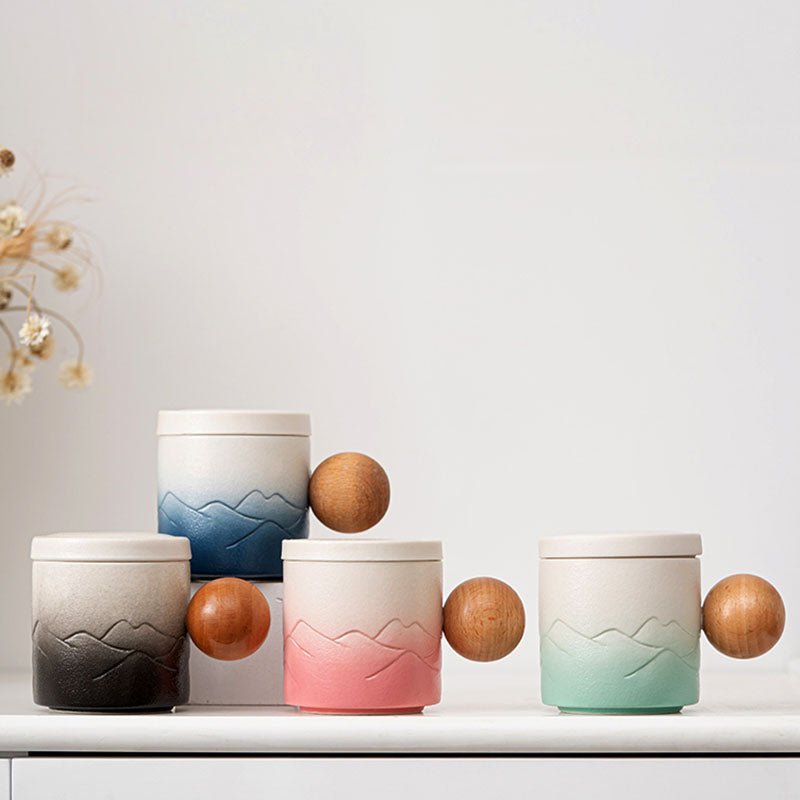
The cacao cup morning routine product shortlist guide: 250–400 ml
Compare CoffeifyMug's 250 ml Ball Handle, 390 ml Round, and 400 ml Spittoon by the way mornings actually work: serving size, timing, refill tolerance, visible opening, storage, and care checks.
Read more
Leave a comment
This site is protected by hCaptcha and the hCaptcha Privacy Policy and Terms of Service apply.