
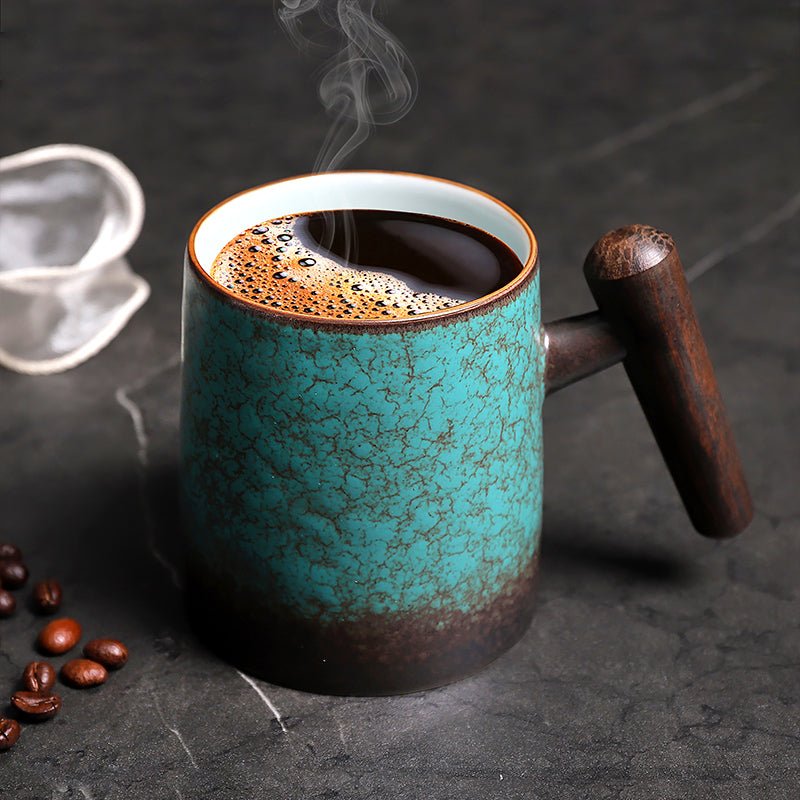
A ceramic cortado cup morning routine product shortlist guide by volume
Reading time: about 9 minutes
At 7:10 a.m., the wrong cup usually reveals itself before the first sip: the prepared drink reaches the rim, or a deliberately short serving sits in much more vessel than you wanted. This ceramic cortado cup morning routine product shortlist guide narrows our current options around finished volume per serving, practical headroom, and willingness to refill.
From handling compact ceramic drinkware in our store, we separate listed capacity from a comfortable working fill. The verified catalog facts used here are Retro 170 ml, Pleated 200 ml, and Emerald 270 ml. We do not claim that any option was designed, tested, or certified specifically for cortado, and we are not comparing extraction, heat retention, microwave or dishwasher use, or café service.
Which number describes your real morning serving?
Do not start with total morning consumption. Start with the amount you prepare each time you fill the cup. Two 120 ml servings create a different cup requirement from one 240 ml serving, even though the morning total is identical.
- Fill your current vessel with water to the level your finished drink normally reaches, then transfer the water to a metric measuring jug.
- Represent the complete drink level, including milk or other additions, rather than measuring only the first pour.
- Record your largest normal serving, not an unusually small day or an occasional oversized drink.
- Decide whether you will refill and whether the cup usually moves from the kitchen counter to a table or desk.
Subtract your planned serving from the listed cup capacity. The result is nominal headroom: a 150 ml drink leaves a 20 ml difference in a 170 ml cup, 50 ml in a 200 ml cup, and 120 ml in a 270 ml cup. This arithmetic is a comparison aid, not a verified safe-fill line.
Short rule: choose by per-serving volume first; use morning timing to decide whether one fill or several fits your routine.
Your ceramic cortado cup morning routine product shortlist guide: three current fits
These are capacity-led matches, not product-performance rankings. Each includes a clear reason to choose it and a reason to move on.
Retro 170 ml: for an intentionally short serving
A shopper who usually prepares 120–150 ml and wants the smallest listed capacity has a clear starting point. At 120 ml, the 170 ml listing leaves 50 ml of nominal headroom; at 150 ml, it leaves 20 ml. Choose it when: you make a short serving and are comfortable preparing another one later. Skip it when: your normal amount is 160–170 ml, you add volume in stages, or you dislike a tight margin. Review the Retro Coffee Tea Cup, listed at 170 ml.
Pleated 200 ml: for a middle-volume morning
A 140–170 ml serving gives this option a practical role between the other two capacities. A 150 ml drink leaves 50 ml of nominal headroom, while a 170 ml drink leaves 30 ml. Choose it when: you want more working room than the Retro offers without moving to 270 ml. Skip it when: you regularly prepare 190–200 ml or your priority is simply the smallest listed capacity. See the Pleated Coffee Tea Cup, listed at 200 ml.
Emerald 270 ml: for one larger serving with fewer refills
For one 180–220 ml prepared serving, this is the only current option that leaves 50–90 ml of nominal headroom across that range. Choose it when: you prefer one larger morning drink and find refilling disruptive. Skip it when: you normally prepare only 100–130 ml and want a close capacity match; extra empty capacity provides no verified beverage-performance benefit. View the Emerald Coffee Tea Mug, listed at 270 ml.
If your measured serving falls outside these scenarios or another vessel format matters more, browse our unique coffee mugs collection. Check each live listing rather than assuming every design shares these capacities.
How much headroom do 170 ml, 200 ml, and 270 ml leave?
Headroom here means the listed capacity minus your planned finished volume. It helps compare options, but it does not account for personal pouring habits, stirring, foam variation, or movement between rooms.
| Planned finished volume | Retro 170 ml | Pleated 200 ml | Emerald 270 ml |
|---|---|---|---|
| 120 ml | 50 ml difference | 80 ml difference | 150 ml difference |
| 150 ml | 20 ml difference | 50 ml difference | 120 ml difference |
| 170 ml | 0 ml difference | 30 ml difference | 100 ml difference |
| 200 ml | 30 ml over listed capacity | 0 ml difference | 70 ml difference |
| 220 ml | 50 ml over listed capacity | 20 ml over listed capacity | 50 ml difference |
A zero difference means the planned drink equals the listed capacity, leaving no mathematical buffer for normal variation or movement. At 150 ml, both Retro and Pleated exceed the planned amount, but their margins are very different: 20 ml versus 50 ml. At 220 ml, only Emerald has a listed capacity above the planned serving.
For a capacity-focused comparison beyond the morning scenarios here, use our ceramic cortado cup capacity guide for 170 ml, 200 ml, and 270 ml.
Five-minute start or slow breakfast: which serving pattern are you buying for?
Time matters because it changes whether a refill feels practical. It is not a basis for making heat-retention claims.
- Fast, short drink: For a 120–145 ml serving, the 170 ml Retro is the closest capacity match. The 200 ml Pleated gives more arithmetic buffer if you carry the cup to another room.
- Two short servings: Retro can still be logical. A 240 ml morning total does not require a 270 ml cup if you intentionally prepare two separate 120 ml servings.
- One 150–170 ml serving: Pleated leaves 30–50 ml of nominal headroom across that range, making it the straightforward middle choice.
- One 180–220 ml serving: The 270 ml Emerald is the only one of these three with 50 ml or more of nominal headroom throughout that range.
- Kitchen-to-desk routine: Measure the amount you carry in one trip and allow for movement. Our ceramic cortado cup desk-use guide covers that scenario in more detail.
If making a refill feels annoying every morning, buy for the full one-pour amount plus your preferred margin. If preparing a second small drink is part of the ritual, do not size the cup from total daily volume.
Milk additions, stirring, and walking: when does headroom matter most?
Headroom becomes more valuable whenever the finished level varies or the cup moves after preparation.
- Adding milk after the first pour: Measure the final drink level, not the initial stage.
- Stirring sweetener or another addition: A zero-margin calculation leaves no extra space for surface movement.
- Walking to a table or desk: Compare a 20 ml difference with a 50 ml difference rather than asking only if the drink fits. More space does not make a cup spill-proof.
- Changing recipes during the week: Shortlist against the larger normal serving so the cup is not usable only on your smallest-drink days.
For example, a 150 ml drink is below both Retro and Pleated's listed capacities, but Pleated leaves a 50 ml difference compared with Retro's 20 ml. That is a practical buffer comparison, not a claim about drink quality.
Which requirements should remove all three from your shortlist?
- Your usual serving is 250–270 ml and you want headroom: Even Emerald leaves only 20–0 ml of nominal space. A larger vessel would be more practical.
- You need a sealed travel vessel or high impact resistance: A lidded travel cup or another material may suit better. Ceramic can chip or crack after a hard impact.
- Verified dishwasher or microwave use is non-negotiable: That information is not part of this capacity comparison. Check the current product listing or contact our store before ordering.
- You need exact machine or cabinet clearance: Capacity does not establish external height, width, or base dimensions. Confirm those measurements separately.
- You require documented café, stacking, or certification claims: We do not make those claims for these products.
If capacity works but grip and exterior form are your next deciding variables, read our ceramic cortado cup shape and handle guide before ordering. Capacity alone cannot answer every fit question.
How should you check a ceramic cup after delivery?
Our team recommends a brief receiving check for any breakable ceramic drinkware. This is a sensible handling routine, not a claim that these products commonly arrive damaged.
- Unbox the cup over a clear, stable counter and keep the packaging until the inspection is complete.
- Inspect the ceramic rim, body, and base under good light for chips, hairline cracks, or other visible damage.
- Place the empty cup on a flat, dry surface and confirm that it sits steadily.
- Read the current care instructions before putting it in a dishwasher or microwave; do not assume compatibility.
For a gift, perform this check before wrapping so the recipient is not the first person to discover visible damage. If a cup appears chipped or cracked, do not use it; contact our store for the appropriate next step.
Use this 60-second shortlist before ordering
- Write down the largest volume you normally prepare per serving.
- Choose a nominal headroom target rather than defaulting to a zero-margin fit.
- Mark your refill tolerance as yes, sometimes, or no.
- Remove any option that lacks information required for your routine, such as dimensions or documented care compatibility.
- Open the matching product page and confirm the current listing details before purchasing.
Start with Retro for the shortest measured serving, Pleated for the middle range, and Emerald for one larger refill-averse serving. These are starting points, not universal drink-size rules.
Frequently asked questions
Which listed capacity works best for a 150 ml morning drink?
Retro 170 ml leaves a 20 ml nominal difference, Pleated 200 ml leaves 50 ml, and Emerald 270 ml leaves 120 ml. Pleated is the middle choice if you want more working room without selecting the largest capacity.
Is a 170 ml ceramic cup automatically the best size for a cortado?
No. The drink name does not tell us how much you prepare at home. Measure your finished per-serving volume first; if it is close to 170 ml, the Retro option leaves little or no mathematical headroom.
How do I use this ceramic cortado cup morning routine product shortlist guide if I make two drink sizes?
Base a one-cup shortlist on the larger normal finished size. If your two servings are 130 ml and 170 ml, Retro leaves 0 ml at the larger size, Pleated leaves 30 ml, and Emerald leaves 100 ml. A smaller option can still work if you are happy to use different cups or change your fill level.
Can I assume these ceramic cups are dishwasher or microwave safe?
No. Those points are outside the verified capacity facts used in this comparison. Review the current product page or contact CoffeifyMug for documented care information before making either feature a purchase assumption.
Which current option fits a 220 ml serving without reaching its listed capacity?
Emerald is listed at 270 ml, creating a 50 ml nominal difference for a 220 ml drink. Retro and Pleated are both listed below 220 ml. The calculation compares capacities and is not a verified safe-fill specification.
Write down two numbers now: your largest normal serving and your preferred headroom. Then open the matching product page. If none of the three clears both numbers, or you need a different vessel style, continue with the unique coffee mugs collection rather than forcing a poor fit into your morning routine.
Read more
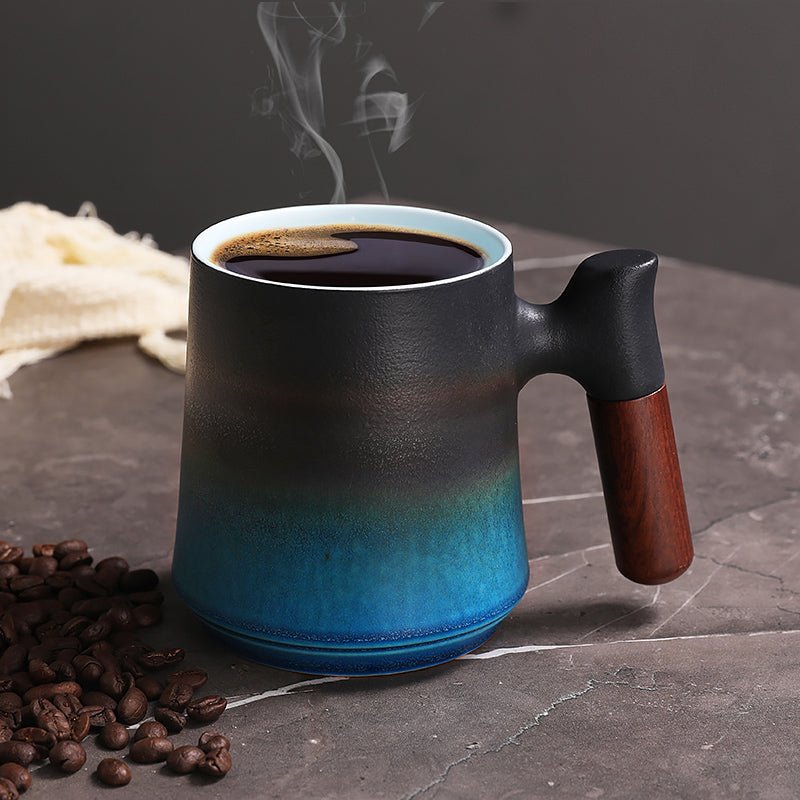
Hot Cocoa Mug Morning Routine Product Shortlist Guide: 3 Practical Picks
Match The Rock 480 ml, The Gradient 400 ml, or The Flow 400 ml to your actual morning drink volume, available sipping time, and tolerance for refills. Clear choose-or-skip reasons keep the shortlis...
Read more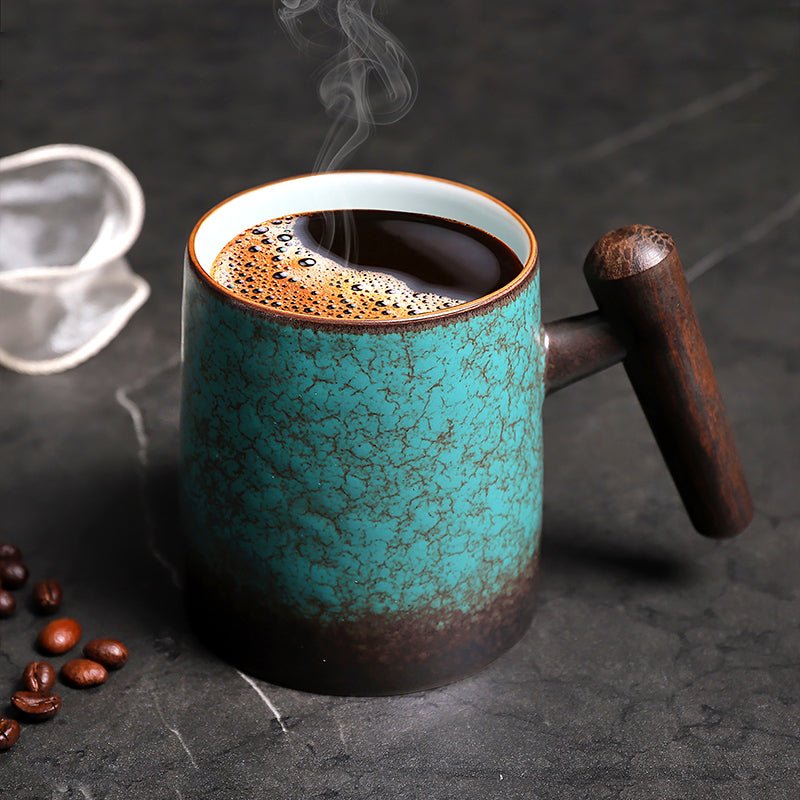
Your ceramic cortado cup morning routine practical purchase checklist
Compare your measured morning pour with verified 170 ml, 200 ml, and 270 ml capacities. This checklist covers practical headroom, refill tolerance, carry distance, care unknowns, and reasons to cho...
Read more
Leave a comment
This site is protected by hCaptcha and the hCaptcha Privacy Policy and Terms of Service apply.