



Wide Based Coffee Mugs Home Coffee Station Practical Purchase Checklist
Reading time: about 10 minutes
The mug that goes over on a home coffee bar is rarely the tall one you would expect. It is usually the everyday mug a wrist clips while reaching past it for the grinder. We pack and handle ceramic mugs in our store every week, and the messages we get after delivery rarely start with "it arrived broken." They start with "it doesn't clear my portafilter" or "it rocks on my counter." That gap between how a mug reads on a product page and how it behaves on a real countertop is exactly what this wide based coffee mugs home coffee station practical purchase checklist is built to close.
Wide Foot, Wide Rim, and Tall Body Are Three Different Things
Shoppers search for a wide base and land on three unrelated shapes. Sorting them out first saves a return.
- Wide foot, modest rim. The stable silhouette: a broad contact ring tapering up to a smaller opening. This is the profile that actually changes tipping behavior, and it is what most people mean.
- Wide rim, small foot. Built for aroma and for spooning in steamed milk, but the opening does nothing for stability. A wide mouth also gives coffee more surface area to cool from.
- Tall body, large capacity. A big mug that gains its volume in height rather than width puts more liquid mass higher up — the opposite of what a bump-prone desk wants.
A mug can be all three at once, and it can also be one while looking like another in a hero photo. Read the base diameter and the rim diameter as separate numbers on the listing instead of judging by silhouette.
Why a Broad Foot Alone Won't Keep a Mug Upright
Textbook physics gives the honest explanation. A wider base of support raises the tilt angle an object must reach before its center of mass passes the edge, and a lower center of mass reduces the effect of a sideways nudge. Those two ideas explain most of what happens on a counter — and they also explain why the phrase "tip-proof" is not something we will use. We have not found a public test or rating that measures mug tipping against base width, height, and fill level, so treat "tip resistant" as descriptive language rather than a certification.
Four variables decide whether a wide based mug survives your morning:
- Fill level. A mug topped to the brim carries its mass high; the same mug filled two-thirds full behaves like a shorter, heavier-footed one.
- Handle as a lever. A handle that projects far from the wall gives a passing hip more leverage than the body does. Handles are excellent for lifting and risky for bumping.
- Foot flatness. A ring that is not perfectly flat will rock on stone or tile even when the diameter is generous. Test it on a known-flat surface before you trust it beside a laptop.
- What it sits on. Bare stone, wood, and a silicone mat respond differently to a nudge, and a mat can absorb small wobbles that a hard surface amplifies.
Brewer Clearance: Four Gaps to Measure Before You Commit
The complaint we hear most often is not about stability. It is about fit. A wide based mug solves one problem and creates another if it will not slide under the machine you brew with. Measure these with a tape measure, not by eye:
- Spout or group head to drip tray. Measure the vertical distance from the tray surface to the lowest point of the spout. The mug's listed height has to be shorter than that number, with spare room for the tilt you need to slide it in.
- Drip tray footprint. A base wider than the tray hangs over the front lip, which turns a stable mug into a lever waiting for a bump.
- Rim seat for drippers and presses. A pour-over cone or an AeroPress flange has to rest on the rim, not drop inside it. Measure the outer span of the brewer base and compare it to the mug's rim diameter. If the rim is wider than the brewer, brew into a carafe and transfer.
- Scale platform. If you weigh your dose through the brew, the base has to sit inside the platform edges rather than overhang them, where a slight push tips the whole assembly.
Cup holders deserve their own note. Vehicle holders taper and vary widely, so measure the narrowest point of yours rather than assuming. A wide ceramic mug with a projecting handle is a counter and desk piece; if your priority is a commute, a dedicated travel mug is the better tool and we would rather say so.
The wide based coffee mugs home coffee station practical purchase checklist
Six rows. Run them against any mug you are considering, including ours.
| Check on the listing | How to verify it | What goes wrong if you skip it |
|---|---|---|
| Listed capacity | Compare it with your usual yield in milliliters, then leave headroom | A mug filled to the rim sloshes the moment you lift it |
| Base diameter | Measure your coaster, scale platform, and drip tray | Overhang, or a mug that cannot sit flat |
| Rim diameter | Measure against your dripper or press flange | The brewer drops in or sits crooked mid-pour |
| Overall height | Measure spout-to-tray clearance | You have to tilt the mug to fit it, and coffee lands on the tray |
| Handle span | Count how many fingers fit and whether they clear a hot wall | A heavy full mug becomes wrist strain and a drop risk |
| Foot ring profile | Look for a recessed base and note the finish | Water pools in the recess after a wash cycle; an unglazed ring can mark wood |
250 ml, 400 ml, and 480 ml: Matching Listed Capacity to Your Brew
Capacity is where most buyers guess. A wide mug full of coffee behaves differently from the same mug half full, so pick the size that matches what you actually pour rather than the largest one on the page. Three shapes in our own lineup cover most home stations, and the listed capacities are the one number we can state with confidence.
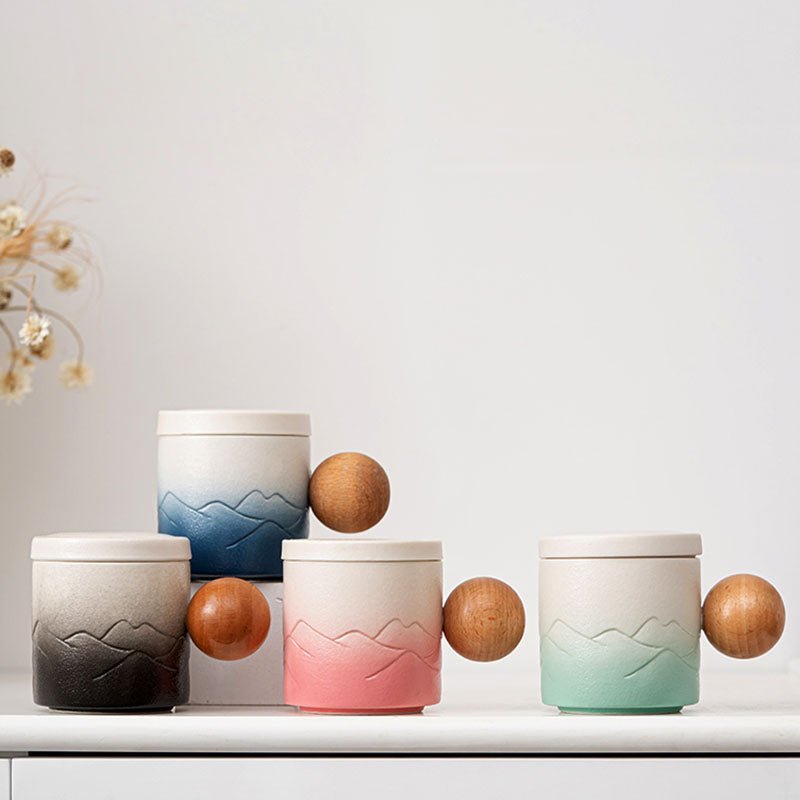
The Ball Handled Coffee & Tea Mug is listed at 250 ml. That is the size for a double espresso pulled long, a cortado, a flat white, or a single cup of tea. A smaller interior means less liquid mass sitting high in the vessel, which is the behavior most people are chasing when they go looking for a stable mug. The ball handle is the design focal point here; check the listed base diameter on the product page before assuming it clears a compact drip tray.
The Flow Coffee & Tea Mug is listed at 400 ml, the middle of the range and the most common single-serve brew size. If you alternate between a drip machine, a pour-over, and the occasional larger tea, this is the volume that leaves headroom without pouring half a mug to waste. Confirm the rim diameter against your dripper base before you commit — that is the measurement that decides whether a cone sits on the rim or falls through it.
The Rock Coffee & Tea Mug is listed at 480 ml, which suits Americanos, large filter brews, and milk drinks built in the mug. More volume means more liquid mass, so this is the capacity where you want to be certain about base fit, handle grip, and height clearance under your spout. It is also the least forgiving choice if your counter is narrow.
If none of those volumes or silhouettes match your setup, browse the full collection of unique coffee mugs and filter by what your counter can actually hold.
One limitation worth stating plainly: none of these are travel mugs. If you need a sealed lid for a bag or a holder-friendly base for a commute, a wide ceramic mug is the wrong purchase no matter how steady it is on a desk.
Glaze, Lead, and the Dishwasher: Care Questions These Mugs Raise
Wide ceramic mugs raise care questions that thin porcelain cups do not, and one of them is a safety question rather than a convenience one.
What the FDA says about lead in ceramic drinkware
FDA guidance notes that some ceramic foodware can leach lead from the food-contact surface, and continued use of lead-leaching ware can cause adverse health effects, including chronic lead poisoning. For cups and mugs, the action level is 0.5 micrograms of lead per milliliter of leaching solution in any one of six units, using methods that include ASTM C738. The same guidance flags improperly fired traditional pottery glazes as a leaching risk, notes that washing or boiling does not remove lead, and singles out handmade, antique, damaged, and brightly orange-, red-, or yellow-decorated pieces as higher concern — while describing ordinary commercial factory tableware as much less likely to have the problem. Anything labeled decorative or not for food use should stay out of your coffee rotation.
Practically: buy from listings that state food use, and ask before buying an unmarked handmade piece at a market.
The recessed foot and the dishwasher
Many wide based mugs use a concave foot ring so the outer perimeter makes solid contact with the counter. Inverted on a dishwasher rack, that recess becomes a small cup and holds wash water. It does not damage the glaze, but a wet foot leaves rings on wood and drips onto the shelf below. We dry the foot by hand before a mug goes back on the bar. Whether a specific mug is dishwasher or microwave rated is printed on its listing or base — verify it there rather than assuming it from the material.
Weight once it is full
Wide ceramic bodies carry more clay than thin porcelain, and a 480 ml fill adds roughly half a kilogram of liquid on top of that. If the handle only takes two fingers, the weight becomes a cantilever on your wrist. Test the grip empty before you fill it to the top.
Frequently asked questions
Will a wide based coffee mug fit a standard car cup holder?
Often not. Cup holders taper and there is no single standard diameter, so measure the narrowest point of yours and compare it with the mug's listed base diameter. A wide ceramic mug with a projecting handle generally belongs on a desk or counter, not in a console.
What does this wide based coffee mugs home coffee station practical purchase checklist actually measure?
It measures what a product photo cannot show: base diameter against your coaster or scale, rim diameter against your dripper, overall height against your spout clearance, and listed capacity against your real brew yield. Those four numbers catch most of the fit problems buyers report to us.
Does a wider base keep coffee hot longer?
Base width by itself does not extend heat retention. How long coffee stays hot depends on wall thickness, the material, whether the mug is covered, and the starting temperature — and a wide open rim adds surface area, which speeds cooling. If heat retention is the priority, a lid and an insulated body matter more than the foot.
Is there a standard for what counts as a wide base?
No. There is no agreed minimum diameter, which is why two mugs marketed as wide-based can differ substantially. Compare the listed base diameter in millimeters or inches instead of relying on the phrase.
Should I hand-wash a wide ceramic mug?
Check the listing for the manufacturer's care instructions — that is the only reliable answer for a specific mug. If it does go in the dishwasher, dry the recessed foot afterward so it does not leave water rings on wood.
Run Your Own Numbers Before You Add to Cart
Grab a tape measure and spend two minutes at your station: spout-to-tray height, drip tray width, scale platform, and your usual brew yield in milliliters. Write them down. Then compare those four numbers against the capacity and dimensions printed on any mug you are considering, including the three sizes above.
A wide based mug earns its place on a coffee station when the base fits the surface, the rim fits the brewer, the height clears the spout, and the capacity matches what you pour. Get those four right and stability stops being a marketing claim and becomes something you feel every morning. If you want to compare silhouettes side by side, start with our unique coffee mugs collection and keep the measurements in hand.
More from our blog
Ready to pick your mug? Two ways to save on today's order:
Ordering 1–3 mugs? Get an extra 10% off your 1st order with code 10_OFF Apply 10% Off & Shop Wooden-Handle Mugs →
Gifting 4+ mugs? Buy 3, Get the 4th Free applies automatically at checkout (no code needed; offers do not stack) · Free standard shipping (Nov pre-Christmas delivery: 15–20 calendar days US) · Free replacement if chipped in transit.
Popular mug buying guides: Ceramic Tea Cups & Infuser Mugs · Ceramic Mugs with Lids Compared · Wooden-Handle Tea Infuser Mugs Compared · Christmas & Secret Santa Mugs 2026 · Espresso & Cortado Cups Guide · Cup & Saucer Gift Sets · All 25 Mugs Spec Table · Mug Size Guide · Shipping & Promo FAQ
FIRST ORDER 10% OFF (CODE: 10_OFF) · OR BUY 3, GET THE 4TH FREE


Read more
Coffee Mug Gifts Ideas Home Coffee Station Practical Purchase Checklist
A mug earns counter space only when it fits a drink, a hand, and a shelf. This checklist walks through listed capacity, handle comfort, care wording, and glaze safety before you buy a coffee mug gi...
Read more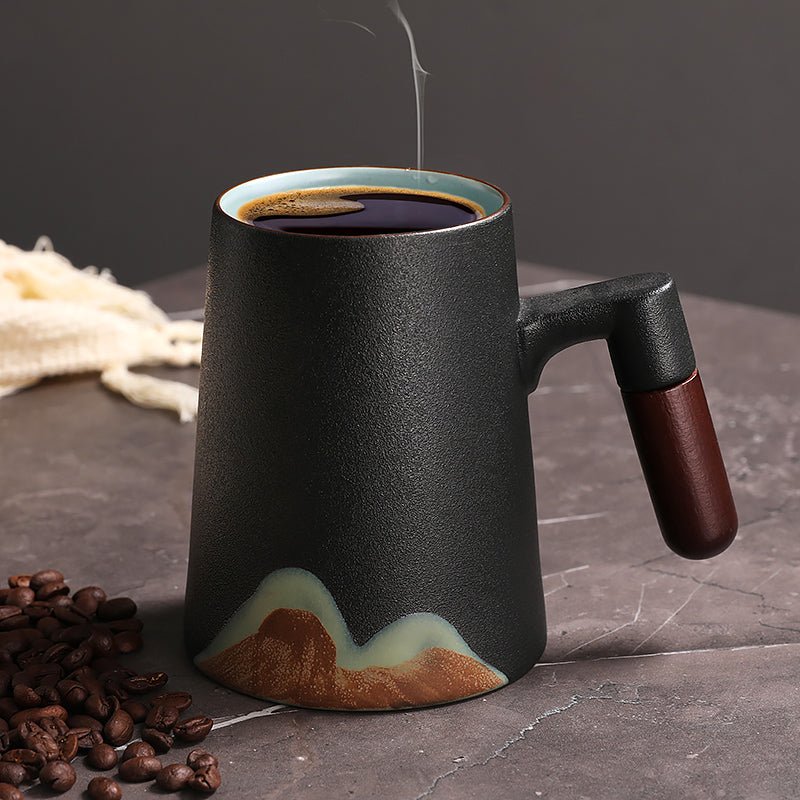
Latte Mugs Tall Home Coffee Station Practical Purchase Checklist
A measurement-first checklist for buying tall latte mugs: fill-line math, spout and cupboard clearance, the latte-art trade-off, and the care claims worth getting in writing before checkout.
Read more
Leave a comment
This site is protected by hCaptcha and the hCaptcha Privacy Policy and Terms of Service apply.