
Art Coffee Mugs Home Coffee Station Practical Purchase Checklist
Reading time: about 9 minutes
A mug can look perfectly suited to a coffee station in a product photo, then become the awkward object on the counter. The handle clips the grinder, the cabinet leaves no lifting room, or a normal coffee-and-milk serving sits too close to the rim. Our art coffee mugs home coffee station practical purchase checklist starts with those everyday friction points before considering the artwork.
In our store, we sell mugs as objects that need to work as well as look good. For the products below, we keep comparisons within facts a listing can support: ceramic material, listed capacity, visible shape, and the imagery shown in the photos. We do not assign an artist, art movement, provenance, production technique, edition status, or institutional connection when the listing does not make that claim.
Will the listed capacity and footprint fit beside your brewer?
Start with the drink you make most often, not the largest drink you might make occasionally. Measure the finished serving after adding milk, cream, or ice. A capacity number alone does not tell you how much carrying room you prefer, so plan for roughly one-half inch of headspace if you regularly walk from the kitchen to a desk or sofa.
Next, measure the station itself. Four dimensions prevent most fit problems:
- Maximum mug height: Measure from the counter or scale to the shelf or cabinet above it. Include enough clearance to lift the mug without tilting it into the shelf.
- Outer handle span: Measure from the far side of the mug body to the outside edge of the handle. This is the dimension most likely to collide with a grinder, kettle base, or storage jar.
- Base diameter: Confirm that the entire foot can rest on a flat surface. A base that hangs over the edge of a small tray or scale is easier to knock.
- Usual drink volume: Include additions and melting ice rather than comparing the listed capacity only with the amount of brewed coffee.
Product photography can help you judge proportions, but it is not a substitute for measurements. If a dimension you need is not listed, treat it as unknown and ask before ordering. We also avoid claiming that a mug fits beneath a particular brewer or works with a specific appliance unless that compatibility is explicitly documented.
Which visible art motif belongs on the station you already have?
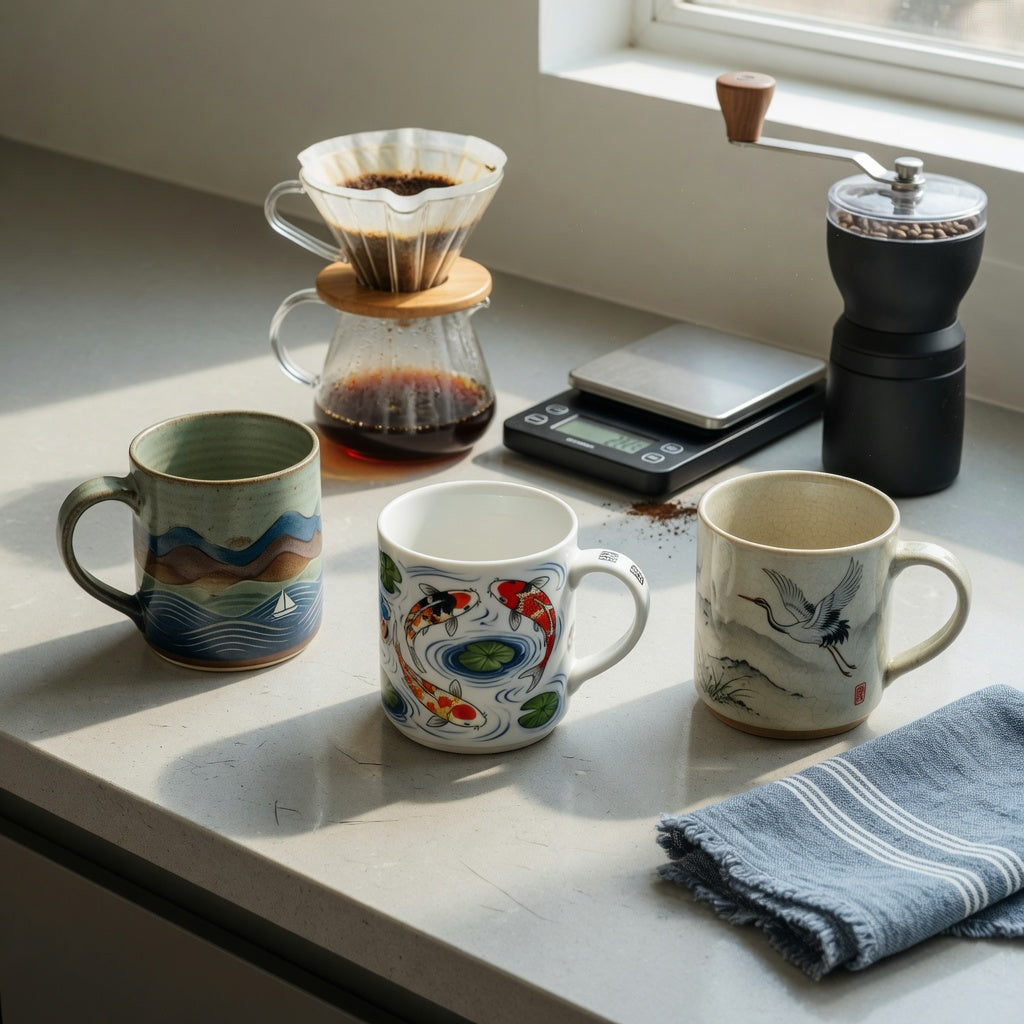
Here, art is a practical style lens. The goal is to choose imagery that works with the objects already visible on your counter, not to make unsupported claims about artistic origin. These three products give shoppers clear subject-based choices:
| Reader situation | Why the visible motif may fit | Product next step |
|---|---|---|
| You want scenery to be the station's main decorative element. | A mountain-and-sea subject adds recognizable landscape imagery without requiring assumptions about a named style or artist. | Inspect the capacity, ceramic form, handle, and complete photo set for the Mountain Sea Coffee Tea Mug. |
| You prefer an animal motif with a sense of movement. | The visible koi subject provides a distinct focal point that is easy to identify among otherwise plain brewing equipment. | Compare the photographed shape and listed details of the Koi Fish Coffee Tea Mug. |
| You want a recognizable bird subject rather than a landscape or fish design. | The named crane motif gives the station a clear visual theme without relying on unlisted provenance or symbolism. | Review the imagery, profile, and listed capacity of The Crane Coffee Tea Mug. |
If none of those subjects immediately fits, do not force the decision. Open the unique coffee mugs collection and compare current motifs and forms side by side. A collection view is especially useful when shape matters as much as the artwork.
How do ceramic material, handle shape, rim, and base affect daily use?
Ceramic is a practical everyday mug material, but it can chip after impact and its glazed surface can pick up fine marks from abrasive cleaning or rough storage. The most vulnerable areas are usually the rim, the handle junctions, and the foot ring. Those are the places we examine first when evaluating a mug for repeated counter use.
Use listing photos to inspect the visible form from several angles. A large-looking handle is not proof of generous finger clearance; the inner opening is what matters. A broad body may offer a stable-looking stance but take more room beside a scale. A narrower profile may save counter space while providing less margin if the mug is bumped. These are trade-offs, not automatic signs of higher or lower quality.
Also look at how the mug will be stored. The unglazed or less-finished foot of one ceramic mug can rub against the decorated surface of another when they are stacked. That contact can create scuffs even if neither mug has a manufacturing defect. Side-by-side shelf storage, a mug tree, or a soft separator between stacked pieces reduces that wear.
Which care and appliance claims should you confirm before buying?
Dishwasher-safe and microwave-safe are product claims, not assumptions we make from appearance. A glossy glaze does not prove dishwasher suitability. Likewise, the absence of an obvious metallic accent does not confirm that a mug belongs in a microwave. Follow the individual listing and supplied care guidance; if a claim is missing, treat the compatibility as unconfirmed.
For a conservative ceramic care routine, we recommend these steps unless the product instructions say otherwise:
- Allow the mug to return toward room temperature before exposing it to a major temperature change.
- Wash with mild dish soap and a soft sponge rather than steel wool, abrasive powder, or a rough scouring pad.
- Keep the mug separated from heavy cookware in the sink and dishwasher so the rim and handle are not struck during loading.
- Towel-dry the exterior if mineral spotting is visible after air-drying.
- Store decorated mugs side by side when possible instead of nesting or stacking them directly.
An art ceramic mug is not the strongest choice for camping gear, a job site, or a shared dish area where cups are dropped into metal bins. It is also not a substitute for a sealed travel mug. If spill resistance, long heat retention, or rough handling is the priority, a lidded insulated tumbler or plain utility mug will suit the job better.
Which mug makes sense for a desk, shared kitchen, or gift?
For a compact personal station, fit comes first. Choose the product with the confirmed capacity and photographed form that best match the open space beside your brewer. The motif can then provide the visual role you want: landscape, koi, or crane.
For an office desk, account for keyboards, notebooks, and charging cables. Measure the full handle span, not just the base, and consider whether an open ceramic mug is appropriate around electronics. Someone who carries coffee through hallways or commutes with it may be better served by a covered travel vessel.
For a shared kitchen, a distinct motif can make a personal mug easier to recognize, but storage and care routines matter. Frequent stacking and crowded dishwasher loads put more stress on rims, handles, and decorated surfaces. A simpler mug may be the more practical purchase if coworkers will handle it roughly.
For gifting, match the recipient's routine instead of selecting on imagery alone. Check their usual drink size, available shelf space, preference for hand-washing, and need for confirmed microwave or dishwasher use. A successful gift unboxing does not compensate for a capacity or care mismatch that appears the next morning.
Art coffee mugs home coffee station practical purchase checklist
Use this art coffee mugs home coffee station practical purchase checklist while each product page is open. Mark missing information as unknown rather than filling gaps from the photographs.
- Measure the recipient's or household's normal finished drink, including milk and ice.
- Allow comfortable headspace below the rim for carrying and stirring.
- Measure cabinet clearance above the mug's resting position.
- Check the maximum width from the mug body to the outside of the handle.
- Confirm that the base can sit fully on the station's level surface.
- Verify the listed material and capacity instead of estimating from the images.
- Compare the complete visible motif, including the side facing away from the handle if shown.
- Read the stated care and appliance guidance; treat omitted claims as unconfirmed.
- Plan storage that will not grind a ceramic foot ring against decorated surfaces.
- Match the situation to the next step: Mountain Sea for landscape imagery, Koi Fish for a fish motif, The Crane for a bird subject, or the collection for a broader comparison.
The practical test is simple: the mug should fit the drink, the available counter space, the user's grip, and the household's care habits. Once those conditions are satisfied, the visible artwork can make the final decision instead of distracting from an avoidable mismatch.
Frequently asked questions
How do I use an art coffee mugs home coffee station practical purchase checklist?
Measure your finished drink volume, shelf clearance, available base area, and maximum handle width first. Then compare those needs with the listed material, capacity, visible form, and confirmed care guidance. Choose the motif only after the physical fit works.
Are the Mountain Sea, Koi Fish, and Crane mugs the same size?
Do not assume that products in the same visual category share a capacity or dimensions. Read each listing separately and compare the photographed profiles. If a measurement needed for your station is absent, ask for it before ordering.
Can I wash an art coffee mug in the dishwasher every day?
Use a dishwasher only when the product guidance confirms that care method. Give the mug space so its rim and handle do not strike heavier dishes during the cycle. If dishwasher guidance is not stated, hand-washing with mild soap and a soft sponge is the conservative option.
Can these ceramic art mugs go in the microwave?
Microwave suitability must be confirmed by the individual product guidance. Do not infer it from the glaze, motif, or absence of visible metallic details. If the listing does not state microwave compatibility, use another confirmed microwave-safe vessel for reheating.
Which art coffee mug should I buy for a small home coffee station?
Choose the mug with a confirmed footprint, handle span, height, and capacity that fit your measured space; no motif is automatically better for a small counter. Compare the three linked products first, then review the current unique coffee mug options in separate tabs and eliminate any listing that leaves a required measurement or care claim unresolved.
More from our blog
Read more
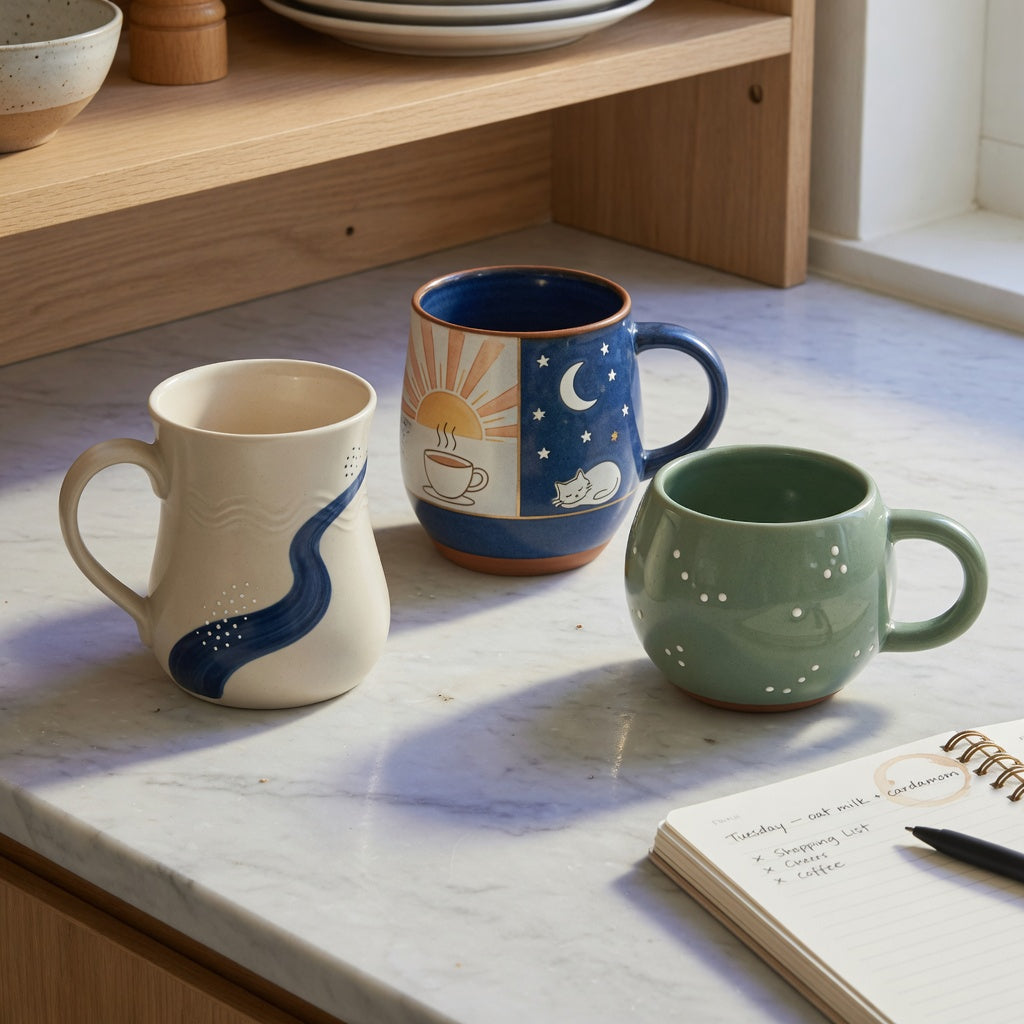
Ceramic Tea Mug Everyday Mug Rotation Practical Purchase Checklist
A shelf-first checklist for comparing ceramic material, listed capacity, visible form, and handle shape. Use it to choose a mug that will actually enter your kitchen or office rotation.
Read more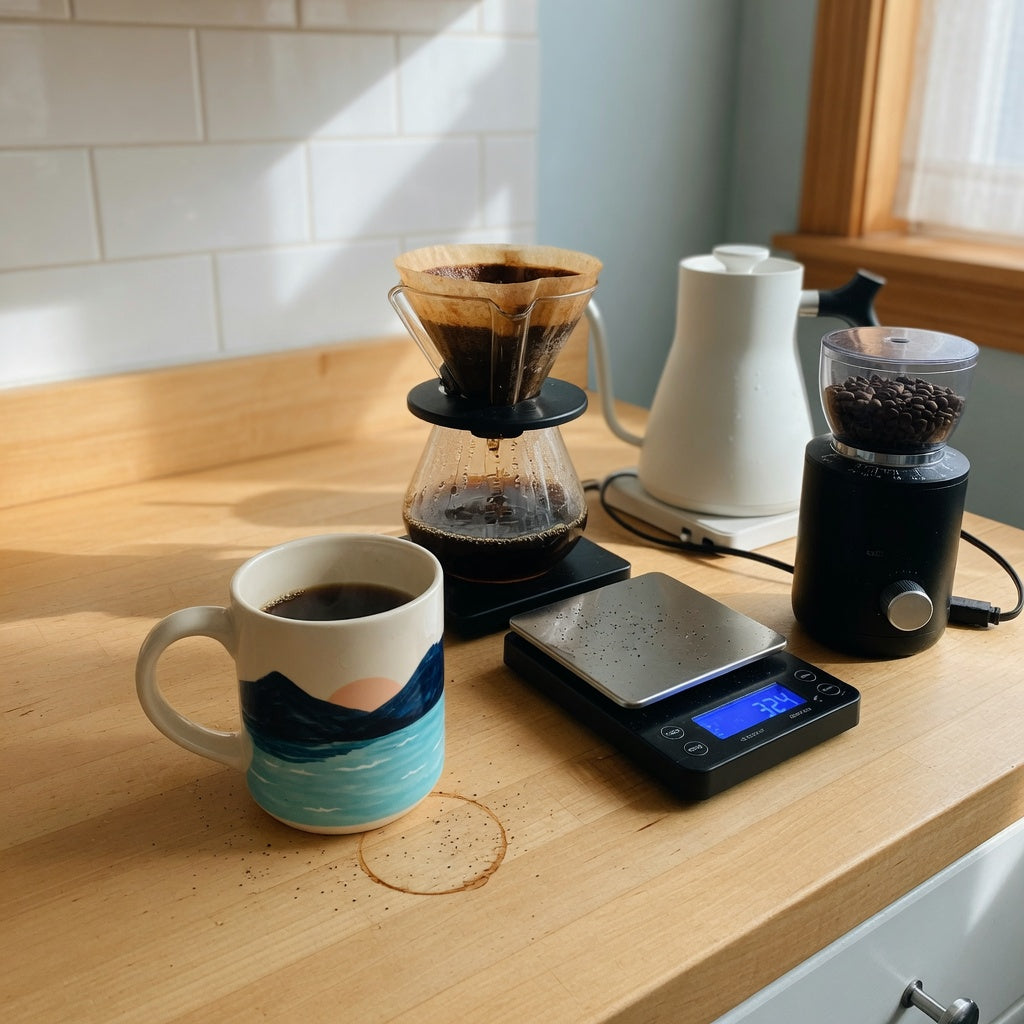
Ocean Coffee Mug Home Coffee Station Practical Purchase Checklist
Use real counter measurements, finished drink volume, and current listing details to compare CoffeifyMug's Mountain Sea and Landscape mugs. This checklist also covers care unknowns, handle clearanc...
Read more
Leave a comment
This site is protected by hCaptcha and the hCaptcha Privacy Policy and Terms of Service apply.