



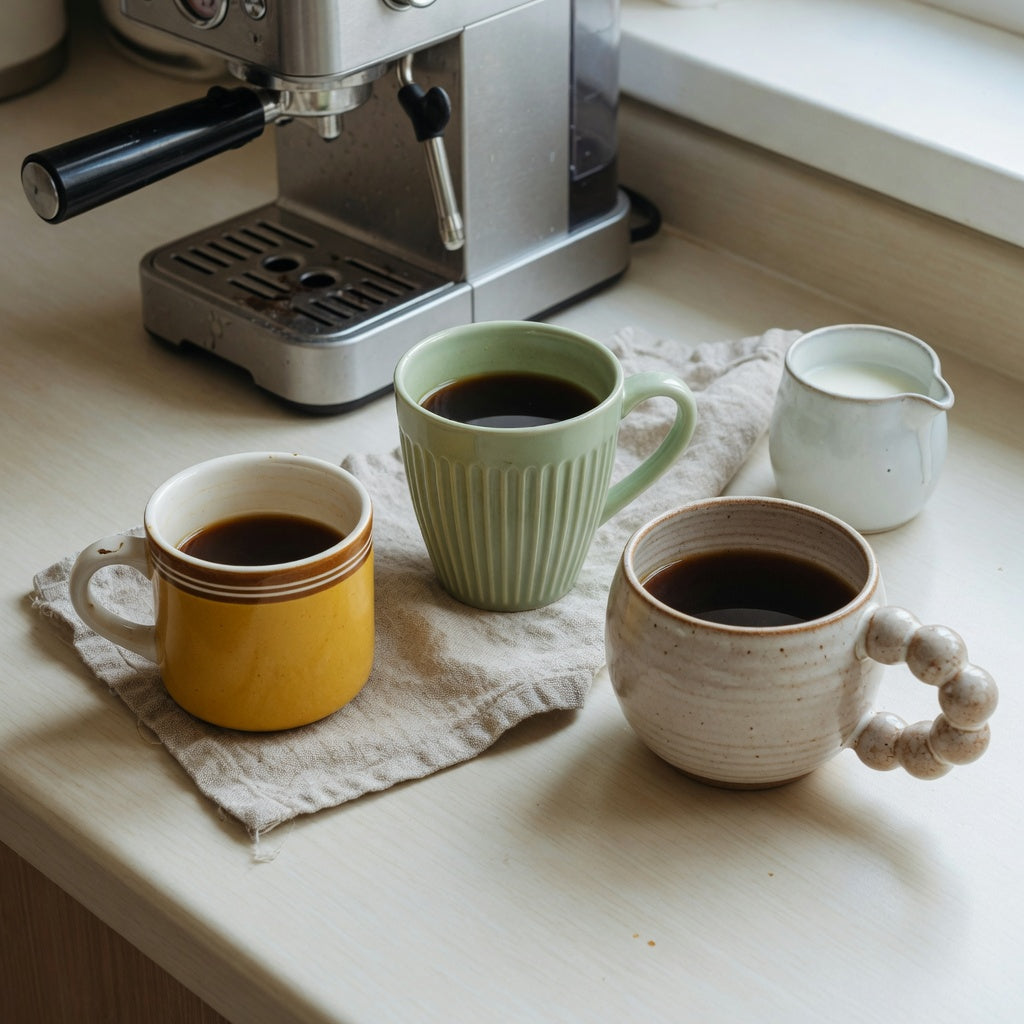
Unique Espresso Cups Weekend Coffee Practical Purchase Checklist
Reading time: about 10 minutes
Saturday coffee has a different rhythm. The machine has been on long enough for the group to settle, someone asks for a cortado instead of a quick shot, and the cup you choose becomes part of the pause. We handle these cups daily in our store, and the ones that earn repeat use are rarely the most dramatic. They are the ones that fit the machine, leave enough headspace for a double shot, and still feel good on the lip. This unique espresso cups weekend coffee practical purchase checklist is built around that slower routine: capacity, clearance, crema visibility, glaze questions, and care.
One honest note before the checklist: our ceramic cups are listed as coffee and tea cups with specific millilitre capacities, not as certified demitasse. Treat the listed capacity as your starting point, then decide whether the cup matches the drink you actually serve on a Saturday.
What does “unique” change on a slow Saturday pour?
Unique can mean a reactive glaze, a pleated wall, a ball handle, an artist pattern, or a colored set that looks nothing like the plain white cup at the office. All of that matters visually. What matters at the machine is less romantic: the cup has to sit under the spout, take the pour without splashing, and feel comfortable when you drink from it. A broad rim and a narrow base can make a small shot feel more generous, while a heavy novelty shape can look better in photos than it feels in the hand.
Our weekend test is simple. Pull a double shot into the cup. Add the splash of milk or water you normally add. Then judge three things: how much headspace is left, whether you can see the crema, and whether the rim lands comfortably on your lip. A cup that fails one of those tests may still be a beautiful object, but it is not the one you will reach for on Sunday.
Unique espresso cups weekend coffee practical purchase checklist: start with capacity, not the product name
Most confusion starts with one number. A 2 oz, 3 oz, 60 ml, 80 ml, or 170 ml listing can describe the cup’s total capacity, not the shot inside it. Those are not the same thing. An Italian certified espresso is about 25 ml, and older specialty definitions often cite 25–35 ml. A classic demitasse is commonly 50–100 ml, while Nescafé’s guide describes its demitasse as about 60 ml. The extra room is for crema and headspace, not for a bigger shot.
Use this quick rule:
- 25–35 ml single shot: a 50–100 ml demitasse is the classic match. A 170 ml cup will leave a lot of empty space and change the presentation.
- Double shot with a splash: 80–170 ml can work, depending on how much milk or water you add. Check the actual capacity, not the product name.
- Cortado or small milk drink: 170–200 ml is a practical range for many weekend pours.
- Generous milky coffee or tea: 250 ml is closer to a small mug than an espresso cup.
This is where our own range sits. The Retro Coffee Tea Cup is listed at 170 ml, the Pleated Coffee Tea Cup at 200 ml, and the Ball Handled Coffee Tea Mug at 250 ml. None is a 60 ml demitasse. If you want a classic single-shot cup, these are not that. If your weekend coffee is a double shot with room, a cortado, or a milky coffee you sip slowly, the capacities make more sense.
| Cup | Listed capacity | Weekend role | What to verify |
|---|---|---|---|
| Retro Coffee Tea Cup | 170 ml | Double shot with room, or a small cortado | Current listing for dimensions and care guidance |
| Pleated Coffee Tea Cup | 200 ml | Cortado, small flat white, or tea | Current listing for dimensions, rim feel, and care guidance |
| Ball Handled Coffee Tea Mug | 250 ml | Longer milky coffee or tea after espresso | Current listing for handle clearance and care guidance |
Will the cup clear your group head, handle, and shelf?
This is the least glamorous question and the one most likely to cause a return. Group-head clearance varies. So does the distance between the spout and the drip tray, especially if you use a bottomless portafilter or a taller scale. Product pages for unique cups often list capacity but not outer height, base diameter, or handle projection. We list capacities for the three cups above; if clearance is tight, ask us for the current height and base measurements before you buy.
Run this fit check before checkout:
- Measure from the drip tray to the group spout with your current cup in place.
- Check the cup’s outer height, not just its volume.
- Look at the handle: a wide ball handle or a long loop can hit the drip tray or sit awkwardly under the spout.
- Measure your shelf or cabinet gap if the cups will be stacked or stored upright.
- Decide whether you need a saucer. A saucer adds stability but also height and storage space.
Handleless cups can look cleaner and stack more easily. Handled cups feel more familiar for milk drinks and tea. Neither is automatically better; the right answer depends on whether you are pulling one shot or serving two people at the kitchen counter.
How do you read crema through a dark glaze or an uneven rim?
A white or clear interior is not a rule, but it is a useful diagnostic. Crema color tells you something about the extraction, and a dark reactive glaze or a metallic luster can hide the contrast. If you like to watch the shot settle, choose a cup with a light interior or a clear glass wall. If you care more about the outside finish, accept that you will judge the pour by taste and texture rather than by eye.
Shape matters too. A narrower base and a wider rim can make a small volume feel more generous, but a very irregular rim can be felt on the lip. Square cups and novelty shapes can be charming in photos. In the hand, they can be harder to sip from and harder to clean at the corners. We would rather sell you a distinctive cup you actually use than a sculptural one that lives at the back of the cabinet.
Are decorative glazes and bright patterns safe for hot coffee?
This is where unique ceramics deserve more than a vibe check. The FDA warns that lead in ceramic glazes or decorations can leach into food or drink if pottery is not properly fired. It also notes that some traditional pottery labeled lead free has still shown extractable lead at or above FDA action levels, and that washing or boiling cannot remove lead from pottery. The FDA’s action level for lead in ceramicware cups and mugs is 0.5 micrograms per milliliter of leaching solution.
The FDA flags higher-risk pieces as handmade ware with a crude or irregular look, antiques, damaged or worn ware, flea-market finds, unknown makers, and pieces brightly decorated in orange, red, or yellow. It advises against food use if a lead test is positive or if the base is marked not for food use. That does not mean every handmade cup is unsafe. It means a distinctive glaze is a reason to ask for current food-contact information, not a reason to assume.
For our listed cups, we describe the visible ceramic finish and the capacity. We do not use this article to claim a specific glaze certification or test result. If you need that documentation for a gift or a daily-use cup, ask us before ordering and check the current product listing. A cup marked ornamental or not for food use should stay ornamental.
Which CoffeifyMug shape matches your weekend drink?
Match the cup to the drink you actually make, not the drink you imagine making. Here is how we would sort the three formats:
- You pull a double shot and add a small splash: the 170 ml retro-style cup gives you room for the shot and a little milk without turning it into a full mug. It is still not a classic demitasse, so expect more headspace than a 60 ml cup.
- You serve cortados or small flat whites for two: the 200 ml pleated cup is the middle option. The pleated wall gives it a different look on the shelf, while the capacity suits a longer weekend drink.
- You want one generous cup for milky coffee or tea after the espresso: the 250 ml ball-handled mug is the closest to a small mug. It is the least espresso-like of the three and the most flexible if the same cup has to serve tea later.
If you are still comparing silhouettes, browse the unique coffee mugs collection to see the full range in one place. Pay attention to the listed capacity first, then compare the finish and handle shape against the measurements of your machine and shelf.
What care routine keeps a weekend cup ready for Wednesday?
A weekend cup still has to survive a weekday rinse. Before you buy, check the current listing for dishwasher and microwave guidance. Do not assume that because a cup is ceramic it is dishwasher safe, and do not assume a metallic rim or hand-painted decoration is microwave safe. Those are exactly the details that get left out of styled photos.
Our practical care routine for decorative ceramic cups:
- Hand wash first if you want to protect a glaze, a gold accent, or a hand-painted pattern.
- Dry the foot of the cup fully before stacking it; trapped water under a base is a common source of marks and smells.
- Do not stack heavy mugs on delicate handles or rims.
- Skip the microwave for any cup with metallic decoration unless the listing explicitly says otherwise.
- Preheat with hot water if that is part of your espresso routine. We are not making heat-retention claims for these cups; preheating is a habit, not a specification.
If you want a cup for daily dishwasher cycles and heavy office use, a simple commercial demitasse may serve you better. Unique cups earn their place when the look matters and you are willing to check the care details.
Frequently asked questions
Is a 170 ml cup too big for espresso?
It depends on the shot you pull. A classic single espresso is about 25–35 ml, and a 50–100 ml demitasse is the traditional match. A 170 ml cup is better suited to a double shot with room for crema, a small cortado, or a coffee you plan to sip slowly. It is not a classic single-shot cup.
Do unique espresso cups need a white interior?
No, but a white or clear interior makes crema easier to see. Dark glazes, metallic lusters, and heavily patterned interiors can hide the contrast between crema and coffee. If you judge extraction by appearance, choose a lighter interior; if you judge by taste, the exterior finish can matter more.
What should be on a unique espresso cups weekend coffee practical purchase checklist?
Start with capacity, then check machine clearance, base diameter, handle projection, crema visibility, glaze and food-contact information, and care instructions. Add saucer and storage needs if you are buying a set. The checklist should tell you whether the cup fits your actual weekend drink, not just your shelf.
How can I check whether a decorative ceramic cup is safe for hot coffee?
Ask the seller for current food-contact and glaze information, and look for a not-for-food-use marking on the base. The FDA’s action level for lead in ceramic cups and mugs is 0.5 micrograms per milliliter of leaching solution, and a lead-free label alone has not always guaranteed zero extractable lead in traditional pottery. If a piece is decorative, damaged, or marked ornamental, do not use it for coffee.
Which cup should I start with if I mostly drink cortados?
The 200 ml Pleated Coffee Tea Cup is the closest match among our three listed capacities for a cortado or small flat white. Before ordering, confirm the outer height and handle projection against your machine’s clearance. If you prefer more room for a double shot with less milk, the 170 ml option is the better starting point.
More from our blog
Ready to pick your mug? Two ways to save on today's order:
Ordering 1–3 mugs? Get an extra 10% off your 1st order with code 10_OFF Apply 10% Off & Shop Wooden-Handle Mugs →
Gifting 4+ mugs? Buy 3, Get the 4th Free applies automatically at checkout (no code needed; offers do not stack) · Free standard shipping (Nov pre-Christmas delivery: 15–20 calendar days US) · Free replacement if chipped in transit.
Popular mug buying guides: Ceramic Tea Cups & Infuser Mugs · Ceramic Mugs with Lids Compared · Wooden-Handle Tea Infuser Mugs Compared · Christmas & Secret Santa Mugs 2026 · Espresso & Cortado Cups Guide · Cup & Saucer Gift Sets · All 25 Mugs Spec Table · Mug Size Guide · Shipping & Promo FAQ
FIRST ORDER 10% OFF (CODE: 10_OFF) · OR BUY 3, GET THE 4TH FREE


Read more
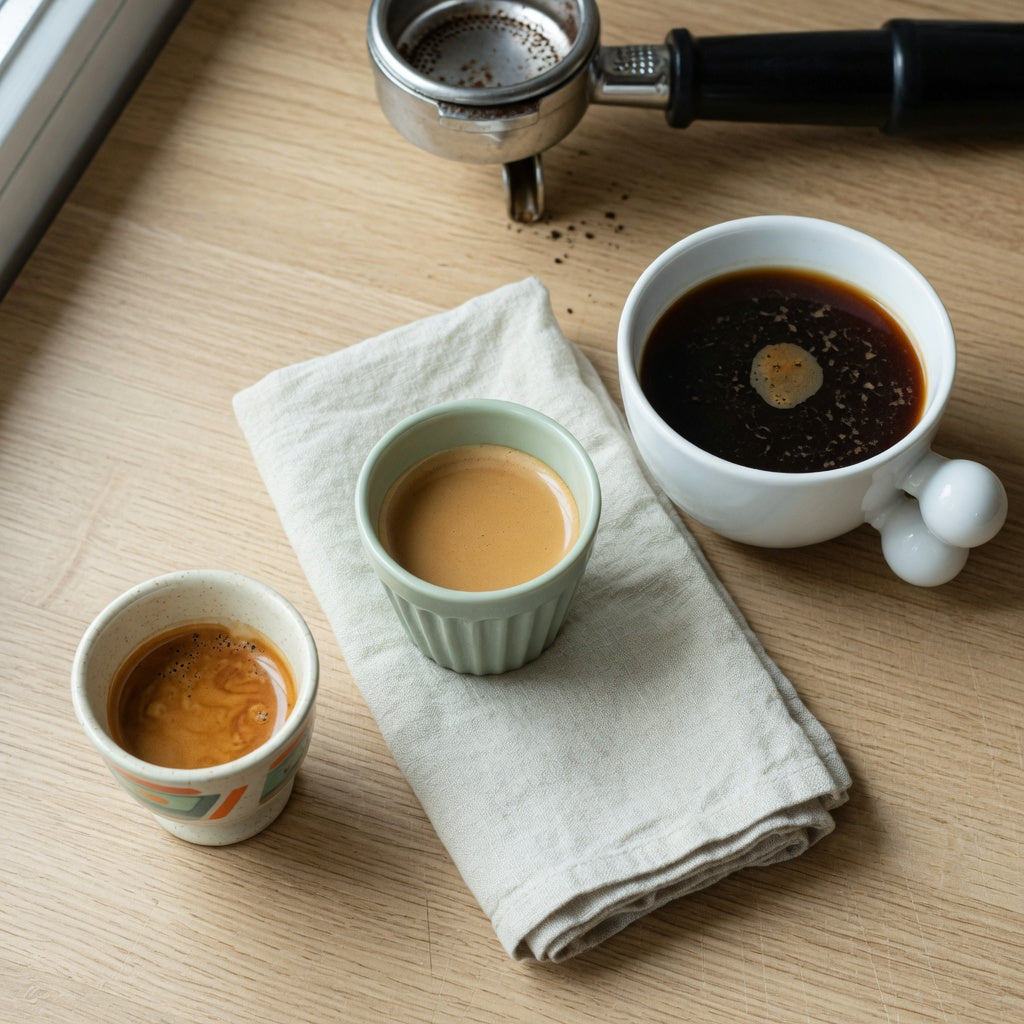
Unique Espresso Cups: Shared Household Product Shortlist Guide
A scenario-by-scenario shortlist for two-person kitchens: which of our three ceramic capacities suits the straight-double drinker, the cortado drinker and the tea drinker, plus the fit, glaze and c...
Read more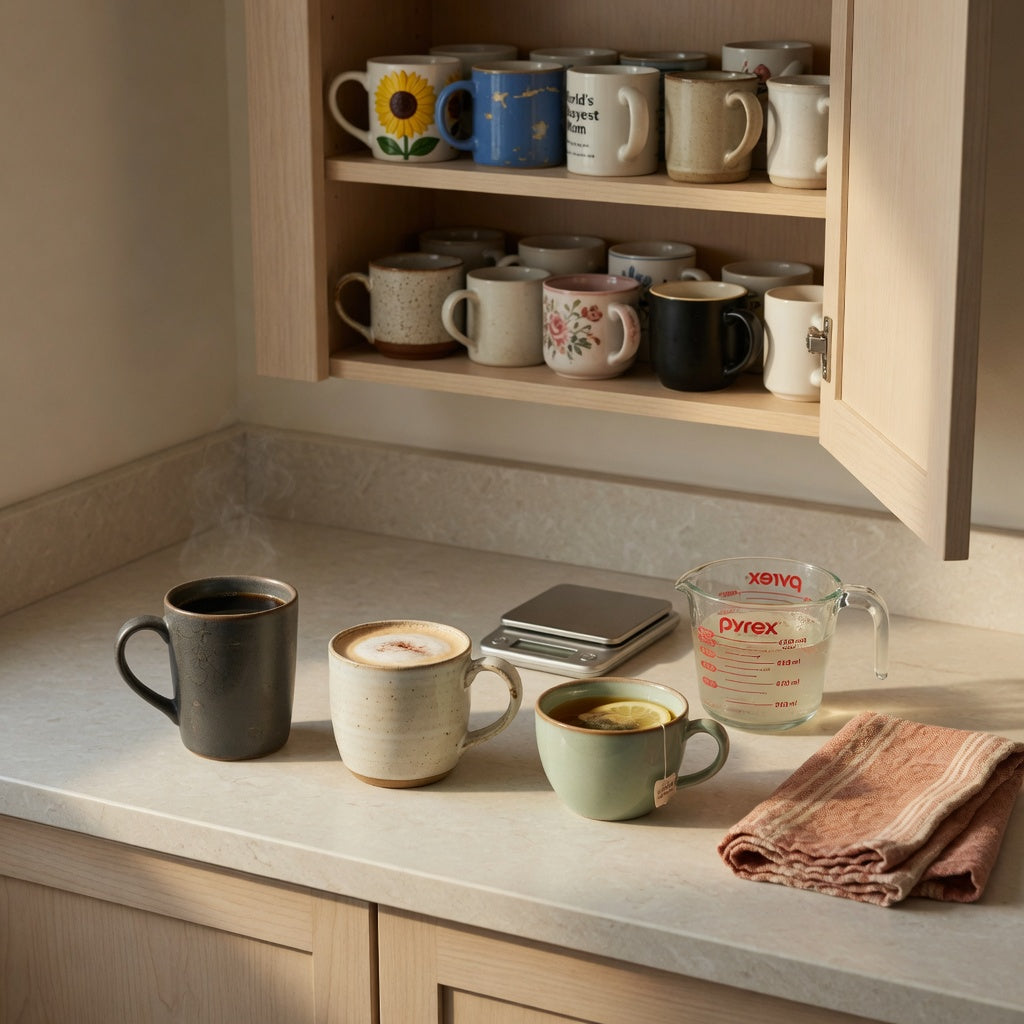
14 Oz Ceramic Coffee Mugs Shared Household Product Shortlist Guide
A scenario-first shortlist for a shared kitchen: sort drinkers by working pour, then match them to 400 ml, 440 ml, or 480 ml mugs. We also cover handle fit, cabinet height, care labels, and what a ...
Read more
Leave a comment
This site is protected by hCaptcha and the hCaptcha Privacy Policy and Terms of Service apply.