



Cute Espresso Cups Weekend Coffee Practical Purchase Checklist
Reading time: about 10 minutes
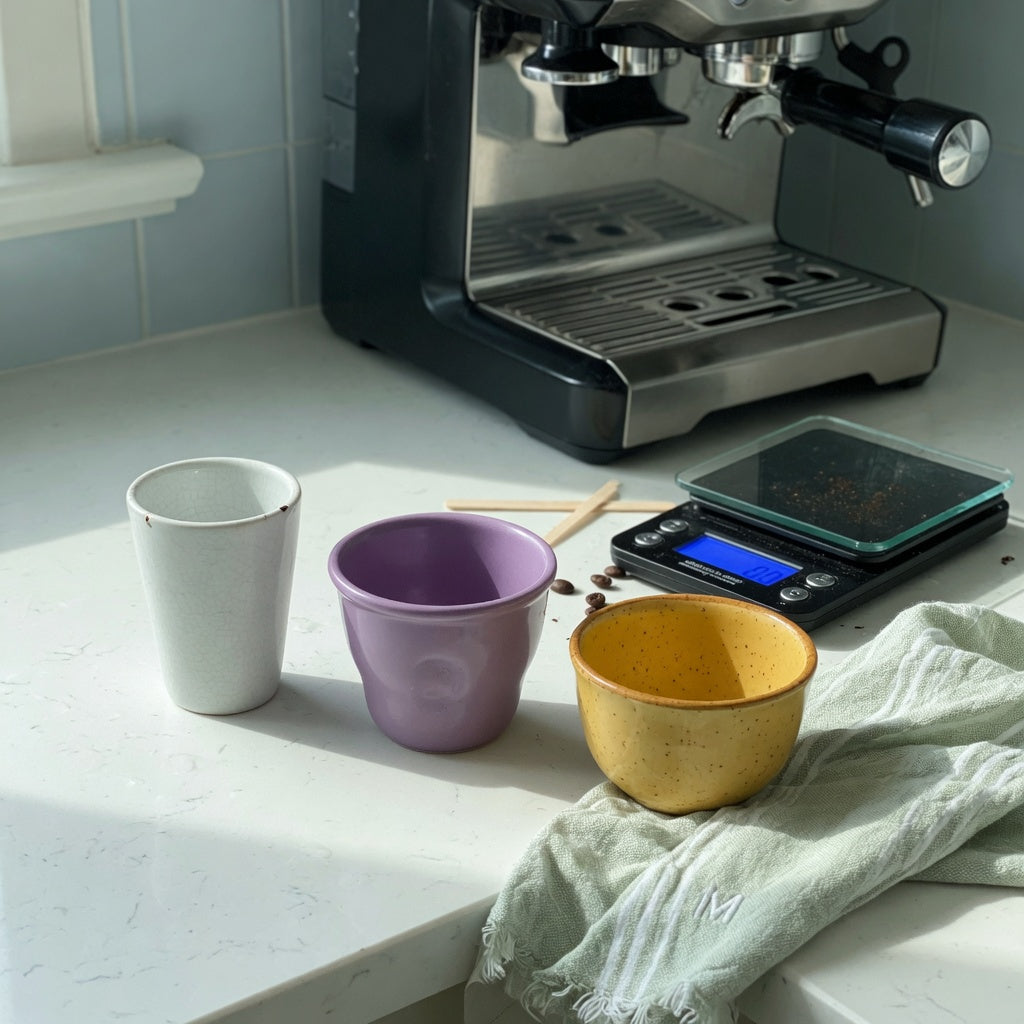
Saturday, 8:40 a.m. The portafilter is locked, the scale is on the drip tray, and the cup you bought for its glaze is sitting just under the spout—close enough that you have to tilt it in. We see a version of this in our store most weeks: a cup bought for a photo, then returned because it misses the machine, the drink, or the care routine. This cute espresso cups weekend coffee practical purchase checklist is built around the checks that prevent that return.
You do not need a lab. You need a ruler, your own machine, and an honest answer about whether you drink straight shots, milky weekend drinks, or tea from the same cup.
Where the cute espresso cups weekend coffee practical purchase checklist starts on a slow Saturday
Start with machine fit, because it is the one detail a pretty product page rarely answers. We do not know of a published standard for spout-to-tray clearance. The reliable number is the one you measure with the portafilter locked in.
- Height: measure from the underside of the spout to the drip tray, then subtract a few millimeters so the cup slides in without scraping.
- Rim opening: a double spout sends two streams. Measure the inside opening, not the widest part of the body, so both streams land in the cup.
- Scale clearance: if you weigh shots, the cup plus scale has to fit under the spout. A tall cup on a thin scale can be tighter than a short cup on a thick one.
- Lift-out room: if the machine sits under a cabinet, you need room to lift the cup out, not just slide it in.
Our Retro Coffee Tea Cup is listed at 170 ml, the Pleated Coffee Tea Cup at 200 ml, and the Ball Handle Coffee Tea Mug at 250 ml. All three are ceramic, and all three hold more than a traditional single-shot cup. That is the fact to plan around: these are compact ceramic vessels, not 50 ml demitasse cups. Listed capacity does not tell you the height, so if your spout sits low, check the current listing dimensions or send us your measurement before ordering. The full lineup sits in our unique coffee mugs collection.
What do 170, 200, and 250 ml actually mean for a weekend pour?
Espresso sizes overlap. Traditional Italian espresso is often described around 25 ml, specialty definitions commonly land at 25–35 ml, and a classic china demitasse is often around 50 ml. Training guidance sometimes allows up to 90 ml for practice. None of those numbers is 170 ml, and that is not a flaw in our cups. It is a different job.
| Model | Listed capacity | Weekend use it suits | What it is not for |
|---|---|---|---|
| Retro Coffee Tea Cup | 170 ml | A lungo, a small macchiato, a tasting pour, or tea for one | A classic tiny demitasse presentation |
| Pleated Coffee Tea Cup | 200 ml | A macchiato with a generous spoon of foam, a small cortado-style drink, or coffee with a splash of milk | A straight shot if you want the cup filled close to the rim |
| Ball Handle Coffee Tea Mug | 250 ml | A larger weekend coffee, a milk-heavy drink, tea, or a guest cup | A small espresso-only cup |
The listed capacity, ceramic body, and visible form are the product facts we can confirm. We are not assigning a shot size or a heat-retention rating to these cups. If your weekend drink is a straight 25–35 ml shot and the classic proportions matter to you, a 50–90 ml demitasse is the better tool. Our cups make more sense when the cup has to carry a longer drink, a milk finish, or a second use for tea.
The crema test: why the inside of the cup matters more than the outside glaze
A cute exterior is what gets the cup off the shelf. The interior is what you look at every time you pull a shot. A plain white interior makes crema easier to read: you see the color, the foam texture, and the edge of the shot without a pattern competing for attention. A dark or heavily patterned interior can hide that contrast, which matters if the weekend ritual includes looking at the shot before you drink it.
We cannot tell you how a specific glaze will read in your kitchen light from a styled photo. Use the listing images, zoom the inside of the cup, and ask us for an unedited photo if the interior is not shown clearly. If crema visibility is a priority, put interior color ahead of the exterior pattern. If the cup is mostly for tea or milk drinks, the interior color matters less.
Handle, rim, saucer, and glaze: what we can confirm and what to ask us
This is the part of a cute espresso cups weekend coffee practical purchase checklist where small design choices become daily annoyances or daily pleasures. We can describe the visible form and the listed capacity. We cannot promise that every handle feels right in your hand, that a saucer is included, or that a painted glaze will survive every dishwasher cycle.
- Handle: a small loop can be decorative rather than functional. Look for a listing photo that shows a hand holding the cup, or ask for one. A 250 ml cup with milk needs a fuller grip than a 170 ml cup drunk black.
- Rim: a thin rim feels more delicate against the mouth; a rolled or thicker rim is more forgiving if the cup gets knocked against the portafilter. Judge the visible form, and do not assume wall thickness from a styled photo.
- Saucer: a saucer catches drips and gives the cup a landing zone beside the machine. It also adds height on the counter and another item to wash. In a small kitchen, stackability can matter more than matching saucers.
- Glaze variation: speckles, reactive glazes, and hand-painted patterns can vary from piece to piece. That is part of the appeal for a gift. If you need four identical cups, ask whether the current batch is consistent before you order multiples.
Daily driver, gift, or display piece? Matching the cup to the person
A cute cup is an easy gift and a harder daily driver. The difference is usually the drink, not the design. Buy for the routine the person actually has, then let the glaze be the bonus.
- For a straight-espresso drinker: the 170 ml Retro is the closest fit in our lineup, but label it honestly as a lungo or tasting cup rather than a 50 ml demitasse. If they want the classic tiny cup, this is not that purchase.
- For a milk-drink drinker: the 200 ml Pleated gives more room for foam and a spoon. It is the middle size we point to when one cup has to cover espresso and a milky drink.
- For a household that drinks tea and coffee: the 250 ml Ball Handle is the most versatile single size, especially for guests who take their coffee light.
Two gift checks: confirm the cup is labeled for food use, and confirm whether the set arrives in gift-ready packaging. Plush or purely decorative espresso-cup objects are not drinkware, even when they appear in the same search results. If the recipient prefers a larger mug for weekend coffee, start with our unique coffee mugs collection and compare shapes rather than assuming the smallest cup is the right gift.
Care and safety checks that belong on the checklist before the first wash
Ceramic is durable, but ceramic is not a care instruction. The U.S. FDA explains that lead in ceramic glaze is bound when pottery is fired correctly; if it is not properly fired, the lead may not fuse and can contaminate food. The agency also warns that some traditional pottery labeled lead free has still shown extractable lead, and that ceramicware meant only for decoration must be identified so it is not used with food. That is why we treat food-contact status as a listing question, not a category assumption. The FDA guidance on lead-glazed pottery is worth reading if you buy handmade or imported cups from any brand.
For our cups, we can confirm the listed capacity and the ceramic body. We do not publish a blanket dishwasher promise for every glaze and cycle, and we do not make heat-retention claims. Check the current care wording on each product page before the first wash. If the glaze is painted, hand-painted, or metallic, hand washing is the safer habit. Avoid pouring cold water into a hot cup or setting a cold cup on a hot burner; thermal shock is a common cause of hairline cracks that show up weeks later.
Chips usually happen at the rim, where cups get stacked and knocked. Inspect the rim after each wash if you machine wash, and stop using any cup with a crack that catches a fingernail.
Before you add to cart: a five-line fit and care check
Run this list before checkout, especially if you are buying more than one cup:
- Measure spout-to-tray height and the rim opening on your machine.
- Name the drink: a 25–35 ml shot, a modern double, a macchiato, or tea.
- Match capacity: 170 ml Retro, 200 ml Pleated, or 250 ml Ball Handle.
- Check the interior color for crema visibility and the handle shape for grip.
- Read the current care wording; hand wash painted or novelty glazes.
If you are between two sizes, choose the smaller cup for espresso-forward weekends and the larger one for milk and tea. Start with the unique coffee mugs collection and compare the three capacities side by side. If your machine clearance is tight, send us your measurement before you order, and we will tell you which listing to check first.
Frequently asked questions
Is 170 ml too big for a single espresso?
For a traditional 25–35 ml shot, yes. A 170 ml cup leaves a lot of empty space and will not look like a classic demitasse. It works better for a lungo, a small macchiato, a tasting pour, or tea. If you want the traditional tiny-cup experience, look for a 50–90 ml cup instead.
Will the Retro, Pleated, or Ball Handle cup fit under my espresso machine?
That depends on your machine, not on the cup category. Measure from the spout to the drip tray with the portafilter locked in, then compare that with the current listing height. We do not know of an industry-standard clearance number, so measure before ordering if your spout sits low.
Are these ceramic cups dishwasher safe?
We do not publish a blanket dishwasher promise for every glaze and cycle. Check the current care wording on the exact product page, and hand wash painted or novelty finishes if you want to protect the surface. Avoid thermal shock either way.
What is the first thing to check on a cute espresso cups weekend coffee practical purchase checklist?
Measure machine clearance first, then choose capacity by the drink you actually make. After that, check interior color for crema visibility, handle shape, saucer preference, and the current care instructions. Design comes last because it is the easiest thing to fall in love with and the hardest thing to return around.
Can I use the 200 ml or 250 ml cup for tea instead of espresso?
Yes. The larger capacities work for tea, and the 250 ml Ball Handle is the most versatile for mixed households. Just keep the cup’s food-contact labeling and care instructions in mind, especially if you use it daily, and start from our unique coffee mugs collection if you want to compare shapes.
More from our blog
Ready to pick your mug? Two ways to save on today's order:
Ordering 1–3 mugs? Get an extra 10% off your 1st order with code 10_OFF Apply 10% Off & Shop Wooden-Handle Mugs →
Gifting 4+ mugs? Buy 3, Get the 4th Free applies automatically at checkout (no code needed; offers do not stack) · Free standard shipping (Nov pre-Christmas delivery: 15–20 calendar days US) · Free replacement if chipped in transit.
Popular mug buying guides: Ceramic Tea Cups & Infuser Mugs · Ceramic Mugs with Lids Compared · Wooden-Handle Tea Infuser Mugs Compared · Christmas & Secret Santa Mugs 2026 · Espresso & Cortado Cups Guide · Cup & Saucer Gift Sets · All 25 Mugs Spec Table · Mug Size Guide · Shipping & Promo FAQ
FIRST ORDER 10% OFF (CODE: 10_OFF) · OR BUY 3, GET THE 4TH FREE


Read more
Cute Espresso Cups Compact Kitchen Product Shortlist Guide: 170–250 ml
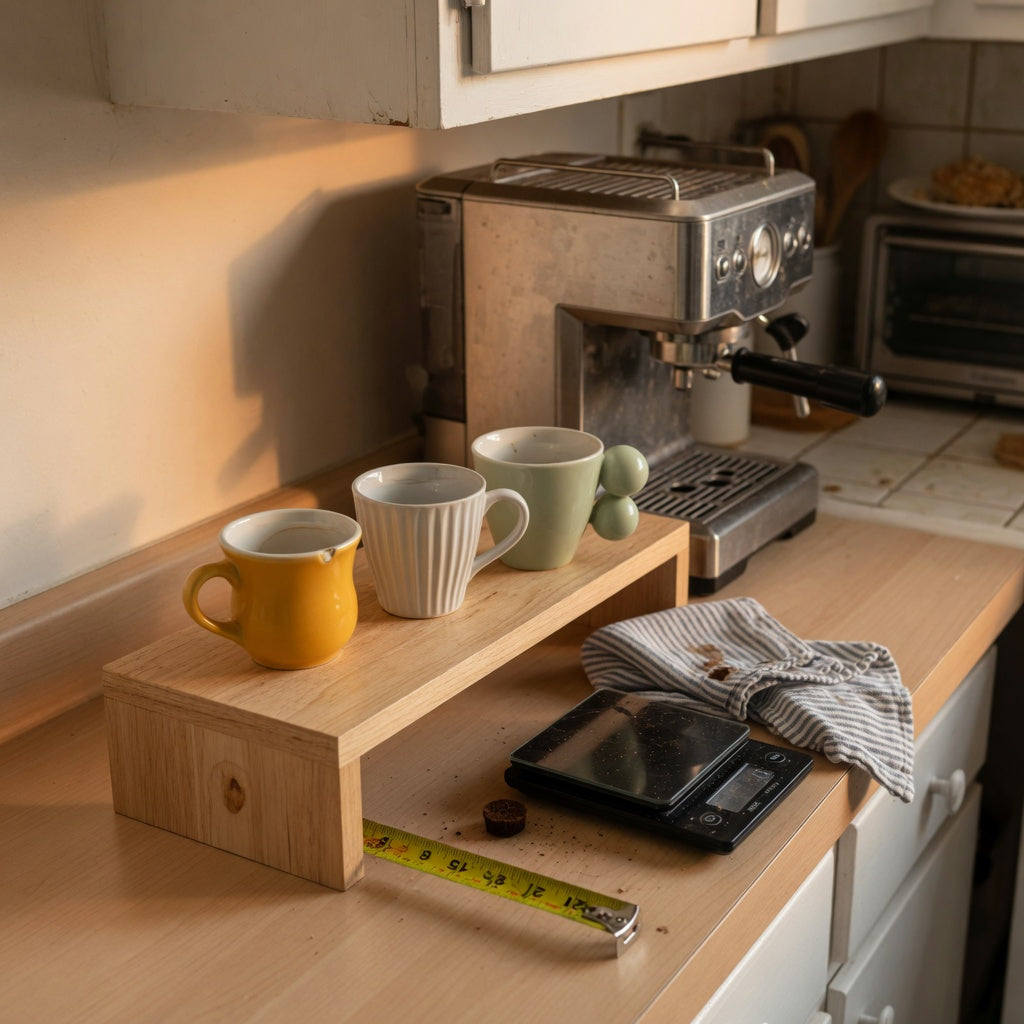
A scenario-based shortlist of 170 ml, 200 ml, and 250 ml ceramic cups for tight counters, with the spout-clearance and shelf measurements that decide which one to buy—and when to skip all three.
Read more
Ceramic Latte Cups Shared Household Practical Purchase Checklist
A shelf-side checklist for buying ceramic latte cups in a shared household: verify real pour volume, map capacity to each drinker, judge handle clearance at full weight, and read glaze claims again...
Read more
Leave a comment
This site is protected by hCaptcha and the hCaptcha Privacy Policy and Terms of Service apply.