

Tall Ceramic Coffee Tea Mug Size: What Buyers Compare
Reading time: about 13 minutes
On our packing counter, shoppers set down two mugs and call both of them tall. One is a narrow column, higher than a diner mug, with a modest pour once you leave room at the rim. The other is wide and heavy, tall only because the listed capacity is large. Same word, two buying problems. Tall ceramic coffee tea mug size is the phrase that brings people to that counter, in the store or in a search box, and it usually bundles a high silhouette, a liquid capacity, and sometimes a cafe menu name that was never a ceramic dimension. If the Mountain Tall Ceramic Coffee Mug is on your short list, split those ideas before the photo does the deciding.
What tall ceramic coffee tea mug size actually describes
Retail pages use tall for a silhouette, a capacity, or both. No government standard and no trade body sets one height, one diameter, or one ounce count for the category. Two listings can share the word and look nothing alike once the tissue paper comes off.
- Physical height. The exterior stands higher than a familiar diner mug. The body is often narrower, so the same pour looks like more drink in a photo.
- Liquid capacity. The page leads with ounces or milliliters. That figure is often brim-full, which you will not pour if you want milk, foam, or room for tea leaves.
- Cafe menu names. Chains label drinks Tall, Grande, and similar words. Those names describe a beverage portion, not the exterior height of a mug you keep at home.
We see the mismatch at unboxing. Someone wanted a long office coffee and received a piece that is tall in the hand and modest once headspace is left. Or they wanted a cafe-looking latte mug and received a wide bowl with a big ounce claim that will not clear a short cabinet shelf. The word did not fail. The measurement behind it was never on the page.
Brim ounces versus the pour you can actually drink
Listings love one number. You need two: brim capacity and usable capacity. NIST's approximate kitchen equivalents treat one US fluid ounce as about 30 milliliters. On that scale, 12 fl oz is about 360 ml and 16 fl oz is about 480 ml. A page that says 350 ml sits near a 12 fl oz brim fill, not in a larger size class. Use the conversion to translate a listing into a pour you recognize. It is not proof that any particular mug holds that amount.
Leave room above the liquid. Black coffee with a splash of milk needs less unused rim than a latte crowned with foam. Loose-leaf tea needs space for leaves to open, and an infuser basket takes interior diameter away from the drink. In our store we talk about a finger of unused rim rather than a fill to the lip. Brim-full is how a warehouse can check a claim. It is not how you carry a mug across the kitchen.
Brim capacity is a warehouse number. Usable capacity is the pour you can walk with.
Weight follows the pour. Water runs close to an ounce of weight for each fluid ounce, so a 12 fl oz fill adds roughly three-quarters of a pound of liquid and a 16 fl oz fill adds about a pound, before the empty ceramic. A tall mug that feels easy for the first sips can tire a wrist halfway down, especially with thick walls. Thicker ceramic holds heat a little longer and starts heavier in the hand. Thinner walls feel easier and lose heat faster at the rim. Neither is a defect. They are different jobs, and pages rarely print empty weight and full weight side by side.
If the Mountain Tall page shows one capacity figure, treat it as brim-full until the text says it is a drinking fill. A title that says tall is not an ounce spec. Confirm the ounces or milliliters, and whether drinking room is already subtracted, on the current listing.
Exterior height, rim width, base diameter, and handle clearance
Capacity without geometry is how a mug fails the spot where you drink. In our experience, five measurements predict daily use better than the headline size.
| Measurement | What it changes | What to verify on the page |
|---|---|---|
| Exterior height | Brewer gap, shelf, dishwasher rack, and how high the mug sits in a car | Is height to the rim, or does it include the handle? |
| Rim diameter | Sip feel, foam surface, aroma, and whether a spoon or infuser fits | Interior or exterior? Listings mix them. |
| Base diameter | Stability on a desk, and whether the foot drops into a cup holder | Is the base narrower than the body? |
| Handle opening | Finger clearance on a full, hot mug | Two or three fingers, or only a pinch grip? |
| Empty and full weight | Desk comfort and how top-heavy a tall fill feels | Is empty weight printed next to capacity? |
A tall, narrow foot is the miss we watch for. The mug looks steady in a styled photo, then rocks when you press the rim, or feels top-heavy once it is full. Set an empty mug on a flat counter and try to rock the foot with one finger. A wobble you can already feel gets worse with hot liquid. A wider base is calmer on a desk and worse in a cup holder. An unglazed foot ring can also scratch bare wood, so we keep a coaster under ceramic even when the glaze looks finished.
Handle trouble shows up on the first hot, full lift. A loop too tight for the hand you have, a sharp join at the upper attachment, and a handle set so high that the mug tips forward are the problems that come up in our conversations. If the listing does not show handle clearance, judge the photos against your fingers. Do not trust a comfort adjective. For soup or a very full tea, you want a real grip, not a pinch on a hot wall.
Brewer gap, cabinet shelf, dishwasher rack, and cup holder
These checks belong to your equipment, not to a size adjective. A single-serve brewer's opening changes when the drip tray stays in. People pull the tray to sneak a taller cup under the spout, then live with a shorter drip path and more splash on the counter. Measure from the platform you actually use up to the dispenser. Compare that gap with exterior height, not with ounces. If height is not published, the mug is a guess for brewer use.
Cabinet shelves and dishwasher racks fail the same quiet way. A mug can fit the tub and still strike the upper rack because the handle sticks up. Compact drawers have less vertical room than a full-size rack. Tall silhouettes rarely nest, so plan on one layer if you stack, and check whether a long handle stops the rack from sliding home.
Car cup holders are cut for a base diameter, not a profile shot. A tall ceramic mug that drops into the opening can still sit so high that braking tips it. Ceramic is a poor travel vessel. It breaks, a typical open mug has no leakproof lid, and a full cup is heavy on a console. If the commute is the main job, use a travel bottle. Keep ceramic for the desk, the kitchen counter, and the chair where you sit down.
Run the same test before you rely on the Mountain Tall piece. Verify exterior height and base diameter on the current listing, then measure your brewer gap, shelf, and cup holder. Do not assume the word tall means the mug was shaped for any of those spots.
Coffee, latte, or a long tea: when height helps
No single shape wins every drink. Match the vessel to the pour, then decide whether extra height is doing useful work.
- Black coffee or a long office refill. Usable ounces matter more than drama. A slightly wider rim lets coffee cool to a drinkable temperature instead of staying scalding in a narrow column. Too tall and narrow, and the last third goes lukewarm while you are still typing. A spoon also needs room to stir without scraping both walls.
- Latte or cappuccino at home. You need headspace for milk and foam, plus a rim wide enough that the foam is not a plug. Height can make the pour look like a cafe drink. It does not make microfoam, and a tall mug is not a milk pitcher. If a broad foam cap matters, rim width beats extra height.
- Tea across several steeps. Interior room for an infuser, and a wall that does not scorch your palm, matter more than maximum ounces. A very narrow tall mug can jam a basket or leave leaves with nowhere to open. A wider rim shows aroma and is easier to wipe where tannin collects.
- Soup or cereal. Only with a large handle opening and a stable base. A decorative tall cup with a small loop is a bad soup mug. Heat plus a pinch grip is how a lap gets scalded.
A tall ceramic mug is a poor fit for iced drinks loaded with ice. Ice displaces the capacity you thought you bought, condensation hits paperwork, and an open rim was never a cold lid. It is also a poor fit if you want one cup to serve as a bowl, a brewer mug, and a car cup. Pick the primary job. The others will compromise.
When you want a stable desk pour, a shorter foot, or a wider sip, look through our unique coffee mugs instead of forcing a tall profile to do every job. Open the Mountain Tall listing when a higher silhouette is what you are shopping for, then confirm the height and capacity on that page.
Glaze safety, microwave marks, and the dishwasher
Size does not tell you whether a glaze belongs near food. For cups and mugs, the U.S. FDA action level for lead leaching is 0.5 micrograms per milliliter of leaching solution. Cadmium action levels for ceramicware are 0.5 micrograms per milliliter for small hollowware and flatware, and 0.25 micrograms per milliliter for large hollowware. Those figures are benchmarks for extractable metal. They are not a style score, and a line that says lead-free is not the same thing as a published test against them.
The FDA has warned that lead in a glaze or decoration can move into food or drink when pottery is not fired properly. Some traditional pottery labeled lead-free has still shown extractable lead at or above the action level. Washing or boiling does not remove lead. A piece marked not for food use should not cook, serve, or store food or drinks. A chipped rim or cracked glaze is a reason to retire that mug from drinking, tall or short. If a listing does not publish extractable-metal results, treat lead-free and cadmium-free as claims to question.
Microwave use is a separate label. USDA guidance says to use only cookware manufactured for microwave ovens. Glass, ceramic, and plastic that are suitable are usually marked for microwave use. China with metallic paint or trim is not safe in the microwave. An unlabeled piece that becomes warm or hot in the USDA cup-of-water test is not microwave-safe, because the material or glaze contains metal. A gold line, a silver rim, or a metallic decal belongs out of the microwave even when the body is ceramic.
Dishwasher-safe is a maker's mark, not a rule of the material. Metallic decoration can spot. Crazing, the fine crackle in a glaze, can hold tea stain and can worsen if you shock a hot mug with a cold rinse. We would rather you skip a heavy cycle when that mark is missing. Confirm microwave and dishwasher marks on the current Mountain Tall listing. Do not copy them from a similar name, a marketplace lookalike, or a general ceramic article. We will not guess those marks from the product title.
Checks to run before a tall mug hits the cart
That is the practical reading of tall ceramic coffee tea mug size: not one heroic number, but the place the mug will live and the drink you actually pour. Put the listing next to that spot and run this list.
- Name the drink: coffee, latte, tea with or without an infuser, or something thicker like soup.
- Write usable ounces, not just brim ounces. Subtract headspace for milk, foam, or leaves.
- Compare exterior height with brewer clearance, shelf height, and the dishwasher rack. Note whether the height includes the handle.
- Compare base diameter with a cup holder only if the car is a real use. If it is, reconsider ceramic.
- Check the handle opening against the hand that will lift a full, hot mug.
- Note empty weight if the page gives it, then add liquid weight for the pour you will really drink.
- Read the microwave and dishwasher marks. Metallic trim rules out the microwave.
- Treat lead and cadmium wording as a prompt to confirm food-use status, not as decoration. Ask for extractable-metal results when that matters to you.
If the Mountain Tall Ceramic Coffee Mug page answers those points for your drink and your counter, it is a fair candidate. If height, base, capacity, or care marks are missing, verify them on the listing instead of guessing from the word tall. When you need a wider rim, a shorter foot, or a shape meant for a stable desk pour, browse the rest of our unique coffee mugs and compare those pages with the same list.
Frequently asked questions
How do I read tall ceramic coffee tea mug size when a listing only prints ounces?
Read the ounce or milliliter figure as brim capacity unless the page says it is a usable or drinking fill. Leave headspace for milk, foam, or tea leaves, so the amount you drink is smaller than the printed number. About 30 milliliters per US fluid ounce is the everyday conversion: 12 fl oz is about 360 ml, and a 350 ml claim sits near that 12 fl oz brim fill. Confirm the exact figure on the product page. The word tall does not set the ounces.
Will a tall ceramic mug fit under a single-serve brewer?
Only if the exterior height is shorter than the gap you actually use, with the drip tray in or out. Ounces do not predict that gap. Measure from your platform to the dispenser, then compare it with the height on the listing. If height is not published, brewer fit is a guess.
Does a tall ceramic mug belong in a car cup holder?
Usually no. Holders are sized for a base diameter, and a tall ceramic body sits high, feels top-heavy, and can tip when you brake. Ceramic breaks, and a typical open mug has no sealed lid. Use it at a desk or table. Pick a travel cup for the console.
Is every ceramic mug microwave-safe and lead-free?
No. Microwave-safe should be stated by the maker. Metallic paint or trim is not microwave-safe, and an unlabeled piece that heats up in the USDA cup-of-water test is not a safe bet. Lead-free on a label is not the same as extractable-lead results. The FDA action level for lead leaching from cups and mugs is 0.5 micrograms per milliliter of leaching solution, and washing does not remove lead from a glaze.
Is a tall narrow mug better than a wide mug for lattes and tea?
It depends on the drink. Height can suit the look of a latte, but you still need rim width and headspace for foam. Tea usually wants interior room for an infuser and a rim that is easy to sip and wipe. A wider, stable mug is the better desk cup when aroma, foam, or the weight of a full pour matters more than looking tall.
More from our blog
Read more
Everyday Coffee Mug Size Comparison: Rim vs Pour
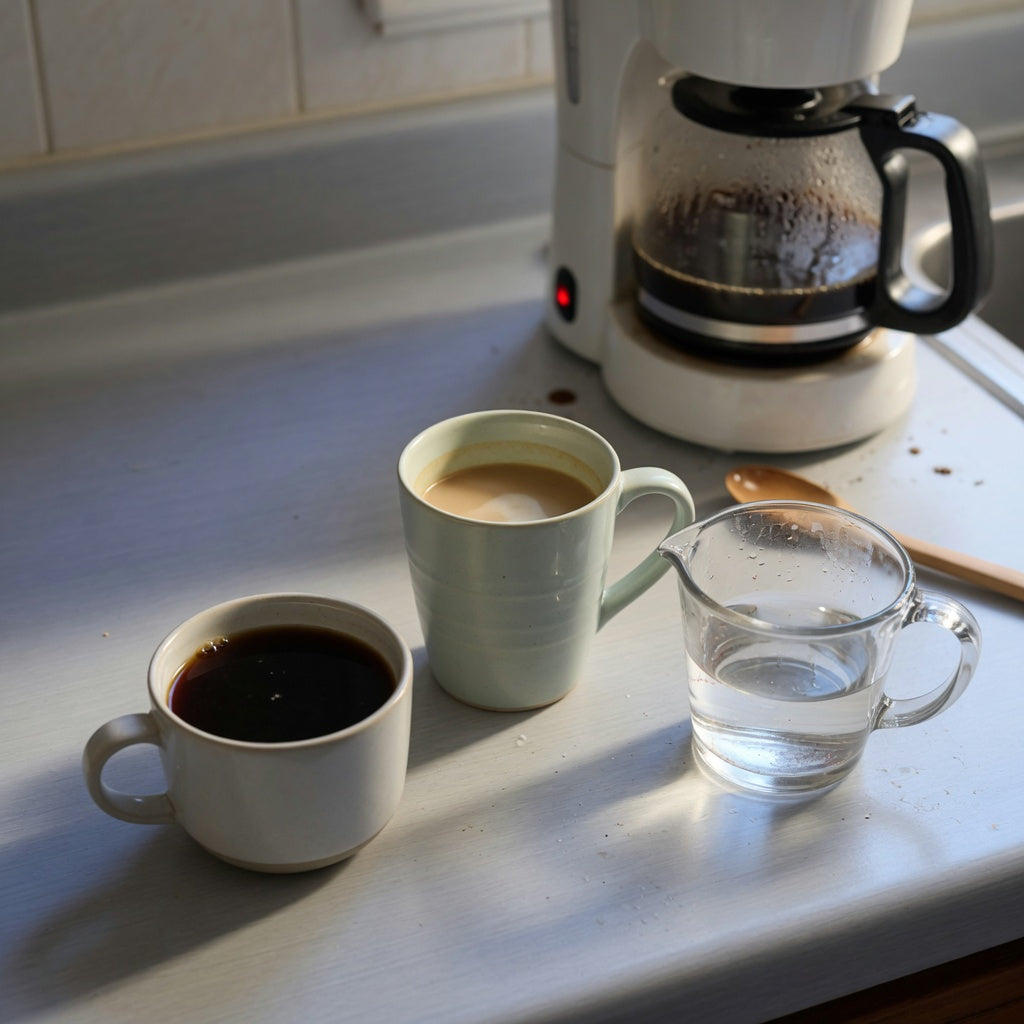
The ounce printed on an everyday mug is usually a brim-full number, not the pour you can carry to a desk. Compare 8 to 16 fl oz against milk, foam, brewer height, and the listing fields that actual...
Read more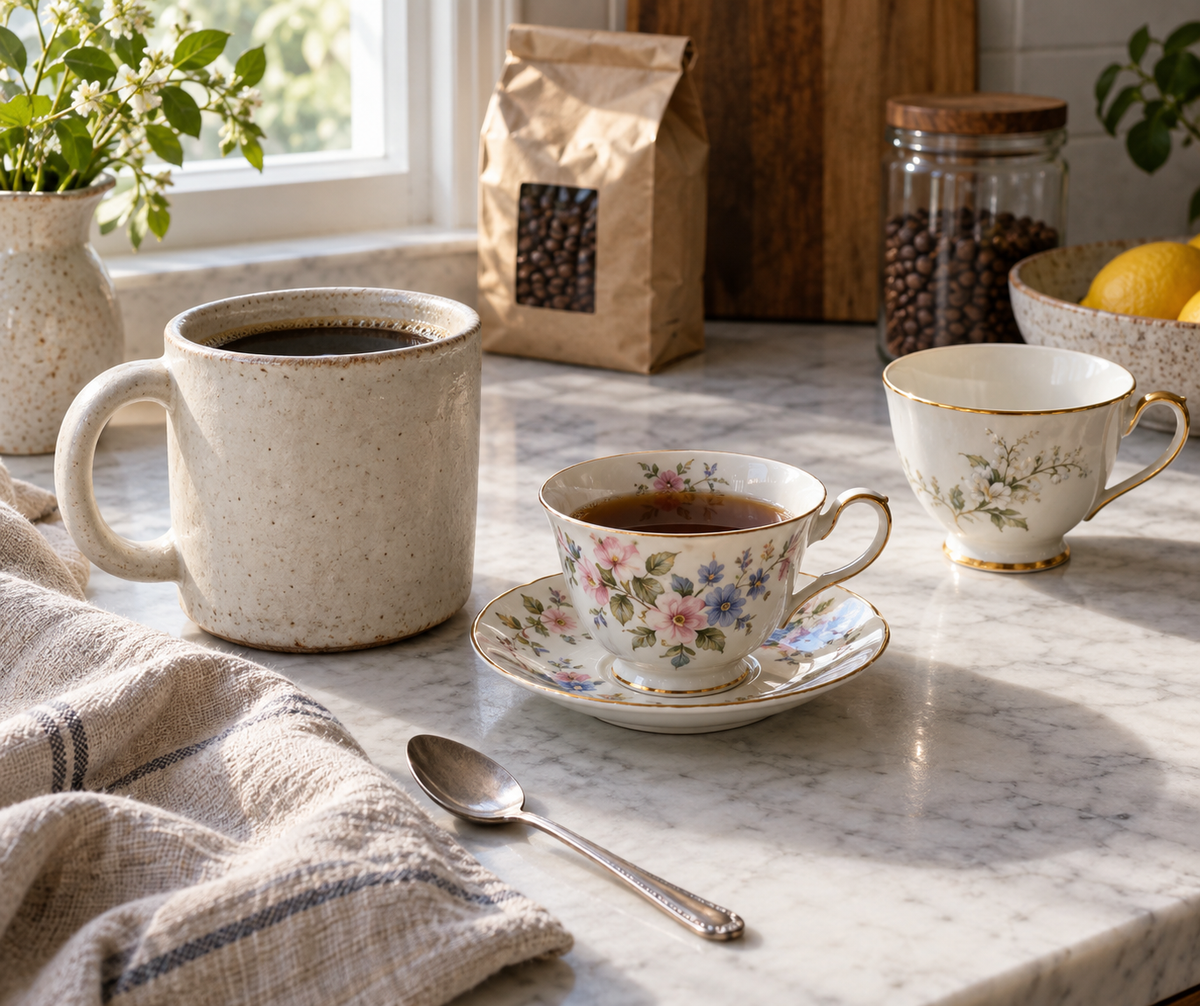
Best Retro Coffee Mugs Tea Cups Gift Guide: Size and Safety
Shoppers comparing retro coffee mugs and tea cups need more than a pretty silhouette. We separate new daily drinkware from true vintage, then cover lead safety, usable size, metallic trim, and what...
Read more
Leave a comment
This site is protected by hCaptcha and the hCaptcha Privacy Policy and Terms of Service apply.