




Best Tall Mug Size for Coffee and Tea: What to Compare
Reading time: about 13 minutes
A shopper set three mugs on our counter and asked which one was the best tall mug size for coffee and tea. The first was a narrow ceramic that looked tall and held about a café pour. The second was a wide diner bowl with plenty of capacity and almost no height. The third was high enough to tap the shelf above the kettle. Same sentence, three different problems. In our store we start with the drink that actually lands in the mug, not the silhouette on the product photo.
Is a tall mug a shape, a capacity, or a café name?
Shoppers use “tall” three ways, and those ways do not describe the same object.
- Tall shape. The walls rise and the rim is narrower than a diner bowl. That changes the sip, whether a tea basket clears the opening, and whether the foot drops into a car cup holder.
- Large capacity. More liquid, whatever the silhouette. A short, wide mug can hold more than a narrow tall one. Ounces do not describe height.
- Café size name. On many menus, “Tall” is a named hot-drink volume around 12 fl oz. That label is the pour, not a height-to-width ratio.
No government or standards source we can hand you defines “tall mug” by a required ounce capacity or a height-to-diameter ratio. Retail pages also disagree about where a regular mug ends and a large one begins. Treat those ranges as store language. They are not a shared standard.
Shape still matters when the ounces match. Two ceramics can share a brim rating and fail different kitchens: one blocks a single-serve spout, the other spreads a small pour across a wide surface so it cools while you answer email. We separate those failures at the counter before we talk about glaze or color.
What is the best tall mug size for coffee and tea once the pour is real?
There is no single best tall mug size for coffee and tea. The useful size is the water you finish while it still tastes right, plus the empty space that drink needs, plus a vessel you will still lift on a Tuesday morning.
Match the mug to the drink:
- Straight espresso or a short strong shot does not need a tall mug. A high cup makes a small pour look lost, and the crema spreads thin. Use a small cup.
- Black drip coffee or plain tea is mostly water. Strength follows how much coffee or leaf you use for the water you poured. It does not follow the brim number printed on the box.
- Milk drinks need empty space. A latte, a cappuccino, or tea with a heavy splash of milk spills if you fill to the listed capacity and then stir or walk to the desk.
- A long sitting tempts people toward 16 fl oz and up. That works if you finish it. It is a poor daily choice if the last third goes cold, or if the full ceramic weight bothers your wrist.
Caffeine guidance is about the day, not the mug. A U.S. Dietary Guidelines beverage fact sheet describes moderation as about 400 milligrams or less a day for most adults, roughly the amount in about four cups of coffee, and says some people need less. It does not recommend a mug capacity. A bigger cup does not rewrite that figure. The same sheet notes that plain coffee or tea is the lower-calorie choice next to drinks that add sweeteners and cream. We are not giving medical advice. If you are cutting back, a smaller practical fill is often easier than a mug you feel obliged to empty.
For nutrition labeling, 21 CFR 101.12 sets the reference amount customarily consumed for “coffee or tea, flavored and sweetened” at 360 mL prepared, with the label statement 12 fl oz (360 mL). That is a serving-size reference for that product category. It is not a rule for mug height, and it is not a standard for unsweetened coffee.
How should you convert 12 fl oz, 16 fl oz, and 350 mL?
Two honest conversion systems get treated as if they were the same number. They are not. At the counter, the mix-up shows up when a shopper compares a 350 mL listing with a 12 oz café cup and expects them to be identical.
NIST’s precise customary factors put a U.S. fluid ounce at 29.57353 mL and a U.S. cup at 236.5882 mL. NIST Handbook 44 lists 1 U.S. fluid ounce as 29.573 milliliters. Nutrition labeling under 21 CFR 101.9 uses rounded equivalents on purpose: 1 fl oz as 30 mL, a cup as 240 mL, a tablespoon as 15 mL, and a teaspoon as 5 mL.
| Figure on the listing or menu | NIST-style conversion (29.57353 mL per fl oz) | Nutrition-label shortcut (30 mL per fl oz) |
|---|---|---|
| 350 mL | about 11.8 U.S. fl oz | about 11.7 fl oz |
| 12 fl oz | about 354.9 mL | 360 mL on the label |
| 16 fl oz | about 473.2 mL | 480 mL |
A 350 mL figure sits near a 12 oz pour and nowhere near a 16 oz pour. It is still not exactly 12 fl oz on either system. If one tab says “12 oz” and another says “350 mL,” read both as close, then check whether the number is brim-full capacity or a line you can actually drink to. Mug pages rarely say which. These conversions describe units in general. They are not a capacity claim for any one mug in our catalog.
The 5 mL teaspoon from nutrition labeling is useful when you dose loose leaf by spoon. It does not tell you how many teaspoons belong in a mug. A “cup of tea” in brewing talk is not the same thing as the 240 mL label cup.
How much empty space do milk, foam, and a tea basket need?
Listed capacity is usually a brim figure. You should not drink a brim-full mug. You need headroom so a stir, a carry from the kettle, or a cap of foam does not land on the counter. In our experience this is the complaint we hear after the unboxing, not at the moment of purchase.
The misses follow a pattern:
- Latte and cappuccino drinkers buy the ounce rating of the coffee they want and forget the milk. If you want something like 8 oz of coffee plus milk and foam, a mug whose brim is only 10 or 12 oz feels tight. You end up leaving the foam in the pitcher.
- Black-coffee drinkers do the reverse. They buy a 16 oz class mug, fill it, and spend the last part of the sitting with a lukewarm cup because the serving outlasted the heat they enjoy.
- Tea drinkers drop one bag into whatever mug is on the desk. A common starting point is one teaspoon or one tea bag per cup, and that guidance does not define the cup in milliliters. One bag in a large mug tastes thin. Two bags in a small mug can turn harsh. Scale the leaf to the water you poured, then taste.
Steep habits travel with that dose, and they are still not a mug-size rule. In our kitchen notes, black tea is usually started hot, near a boil, for a few minutes. Green tea is usually better cooler and shorter, or it goes bitter. If the mug is larger than the cup you learned on, add leaf before you add minutes. Extra time will not fix a weak dose, and it can punish a tea that was already enough.
Infusers add a fit problem ounces ignore. The basket has to pass the rim and still leave room for wet leaves to expand. A tall, narrow opening can fail that test even when the ounce rating looks generous. If you already own a basket, measure its widest point and compare it with the inside rim. If a listing does not publish an inside diameter, do not assume the basket will fit.
Filter coffee works the same way. Use more coffee when you pour more water if you want the same strength. A tall wall does not rescue a weak ratio.
Before we recommend a tall ceramic, we ask for four notes from the buyer’s own kitchen: ounces they finish, headroom the drink needs, clearance under the spout with the tray in, and whether the infuser passes the rim.
When someone wants a tall ceramic instead of a wide diner bowl, we open the Mountain Tall Ceramic Coffee Mug. The product name is not a measured height, capacity, handle opening, or inside diameter. Confirm brim ounces, wall height, infuser clearance, and care notes on the current listing before you decide it is your size. Listings change, and a photo cannot answer those checks.
If the tall shape is optional and you are shopping for a look or a different silhouette first, start in our unique coffee mugs collection. Then check ounces and dimensions on each product page against the pour you measured at home.
Will that height clear the brewer, the shelf, and a cup holder?
Capacity cannot answer “will it fit.” Clearance is specific to your machine, your cabinet, and your car, and it is often missing from mug product pages. We have packed tall ceramics that were the right pour and the wrong height. The buyer measured ounces. The brewer measured inches.
Check three spots with a tape measure:
- Machine opening, drip tray in. A single-serve brewer or a home espresso machine may accept the mug only after you remove the tray. That is a mug you will resent every morning. Measure from the drip tray surface to the spout or group, then compare that gap with the mug’s full height, including any foot.
- The shelf where it lives. A tall wall plus a lid, or a mug stored under a rack, is how rims get chipped. Leave a finger of space so you are not sliding ceramic against wood.
- The car cup holder, if it commutes. Many holders want a taper. Straight tall walls, or a wide foot, sit on the rim of the holder and tip at the first turn. A tall ceramic is a poor commute cup if it only balances on the lip of the holder.
Desk use has its own version of the same problem. A high mug beside a laptop stand can block the keyboard when the handle faces the wrong way, and a heavy full cup is awkward next to a notebook. Turn the handle toward your dominant hand and see whether the rim still clears the screen.
Cooling is the other promise people want from shape. A narrower rim has less open surface, and buyer articles often claim that keeps a drink hotter. We have not seen a standards-body or university test that makes mug geometry a rule, so we do not sell a tall wall as a heat-retention feature. If the last half of a large pour goes cold, pour less or pour again. Do not assume height fixed it.
When do handle reach and filled weight beat a bigger ounce number?
A high-capacity ceramic can be the wrong daily driver even when the volume looks perfect. Ceramic is sturdy, and the walls hold some heat, which also means the empty mug is already heavier than a thin travel cup. Add a full pour and you lift that weight by the handle on every sip.
What we ask shoppers to check in hand, or in the listing photos and dimensions if they are buying unseen:
- Finger clearance. Larger hands and rings catch on a tight opening. A tall mug sometimes stretches the handle vertically without making the hole wider.
- Balance when full. A high column of liquid over a small foot feels tippy on a stack of mail or a slightly uneven desk mat.
- Rim thickness. A thin rim is pleasant for tea. A very thick rim can feel clumsy if you like to smell coffee as you sip.
- Care limits, item by item. Microwave and dishwasher behavior depend on the glaze, any metal trim, and how that piece was made. Do not generalize from the word ceramic or the word tall. If the current listing does not say microwave-safe or dishwasher-safe, hand-wash it and reheat the drink another way until you know.
A tall ceramic mug is not a travel tumbler, and it is not the right vessel for a straight espresso. It is a weak choice when your real limit is a low brewer opening, a small car holder, or a wrist that dislikes a heavy full cup. In those cases a shorter, lighter mug with the same drinkable ounces will serve you better. A gift mug that looks striking in the box is a bad surprise if the recipient’s machine cannot clear it.
Pick a path, then match it to the listing
Use the drink you actually make. Do not crown one ounce size as best for every kitchen.
- Short strong coffee. Skip tall. Use a small cup.
- Daily black coffee or tea. Start from the water you finish while it is still pleasant, often nearer a 12 fl oz class pour than a 16 fl oz brim, then leave headroom so you are not filling to the lip.
- Lattes, foam, or milky tea. Add headroom on top of the coffee or tea volume. A listed 12 oz brim can be too small once milk goes in.
- One long sitting you truly finish. A 16 fl oz class mug can make sense. Confirm you can lift it full, and that it clears the machine with the tray in.
- Loose leaf with a basket. Confirm inside rim and leaf room. Ounces will not tell you.
- A gift, and you do not know their machine. Favor a size they can use for both coffee and tea, and say so in the note. Skip a very tall profile if you cannot check their brewer clearance.
Write those four kitchen numbers down, then open the Mountain Tall Ceramic Coffee Mug listing and match them to the current capacity, dimensions, and care lines. If height is not the point, compare other shapes in the unique coffee mugs collection the same way. The right next step is a fit check, not a bigger number on the box.
Frequently asked questions
What is the best tall mug size for coffee and tea if I drink both?
There isn’t one universal size. A practical daily target for many people is a drinkable pour near a 12 fl oz class, with unused space above the liquid, rather than a brim-full 16 fl oz. Tea made with one bag in a much larger mug tastes weak unless you add leaf, and milk or foam needs still more empty room. Measure the pour you finish, then confirm height and capacity on the listing.
Is 12 oz enough, or is 16 oz the better tall mug?
Twelve U.S. fl oz is about 354.9 mL by the NIST factor, and nutrition labels round 12 fl oz to 360 mL. Sixteen U.S. fl oz is about 473.2 mL, or 480 mL on the label shortcut. Choose a 12 oz class mug when you finish a café-sized hot drink and want less leftover coffee. Choose a 16 oz class mug only if you finish that much while it is still pleasant and you can lift the full ceramic comfortably. Neither number is a standard for mug height.
Does a 350 mL mug equal a 12 oz mug?
Not exactly. At 29.57353 mL per U.S. fl oz, 350 mL is about 11.8 fl oz. The nutrition-label shortcut of 30 mL per fl oz puts it near 11.7 fl oz. It is close to 12 oz and far from 16 oz. Also check whether the listing means brim capacity or a practical fill. Those are different drinks.
Will a tall mug fit under a single-serve brewer?
Sometimes, and you cannot tell from ounces. Measure from the drip tray, installed, up to the spout, and compare that gap with the mug’s full height. A mug that fits only after you remove the tray will be annoying every morning. Cabinet shelves and car cup holders need the same kind of check, because a straight tall wall often misses a tapered holder.
Should I use one tea bag in a large tall mug?
One teaspoon or one tea bag per cup is a common starting point, and that guidance does not define cup volume. In a mug well above the cup you learned on, one bag often tastes thin. Add leaf to match the water you poured, keep black tea hotter and a bit longer than green tea, and make sure any infuser basket actually fits the rim with room for the leaves to expand.
More from our blog
Shop Popular In-Stock Mugs — Extra 10% Off 1st Order (10_OFF) + Free Shipping
 Pleated Ceramic Coffee Cup, Crumpled Paper Cup Style, 200 ml
Default color: Green
 Christmas Tree Coffee Mug with Lid and Spoon, 460 ml
Default color: Red
 Handbag Shaped Coffee Mug with Saucer and Spoon, 310 ml
Default color: Pink
 Elk & Moon Deer Coffee Mug with Tea Infuser & Lid, 420 ml
Default color: Dark Blue
Browse by budget & style: Cute & Gift Cups (10% Off Applied) · Wooden-Handle Bestsellers · Large 14–15.5 oz Mugs · Holiday Gift Mugs · 8–9 oz & Espresso Cups
Popular mug buying guides: 2026 Mug Gift Ideas · 4-Piece Mug & Espresso Cup Sets · 8 oz & 9 oz Mugs · Cute & Aesthetic Mugs · Ceramic Tea Cups & Infuser Mugs · Ceramic Mugs with Lids Compared · Wooden-Handle Tea Infuser Mugs Compared · Christmas & Secret Santa Mugs 2026 · Espresso & Cortado Cups Guide · Cup & Saucer Gift Sets · All 25 Mugs Spec Table · Mug Size Guide · Shipping & Promo FAQ
1ST ORDER: EXTRA 10% OFF (CODE: 10_OFF) · OR BUY 3, GET 1 FREE


Read more

The Flow Coffee Tea Mug Size: What Buyers Should Compare
Shoppers asking about the Flow Coffee Tea Mug size usually want a measured capacity, not the catalog word large. We compare brim fill with a comfortable pour, coffee versus tea headroom, and the li...
Read more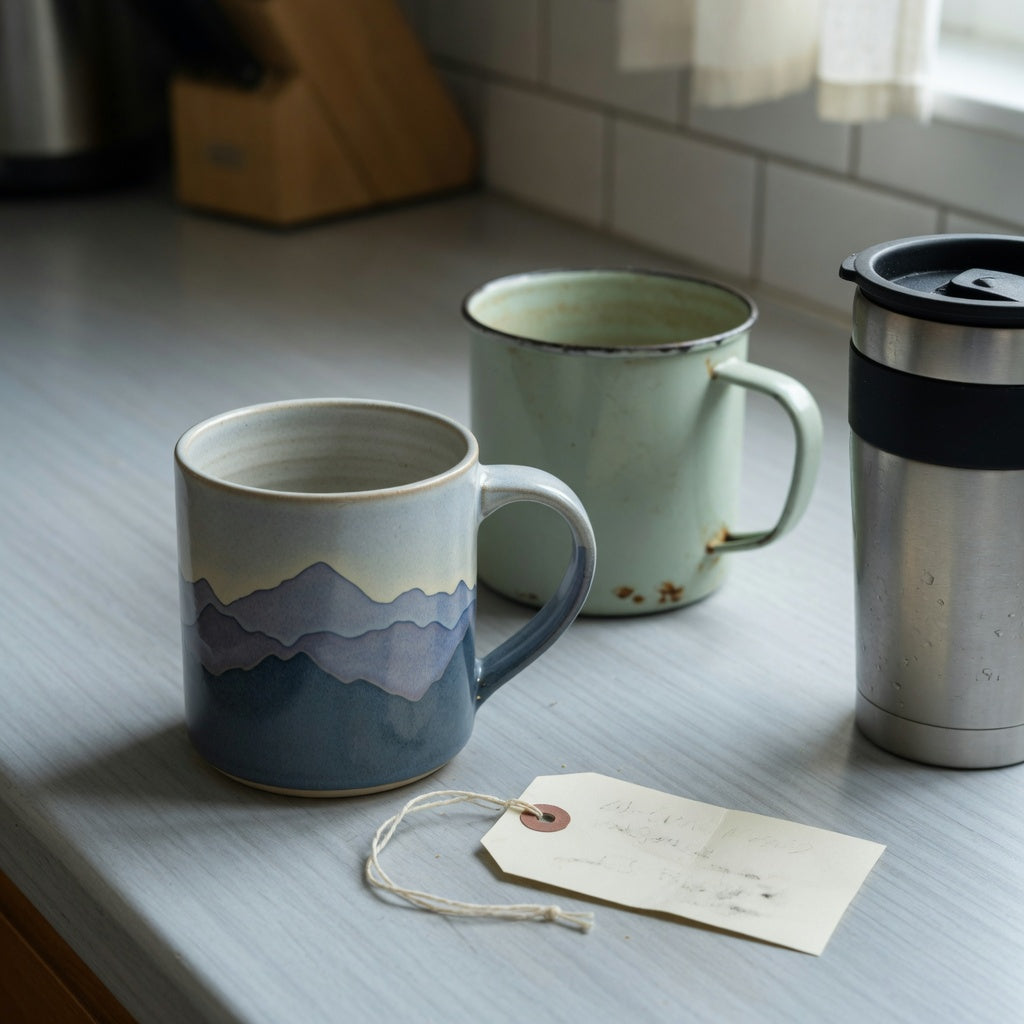
Mountain Coffee Mug Gift Buying Checklist: What to Compare
A practical mountain coffee mug gift buying checklist that splits kitchen ceramic, enamel camp cups, and insulated travel mugs, then checks usable fill, artwork wear, metallic rims, and food-use la...
Read more
Leave a comment
This site is protected by hCaptcha and the hCaptcha Privacy Policy and Terms of Service apply.