

Small Retro Coffee Cup Gift: Size, Safety, and Fit
Reading time: about 12 minutes
Last month a customer sent a photo from their kitchen counter: a pretty cup next to a full French press. They had searched for a small retro coffee cup gift, liked the shape, and only saw the problem at the first pour. The cup was after-dinner size. The recipient drinks a desk mug and refills it before noon. We see the opposite at our packing table. Small was in the title, the cup was an ordinary drinking size, and small was just a style word beside a vintage graphic. Those are different gifts. The title will not tell you which one arrives.
Shoppers use that phrase for two products. One is a genuinely small cup, often called demitasse, espresso, or mocha, sometimes sold with a saucer for a short black coffee. The other is a standard mug printed with 1970s, atomic, or mid-century graphics. In our store we split those intents before we send anyone to a product page. A good-looking mismatch is still a mismatch.
Is the cup small, or is only the artwork retro?
Search pages mix them. Retro can mean a low, thick diner shape, or a starburst printed on a modern blank. Small can mean a mini espresso cup, or merely smaller than a novelty tankard. If you are buying for someone else, that blur is the risk that matters.
Read the name, then make the details agree with it. The page we list is the Vintage Retro Small Coffee Cup. That name is a style label. It is not a capacity, a clay body, or proof the piece is an antique. Until the current listing says so, capacity, material, trim, and care stay unverified. We will not guess them from a cropped photo, and we will not copy them from a similar cup on another site.
We sort the choice into four groups when we talk it through:
- Truly small cup. Demitasse, espresso, mocha, or after-dinner wording, sometimes with a saucer. Right for a short drink. Wrong for a commute pour. In buyer language, demitasse means a small cup for black coffee. It is not a fixed ounce size.
- Retro graphic mug. Everyday drinking size with vintage artwork. The better fit when someone already takes drip coffee or tea from a regular mug.
- True vintage object. Age, a maker mark, wear, or a garage-sale story. Reasonable on a shelf. Drinking from it is a separate decision.
- New retro-style cup. Made to look old and sold as drinkware for now. It still needs a capacity line and a care line. The look is not a safety test.
A small cup can sit beside a favorite large mug as a nostalgic extra. It is a poor stand-in for the one they reach for every morning.
What capacity should a small retro coffee cup gift list?
FDA guidance describes ceramic cups and mugs as small hollowware for hot drinks such as coffee or tea. In that description, they normally hold about 8 fluid ounces, roughly 240 milliliters, though not in every case, and they are usually made with a handle. That sketches an ordinary cup. It does not mean the retro listing in your cart is 8 ounces, and it does not mean 8 ounces feels small next to a tall cafe mug.
A diner-style cup near that mark can look modest on a modern counter and still be a full cup of coffee under that description. A piece sold as tiny, demitasse, espresso, or mocha may sit well below it. Overhead photos hide the difference. No saucer, no hand, tight crop: either size is possible.
Our team does not pack this kind of gift without capacity written in ounces or milliliters. If the page has no number, we do not invent one from the thumbnail. Three questions do more than the title:
- Does this person drink espresso, a short black coffee, Turkish coffee, or a mug they refill at a desk?
- Will the cup live beside an espresso machine, or beside a drip brewer and a kettle?
- Is a saucer included, or will the bare cup sit on wood and leave a ring?
Missing capacity is what buyers write to us about. The word retro will not say if the pour is short or normal. While you compare other shapes, read the size line on each page in our unique coffee mugs. For this cup, the only capacity that counts is the one on the live listing.
Espresso machine, drip brewer, or a shelf?
Match the drink before the decade of the artwork.
A genuinely small cup fits an espresso drinker or someone who wants black coffee after dinner. Turkish coffee belongs there too. The serving is short, and a wide mug leaves it looking lost. If they host, a cup and saucer is more useful: the spoon has a home, and a hot foot stays off the table. The trade-off is extra pieces to wrap, more chips in a tight cabinet, and more counter space than one mug needs. Mention that on the card. In shared kitchens, saucers stacked hard pick up a nicked rim in the first week.
A drip drinker, a tea drinker who wants room in the cup, or a colleague who keeps a mug at the office will usually want retro artwork on a normal cup. A tiny cup gets one unboxing photo, then holds pens. That is fair only if you meant a desk object.
Personalization is its own line. People ask us for a name for dad, a short note for a colleague, or a birthday year. Some retro mugs elsewhere are printed to order. A one-off vintage cup often cannot take new print without covering the artwork. If the listing has no custom option, we do not add a name at checkout. The right name on the wrong size is still the wrong gift.
A small cup is a weak choice for a lidded commute, a milky drink that needs space above the coffee, or one long morning pour. Those households need more capacity. A mini shape on a drip habit becomes the cute cup at the back of the shelf.
When old glaze means the cup stays on the shelf
This question shows up with old cups, bright color, and garage-sale finds. Cute is not a test.
Lead can be present in the glaze or decoration of some traditional pottery, and it can move into food or drink if the piece was not manufactured properly. Concern is higher for antiques, damaged or heavily worn pieces, crude handmade ware, flea-market finds, and some pottery in bright orange, red, or yellow. Washing, a dishwasher cycle, and boiling do not remove lead from a glaze. Clean is not the same as suitable for coffee.
For ceramic cups and mugs, FDA guidance sets a lead action level of 0.5 micrograms per milliliter of leaching solution. The check is missed if any one of six tested units goes over that level. We mention it because the category has a real benchmark. It is not a lab report for the cup in the cart, and dish soap cannot prove it at the sink.
Ceramic that looks fit for drinking is still treated as foodware unless it is permanently and conspicuously marked not for food use. In substance, those warnings say the piece is not for food, that food use may poison food, or that the glaze contains lead and food use may result in lead poisoning. A note tucked in the gift box is not that mark. We would not pour coffee into an old promo mug or character cup with no reliable food-use history just because the graphic is fun. Display is the cautious gift.
A new cup sold as drinkware is a different case from a thrifted unknown. Read the page anyway. If a seller marks a piece decorative, believe the mark. We will not claim a test, a certification, or a food-contact status for our own cup unless the current listing states it.
Gold trim, overglaze color, and the care line
Buyers see ceramic and assume the dishwasher and the microwave are both fine. They are separate approvals. Plenty of cups have neither.
If the photo shows gold, silver, platinum, or any metal band on the rim, foot, or handle, find the care text before you buy. In our experience, that metallic edge is the detail most likely to change the instructions we pass along. Metal is a poor match for a microwave. A harsh wash can dull or lift decorative metal and overglaze color. If the listing does not say microwave safe, keep the cup out. If it does not say dishwasher safe, wash it by hand with a non-abrasive sponge. Silence is not a yes. That applies to a current catalog cup and to a flea-market find alike.
Condition fails in ways we see on older pieces that cross the counter. A chip on the lip, where the mouth rests. Crazing, a fine crackle through the glaze. A stained crack at the handle join. A foot ring rough enough to scratch a wood table or the saucer under it. Any of those is a reason to gift the cup as decor, or to skip it.
Stacking does quiet damage. Small cups nested together, or saucers piled with nothing between them, chip during a move or a busy week. Giving more than one piece? Say so, and suggest a shelf with room rather than a mug tree built for tall handles.
New retro style versus a true vintage find
These solve different jobs. Confuse them and a shelf object ends up in the dishwasher.
A new retro-style cup is the practical gift when someone will drink from it this week. You can look for a material line, a capacity line, and a care line, and you can replace a broken cup. The print still will not tell you the ounces, the clay, or whether an adult hand fits the handle. The Vintage Retro Small Coffee Cup is the current catalog listing we can point to. The title does not document antique provenance, a lab test, or a capacity. If the page changes, the page wins over memory.
A true vintage piece is right for a collector, a maker-mark hunt, or a shelf. You accept wear, old repairs, and a glaze you cannot vouch for. Dishwasher language may be missing because the cup never had a modern care card. Do not invent it. A maker mark can name a pattern. By itself, it does not show the glaze is suitable for hot coffee today.
| Buyer situation | What usually fits | What to skip |
|---|---|---|
| Espresso, Turkish coffee, or a short after-dinner cup | A small cup with a stated capacity, plus a saucer if they host | A wide mug that spreads a tiny pour thin |
| Daily drip coffee or an office desk | Retro artwork on a mug with a clear everyday capacity | A mini cup that becomes a pen holder after one photo |
| Collector or display gift | Honest condition, and unknown glaze kept off the table | A flea-market glaze treated as safe because it looks unused |
| A name for dad, a colleague, or a birthday | A listing that actually offers personalization and states care | An antique you hoped a shop could reprint |
The checks we make before the box is sealed
This is the pass our team uses. It also works at a kitchen counter with two tabs open.
- Capacity is printed. Ounces or milliliters, not a guess from the crop of the photo. Set it beside the roughly 8-ounce ordinary cup in FDA ceramic guidance so you can see if you are under a normal cup or near one.
- The drink fits the vessel. Espresso, Turkish coffee, and a short black coffee can suit a small cup. A morning drip habit usually will not.
- Food use is explicit. Sold as drinkware, or permanently marked not for food use. Charm is not a third category.
- Age and source are honest. A new commercial cup is not the same bet as antique, damaged, handmade, or flea-market pottery. Higher-concern pieces stay on the shelf unless you have a real basis to drink from them.
- Care matches the decoration. Gold or other metal trim means you hunt for dishwasher and microwave language. No language, no assumption.
- The set is listed. Cup only, cup and saucer, or a pair. Do not promise a saucer the page does not include.
- Personalization is in writing. If the listing does not offer it, it is not part of the gift.
- Handle and rim survive a real hand. Look for a grip someone can hold, a lip without chips, and a foot that will not scar the table. On our page, take those details from the current photos and text, not from this article.
If the small cup fails the capacity check or the safety check, compare everyday shapes in our unique coffee mugs instead of forcing a mini. If a short drink is actually how they use a cup, open the Vintage Retro Small Coffee Cup listing and confirm capacity, material, trim, and care there before you order.
Frequently asked questions
What should I compare before buying a small retro coffee cup gift?
Compare the stated capacity with how that person actually drinks: espresso or a short coffee versus a full mug. Check that the piece is sold for food use, then read dishwasher and microwave wording, especially with gold or other metal trim. Confirm a saucer or a custom name only if the listing includes it. A retro title settles none of those points.
Is an 8-ounce retro cup considered small?
FDA descriptions of ceramic cups and mugs treat about 8 fluid ounces, roughly 240 milliliters, as a typical handled cup for hot drinks, not as a rule for every piece. Beside a tall cafe mug that can look modest, but it is not the same as a mini espresso or demitasse cup. If the listing never states ounces or milliliters, you cannot tell which one you are buying.
Are thrifted or antique coffee cups safe to drink from?
Not by default. Lead in some traditional glazes and decorations can leach into a drink, and washing or boiling does not remove it. Antiques, worn or damaged pieces, crude handmade ware, flea-market finds, and some bright orange, red, or yellow pottery call for extra caution. Without a clear food-use basis, we would give an unknown vintage cup as a display piece.
Is a tiny retro cup better than a standard retro mug for an espresso drinker?
It is the better fit only when they drink espresso, Turkish coffee, or a short black coffee, and the listing states a small capacity. A standard retro graphic mug suits daily drip, a roomy tea habit, or an office desk. A tiny cup is a weak morning gift for someone who wants one big pour.
Are vintage espresso cups with gold trim dishwasher and microwave safe?
Do not assume they are. Metal trim is a reason to read the care line, because metal and a microwave are a poor match and a harsh wash can damage decorative metal and overglaze color. Follow only what the current listing says. If it says nothing, hand wash the cup and keep it out of the microwave.
More from our blog
Read more
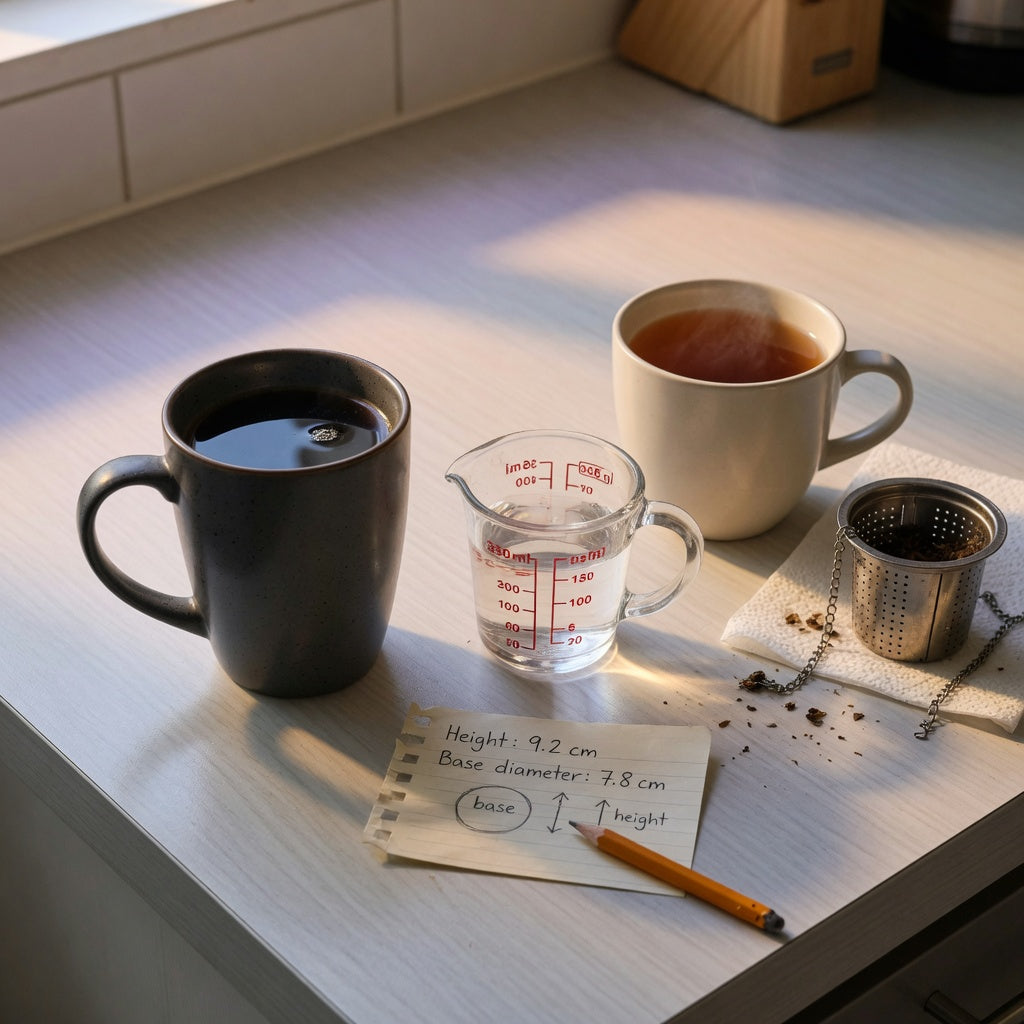
Everyday Coffee Tea Mug 350 ml: What Buyers Compare
A 350 ml mug is about 11.8 US fl oz at the brim, above the FDA’s usual 240 ml cup example, but the pour you can carry is smaller. We compare usable fill, fit, handle, glaze, and care before you buy...
Read more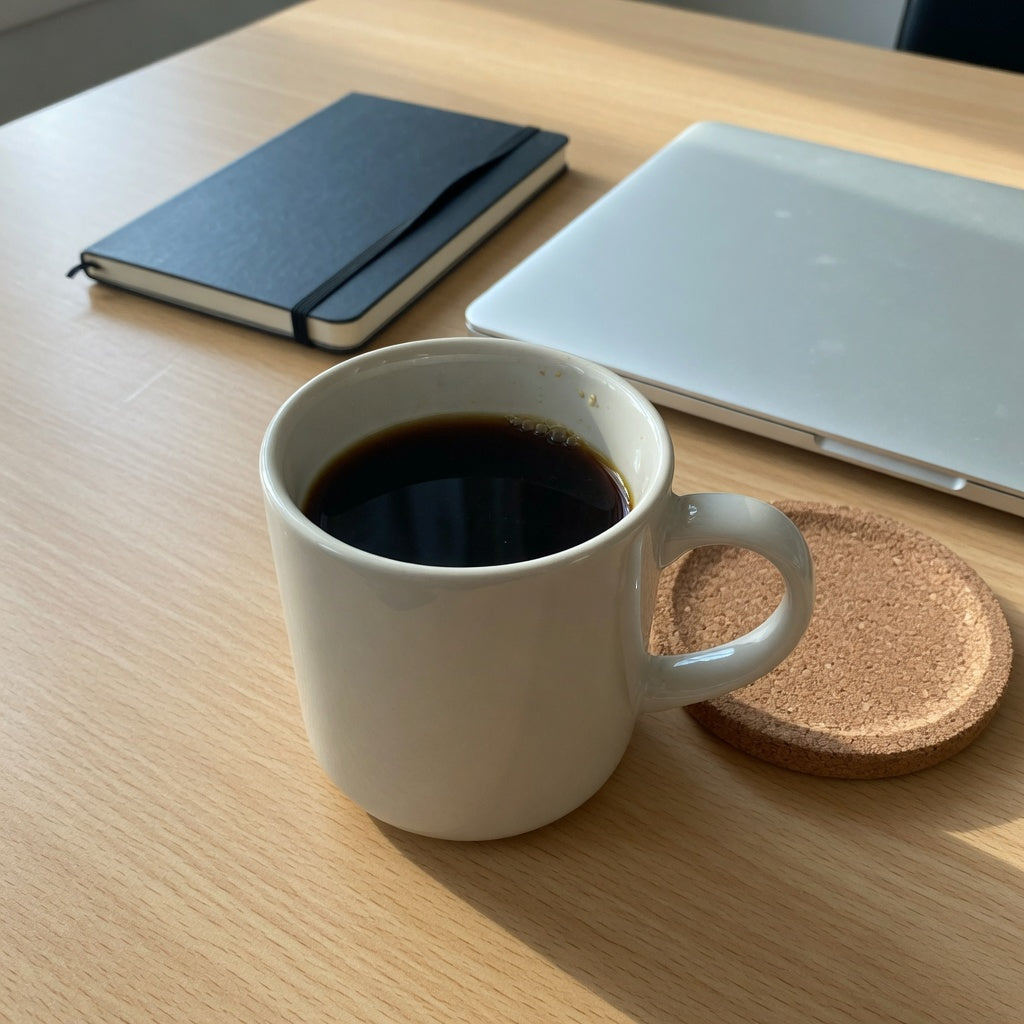
Desk Ceramic Mug for Workday Coffee: What to Compare
A desk ceramic mug for workday coffee has to hold brew plus cream without crowding the desk. Compare handle clearance, glaze testing, lids, and foot marks before you trust the photo.
Read more
Leave a comment
This site is protected by hCaptcha and the hCaptcha Privacy Policy and Terms of Service apply.