
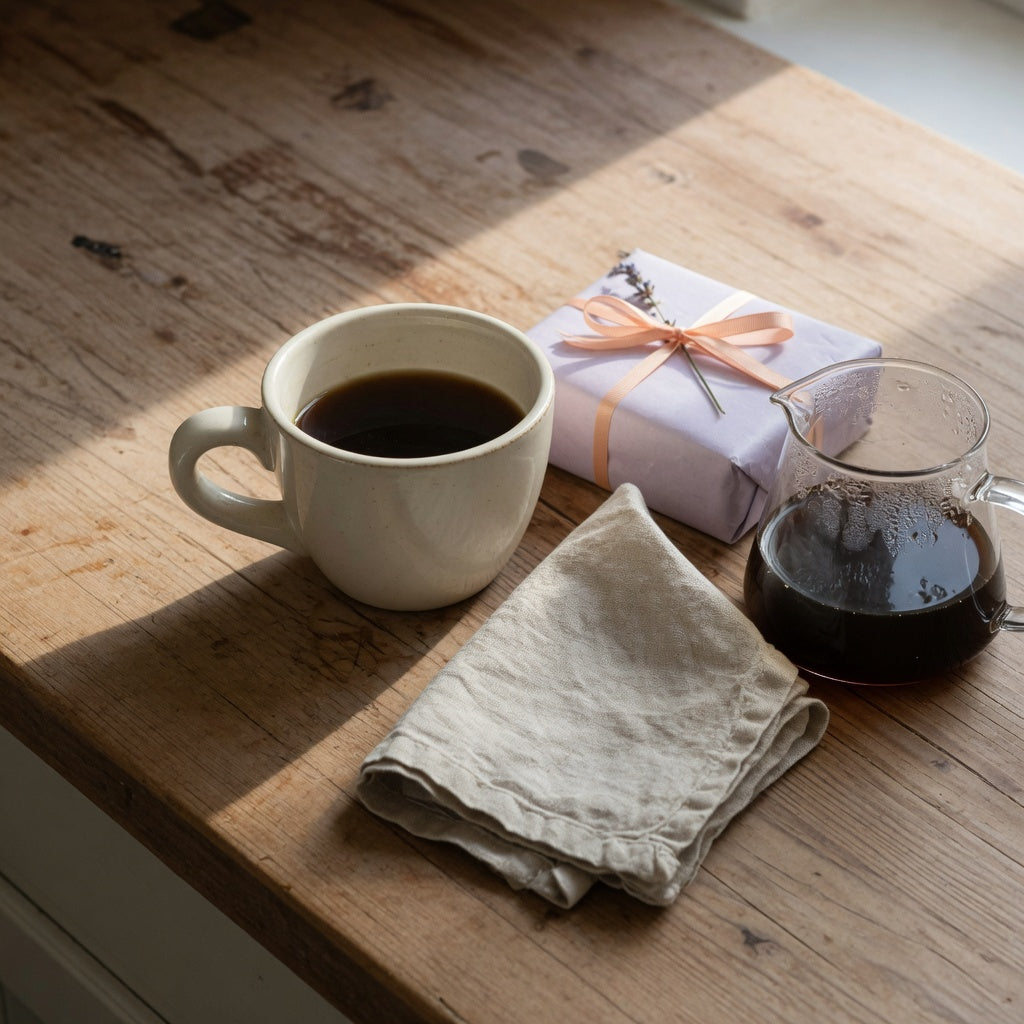
Retro Ceramic Coffee Cup Gift: Fit, Safety, and Daily Use
Reading time: about 14 minutes
Two cups can leave our packing bench looking like cousins: both cream, both rounded, both with a handle thick enough to read as retro. One is a new commercial body with a fired graphic. The other is an older piece with a hairline at the lip that only shows when we tilt it under the lamp. The first can be a weekday mug if the listing says so. The second may belong on a shelf. That split is the whole decision behind a retro ceramic coffee cup gift, and the photo rarely makes it for you.
In our store, that search covers four different objects: new printed mugs, heavy reproduction diner stoneware, handmade or kiln-glazed pottery, and true vintage cup-and-saucer sets. Care, weight, and food-contact status do not travel with the look. Start with the live details on our retro coffee tea cup, then set the handle and scale against other shapes in our unique coffee mugs collection. Do not assume every retro piece shares the same limits.
Are you holding a new print, diner stoneware, handmade pottery, or true vintage?
Shopping pages blend those four and stamp them all retro. The tissue paper looks the same. The third dishwasher cycle does not.
- New printed nostalgia mugs put a birth year, a slogan, or a period graphic on a modern blank. The body is often a standard commercial mug. The risk is the print: a decal that looks sharp in the photo can soften after repeated hot washes.
- Reproduction diner cups chase the heavy stoneware feel of a lunch counter. Thick walls feel steady beside a plate. They can also feel like a brick in a small hand, or for someone who already tires of a heavy favorite.
- Handmade and kiln-glaze cups vary on purpose. Rim thickness, foot ring, and color can shift from the listing photo. That is welcome if they want one object. It is a problem if they need four matching cups for Sunday brunch.
- True vintage is a used object. A thumbnail will not show a chipped rim, a stained foot, crazing inside the bowl, or a repaired handle. Any of those can take the cup out of daily drinking.
We sort the gift before we talk about color. A cream glaze and a chunky handle do not tell you which of the four is in the box.
Which retro ceramic coffee cup gift matches how they actually drink?
Match the habit, not the mood board.
Birth-year graphics work for a milestone birthday when the person already drinks from printed mugs and likes that the design is the point. Look at buyer photos if the seller shows them. A tight crop hides how large the type sits, and a glossy mockup can look sharper than a fired decal.
Diner nostalgia fits a short, wide pour beside a plate, finished before a second refill. It is a weak gift for someone who nurses one large mug through a long meeting. Skip thick stoneware if they already say heavy cups tire a wrist by midmorning. Thick walls are not proof the coffee stays hotter. Weight is the trade-off you can actually feel.
Clay, mustard, avocado, and glossy 1970s bands often belong with someone who styles a shelf as carefully as a cupboard. If the cup is for the room, say that in the card. A decorative-only piece does not move into the breakfast rotation later.
Reactive kiln glazes suit a thank-you or anniversary when you will say the color can shift. They are the wrong surprise for anyone who returns a gift that misses the photo. If one vessel has to cover tea and coffee, interior glaze and capacity matter more than the outside pattern. A small espresso bowl and a tall latte mug are different mornings.
Is an 8-ounce cup, a heavy diner mug, or a large latte the right pour?
A retro ceramic coffee cup gift fails the way a lot of pretty kitchen gifts fail. It looks right in the photo, then sits unused because the pour, the weight, or the care rules do not match the person.
Photos hide scale. When U.S. regulators define cups and mugs for lead testing, they describe small ceramic hollowware commonly used for coffee or tea above room temperature. They normally, but not exclusively, hold about 8 fl oz (240 mL) and are made with a handle. That is a testing category, not the capacity of any cup we sell. It is still the benchmark we use on the bench. Plenty of retro cups that look generous in a crop sit small next to a 12- or 16-ounce office mug.
On the packing table we sort gift sizes this way:
- Small diner or espresso-adjacent cups, often well under a modern mug. Good with cake or in a set. Too small for a commute-sized habit.
- Traditional cups around that 8-ounce idea. Enough for a short breakfast coffee, or tea shared across two cups. Wrong if one large mug is the whole morning.
- Standard printed mugs on everyday blanks. Fine in most kitchens when the handle clears two fingers and the wall is not paper-thin.
- Oversized latte mugs. Useful for milk-heavy drinks. Awkward in a shallow cabinet, and heavy once full if the walls are thick.
A thick foot ring sits steady on a wood table and fights for space in a crowded rack. A narrow handle looks tidy in a photo and pinches a ring or a larger hand. Ask where the cup will live: a desk, a kitchen island, or a bedside table. A handle that needs a full fist is a poor desk companion.
One cup is right when the piece is meant to become theirs. A pair or a small set is better for a housewarming where guests will be served. When we wrap a pair, we pad between the rims. Two cups in one box will chip each other before the carrier does. A single statement cup is a weak housewarming if the kitchen is plain white and they wanted something they can replace after a chip.
None of those bands is a measurement of the cup on our product page. If the maker states capacity, read it on the current listing. If ounces are missing, ask. Do not guess from the photo.
| What you are buying | Fits | Skip it when | Confirm on the listing |
|---|---|---|---|
| New printed nostalgia or birth-year mug | Someone who already uses graphic mugs | They wanted a quiet glaze | Food-use claim, and whether the decal is meant for a hot wash |
| Heavy diner-style stoneware | Short pours beside a plate | They want a light, all-day office mug | Stated capacity, handle room, and chip or return terms |
| Handmade or kiln-glaze cup | A thank-you when variation is welcome | They need an exact match to the photo | Sample photo, appliance marks, and food contact |
| True vintage cup or saucer set | Display, or drinking only with a known food-use history | Daily use, kids' drinks, or an unknown glaze | Rim chips, crazing, repairs, and any permanent base warning |
What should glaze, lead limits, and a food-use label change before you wrap it?
Retro color is not a safety mark. Lead may be present in the glaze or decoration of some traditional pottery. If that pottery was not manufactured properly, lead can leach into food or drink prepared, stored, or served in it. The U.S. Food and Drug Administration says firing at the proper temperature for the proper time binds essentially all the lead into the glaze. If it is not properly fired, lead may not fuse to the earthenware and may contaminate food. Washing, boiling, or any other consumer process does not remove lead already in the pottery.
For cups and mugs, FDA Compliance Policy Guide Sec. 545.450 sets the lead guideline at 0.5 micrograms per milliliter of leaching solution in any one of six units tested. Ware above those action levels may be considered adulterated. Ware that shows extractable lead under the prescribed test should not be labeled "Lead Free." We do not treat a lead-free line in a product story as a lab result.
FDA has also found significant quantities of extractable cadmium in imported and domestic ceramic ware. Acid foods can pull it out, and continued food use of ware that leaches cadmium could cause chronic cadmium poisoning. For small hollowware under 1.1 liters, FDA Compliance Policy Guide Sec. 545.400 sets the cadmium guideline at 0.5 micrograms per milliliter in any one of six units. A short pour does not turn an unknown glaze into a safe daily driver.
Give extra attention to handmade ware with a crude or irregular appearance, antiques, damaged or excessively worn pieces, ware from flea markets, street vendors, or an unknown maker, and traditional pottery brightly decorated in orange, red, or yellow. FDA links lead poisoning in children to learning disabilities, developmental delays, and lower IQ scores, and a child with lead poisoning may not look or act sick. We would not send an uncertain vintage cup, or a bright traditional piece from an unknown kiln, into a house that will use it for cocoa or milk.
Under 21 CFR 109.16, ceramicware that looks suitable for food is treated as food ware unless it has both a conspicuous required warning and a permanent version of that warning on the exterior of the base. A hangtag is not that base mark. A permanent not-for-food-use warning means the cup stays decorative. A state warning label about lead or cadmium is not the same document as a leach test on the cup in the cart. If the maker will not say the cup is for food, do not give it as a drinking gift.
Why is a cup dishwasher safe on the box and still a bad microwave idea?
Those are different claims. Dishwasher language is about detergent, heat, and water jets. Microwave language is about the ceramic and any decoration in that oven. A retro look answers neither.
Follow the mark on that exact item. Silence means you assume nothing. We are cautious with gold or silver rims and other metallic paint, handmade cups whose maker never states appliance use, and vintage pieces with no original mark. Metal trim does not go in a microwave. Do not test an unknown glaze with a full cycle the morning you hand it over.
After birthdays we hear the same story: the cup went into the microwave because it was ceramic, and the wall came out hotter than the coffee. When a gifted or thrifted cup has no mark, heat water and watch both the drink and the clay. If the wall or handle gets hot while the water stays comparatively cool, stop. That is a reason to retire it from the microwave, not a reason to try a shorter burst tomorrow. Sparks, an odd smell, or a lukewarm drink with an uncomfortable handle mean the same thing.
Dishwashers fail gifts in other ways. Birth-year decals can fade or scratch while the clay survives. Reactive glazes can dull where cups knock. New pits, bubbles, or crackle are a reason to take a handmade mug off the rack and wash it by hand, or to stop drinking from it if the glaze is breaking over the clay. Interior crazing on an older cup, especially with stain settled in the lines, is why we often say display only.
Care follows the surface you actually bought:
- Printed graphics: milder wash, no abrasive pad on the decal, and no expectation that the print will look new after a year of hot cycles.
- Glossy commercial glaze: usually the most forgiving daily cup, and only if the maker marks it for the dishwasher and microwave you plan to use.
- Reactive or kiln glaze: expect color shift from the photo, and expect contact marks if it bangs around a full rack.
- Crazed, chipped, or repaired vintage: shelf, not the breakfast rotation.
These cups are not for a shared office where anyone will microwave a handle, a house that sanitize-washes every dish, or a commute that needs a lid. Retro ceramic is a sit-down cup. It chips in a bag.
Birthday year, housewarming set, or a cup that should never hold coffee?
Listings aim these cups at birthdays, holidays, housewarmings, thank-yous, and anniversaries. The occasion still does not choose the construction.
A birth-year mug works when the year is right, the maker presents the body for food use, and the recipient likes graphics. It fails when they wanted a quiet glaze and the year was the only reason you bought a loud decal. If the listing says a handmade cup can differ from the photo, put that in the card. Do not promise a twin of the picture.
A cup-and-saucer or a small retro set beats one oversized novelty mug for a housewarming, because people can be served and the scale usually fits a table. It is a poor fit when the new kitchen has no shelf and they asked for one sturdy everyday mug. Vintage sets need a second look at the lip: rim chips, hairline cracks, and old repairs. Pretty across the room is not the same as sound where the mouth meets the glaze.
Anniversary pottery works when you want a kept object and you accept variation. It does not work as a sneaky upgrade for someone who asked for a plain, replaceable cup. A thank-you should be easy to use or clearly decorative. An unlabeled vintage cup is neither. It leaves the recipient researching glaze safety after the party.
Ceramic breaks at the rim and the handle first. Read breakage and return terms before you pay for rush shipping on a vintage piece with no packing note. In our experience, a new cup with a clear care line is a better gift than a fragile antique that arrives with a chip you cannot hide.
What we confirm on the listing before the cup leaves the bench
We want these answers in the description or from the maker, not in the style name:
- What the piece actually is: new print, reproduction diner stoneware, handmade kiln glaze, or true vintage.
- The material the seller names, and any stated capacity. If ounces are absent, do not invent them from the photo.
- Microwave and dishwasher language for this item, including any exclusion for metallic paint.
- Whether handmade variation is expected, and whether the photo is a sample.
- Any permanent not-for-food-use mark, or a food-contact claim you can trace to the maker rather than to a keyword.
- Return and breakage terms, especially if the cup is one of a kind or already decades old.
If a cup you meant for every morning cannot answer them, choose another. The current retro coffee tea cup listing is one place to run that check. Use the live page, not a screenshot.
Frequently asked questions
Is a retro ceramic coffee cup gift safe to drink from just because it looks like a diner mug?
No. The silhouette does not tell you how the glaze was fired, or whether the cup is new commercial ware, handmade pottery, or vintage. Drink from it only when the current listing supports food use and the base has no permanent not-for-food-use warning. Extra caution belongs with antiques, damaged or worn glaze, unknown makers, and traditional pieces decorated in bright orange, red, or yellow.
Can I microwave a ceramic mug the box calls dishwasher safe?
Not automatically. Those are different tests. Use the microwave only if that specific cup is marked or clearly stated as microwave safe, and skip gold, silver, or other metallic paint. If the wall or handle heats up while the drink stays cool, stop using it in the microwave.
Will washing or boiling remove lead from an old ceramic cup?
No. FDA has said no consumer washing, boiling, or similar process removes lead from pottery. Proper firing can bind lead into a glaze at the time of manufacture. It cannot be fixed later in a home sink. If you are not sure the piece was made for food, keep it as display.
Are thick diner-style cups a good everyday gift, or are they too heavy?
They suit someone who likes a short, sturdy pour and does not mind weight. They are a poor everyday gift if the person wants a light mug, a large latte volume, or something that stacks with a thin commercial set. Handle clearance and cabinet height matter as much as the retro profile. Heavy walls are not a guarantee that the coffee stays hotter.
What should I verify before giving a birth-year or handmade retro cup?
Confirm the year or design on the actual product, whether the print is meant for the dishwasher, and whether the maker expects color or shape to vary from the photo. For handmade cups, also confirm food-contact status and appliance limits. If any of that is missing, choose a cup whose listing answers it.
Construction first, color second. If the page will not tell you capacity, appliance marks, and whether the cup is for food, treat it as a shelf piece or walk away. Compare the live retro cup with the rest of the unique mug collection, and buy the one that still makes sense on an ordinary Tuesday.
More from our blog
Read more
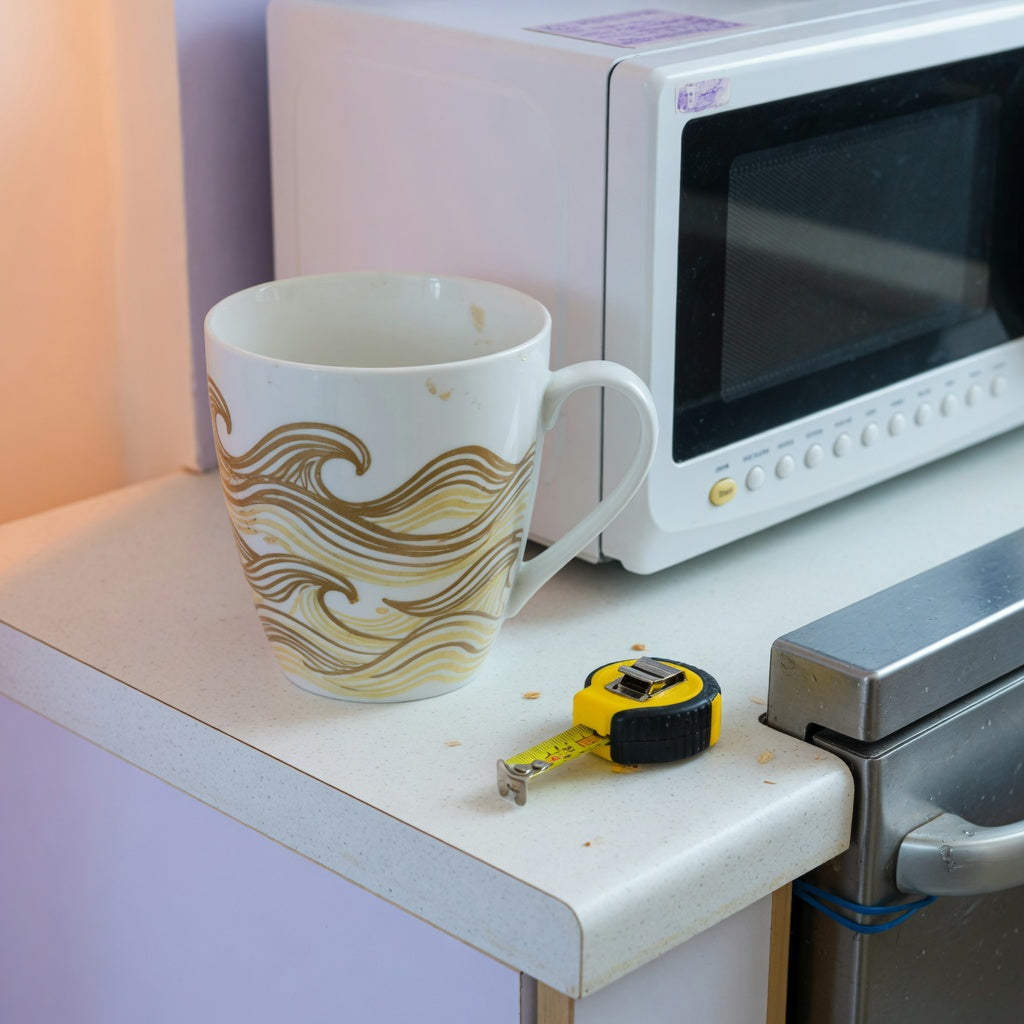
Golden Waves coffee mug white large ceramic: what to compare
Before you buy a Golden Waves coffee mug white large ceramic, separate a gold-looking print from real metal. Then match care marks, height, handle fit, and any food-contact notes on the current lis...
Read more
Preppy Ceramic Coffee Mug: What Buyers Should Compare
Compare a preppy ceramic coffee mug on stated ounces, care labels, metallic trim, rim and handle comfort, and whether any food-contact wording covers the interior you drink from.
Read more
Leave a comment
This site is protected by hCaptcha and the hCaptcha Privacy Policy and Terms of Service apply.