
Small Ceramic Coffee Cup Buying Priorities: Capacity, Shape, Space
Reading time: about 10 minutes
A cup can look compact on a product page and still fail at the first pour. It may not clear the brewer spout, its widest point may crowd a mouse pad, or coffee plus milk may reach the rim. In our store, we use small ceramic coffee cup buying priorities to separate attractive options from cups that actually fit a shopper's routine.
We handle and pack this category with three questions in mind: How much does the buyer normally pour? How will the body, rim, and handle feel in use? Where will the cup sit, wash, and dry? Product pages remain the source for current capacities, dimensions, and care directions. Photos can help you assess visible shape, but they should not be used to invent a measurement that is not listed.
Which small ceramic coffee cup buying priorities should lead?
Start with the constraint that could make the cup unusable. Style matters, but it cannot fix a capacity mismatch or a cup that will not fit under your brewer.
- Capacity: Rank this first if you make a repeatable drink, add milk or foam, or want to finish one serving without a refill.
- Shape: Move this to the top if you carry the cup between rooms, have a strong rim preference, or need an easy one-handed grip.
- Occupied space: Lead with this variable if the cup must fit under a low spout, beside a keyboard, or on a crowded shelf.
- Care and style: Use these to break a tie after the functional requirements have been met.
Using these small ceramic coffee cup buying priorities in order prevents a common buying mistake: comparing color and decoration before checking the two or three details that determine daily use.
What capacity fits your usual pour, including milk and headroom?
Do not estimate your serving by looking at your current mug. Fill that mug with room-temperature water to the level you normally use, then transfer the water to a marked measuring jug. Add the space normally taken by milk, cream, foam, or a second small pour. That gives you a useful target to compare with the capacity currently listed on a product page.
Listed capacity and comfortable carrying capacity are not always the same thing. A cup filled close to the rim leaves little room for additions and is harder to carry from the counter to a desk. There is no universal headroom number because a careful seated tea drinker has a different routine from someone crossing a room with coffee in one hand and a phone in the other.
- A short, concentrated drink can suit a lower capacity if you finish it promptly.
- Coffee with milk or foam needs room above the base beverage.
- A refill-from-the-pot routine may suit a small cup better than one long, uninterrupted serving.
- An iced drink needs additional space because ice displaces liquid.
A small ceramic cup is not the best fit for someone who wants a large drink without refilling. It is also a weak match for an ice-heavy beverage if the listed capacity barely covers the liquid portion of the recipe.
How do rim width, body profile, and handle projection change use?
Shape affects more than appearance. The opening diameter changes the sip and the amount of liquid exposed to room air. All else being equal, a wider opening allows more surface exposure, while a narrower opening can reduce it. Wall thickness, drink temperature, and room conditions also matter, so shape alone should not be treated as a heat-retention promise.
The body deserves the same attention. A taper or visible exterior texture may give fingers more purchase than a visually smooth, straight wall. The trade-off is cleaning: deeper exterior details can need another pass with a sponge or towel because water collects in the channels.
If the cup has a handle, inspect both the finger opening and the outer projection. A compact-looking body can still occupy considerable desk or cupboard space once the handle is included. On a work surface, we also check whether the base appears broad enough for stable placement and whether the handle would point into a mouse path or charging cable.
Photos help with silhouette, but they cannot reproduce rim feel or hand fit. A ceramic cup also does not become a travel cup simply because it is small. If you need a sealed lid, bag-safe transport, or insulated walls, a dedicated travel vessel is the more suitable category.
Which measurements prevent a poor fit under a brewer or on a desk?
Measure the space where the cup will actually be used, not the open area beside it. At a coffee machine, start at the installed drip tray and measure to the spout. On a desk, account for the handle and the direction it will face. In a cupboard, check height, depth, and the clearance needed to lift the cup without tilting neighboring pieces.
| Use point | Measurement to take | Commonly missed detail |
|---|---|---|
| Coffee brewer | Drip tray to spout | The tray reduces usable vertical clearance |
| Desk or side table | Maximum width, including any handle | Cables, mouse movement, and coaster size |
| Cupboard | Shelf height and front-to-back depth | Room needed to lift the cup out cleanly |
| Drying rack or dishwasher | Widest body point and handle projection | Contact with nearby ceramic pieces |
Compare those measurements with the dimensions listed on each product page when available. If a critical dimension is not shown, do not calculate it from props in a photograph. Product photography can vary in crop and perspective. Leave a practical margin or choose an option with enough listed information to confirm the fit.
Which current CoffeifyMug cup matches each shopper priority?
Our recommendations here are deliberately conditional. We can compare the product names, visible designs, and details currently presented on their pages, but we will not assign an unlisted capacity or claim a compact footprint based on appearance alone.
| Reader situation | First option to compare | Why it fits the shortlist | What to verify |
|---|---|---|---|
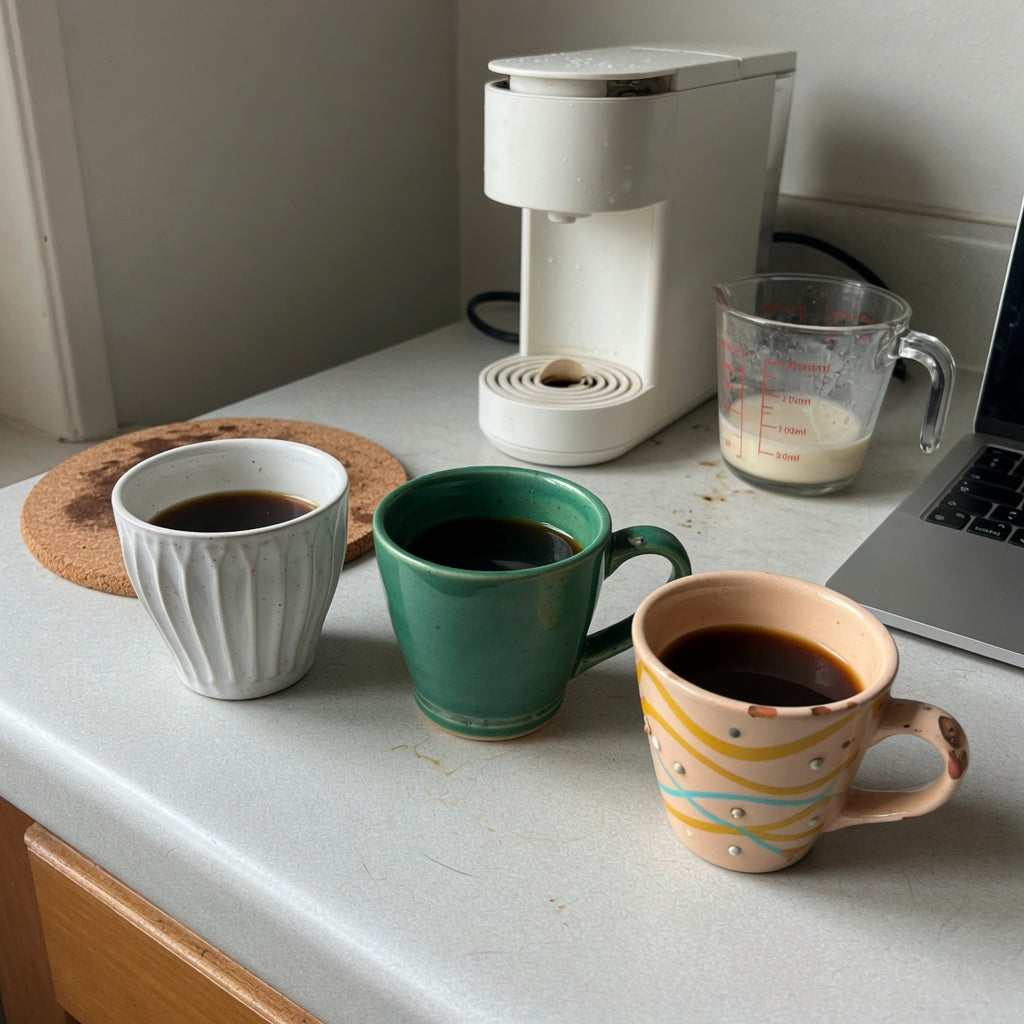
| You carry the cup from the kitchen to a desk and want exterior texture to be part of the grip | Pleated Coffee Tea Cup | The visible pleated treatment makes body texture a meaningful comparison point | Current capacity, overall dimensions, care directions, and how much cleaning the exterior detail requires |
| You want a color-led mug for a desk, open shelf, or gift | Emerald Coffee Tea Mug | The emerald presentation gives you a distinct color choice without having to infer decorative details | Footprint, handle clearance, listed capacity, and compatibility with the intended brewer |
| You prefer retro styling for a home coffee setup or gift presentation | Retro Coffee Tea Cup | The retro design puts silhouette and visual character ahead of a plain utility look | Height, base width, capacity, handle projection, and any listed care limitations |
The Pleated Coffee Tea Cup is the logical first page for a shopper prioritizing tactile exterior detail. That does not automatically make it the easiest option to wipe dry, and visible pleating should not be treated as proof of a particular grip without considering hand size and glaze.
The Emerald Coffee Tea Mug is the clearer starting point when color and mug styling matter. Its name does not establish that it has the smallest footprint, so buyers with a tight desk or low brewer should still check the current product details before deciding.
The Retro Coffee Tea Cup suits a shopper who wants the cup to contribute to a vintage-inspired setting or gift. Retro styling does not guarantee stackability or machine clearance. Those remain measurement questions.
If none of these pages satisfies your leading constraint, compare other shapes in our unique coffee mugs collection. The right next step is a broader comparison, not forcing a visually appealing cup into a space or serving routine it does not fit.
What should you inspect after unboxing and repeated washing?
At unboxing, we recommend checking three points under clear side light: the rim, the foot ring, and the handle junction if the cup has one. Look for a chipped drinking edge, a hairline crack, or a rough point that was not shown or described. Set the empty cup on a clean, flat counter to confirm that debris is not caught beneath the base.
Glaze appearance can vary by design, so compare an unfamiliar line or surface effect with the product photos before deciding it is a defect. If the rim is chipped or a crack appears structural, stop before using the cup and address it with the store.
Care instructions must come from the individual product page. Do not assume a ceramic cup is dishwasher safe or microwave safe because another cup in your cupboard is. If dishwasher use is permitted, leave enough space to prevent the rim or handle from knocking against another hard piece during the cycle. For hand washing, avoid abrupt hot-to-cold temperature changes and use a nonabrasive sponge unless the listed directions say otherwise.
Ceramic offers a solid, familiar drinking surface, but it is still breakable. It is not ideal for a bag, a tile-floor commute path, or a workspace where the cup is regularly knocked against metal equipment.
How should priorities change for a desk, small kitchen, tea, or gift?
- Crowded desk: Rank base footprint and maximum width first, then choose enough capacity to avoid constant trips away from the screen.
- Compact kitchen: Measure brewer clearance and cupboard height before comparing color. Include the drip tray and shelf lip.
- Tea routine: Consider opening shape and comfortable fill level. A wider opening may suit the sip you prefer, but it also exposes more liquid to room air.
- Gift purchase: Match style to the recipient only after confirming that the listed capacity suits their usual drink. The Retro option is a useful style-led starting point; the Emerald option is a clearer color-led choice.
- Room-to-room carry: Prioritize a body you can hold confidently and enough headroom to reduce splashing. The Pleated option belongs on that comparison list because of its visible exterior treatment.
What should you verify in the last 60 seconds before checkout?
- Your normal beverage volume has been measured rather than guessed.
- The listed capacity leaves room for milk, foam, or careful carrying.
- The cup height fits between the brewer's drip tray and spout.
- The maximum width, including any handle, fits the desk or shelf.
- You have read the current care directions instead of assuming dishwasher or microwave compatibility.
- You accept the trade-off between small capacity, ceramic breakability, and a compact everyday format.
If a cup clears every hard constraint, use color and styling to make the final decision. If it misses even one non-negotiable measurement, return to the collection and compare another profile.
Frequently asked questions
Which small ceramic coffee cup buying priorities matter most under a low brewer spout?
Height and usable capacity should lead. Measure from the installed drip tray to the spout, then compare that clearance with the product's listed dimensions when available. Do not remove the tray from your calculation unless you genuinely plan to brew that way every time.
Is listed cup capacity the same as comfortable drinking capacity?
Not necessarily. A listed capacity may represent a fuller vessel than you would safely carry, especially after adding milk or foam. Measure your normal drink and leave enough unfilled space for your actual routine.
Can I assume a small ceramic coffee cup is dishwasher and microwave safe?
No. Ceramic construction alone does not confirm compatibility with either appliance because glazes, decoration, and construction details can differ. Follow the care information on the specific CoffeifyMug product page.
Which CoffeifyMug option should I compare first?
Start with the Pleated Coffee Tea Cup if exterior texture leads your list, the Emerald Coffee Tea Mug if color and mug styling lead, or the Retro Coffee Tea Cup if retro character is the priority. In every case, verify the current capacity, dimensions when listed, and care directions before buying.
Is a small ceramic coffee cup suitable for commuting or iced coffee?
It can hold a cold drink if the product directions allow it, but ice reduces the space available for liquid. For commuting, an open ceramic cup is not a substitute for a sealed, insulated travel mug. Choose a different vessel if leak-resistant transport is a requirement.
Measure your usual pour, brewer clearance, and available width, then open the three product pages side by side. If none clears those checks, continue through the CoffeifyMug collection of unique coffee mugs and choose by verified fit before color or styling.
More from our blog
Read more
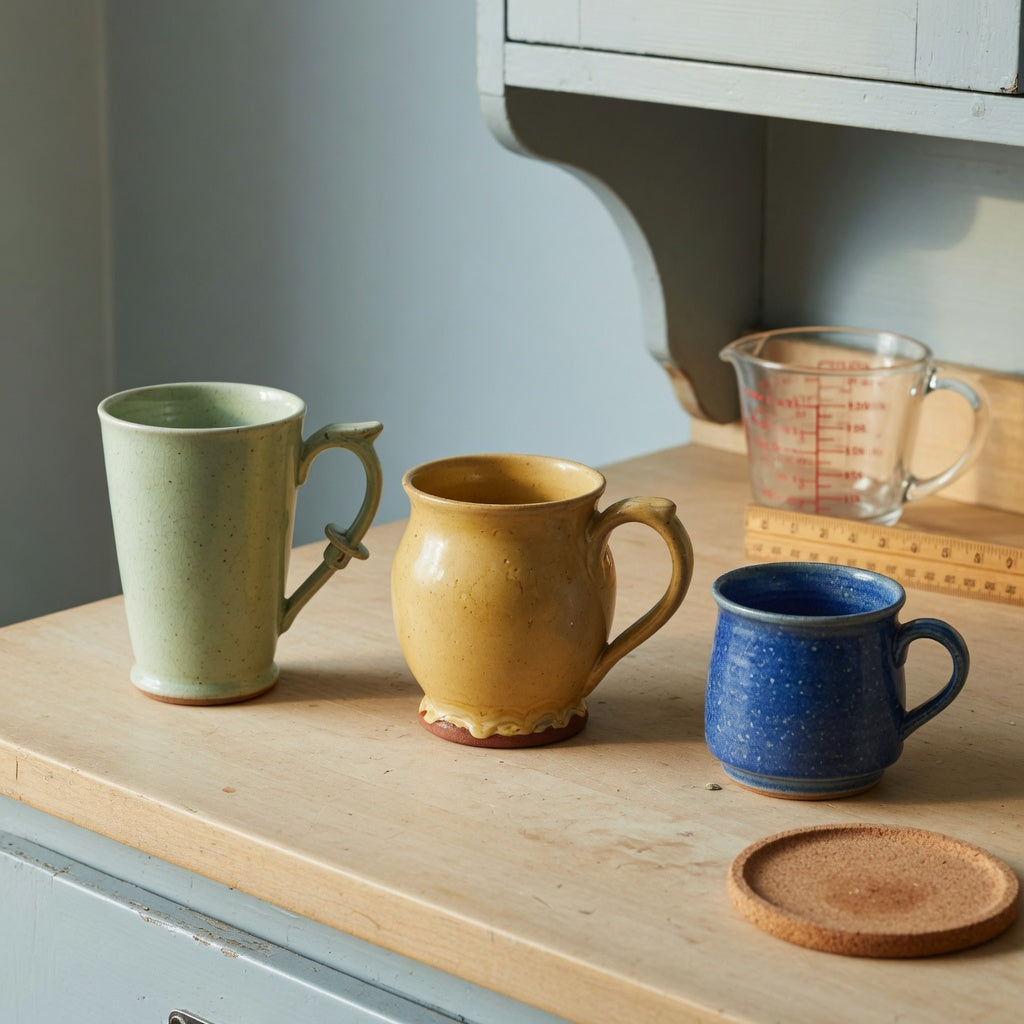
Vintage pottery coffee mugs buying priorities: Capacity, Shape, Space
Compare normal pour size, visible silhouette, listed dimensions, handle clearance, and care details before choosing a vintage-style mug. We connect each priority to the Retro, Mountain Sea, Great M...
Read more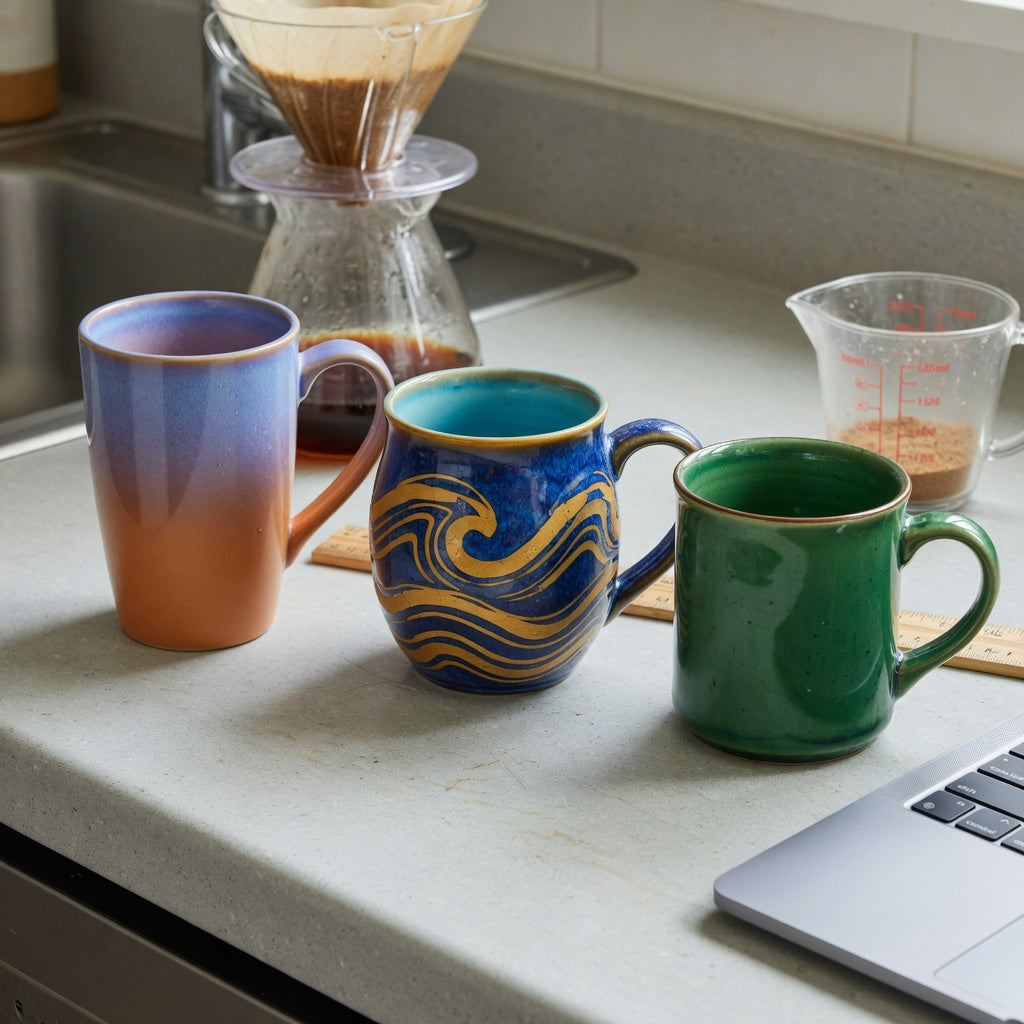
Ceramic Glazed Coffee Mugs Buying Priorities: Size, Shape, Space
Compare ceramic glazed mugs by usable capacity, handle and body shape, storage dimensions, and everyday placement. We map those priorities to the Gradient, Golden Waves Kio, and Emerald mugs withou...
Read more
Leave a comment
This site is protected by hCaptcha and the hCaptcha Privacy Policy and Terms of Service apply.