



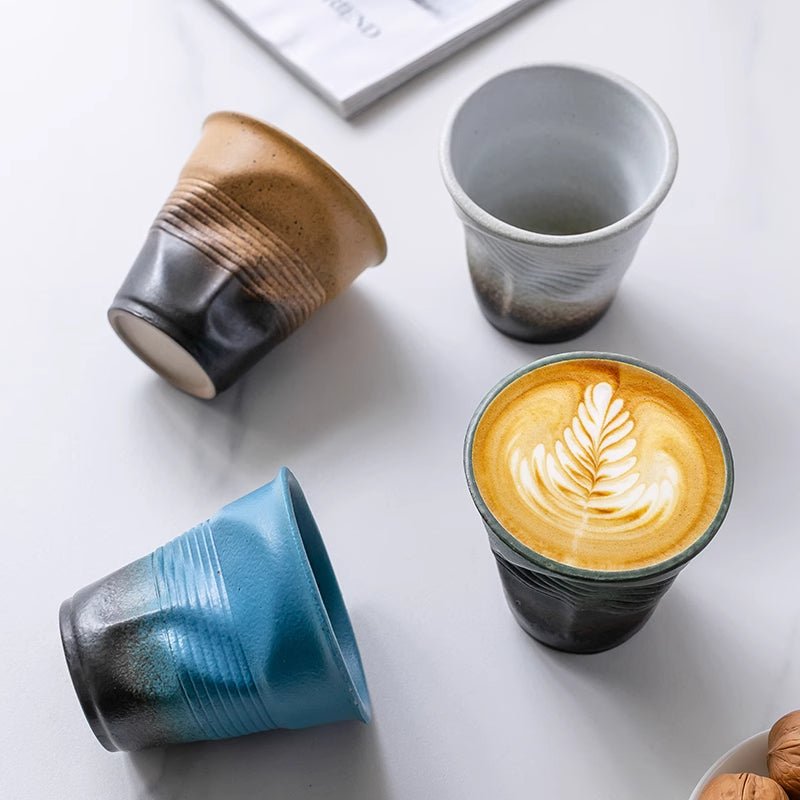
Pottery Tea Cups Buying Priorities: Match Capacity, Shape, and Space
Reading time: about 10 minutes
Three pottery tea cups sit in a kitchen cabinet. One gets used every morning; two are moved aside every time someone reaches for the coffee. The difference is rarely the glaze. It is whether the cup holds the amount of tea that person actually drinks, whether the rim and handle feel right in the hand, and whether it clears the shelf without becoming a stacking problem. That is why pottery tea cups buying priorities should start with capacity, visible shape, and space, not with whichever finish photographs best.
Pottery tea cups buying priorities: capacity first, then shape, then space
We handle ceramic drinkware every week, and the returns and exchanges we see rarely come from a cup being ugly. They come from a mismatch between the cup and the buyer's routine. In our store, the three cups below are ceramic-bodied and listed at 170 ml, 200 ml, and 250 ml. Those numbers are useful because they force a real decision before you fall for a surface pattern.
Use this order when you compare:
- Capacity tells you how many refills a tea session will need. A 170 ml cup is not a failure because it is small; it is a failure only if you wanted one large mug to last through a meeting.
- Shape tells you how the cup meets your hand and lip: handle opening, rim thickness, wall weight, and whether decoration sits where you drink.
- Space tells you whether the cup actually lives in your cabinet, on your desk, or in a gift box. Capacity does not tell you footprint, height, or handle protrusion.
If you shop by finish first, you will still need to answer these three questions after the cup arrives. Better to answer them before checkout.
| Cup | Listed capacity | Visible form cue | Routine it suits | Verify before ordering |
|---|---|---|---|---|
| Retro | 170 ml | Retro styling indicated in the product name | Small tea servings, tasting pours, guests who expect a refill | Height, width, handle configuration, glaze care |
| Pleated | 200 ml | Pleated surface indicated in the product name | Mid-size daily tea, a single 6 to 7 oz pour with a little room | Rim feel, handle, exact dimensions |
| Ball Handle | 250 ml | Ball handle named in the product | Larger daily tea, desk use, a gift for someone who drinks 8 oz or more | Handle opening, footprint, care notes |
How much tea do you actually drink in one sitting?
The FDA describes a typical cup or mug as small ceramic hollowware of about 240 ml, or 8 fl oz, normally with a handle. That is a useful benchmark, not a rule for tea. Many tea drinkers pour 100 to 150 ml at a time, especially with green tea or gongfu-style sessions, and then refill. Others want one 12 oz cup and no second pour. Neither habit is wrong; they point to different cups.
At 170 ml, the Retro is a small-serving cup. It suits tea tastings, concentrated brews, or guests who expect a second pour. It is not the right pick if you want one 12 oz mug to last through a long work call. The Pleated at 200 ml sits in the middle: close to a standard 7 oz tea serving, with enough room for a slightly generous pour. The Ball Handle at 250 ml is the closest of the three to the FDA's 240 ml benchmark, so it is the first one to check if your habit is one large tea rather than several small ones.
All three capacities are listed; we are not guessing from photos. If you routinely drink 12 to 16 oz, none of these three is a large mug. Start with a larger format in our unique coffee mugs collection and check the listed capacity on each option.
Does the visible shape match how you hold a hot cup?
Capacity tells you volume. Shape tells you heat, grip, and where the cup meets your mouth. The Ball Handle name tells us the product has a ball handle. The Retro and Pleated names do not tell us enough to promise a handle configuration, so check the listing photos and details rather than assuming every pottery tea cup has the same handle.
- Handle opening: A handle that fits two fingers feels very different from one that fits three. If you have large hands or drink very hot tea, confirm the opening size before ordering.
- Rim: A thin, clean rim is usually easier to drink from than a thick, heavily rounded one. Run your eye around the lip line in the photos and ask about any metallic or overglaze decoration at the drinking edge.
- Wall: Thick walls hold heat longer but add weight; thin walls cool faster and feel lighter. Our verified product facts list capacity and ceramic body, not wall thickness, so ask if that detail matters to you.
- Foot ring: A flat, well-finished foot sits more steadily on a saucer or desk. A rough foot can scratch furniture and is harder to dry.
If a generous handle is non-negotiable, the Ball Handle is the obvious first check because the handle is named in the product, but confirm the opening in the photos. If you want a handleless cup, that is a different shopping problem; a small, thick-walled handleless cup can be comfortable for short pours, but a full cup of very hot tea is harder to manage.
Will the cup fit your shelf, desk, and saucer situation?
Capacity is not footprint. A 200 ml cup can be wider than a 250 ml cup, and a handle can add more clearance than the body does. We do not have verified height, width, or foot diameter for these three in our product facts, so treat the current listing as the place to confirm dimensions. Do not infer them from milliliters.
- Measure the shelf gap where the cup will live. Include the height of any saucer you plan to use, and leave a finger's width above the rim so you can lift it out without tipping.
- Measure your coaster or desk zone. A 250 ml cup with a protruding handle needs more usable space than a compact 170 ml cup, even if the body looks similar in a photo.
- Check the saucer situation. If the listing does not state whether a saucer is included, do not assume it is. A cup that fits a saucer you already own is easier to keep in rotation.
- Check the gift box. If the cup is a gift, measure the box or ask for packed dimensions. A beautiful cup that does not fit the shipping box is a packaging problem, not a tea problem.
You can compare current shapes in our collection, and if you are choosing between clay bodies and glazes, ask before ordering rather than relying on a product name alone. For pottery tea cups, the safest approach is to confirm the exact listing details for the cup you are considering.
What should you verify about glaze and food contact before you fall for the finish?
Glaze is the least photogenic priority and the one we would not skip. The FDA notes that lead can leach from improperly made glazed pottery, and that washing, boiling, or other processing does not remove lead from a piece. When pottery is fired at the proper temperature for the proper time, essentially all the lead is bound into the glaze. That is why the maker's firing and finished-piece testing matter more than a shiny surface.
The FDA's higher-concern list includes some handmade ware with a crude appearance or irregular shape, antiques, damaged or excessively worn pieces, flea-market finds, unidentifiable makers, and bright orange, red, or yellow decoration. That list is about risk categories, not a verdict on every handmade cup. For cups and mugs, the FDA lead guideline is 0.5 micrograms per mL of leaching solution in any one of six units. The cadmium guideline for small hollowware is also 0.5 micrograms per mL. Those numbers are useful when you ask a maker or seller what testing was done. A glaze recipe or clay body specification is not the same as a leach test on the fired cup you will receive.
The CDC also documented a New York City family with elevated blood lead levels associated with traditional glazed ceramic ware used for cooking, storing meals, and making coffee; the family's levels declined after they stopped using it. That is an extreme case, but it explains why we treat food-contact questions as part of the buying decision, not an afterthought.
- Ask what touches the tea and your lips. The interior glaze, rim, and any lip decoration matter more than the outside pattern.
- Ask for finished-piece test results. A glaze recipe or a clay body specification is not the same as a leach test on the fired cup you will receive.
- Read the label literally. The FDA says ware with extractable lead should not be labeled lead free. A not-for-food-use marking means display only, not daily drinking. Ornamental ceramicware that looks food-suitable is treated as foodware unless it is permanently identified as not for food use.
- Inspect on arrival. Look for bare clay on the rim, pinholes in the glaze, chips, and cracks. Crazing is a crackle pattern; if it catches a fingernail or stains, treat it as a defect and ask before using the cup for tea.
For the three cups on this page, use the listing's care and food-contact notes and ask before ordering if the finish is your main concern. If you buy antique or brightly decorated pottery, keep it for display unless the seller can document food-contact testing.
Which pottery tea cup fits which routine?
Match the cup to the way you actually pour, not the way you imagine you will pour.
- Tea tasting or small pours: The Retro at 170 ml keeps a small serving from feeling lost. It is a poor fit for someone who wants one large mug and no refill.
- One mid-size daily tea: The Pleated at 200 ml is the middle option. It gives a little more room than the Retro without moving into mug territory.
- Desk, gift, or larger serving: The Ball Handle at 250 ml is the closest to a standard 8 oz cup. Confirm the handle opening and footprint before you commit.
- 12 to 16 oz tea drinkers: None of these three is a large mug. Start with a larger ceramic mug rather than buying a small cup and refilling it three times.
The trade-off is simple: smaller pottery tea cups reward attention and refilling; larger cups reward convenience. Neither is more authentic. Pick the one that matches your morning.
Frequently asked questions
What are the pottery tea cups buying priorities if I drink one large tea a day?
Start with capacity. The 250 ml Ball Handle is the closest of our three listed cups to a standard 8 oz serving. If you routinely drink 12 to 16 oz, a larger ceramic mug is a better fit than a 170 ml cup.
Are pottery tea cups food safe just because the glaze looks shiny?
No. A shiny surface does not prove food safety. Ask what touches the tea and your lips, whether the maker has finished-piece leach-test results, and what the label says about food use. The FDA treats improperly fired glazed pottery as a lead-leaching risk.
Can I put these pottery tea cups in the dishwasher or microwave?
Do not assume appliance safety from the word ceramic. Check the specific listing or ask the seller about dishwasher and microwave use, especially if the cup has metallic or overglaze decoration. If care notes are missing, hand wash and avoid sudden temperature changes.
What if the cup has no listed dimensions?
Do not guess from capacity. Measure your shelf gap and coaster, then ask for height, width, and foot diameter. A 200 ml cup can be wider or taller than a 250 ml cup, and a handle can change the clearance.
Does a handleless pottery tea cup get too hot to hold?
It depends on wall thickness, fill level, and how you hold it. Small pours in a thicker-walled cup are usually easier to manage than a full cup of boiling tea. If you have sensitive fingers or drink very hot tea, a handled cup like the Ball Handle is the safer starting point, but confirm the handle opening first.
More from our blog
Ready to pick your mug? Two ways to save on today's order:
Ordering 1–3 mugs? Get an extra 10% off your 1st order with code 10_OFF Apply 10% Off & Shop Wooden-Handle Mugs →
Gifting 4+ mugs? Buy 3, Get the 4th Free applies automatically at checkout (no code needed; offers do not stack) · Free standard shipping (Nov pre-Christmas delivery: 15–20 calendar days US) · Free replacement if chipped in transit.
Popular mug buying guides: Ceramic Tea Cups & Infuser Mugs · Ceramic Mugs with Lids Compared · Wooden-Handle Tea Infuser Mugs Compared · Christmas & Secret Santa Mugs 2026 · Espresso & Cortado Cups Guide · Cup & Saucer Gift Sets · All 25 Mugs Spec Table · Mug Size Guide · Shipping & Promo FAQ
FIRST ORDER 10% OFF (CODE: 10_OFF) · OR BUY 3, GET THE 4TH FREE


Read more
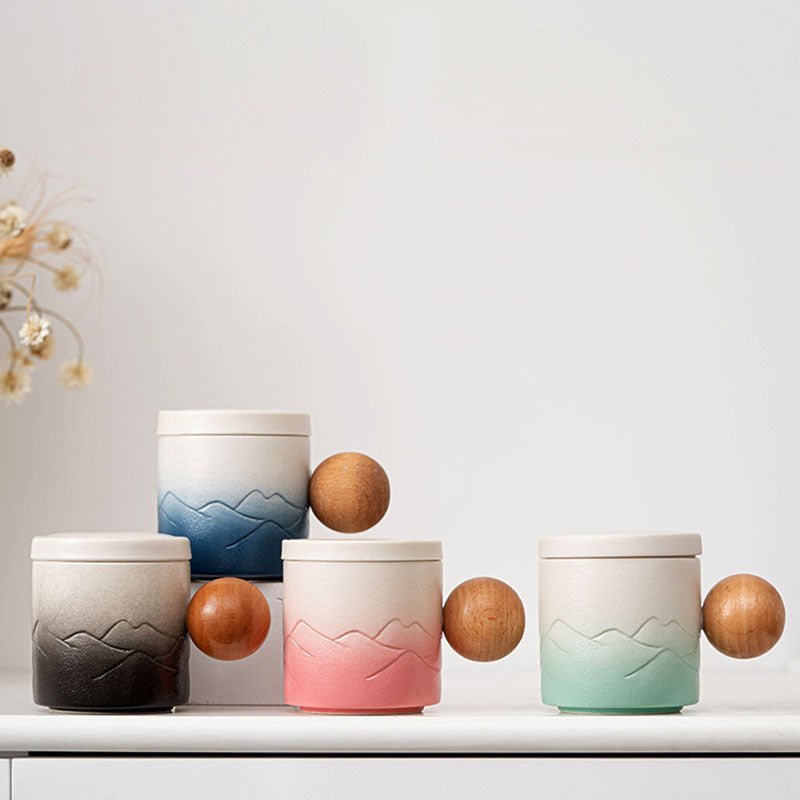
Wide Based Coffee Mugs Buying Priorities: Capacity, Shape, Space
A working framework for wide based coffee mugs buying priorities: what a broad foot does and does not fix, how 250, 400, and 480 ml pours change the trade-off, and which clearance checks to run bef...
Read more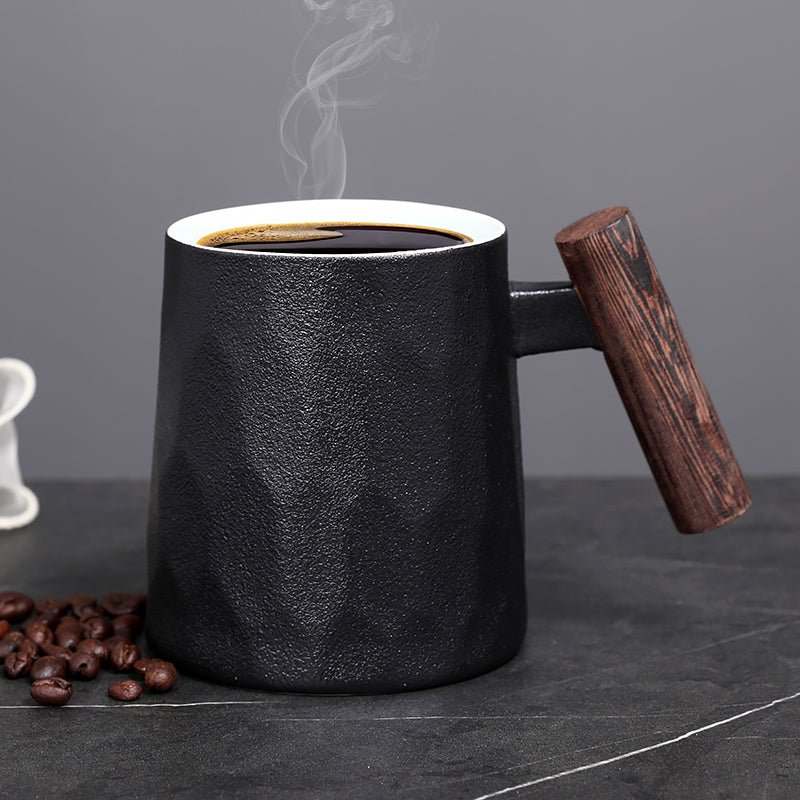
Large Round Coffee Mugs Buying Priorities: Capacity, Shape, Space
Large round coffee mugs buying priorities come down to usable capacity, rounded shape, and the counter space a mug really occupies. We line up our 400 ml, 440 ml, and 480 ml options against everyda...
Read more
Leave a comment
This site is protected by hCaptcha and the hCaptcha Privacy Policy and Terms of Service apply.