



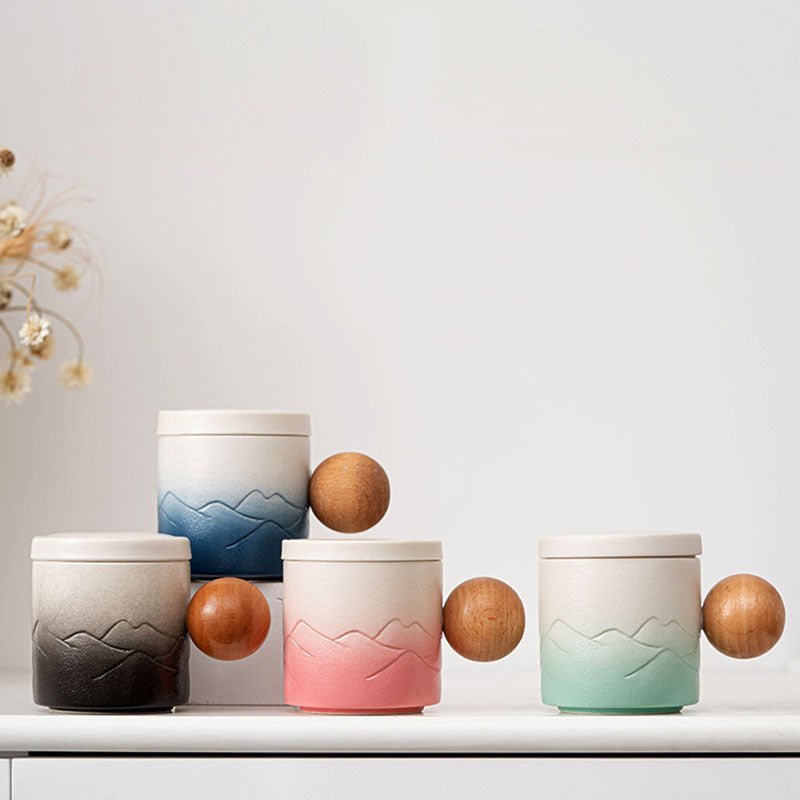
Wide Based Coffee Mugs Buying Priorities: Capacity, Shape, Space
Reading time: about 10 minutes
Reaching across a desk for a pen, your sleeve catches a mug handle, the mug rocks onto its rim, and coffee crosses the keyboard. That half-second is when most shoppers start weighing wide based coffee mugs buying priorities — and it is also where the shopping gets muddled. “Wide base” is not a defined specification. Two mugs sold under that phrase can differ by half an inch of contact patch, an inch of height, and a hundred millilitres of interior volume.
We keep three ceramic shapes in the CoffeifyMug lineup, and the emails we answer about them are almost never about glaze colour. They are about whether a mug will sit still on a tilted drafting table, whether it clears a Nespresso spout, and whether 480 ml is more coffee than one person actually drinks. Here is how we would sort those priorities for ourselves.
Three shapes shoppers mix up — only one of them is about stability
Most confusion starts because people use “wide” for three different measurements.
- The foot (contact ring). The circle of ceramic that touches the table. This is the part that resists tipping, and it is the least visible dimension in most product photography.
- The mouth (rim diameter). This governs aroma, how fast the coffee cools, whether an AeroPress or a pour-over cone seats properly, and how easy it is to sip without a splash. It does nothing for stability.
- Body height. More height on the same foot means a higher centre of gravity once the mug is full, which is the opposite of what a nervous desk setup needs.
A stable mug can absolutely have a narrow rim: broad foot, straight wall, small opening. That is often the best combination for a workspace. A wide-brimmed bowl on a small foot is the reverse — generous to drink from, easy to knock over. In listing photos the rim is usually the flattering star and the base is cropped or shadowed, so zoom in on the underside before you assume anything.
What a wide foot actually changes when the mug gets bumped
The physics is simple enough to use. A mug tips when a sideways push moves its centre of gravity past the edge of its base of support. A broader base buys more tilt before that happens; a lower centre of gravity means the mass has less distance to travel. Both help. Neither makes a mug immune.
- Height matters as much as width. A short, broad mug is harder to tip than a tall one sharing the same footprint, because the liquid sits closer to the table.
- Fill level changes the equation mid-drink. A brim-full mug carries its weight high; the last third of a cup is far more planted than the first.
- A flat, even foot ring beats a wide warped one. Kiln firing can leave a slight rock in a hand-finished base. Stand the mug on a glass surface and press alternate sides — a wobble shows up immediately, and it feels worse on a hard desk than on a tablecloth.
- Glaze alone does not grip. A polished ceramic foot slides on glass and laminate. If you need a mug that resists sliding on a boat or a dashboard, that is a rubber-footed travel mug problem, not a ceramic mug problem.
One honest caveat: we found no public test standard that scores commercial mugs on tip angle, so “tip-proof” is marketing language rather than a measurable claim. We describe our pieces by capacity and visible shape, and we leave that word out.
Wide based coffee mugs buying priorities by listed capacity: 250, 400, or 480 ml
Start with the pour, not the footprint. The mug that fits your routine is usually decided by how much liquid you want to keep warm, and the base follows from there.
| Mug | Listed capacity | What the listing shows | Routine it suits |
|---|---|---|---|
| Ball Handle mug | 250 ml (about 8.5 fl oz) | Compact, rounded body with the spherical handle that gives it its name | Cortados, single-serve pods, small tea top-ups, tight keyboard corners |
| The Flow | 400 ml (about 13.5 fl oz) | Continuous wall without a hard shoulder | A 12 oz drip or pour-over with a little headroom; the middle of the range |
| The Rock | 480 ml (about 16.2 fl oz) | Largest listed capacity, with the chunkiest, most angular body of the three in the photos | Long tea sessions, big morning pours, mugs that live on a side table |
Those capacities are the numbers on our listings. We have deliberately left base diameters out of the table: photographs stretch perspective, and a dimension you read on the current product page is worth more than one you infer from a picture. If footprint matters to your setup, open the listing and check it there.
The 250 ml compact ball-handled cup is the one we suggest when the drink is short and strong. A double espresso with a splash of steamed milk disappears in a 480 ml mug — it cools fast and you spend the morning looking at a wide empty bottom. For a standard American drip or a V60 worth roughly 350–360 ml, the 400 ml Flow mug leaves a small margin for milk or foam without pushing the level to the rim. And if you brew a full 16 oz pot in one go, the 480 ml Rock mug is sized for it.
Half-litre mugs are not automatically better. A full 480 ml is a heavy object to lift repeatedly, and if you tend to forget a mug on the desk for an hour, the extra volume just means more cold coffee to pour away. Our full range, including smaller and more sculptural shapes, sits in the unique coffee mugs collection.
Fit checks that decide it before the glaze does
- Brewer clearance. Measure from your drip tray to the spout, then check the mug's height and base against the tray grid. A base that overhangs the grid perches rather than sits.
- Rim fit for manual brewing. An AeroPress needs a rim it can seal against; a pour-over cone needs a rim it will not fall into. A wide foot tells you nothing about the opening, so check both numbers on the listing.
- Coaster and desk pad. A standard coaster is commonly around 4 inches across. If the foot is wider than the coaster, the mug effectively sits on a second, smaller platform — which is worse than no coaster at all.
- Cup holders. Vehicle holders are not one size, and many taper toward the bottom. Measure the narrowest point, not the opening. Our ceramic pieces are desk and table mugs first; if the commute matters more than the desk, buy a travel mug.
- Shelf and cabinet height. Tall mugs get stored on low shelves because that is where they fit. Check before you commit cupboard space.
For a longer walkthrough of these measurements, our shape and fit guide to ceramic wide bottom mugs covers brewer and coaster dimensions in more depth.
Handle clearance and the weight of a full pour
Here is the number most listings never print: 480 ml of coffee weighs roughly 480 grams, about a pound, before you add the ceramic. That is the load your wrist takes on the second and third lift of the morning, and it is why handle geometry matters more on the big mugs than the small ones.
Two practical tests. First, can you get three fingers through the loop without your knuckles touching the wall? A two-finger grip on a full 480 ml mug rolls the wrist outward. Second, where does the handle sit vertically? A loop mounted high forces you to hold the weight from above; a lower-slung handle lets your bottom fingers brace against the curve of the body.
The spherical handle on the 250 ml Ball Handle is a pinch-and-cradle grip rather than a full-fist loop, which suits a small pour but would be the wrong choice at the largest size. If you have limited grip strength, buy capacity down rather than up: a 400 ml mug filled twice is easier to manage than one 480 ml mug filled once.
Dishwasher pooling, unglazed feet, and glaze safety
Two care details catch people out on broad-based ceramics.
- Water in a concave base. Many wide feet are recessed underneath. Turned upside down in a dishwasher, that recess can hold a small pool of rinse water. Tip the mug out and dry the base before it goes back on the shelf.
- The unglazed foot ring. The ring that contacts the kiln shelf is usually left raw so the piece does not fuse to it. Raw stoneware is mildly abrasive; on a lacquered desk or a polished table, a felt pad under the mug prevents hairline scratches.
On safety, the FDA is the source worth quoting. Its guidance on lead-glazed pottery notes that improperly fired glazes can leach lead into food or drink, and that washing, boiling, or other household steps do not remove lead from a piece. For cups and mugs, the action level is 0.5 micrograms of lead per millilitre of leaching solution in any one of six units, using methods that include ASTM C738. The same guidance flags glazed, antique, damaged, and brightly orange-, red-, or yellow-decorated pieces as higher concern, while describing ordinary commercial factory tableware as much less likely to be a problem. Anything marked “not for food use” should never hold coffee, whatever it looks like on a shelf.
Microwave and dishwasher suitability is product-specific, so check the current listing rather than assuming from material alone — dense ceramic bodies heat unevenly, and thick bases hold warmth longer than thin walls.
Which setting are you actually buying for?
- Desk or studio: prioritise footprint and an even, flat foot. The 400 ml Flow is the safest middle pick; the 250 ml Ball Handle suits a small cortado and a cramped keyboard corner.
- Gift: capacity matters less than first impressions and handle feel. A sculptural silhouette photographs well, but ask what the recipient actually drinks — a 480 ml mug given to an espresso drinker tends to end up as a pen pot.
- Commute: buy a travel mug. Ceramic with a wide foot is the wrong tool for a cup holder, and a splash-resistant lid is not the same thing as a leakproof one.
- Boat, workshop, or a desk that gets bumped: a heavy, low, wide-footed ceramic helps, but pair it with a non-slip mat under the mug. The mat does more work than the geometry.
If none of the three capacities is quite right, start from the full collection page and filter by what you drink rather than by what looks good in a thumbnail.
Frequently asked questions
Do wide based coffee mugs really spill less, or is that marketing?
A broader base genuinely raises the force needed to tip a mug, and a lower centre of gravity helps further. What it does not do is make a mug tip-proof, and we found no public standard that scores mugs on tip angle. Treat wide based coffee mugs buying priorities as a ranking exercise — foot size, height, fill level, then surface — rather than a single yes-or-no feature.
Will a wide bottom mug fit my car's cup holder?
Usually not. Vehicle cup holders vary between models and often taper toward the bottom, so measure the narrowest point rather than the opening. If a mug's base is wider than that, it will perch and slide. For driving, choose a purpose-built travel mug with a tapered base.
Does a wider base mean the mug holds more coffee?
No. Base width and interior volume are separate measurements. Wall thickness, the flare of the foot, and the internal profile all affect capacity, which is why we publish millilitres rather than letting the silhouette imply the pour. Our three shapes hold 250 ml, 400 ml, and 480 ml.
Can I put a wide base ceramic mug in the dishwasher and microwave?
Check the individual listing — suitability is set per product, not per material. Two habits help regardless: empty the recessed base after a wash cycle, and avoid moving a cold mug straight into a hot microwave, since a sudden temperature change stresses thick ceramic.
Is 480 ml too big for one person?
For filter coffee it is a generous but workable single serving; for espresso drinks it is far too much. The practical test is whether you finish the cup while it is still hot. If you usually pour half away, a 400 ml mug with a refill will serve you better than a 480 ml mug you never empty.
Ready to pick your mug? Two ways to save on today's order:
Ordering 1–3 mugs? Get an extra 10% off your 1st order with code 10_OFF Apply 10% Off & Shop Wooden-Handle Mugs →
Gifting 4+ mugs? Buy 3, Get the 4th Free applies automatically at checkout (no code needed; offers do not stack) · Free standard shipping (Nov pre-Christmas delivery: 15–20 calendar days US) · Free replacement if chipped in transit.
Popular mug buying guides: Ceramic Tea Cups & Infuser Mugs · Ceramic Mugs with Lids Compared · Wooden-Handle Tea Infuser Mugs Compared · Christmas & Secret Santa Mugs 2026 · Espresso & Cortado Cups Guide · Cup & Saucer Gift Sets · All 25 Mugs Spec Table · Mug Size Guide · Shipping & Promo FAQ
FIRST ORDER 10% OFF (CODE: 10_OFF) · OR BUY 3, GET THE 4TH FREE


Read more
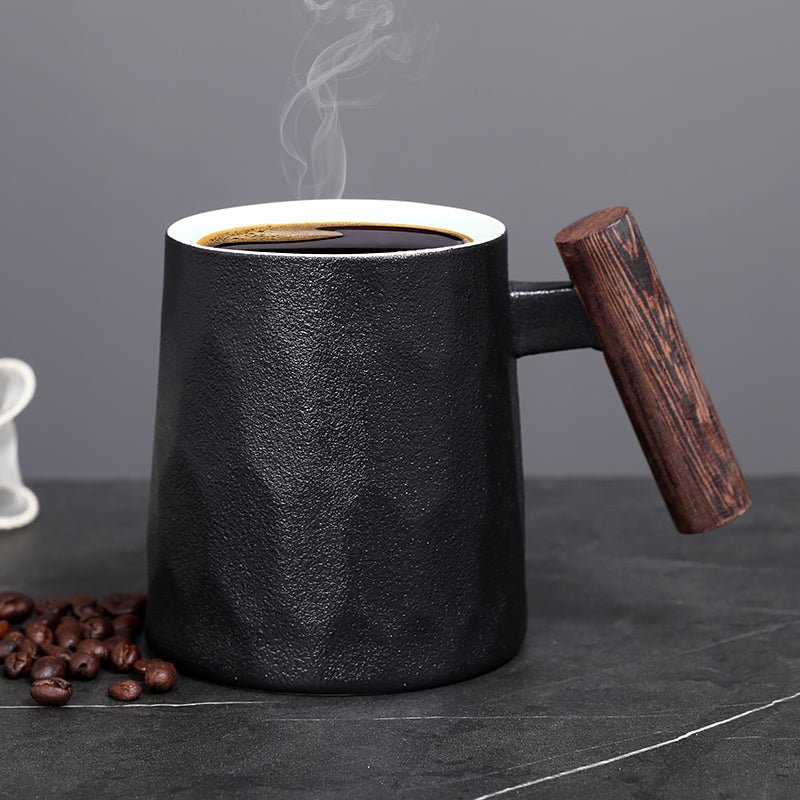
Coffee Mugs With Big Handles Buying Priorities: Fit, Weight, Space
Compare 250 ml, 400 ml and 480 ml handled mugs by the three things that actually decide the purchase: how much you pour, how much hand room the loop gives, and what fits under your brewer.
Read more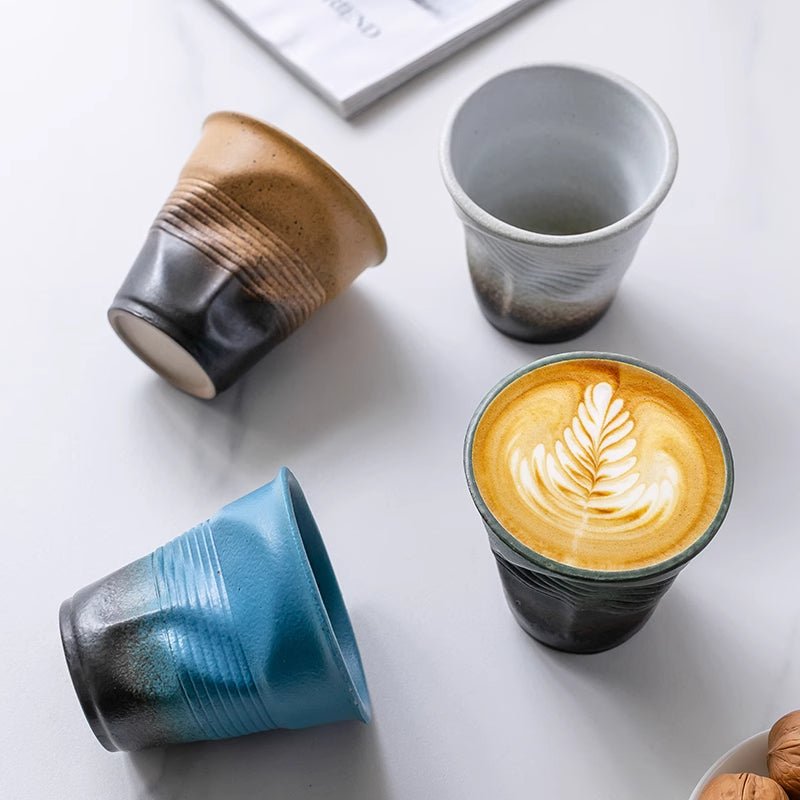
Pottery Tea Cups Buying Priorities: Match Capacity, Shape, and Space
Pottery tea cups buying priorities come down to listed capacity, visible form, and the space the cup actually occupies. We compare our 170 ml, 200 ml, and 250 ml cups by routine, then flag the glaz...
Read more
Leave a comment
This site is protected by hCaptcha and the hCaptcha Privacy Policy and Terms of Service apply.