
Piccolo Cup Replacement Purchase Practical Purchase Checklist
Reading time: about 10 minutes
A chipped rim can make a favorite small cup unusable overnight. The replacement can create a second problem: the familiar pour sits too low, spills at the rim, will not clear the coffee machine, or feels awkward at an office desk. This piccolo cup replacement purchase practical purchase checklist starts with those failures, then compares only three verified catalog capacities: Retro at 170 ml, Ball Handle at 250 ml, and Emerald at 270 ml.
We handle questions about compact drinkware in our store, and in our experience, replacement buyers make a better second choice when they measure the old routine instead of relying on the word piccolo. For this comparison, the facts we can stand behind are the listed capacities. Material, external dimensions, care compatibility, and usable fill line still need to be confirmed on the current product page or with our team. We do not present any of these options as a certified piccolo cup, prescribe a fixed milk-to-coffee ratio, or claim barista testing or cafe provenance.
How should you use a piccolo cup replacement purchase practical purchase checklist?
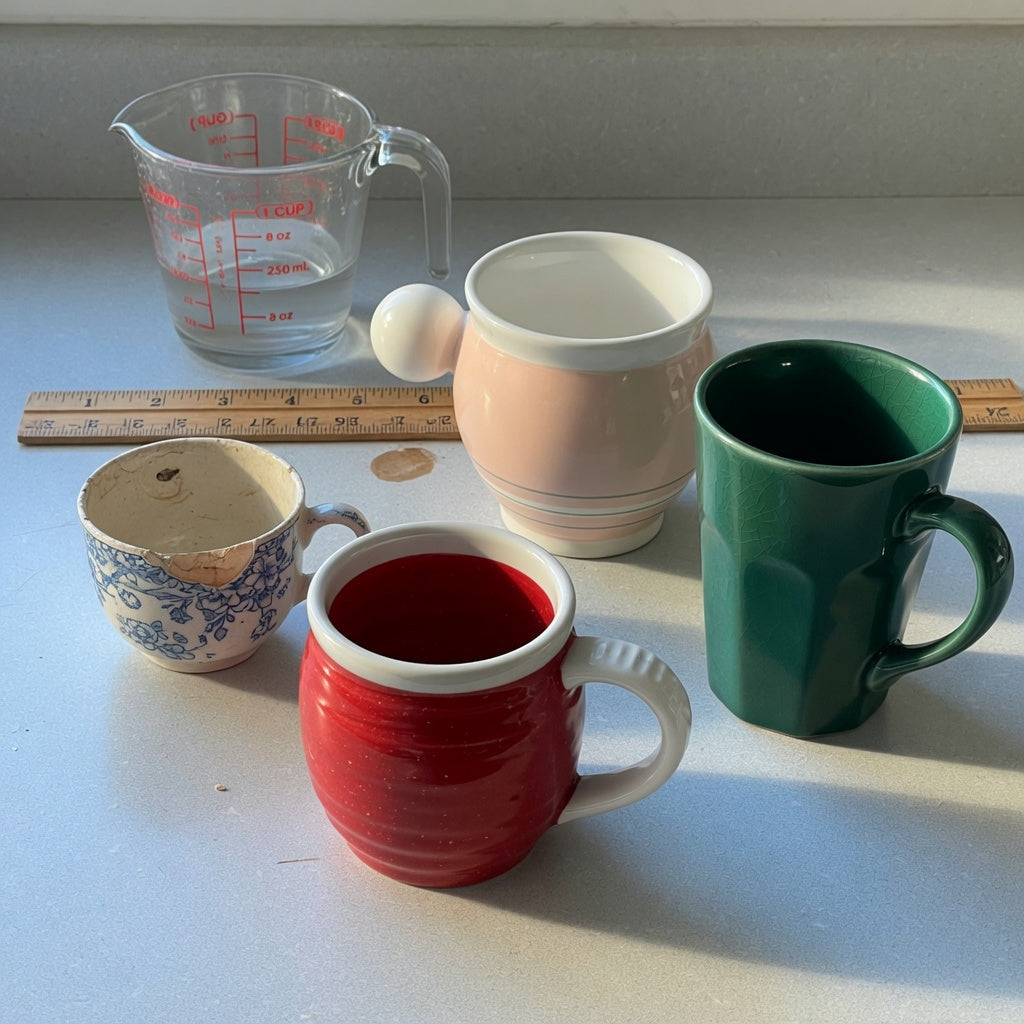
Begin with the cup being replaced. Its most useful details are not its color or age but the drink volume it handled, the space it occupied, the way you held it, and the reason it stopped working. If the old cup is safe to handle, fill it to your normal level with cool water and transfer that water to a marked measuring jug. Do not fill or handle a cracked vessel that could separate under pressure.
- Record your normal pour. Measure the finished drink, including milk or added water, rather than estimating from the espresso dose.
- Measure machine clearance. Check the distance from the drip tray to the spout in the machine configuration you actually use.
- Check storage space. Record the maximum cup height and total width, including the handle, for the shelf or cupboard.
- Describe your grip. Note whether you used one finger, two fingers, or held the cup body because the old handle was too small.
- Name the failure. A chipped rim, cracked handle junction, unstable base, worn finish, and inadequate capacity require different replacements.
- Write down the real care routine. Daily dishwasher cycles in a shared kitchen are a different constraint from careful hand-washing at home.
This short record keeps an attractive replacement from repeating the old cup's limitation. It also exposes any missing specification that needs an answer before checkout.
What do 170 ml, 250 ml, and 270 ml change?
Capacity is the only directly comparable specification verified across these three options. Even then, listed capacity should not be confused with a comfortable working fill. A brim-full cup leaves no room for carrying, stirring, milk, or foam, and product listings can differ in how capacity is measured. If your normal drink is close to the stated limit, confirm the measurement method and allow practical headroom.
| Current option | Verified listed capacity | Reader situation and reason it fits | Trade-off to accept |
|---|---|---|---|
| Retro Coffee Tea Cup | 170 ml | Your measured drink sits comfortably below 170 ml and the old cup did not need extra room. It has the lowest listed volume of the three. | It provides the least listed headroom. Extra milk or water can quickly make this capacity restrictive. |
| Ball Handled Coffee Tea Mug | 250 ml | The old small cup regularly ran short, and you want 80 ml more listed capacity than the Retro. Its named ball-handle design also makes it relevant to shoppers intentionally changing grip style. | The handle name does not establish comfort, joint strength, or machine clearance. Confirm those details separately. |
| Emerald Coffee Tea Mug | 270 ml | Your pour varies from day to day, or you want the most listed room among these three options. It adds 100 ml over the Retro and 20 ml over the Ball Handle. | It may feel too capacious if the appeal of the old cup was a very small drink. Listed volume does not reveal its external footprint. |
The 20 ml difference between the Ball Handle and Emerald is modest compared with the 80 ml jump from Retro to Ball Handle. If both larger capacities accommodate your drink, handle preference, verified dimensions, and care instructions should decide the purchase. Choosing 170 ml does not make the Retro an official piccolo vessel, and choosing 250 ml or 270 ml does not determine a recipe or serving ratio.
Did the handle, rim, or cupboard clearance cause the replacement?
A broken old handle does not automatically make a ball handle stronger. The Ball Handled product name identifies a design feature, not a load rating or durability certification. If grip is the deciding issue, study current close-up images of both handle attachment points and ask for the opening size, handle projection, and total cup width. A rounded shape may look comfortable but still be wrong for large fingers or a tightly spaced dishwasher rack.
For a rim failure, identify what happened. A single chip from hitting the sink calls for better handling and enough rack clearance; fine cracks in a glazed surface would call for confirmation of the replacement's material and finish. When we handle a new cup, we rotate it under direct light, inspect the rim and handle junctions, and set it on a flat counter to check for rocking. Shoppers can perform the same check during unboxing before the cup is washed or used.
Capacity is also a poor substitute for dimensions. A 170 ml cup is not guaranteed to be shorter or narrower than a 250 ml cup because wall shape, base design, and handle projection affect the exterior. If the old cup barely cleared a low spout or cupboard shelf, obtain the actual height and widest measurement before buying.
Which option suits a kitchen counter, office desk, or gift?
- Short, repeatable drink at home: If your measured pour leaves sensible headroom below 170 ml, the Retro is the relevant starting point because it has the lowest verified capacity. Confirm machine clearance rather than assuming its volume guarantees a compact exterior.
- Variable office drink: If coworkers, a larger water pour, or occasional extra milk made the old cup overflow, compare the 250 ml Ball Handle with the 270 ml Emerald. Verify dishwasher guidance first if the cup will enter a communal machine every day.
- Grip-driven replacement: If a thin or cramped handle caused the old problem, review the Ball Handle photographs and measurements. Its design is relevant to the situation, but the product name alone cannot prove a better fit or stronger attachment.
- Gift with an uncertain drink routine: The 250 ml and 270 ml capacities provide more listed room than the Retro, but neither is a universal gift size. Check what the recipient drinks, where the cup will be stored, and how they wash drinkware before choosing.
If style matters but none of these three clearly resolves the old limitation, compare shapes in our unique coffee mugs collection. Use the measurements and care requirements from your checklist to narrow the collection instead of selecting by appearance alone.
Which material and care facts need confirmation?
Do not infer material from a product name, photograph, or the cup being grouped with similar drinkware. Material affects weight, heat transfer, impact behavior, and the correct cleaning method. The verified facts supplied for this comparison do not establish the exact material of each option, so check the current listing or ask our store before treating any of them as ceramic, glass, stoneware, or another construction.
Dishwasher-safe and microwave-safe are separate claims. One does not imply the other, and neither automatically covers decorative finishes, sudden temperature changes, or contact with neighboring items in a crowded rack. If the current care instructions do not answer your routine, ask before ordering or plan to hand-wash until suitability is confirmed.
- Check whether the exact product is listed as dishwasher-safe and whether rack placement is specified.
- Confirm microwave suitability separately if reheating in the cup is part of your routine.
- Look for finish-specific instructions, especially if the design includes applied decoration or a distinctive surface treatment.
- Keep the rim and handle from striking sink edges, utensils, or adjacent cups during washing.
- Avoid moving breakable drinkware directly between extreme temperatures unless its material guidance permits it.
- Inspect a gift promptly after unboxing so any rim damage, handle cracks, or base instability can be documented before use.
These checks do not guarantee indefinite life. They address common handling conditions that shorten the useful life of breakable cups, including repeated impact at the rim, pressure at the handle junction, and unsuitable wash or heat cycles.
When are all three compact options the wrong replacement?
Skip these options if your measured drink approaches or exceeds 270 ml before allowing headroom. They are also poor starting points for an iced drink that needs substantial space for cubes, a high foam topping, or frequent top-ups. A larger mug category will suit that routine better.
Do not select from these three on capacity alone if you require a sealed commuting lid, insulation, exact stackability, or guaranteed clearance under a specific machine. Those features are not established by the verified capacity facts. Shoppers seeking a traditionally defined or certified piccolo cup should also keep looking, because we make no such claim for the Retro, Ball Handle, or Emerald.
Can you complete this two-minute checkout check?
Use this piccolo cup replacement purchase practical purchase checklist immediately before ordering. Any unanswered item that caused the previous cup to fail should pause the purchase.
- My usual finished drink measures approximately the amount I recorded.
- The selected capacity leaves enough headroom to carry and stir the drink comfortably.
- I have verified the external height and total width if machine, shelf, or rack clearance matters.
- The pictured handle suits my grip, and I have requested handle measurements if fit is uncertain.
- I have confirmed the exact material instead of guessing from the product name or image.
- The published dishwasher, microwave, and finish-care guidance matches my routine.
- I understand that the listed capacity is not a fixed recipe, usable fill guarantee, or piccolo certification.
- I have reviewed the current damage-reporting and return terms before washing or gifting the cup.
If your routine is consistently well below 170 ml, begin with the Retro. If 170 ml caused overflow and a different handle shape is part of the solution, compare the 250 ml Ball Handle. If variable pours make maximum listed room the priority, inspect the 270 ml Emerald. Each next step is tied to the limitation you are replacing, not a claim that one cup is best for every shopper.
Frequently asked questions
What should a piccolo cup replacement purchase practical purchase checklist include?
Include the old cup's failure, your measured finished drink, required headroom, machine and shelf clearance, preferred grip, and actual cleaning routine. Confirm material, external dimensions, and care instructions because the three verified capacities do not answer those questions.
Is the Retro 170 ml an official piccolo cup?
No certification or official piccolo designation is claimed here. The verified fact is its 170 ml listed capacity, so choose it only if that volume and the currently published dimensions suit your routine.
Should I replace a 170 ml cup with the 250 ml or 270 ml option?
Choose a larger option if your measured drink lacked headroom in 170 ml. The Ball Handle adds 80 ml of listed capacity, while the Emerald adds 100 ml; the larger two differ by only 20 ml, so verified grip, dimensions, and care may be more decisive than volume.
Can I assume the Ball Handle is stronger than a loop handle?
No. The name describes the handle style but does not establish attachment strength, impact resistance, or a tested load. Inspect current images of the joins and confirm measurements if handle security or finger space caused the replacement purchase.
Where should I compare alternatives if these three do not fit?
Keep your measured pour, clearance limits, grip notes, and care requirements beside you while browsing the current unique coffee mugs collection. Shortlist only the cups whose published details resolve the problem that made the old one unsuitable.
More from our blog
Read more
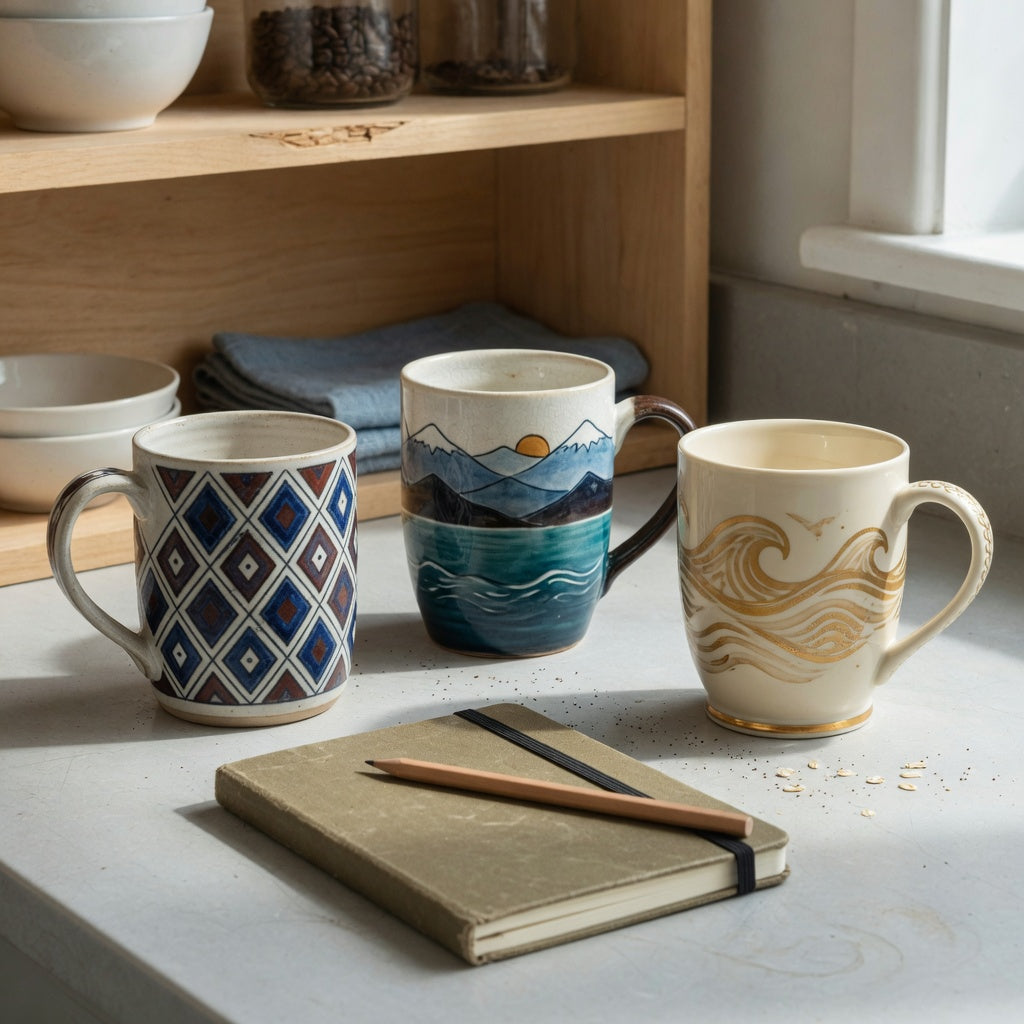
Unique Pottery Coffee Mugs Gift Choice Product Shortlist Guide: 3 Picks
Compare Rhombus, Mountain Sea, and Golden Waves Kio designs against real desk, kitchen, and care routines. Each option includes a reason to choose it, a reason to skip it, and facts to verify on th...
Read more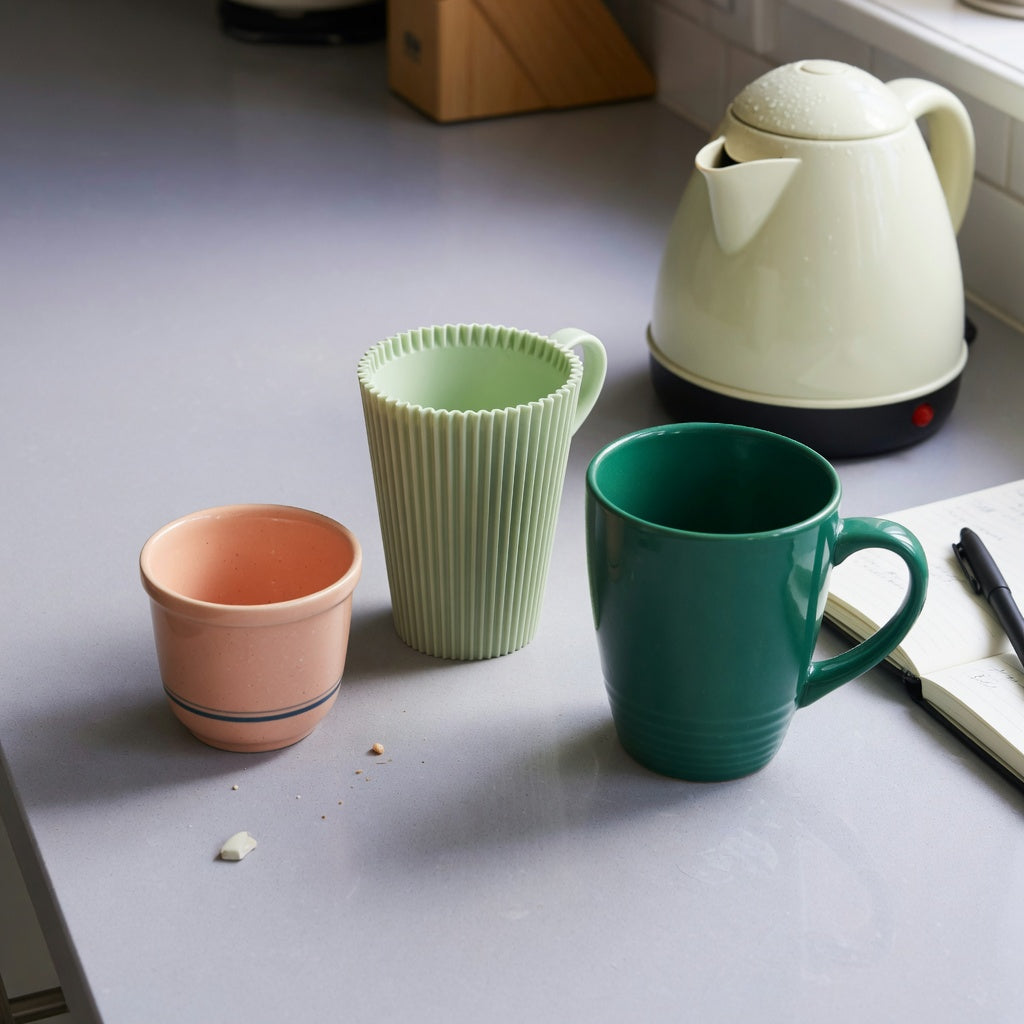
Green Tea Mug Gift Choice Product Shortlist Guide: 3 Practical Picks
Compare three listed capacities and visible shapes against the recipient's refill routine. See why the Retro 170 ml, Pleated 200 ml, or Emerald 270 ml may fit, plus when to skip each.
Read more
Leave a comment
This site is protected by hCaptcha and the hCaptcha Privacy Policy and Terms of Service apply.