
Piccolo Cup Morning Routine Product Shortlist Guide: 3 Sizes
Reading time: about 9 minutes
At 7:10 a.m., an oversized mug rarely looks like a problem. By 7:35, the cold coffee left beside the toaster or laptop tells a different story. That is the practical problem behind this piccolo cup morning routine product shortlist guide: finding a cup that matches the drink you actually prepare, the minutes you have available, and your tolerance for making a refill.
In our store, we handle and pack compact ceramic cups while shoppers compare them for short coffee, tea, breakfast, and desk use. This shortlist covers three stated capacities: the Retro at 170 ml, the Ball Handle at 250 ml, and the Emerald at 270 ml. We are not presenting any of them as a certified piccolo cup. Here, piccolo is a useful shopper description for a compact serving, not a certification, a fixed milk-to-coffee ratio, or a claim about cafe provenance.
Use this piccolo cup morning routine product shortlist guide by measured volume
Coffee names are an unreliable starting point because recipes and serving sizes vary. Your prepared volume is more useful. Measure the coffee after water, milk, and foam have been added, then compare that total with the cup's stated capacity.
- Prepare your normal first drink. Do not make a smaller version just for the test.
- Measure the finished volume. Include milk, added hot water, or any other ingredient that occupies the cup.
- Allow headroom. Filling to the stated capacity can put liquid uncomfortably close to the rim, especially while walking from the kitchen to a desk.
- Time your usual drinking window. A cup finished in ten minutes has a different job from one left beside a computer through a meeting.
- Count expected refills. A small cup can be satisfying when a second pour is intentional and irritating when it is an interruption.
A simple elimination rule: if your normal prepared drink is already close to or above 170 ml, the Retro should not remain on the shortlist unless you plan to reduce the serving or refill.
170 ml, 250 ml, or 270 ml: where does each size fit?
The numerical gaps matter more than the piccolo label. The Ball Handle gives you 80 ml more stated capacity than the Retro. The Emerald adds only 20 ml over the Ball Handle, so style, grip, and the shape of your routine may matter more than volume in that final comparison.
| Option | Stated capacity | Strongest morning fit | Main reason to pass |
|---|---|---|---|
| Retro | 170 ml | A short drink finished promptly | Limited room for generous milk or added water |
| Ball Handle | 250 ml | A compact milk-based coffee or desk cup | The rounded handle may not suit a conventional grip |
| Emerald | 270 ml | A fuller small coffee or tea with breakfast | It will not create the miniature look some piccolo shoppers want |
Retro 170 ml: a short cup with a clear stopping point
The Retro Coffee Tea Cup is the smallest option here. It fits a shopper whose completed morning drink sits comfortably below 170 ml and is normally finished before leaving the kitchen. For example, a measured 140 ml serving leaves about 30 ml of theoretical room, although comfortable headroom also depends on the cup's shape and how steadily it will be carried.
- Choose it for: a short black coffee, a small coffee with a modest milk addition, or a compact tea serving that you intend to finish promptly.
- Skip it for: a milk-heavy recipe, a long Americano, or an office drink expected to last through several tasks. Repeatedly topping up a 170 ml cup can become the least convenient part of the routine.
Ball Handle 250 ml: more pour room and a distinctive grip
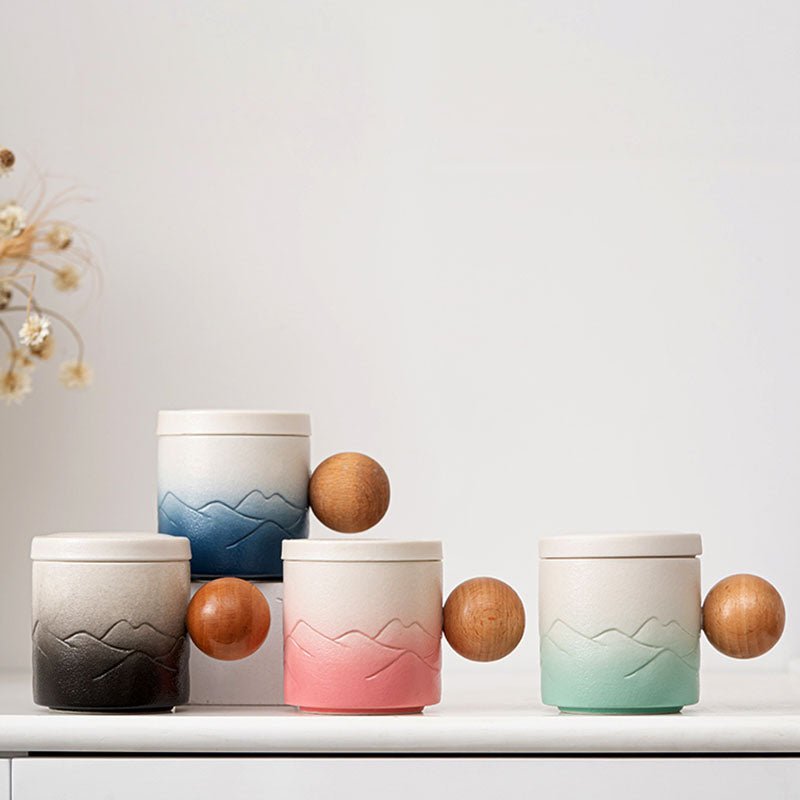
The Ball Handled Coffee Tea Mug occupies the practical middle. Its 250 ml stated capacity gives milk, foam, or added water more room than the Retro without moving into a large-mug serving. The rounded ball-style handle is also a genuine selection variable: shoppers who normally hook several fingers through a conventional loop should inspect the product photos rather than assuming the grip will feel familiar.
- Choose it for: a measured drink that will not fit the Retro comfortably, a 20-minute breakfast, or one compact mug that needs to handle both coffee and tea.
- Skip it for: a shopper who strongly prefers a standard loop handle or wants the visual scale of a tiny espresso-style cup. At 250 ml, this reads more like a small everyday mug.
Emerald 270 ml: the fullest serving in this compact shortlist
The Emerald Coffee Tea Mug has the largest stated capacity of the three. The extra 20 ml over the Ball Handle is modest, so it should not be treated as a dramatic increase. It makes the most sense for a slower breakfast, a fuller tea serving, or a gift recipient whose current cup is closer to an ordinary small mug than a miniature cup.
- Choose it for: a prepared drink near the upper end of this shortlist or a gift where an extremely small cup could be an unwelcome surprise.
- Skip it for: a strictly short serving or a shopper choosing primarily for the compact silhouette associated with the word piccolo.
For a visual comparison with larger and differently shaped options, open the unique coffee mugs collection. Seeing the compact cups beside broader everyday choices can make a volume mismatch easier to spot.
How do ceramic, headroom, and the ball handle affect a rushed morning?
All three options in this shortlist are ceramic, but capacity alone does not tell you how long a drink will stay hot. Wall thickness, starting temperature, room conditions, and the exposed surface area all affect cooling. We do not have comparative laboratory heat-retention results for these three pieces, so we would not select among them on an unsupported promise that one keeps coffee hot longer.
Headroom is easier to judge. A cup filled close to its maximum stated volume leaves less margin for foam, stirring, and the walk to an office desk. If your measured drink is 240 ml, both 250 ml and 270 ml appear large enough on paper, but the Emerald provides more theoretical clearance. That 20 ml difference matters more to someone carrying a full cup than to someone pouring 180 ml.
As we handle ceramic cups, the rim, glaze, and handle attachment are the first areas we examine. Shoppers should make the same checks after delivery and after regular washing:
- Run a fingertip carefully around the rim and stop using the cup if it becomes chipped or sharp.
- Inspect the handle joint for an unexpected hairline crack, especially before carrying a full hot drink.
- Avoid sudden extreme temperature changes, such as moving a very hot cup directly into cold water.
- Check the product-specific care information before using a dishwasher or microwave. We are not making one blanket dishwasher-safe or microwave-safe claim for all three products here; if the instructions are unclear, hand washing with a nonabrasive sponge is the cautious option.
One fast cup, a desk coffee, or a refill before 9 a.m.?
Morning timing turns the same capacity into either a good fit or a daily annoyance. In our experience, these are the useful scenario matches:
- Ten minutes at the kitchen counter: start with the Retro if your measured drink fits with headroom. Its smaller serving creates a defined finish before you leave.
- Breakfast plus a quick email check: start with the Ball Handle. The 250 ml capacity is more forgiving if you add milk after brewing.
- A slower breakfast or first office task: consider the Emerald if 270 ml covers the whole serving. The extra 20 ml over the Ball Handle will not transform the routine, but it may prevent an overfilled rim.
- Two or more expected refills: reconsider the compact shortlist. If your total morning consumption is much larger than any one of these capacities, a larger mug from the collection is likely to interrupt you less.
A larger cup does not automatically keep coffee enjoyable for longer, and a smaller cup does not automatically prevent cooling. The best match is the amount you can comfortably finish during the time the cup is actually in front of you.
What should milk-heavy, iced, and all-morning drinkers skip?
A useful shortlist also rules out poor matches. These three cups are not the answer for every coffee routine.
- Large Americanos: if your usual finished drink exceeds 270 ml, none of these capacities is a sensible one-cup solution.
- Milk-heavy servings: measure the final drink rather than relying on its name. Milk and foam can move a recipe beyond the Retro quickly, and no cup in this article enforces a particular ratio.
- Ice-filled coffee: ice displaces liquid, so a compact cup leaves less room for the coffee itself. A taller glass or insulated vessel will usually be more practical.
- Drinks carried in a vehicle: choose a purpose-built lidded travel vessel if spill resistance is required. Capacity does not replace a secure lid.
- Tea sipped throughout the morning: a larger mug may suit the routine better than accepting several 170 ml, 250 ml, or 270 ml refills.
Run this 60-second pour-and-refill test before ordering
Use the cup already in your cupboard to make the decision less abstract. Prepare your normal drink, measure its total volume, and note how much remains when you naturally walk away from it.
- Cross out every option that cannot hold the prepared drink with comfortable headroom.
- Choose Retro only if 170 ml supports a genuinely short serving.
- Compare Ball Handle and Emerald on grip and style if both 250 ml and 270 ml are large enough.
- Move to a larger mug if avoiding refills matters more than maintaining a compact profile.
- For a gift, estimate from the recipient's current mug rather than from the drink name printed on a cafe menu.
Frequently asked questions
Does this piccolo cup morning routine product shortlist guide identify a certified piccolo cup?
No. The Retro, Ball Handle, and Emerald are ceramic cups or mugs with stated capacities of 170 ml, 250 ml, and 270 ml. We use piccolo as a practical search and size description, not as a certification or a promise of a fixed coffee recipe.
Is a 170 ml cup too small for morning coffee?
It is too small if your prepared drink approaches or exceeds that capacity, or if you dislike refilling. It can be a practical fit for a short serving that sits clearly below 170 ml and is finished promptly.
Will I notice the 20 ml difference between the Ball Handle and Emerald?
The difference is modest, but it can provide useful headroom when your drink already sits near 250 ml. If your normal pour is well below both capacities, handle preference and style are likely to matter more than the extra 20 ml.
Which cup should I choose if I add milk after brewing?
Measure the coffee and milk together, then leave space below the rim. The Ball Handle 250 ml or Emerald 270 ml will usually offer more flexibility than the Retro 170 ml, but the right option still depends on your actual final volume rather than a fixed milk-to-coffee ratio.
Can all three ceramic cups go through a dishwasher cycle?
Do not assume one care method applies to every finish or product. Confirm the instructions for the specific cup before using a dishwasher or microwave; if that information is unavailable, hand washing with a nonabrasive sponge is the more cautious approach.
Your next step: write down your finished drink volume, desired headroom, available drinking time, and acceptable number of refills. Then compare the compact cups with the rest of our mug collection and remove any option that asks you to change the routine you already know works.
More from our blog
Read more
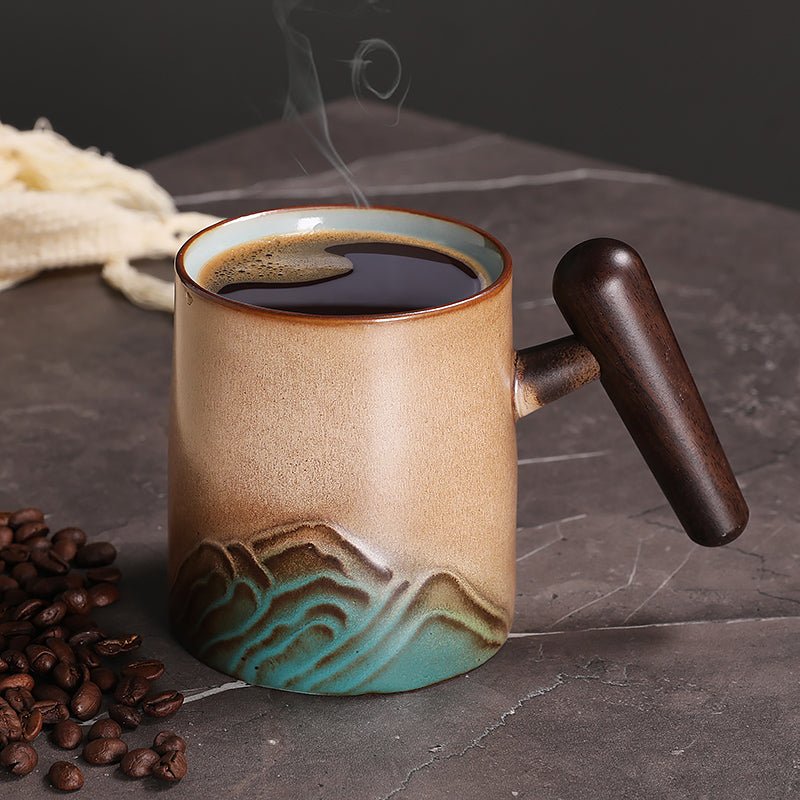
Clay Pottery Coffee Mugs Home Office Product Shortlist Guide
Compare the Mountain Sea, Great Mountain, and Landscape mugs by home-office routine, then verify footprint, capacity, material, and care. Each option includes a clear reason to choose it and a reas...
Read more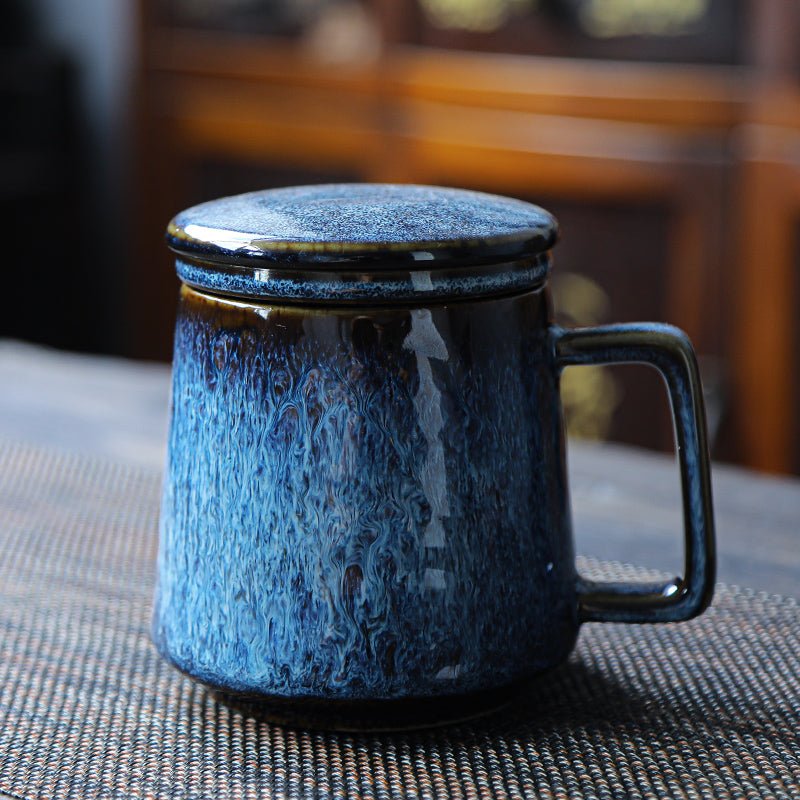
Apple Cider Mug Morning Routine Product Shortlist Guide: 3 Picks
Compare The Gradient and The Flow at 400 ml with The Rock at 480 ml. This practical shortlist uses your measured morning pour, refill tolerance, handle grip, and ceramic care needs to explain who s...
Read more
Leave a comment
This site is protected by hCaptcha and the hCaptcha Privacy Policy and Terms of Service apply.