
Macchiato Cup Shared Household Practical Purchase Checklist: 170-250 ml
Reading time: about 9 minutes
Two people can stand at the same espresso machine at 7 a.m. and make drinks that need different cups. One stops after espresso and a small amount of milk; the other keeps pouring until milk or foam is close to the rim. Our macchiato cup shared household practical purchase checklist begins with that ordinary counter problem: match each person's finished pour to a separate cup, then preserve enough empty space to carry it without spills.
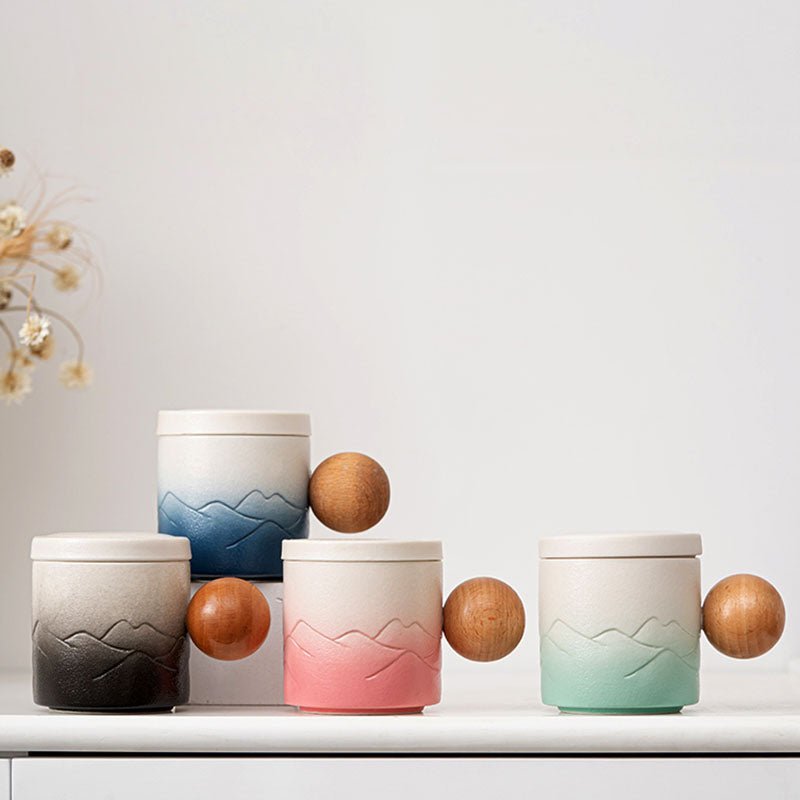
We sell and handle compact ceramic cups in our store, and we keep this comparison inside facts we can support. The relevant CoffeifyMug choices are the Retro at 170 ml, the Pleated at 200 ml, and the Ball Handle at 250 ml. They are separate products, not a bundled set. Capacity, ceramic material, and visible form are the decision points used here; dimensions, weight, handle clearance, and dishwasher or microwave compatibility should be confirmed on the current listing instead of inferred.
How much practical headroom does each drinker need?
Listed milliliters are useful, but they do not tell you where your household normally stops pouring. Practical headroom is the unused space above the finished drink. It matters for foam, a tea bag, stirring, and the walk from the machine to a kitchen table or office desk. Macchiato proportions vary by recipe and cafe tradition, so use the drink name only as general context.
- Make the person's usual drink. Use the cup and recipe they already reach for, not a recipe they rarely follow.
- Measure the normal fill line. Re-create that level with water and pour it into a kitchen measuring jug. If the drink carries foam, leave additional physical space rather than treating foam as free capacity.
- Compare the result with 170, 200, and 250 ml. Choose a capacity that leaves visible headroom. Avoid selecting a listed capacity that merely equals the normal liquid pour.
- Repeat for every regular drinker. Add an occasional tea or guest pour only if that use genuinely affects the purchase.
If a usual liquid pour is already close to 170 ml, the 170 ml option leaves little room for extra milk or foam. Moving to 200 ml adds 30 ml of listed capacity; moving from 200 ml to 250 ml adds 50 ml. Those differences are concrete, but usable room still depends on how far below the rim each person pours.
The macchiato cup shared household practical purchase checklist: 170, 200, or 250 ml
Use capacity to solve volume first, then use visible form to tell cups apart. There is no single winner for every household drinker.
| Reader situation | Why it fits | Product next step | Trade-off |
|---|---|---|---|
| A short, espresso-forward serving with only a modest milk topping | 170 ml is the smallest listed capacity in this comparison | Review the Retro 170 ml ceramic cup | Limited reserve for additional milk, foam, or a tea bag |
| The normal pour overruns 170 ml but should still feel like a compact coffee | 200 ml is the middle capacity, providing 30 ml more listed volume than the Retro | Compare the pleated 200 ml option | It may remain tight for a longer milk drink or a generous tea pour |
| One person routinely adds more milk or also uses the cup for tea | 250 ml is the largest of the three, with 50 ml more listed volume than the Pleated cup | Inspect the 250 ml mug with a ball handle | A very short serving may lose the compact macchiato-cup feel |
Treat these rows as individual matches. A household can pair a 170 ml Retro for one person with a 250 ml Ball Handle for another, but the listings remain separate items. If everyone wants the same appearance, confirm the product and quantity on the chosen listing rather than reading this comparison as a promise of a coordinated set.
Can visible cup form reduce mix-ups in a shared cupboard?
Yes, if household members naturally recognize shapes. In our experience, a clearly different exterior is easier to spot on a crowded drying rack than a capacity number that appeared only on an order page. The Retro form, pleated exterior, and ball-style handle provide three visual cues without requiring labels.
- Two different morning drinks: Choose different forms so each person reaches for the intended capacity before pouring.
- Kitchen and office desk use: Assign one visible form to each location. That can reduce cup mix-ups, but it does not make either option spill-proof.
- A gift for two household members: Match each form to the recipient's drink routine. Do not assume the separate products arrive as a matching pair or in set packaging.
Shape is not the same as ergonomic proof. A product photo cannot establish handle opening, total cup weight, or suitability for someone with limited grip. If hand comfort is decisive, confirm current measurements before ordering rather than assuming the Ball Handle name means more clearance.
What should you verify beyond 170, 200, and 250 ml?
Capacity answers only one part of the purchase. Before checkout, compare each current listing with the physical space and care routine in your home.
- Espresso-machine clearance: Measure from the drip tray to the spout or group head. Compare that space with the listed cup height, or ask for the measurement if it is not shown.
- Cupboard clearance: Check shelf height and depth, including the room needed by the handle. A lower capacity does not automatically prove a narrower exterior.
- Handle and weight requirements: Confirm handle-opening dimensions and cup weight if grip or mobility affects the buyer's decision.
- Dishwasher and microwave use: Verify both on the current product page. Ceramic material alone does not establish compatibility with either appliance.
- Included pieces: Confirm the listing quantity and contents. Do not assume a saucer, spoon, lid, or second cup is included unless the product description says so.
These checks carry more weight in a shared household because one person's espresso station, another person's desk, and the common cupboard can impose different limits. We would rather flag an unknown than turn a product photograph into a specification.
How should ceramic cups move through a shared sink or dishwasher?
The first areas we inspect on a small ceramic cup are the rim, the base, and both handle joins. Rim chips can begin when cups knock against a faucet or another dish. Stress around a handle can come from pulling a cup out of a tight stack by the exposed handle. The care instructions on the current product page should always take priority.
- Inspect before first use. Check the rim and handle joins in good light. Set aside a cup with a chip or visible hairline crack rather than putting it into daily rotation.
- Use a gentle default. If dishwasher suitability is not stated, hand wash with warm water and a soft sponge. Abrasive pads can mark a ceramic surface.
- Leave space in the dishwasher. If the product is approved for dishwasher use, position it so the rim and handle cannot tap neighboring dishes during the cycle.
- Avoid rapid temperature changes. Do not move a very hot ceramic cup directly into cold water. Let the temperature change gradually.
- Do not force the cups to nest. Store each form with enough room that a handle is not trapped under another cup or used to pull apart a stack.
A shared sink exposes cups to more contact than a single-user desk. A practical rule is to give each cup enough drying-rack and shelf space that ceramic surfaces are not being used as wedges.
Where do compact 170-250 ml cups stop being practical?
These capacities solve small hot-drink routines. They are not universal drinking vessels.
- Large iced coffee: Ice consumes capacity before coffee and milk are added. A larger glass or mug is a more practical choice.
- Commuting: No spill-proof or travel-lid claim is established by the product facts used here. Choose a purpose-built travel tumbler for bags, cars, or public transport.
- Long meetings and tea sessions: Even the 250 ml option may require repeated refills. A larger desk mug will suit someone who wants one drink to last.
- A coordinated set gift: These are separate products, not a represented set. Choose an explicitly listed cup set if coordinated quantity or packaging is essential.
- Specific accessibility needs: Do not buy on capacity and product name alone if weight or handle dimensions must meet a firm requirement.
If your household normally makes drinks that already approach or exceed 250 ml before foam or ice, this compact group is the wrong category. The honest next step is a larger mug, not filling one of these cups to the rim.
Frequently asked questions
What size macchiato cups should two people with different drinks buy?
Choose for each person separately. A short finished pour may fit the 170 ml Retro with usable headroom, while a milkier drink may require the 200 ml Pleated or 250 ml Ball Handle option. Measure both normal pours before deciding.
How do I use the macchiato cup shared household practical purchase checklist online?
Measure each person's usual liquid volume, then select the listed capacity that leaves enough room for foam, stirring, and carrying. Use the visible cup form to help distinguish ownership. Confirm dimensions, handle clearance, product quantity, and care instructions on the current listing before ordering.
Are the Retro, Pleated, and Ball Handle cups sold as a set?
No. They are separate products, and this article compares them as individual choices for different household routines. Selecting more than one style can create a practical pairing, but it should not be described as a bundled or coordinated set.
Is a ceramic macchiato cup automatically dishwasher and microwave safe?
No. Ceramic material alone does not confirm dishwasher or microwave compatibility. Follow the current product care instructions; if dishwasher use is not stated, hand washing with warm water and a soft sponge is the cautious routine.
Run this checkout check for every regular drinker
Before adding a cup to the cart, run the same sequence once per person:
- Measure the normal finished liquid pour.
- Choose 170, 200, or 250 ml with visible headroom left above that pour.
- Pick a form the person can recognize on a crowded shelf.
- Verify external dimensions, handle clearance, weight, and appliance-care details that affect daily use.
- Confirm the quantity and remember that each style is a separate product.
Start with the household member whose drink is hardest to fit, then compare the second person's options in our collection of unique coffee mugs. That sequence creates a practical pairing based on real pours while keeping the Retro 170 ml, Pleated 200 ml, and Ball Handle 250 ml choices independent.
More from our blog
Read more

Ceramic Espresso Cup Shared Household Product Shortlist Guide: 3 Sizes
Compare CoffeifyMug's 170 ml Retro, 200 ml Pleated, and 250 ml Ball Handle ceramic cups by finished drink volume, visible form, care limits, and shared-kitchen routines.
Read more
12 oz ceramic coffee mugs shared household practical purchase checklist
Compare 12 oz ceramic mug capacity, tall versus round profiles, cabinet clearance, handle fit, and care routines for a shared kitchen. Each household scenario leads to a relevant CoffeifyMug produc...
Read more
Leave a comment
This site is protected by hCaptcha and the hCaptcha Privacy Policy and Terms of Service apply.