
Ceramic Espresso Cup Shared Household Product Shortlist Guide: 3 Sizes
Reading time: about 9 minutes
At 7 a.m. in a shared kitchen, one person pours espresso, another adds milk, and a third wants tea for a desk. The cupboard may be full, but everyone still reaches for the same familiar cup. This ceramic espresso cup shared household product shortlist guide sorts that problem by listed capacity, ceramic material, visible form, and finished drink volume.
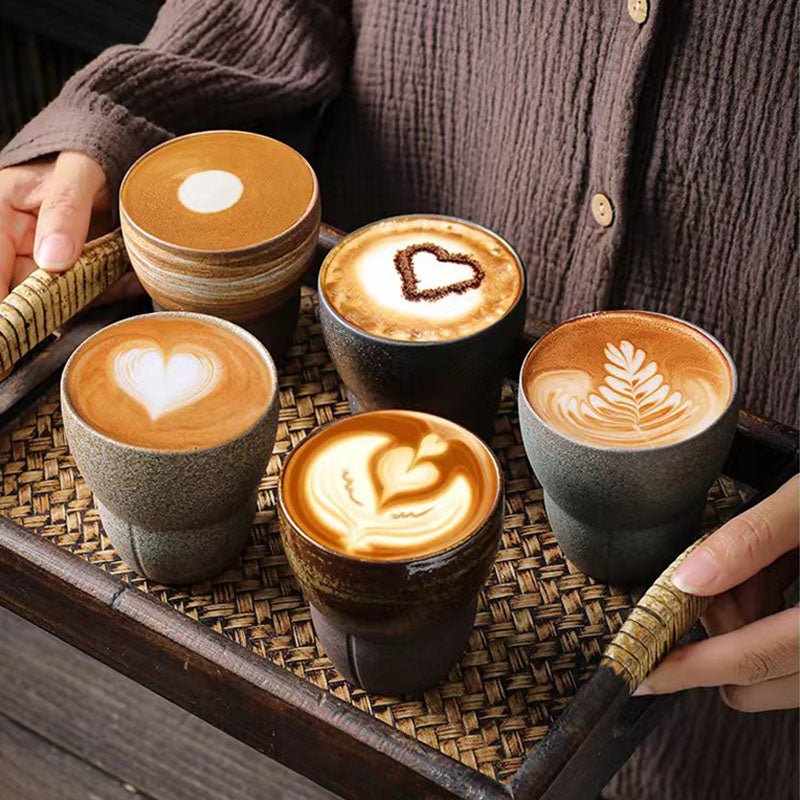
In our store, we start with the three facts that make a useful comparison possible. The Retro is listed at 170 ml, the Pleated at 200 ml, and the Ball Handle at 250 ml. All three may be larger than a traditional single-shot demitasse, so a shopper seeking a tiny, classic espresso cup should not assume these are that size.
The practical lesson from helping shoppers compare ceramic drinkware is simple: drink names are inconsistent. One person's espresso is another person's long coffee with milk. Measuring the finished serving once produces a better shortlist than relying on labels alone.
How many milliliters does each person really pour?
Make each household member's usual drink and record the finished volume with a marked measuring vessel. Include added water, milk, or other ingredients. A listed capacity is a catalog figure, not a recommendation to carry the cup filled to the edge, so leave enough room for the trip from machine to table or desk.
- Well below 170 ml: All three capacities may be possible, but the Retro is the closest of this group to a small espresso cup.
- Too much for 170 ml but comfortably below 200 ml: The Pleated becomes the middle-capacity candidate.
- Too much for 200 ml but comfortably below 250 ml: The Ball Handle provides the most listed capacity of these three.
- Close to or above 250 ml: Skip this shortlist and consider a larger vessel rather than planning to fill one to its limit.
Capacity does not reveal outside height, rim diameter, base width, shelf fit, or clearance beneath an espresso machine. If those measurements affect your kitchen, verify them from the product information or with the seller before ordering. CoffeifyMug does not make an equipment-fit claim for these cups.
A ceramic espresso cup shared household product shortlist guide for three routines
Use the household routine first, then follow it to the relevant product. This avoids picking the most decorative option and discovering that it does not match the person's normal serving.
| Household routine | Option | Why it reaches the shortlist | Reason to skip it |
|---|---|---|---|
| Mostly short coffee with limited additions | Retro | At 170 ml, it is the smallest listed option here | The finished drink approaches 170 ml or the buyer expects a traditional demitasse |
| Coffee and tea in moderate servings | Pleated | Its 200 ml capacity sits between the other two, and the pleated form is visually distinct | The drink approaches 200 ml or a smooth, conventional profile is preferred |
| Larger coffee or tea carried to a desk | Ball Handle | Its 250 ml capacity is the largest of the three, and the handle detail identifies it visually | A petite espresso profile or verified insulated performance is required |
These are separate product listings being compared for household use. The table does not represent them as a bundled or matching set. Our verified comparison is limited to the ceramic vessel, listed capacity, and visible form; we are not claiming that a saucer, lid, spoon, or other accessory is included.
Is the Retro 170 ml right for the shortest pour?
The Retro is the first option to consider for someone searching for a coffee cup for espresso rather than a full-size mug. Its listed capacity is 30 ml less than the Pleated and 80 ml less than the Ball Handle. That relative size is the main reason to choose it, not an unverified claim about crema, extraction, or heat retention.
- Choose it: The person's finished drink sits comfortably below 170 ml, and the retro styling gives that person an identifiable cup in the cupboard.
- Skip it: The drink regularly approaches 170 ml, the buyer wants one vessel for larger tea servings, or only a traditional single-shot demitasse will do.
Review the Retro 170 ml ceramic coffee and tea cup to inspect its visible form and the product information provided on the listing.
Does the Pleated 200 ml solve a mixed-drink kitchen?
The Pleated occupies the middle position: 30 ml more than the Retro and 50 ml less than the Ball Handle. That makes it a practical candidate for a household member whose measured drink rules out 170 ml but does not require the largest option. Its pleated exterior also creates an obvious visual distinction on a crowded counter or drying rack.
- Choose it: The user alternates between moderate coffee and tea servings, wants more capacity than 170 ml, and likes the visible pleated form.
- Skip it: The serving is close to 200 ml, a smooth exterior is strongly preferred, or the goal is the smallest possible espresso-style vessel.
See the Pleated 200 ml ceramic coffee and tea cup for the specific vessel represented by this middle-capacity option.
Who should move up to the Ball Handle 250 ml?
The Ball Handle is listed at 250 ml, which is 50 ml more than the Pleated and 80 ml more than the Retro. It belongs on the shortlist for the household member whose added water or milk repeatedly rules out the two smaller capacities. The visible ball-handle form also makes it easier to assign this option to a particular routine without relying only on color.
- Choose it: The finished drink leaves practical carrying room below 250 ml, or the user prefers the largest of these three for coffee or tea at a desk.
- Skip it: The priority is a petite demitasse look, the drink approaches 250 ml, or documented equipment fit or insulated performance is required.
Open the Ball Handle 250 ml coffee and tea mug to compare its visible form with the two smaller options.
Can separate cup forms reduce shared-cup mix-ups?
Different forms can give each household member a clear default: Retro for the shortest pour, Pleated for the middle serving, and Ball Handle for the largest. We find this more useful than assigning cups by a cupboard position that changes every time someone unloads the dishwasher.
- Assign by measured serving rather than by who wakes up first.
- Use the visible retro, pleated, or ball-handle form as the ownership cue.
- Keep a different general-purpose cup available for guests so assigned cups stay available.
This approach does not guarantee that nobody will borrow another person's cup, and it will not suit a household that wants a coordinated table setting. In that case, a product explicitly offered as a matching set would be a better category to consider. Do not assume these three listings share accessories, packaging, or matching specifications.
What should you verify before washing and daily use?
At our store, we treat inspection and care as part of the buying decision because shared kitchens put ceramic drinkware through repeated sink, drying-rack, and cupboard handling. These checks do not replace the product's current care instructions, but they help uncover practical problems early.
- Inspect on arrival: Under direct light, check the rim, body, base, and any handle connection for chips, hairline cracks, or rough points. Do not use damaged ceramic; contact the seller about the affected item.
- Confirm care directions: The verified facts supplied for this comparison do not include dishwasher-safe or microwave-safe claims. Follow the product listing, packaging, or care label rather than assuming ceramic automatically permits either appliance.
- Use a conservative wash routine when instructions are absent: A soft sponge, mild dish soap, and non-abrasive cleaning are lower-risk choices than a harsh scouring pad. Let the cup dry before returning it to a crowded cupboard.
- Avoid forced stacking: Do not press one cup into another if the forms do not nest naturally. Hard ceramic contact around a rim or base is a common place for chips to begin.
- Verify physical fit: Measure the machine opening, shelf, or office storage space if clearance is tight. A 170 ml capacity does not tell you that cup's external height or width.
If everyone in the household relies on a dishwasher and an explicit dishwasher-safe statement is non-negotiable, skip any listing that does not provide that documentation. A different cup with clearly stated care compatibility would be the more practical purchase.
The five-minute kitchen-counter decision
- Measure each person's complete drink, including milk or water.
- Cross out any listed capacity that would leave little or no carrying room.
- Assign the Retro, Pleated, or Ball Handle form to the remaining household routines.
- Confirm that the stated care information matches how the household actually washes cups.
- Check the relevant product listing for quantity, included contents, and any dimensions needed for storage or machine clearance.
Used this way, the ceramic espresso cup shared household product shortlist guide does not declare one universal winner. It separates three individual options according to real serving volume and household habits, which is the decision that matters after the cup reaches the kitchen.
Frequently asked questions
Is a 170 ml cup the same size as a traditional espresso demitasse?
No. The Retro is listed at 170 ml and may be larger than a traditional single-shot demitasse. It is the smallest of these three CoffeifyMug options, but shoppers seeking a very small classic espresso cup should still check the listed capacity before buying.
Which cup should we choose if one person drinks espresso and another drinks tea?
This ceramic espresso cup shared household product shortlist guide starts with each person's finished volume, not the drink name. The Retro is the shortest-capacity option, the Pleated is the 200 ml middle choice, and the Ball Handle is the largest at 250 ml. If the tea serving approaches 250 ml, consider a larger vessel outside this shortlist.
Are the Retro, Pleated, and Ball Handle cups sold as a set?
This article compares them as separate product listings and does not state that they form a set. Confirm the quantity and included contents on each linked product page. Do not assume matching accessories, packaging, or finishes.
Can these ceramic cups go through a dishwasher cycle?
The verified catalog facts used here do not include a dishwasher-safe claim. Follow the care directions on the product listing, packaging, or delivered item. If no clear direction is provided, hand-washing with a soft sponge and mild dish soap is the conservative option.
Will these cups fit beneath my espresso machine?
No equipment-fit claim is provided for these products, and capacity alone cannot confirm external height or width. Measure the available space beneath the spout and compare it with any product dimensions supplied by the seller. Ask before ordering if the required measurement is not listed.
Next step: Write each household member's finished drink volume beside their name, then compare the individual forms in the CoffeifyMug unique coffee mugs collection. Keep the Retro for the shortest candidate, the Pleated for the middle, and the Ball Handle for the largest. If none leaves suitable carrying room, meets your care requirements, or fits your available space, move to a different vessel style.
More from our blog
Read more
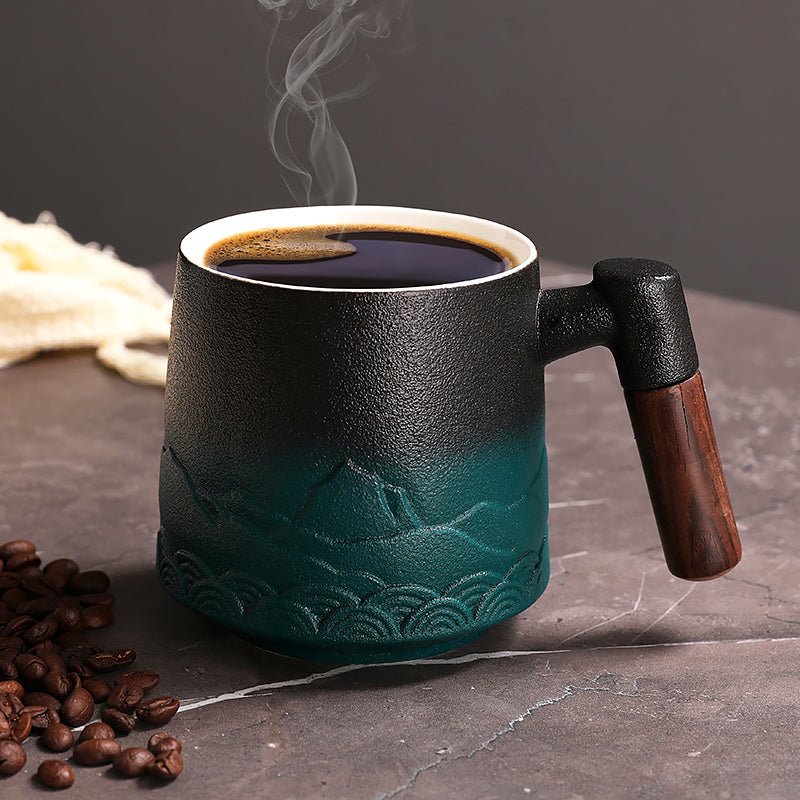
Coffee Mug Gift Idea Shared Household Product Shortlist Guide
A scenario-led shortlist for comparing Golden Waves Kio, The Crane, and Mountain Sea mugs. Match each design to drink routines, cupboard space, care habits, and the recipient's taste.
Read more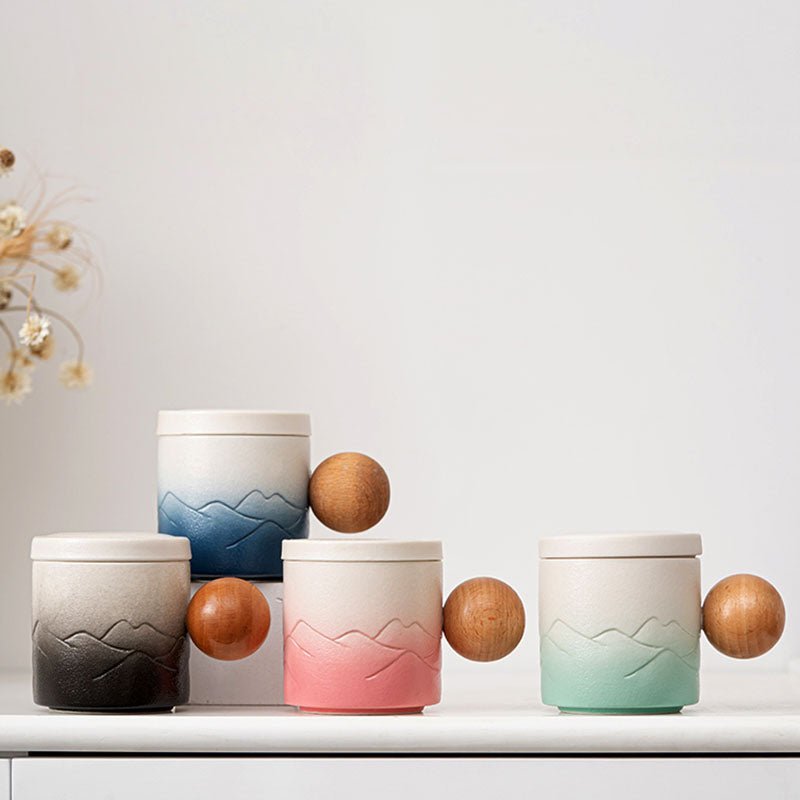
Macchiato Cup Shared Household Practical Purchase Checklist: 170-250 ml
Compare the Retro 170 ml, Pleated 200 ml, and Ball Handle 250 ml ceramic cups by each drinker's finished pour, needed headroom, cupboard fit, and care routine. The checklist also flags the details ...
Read more
Leave a comment
This site is protected by hCaptcha and the hCaptcha Privacy Policy and Terms of Service apply.