



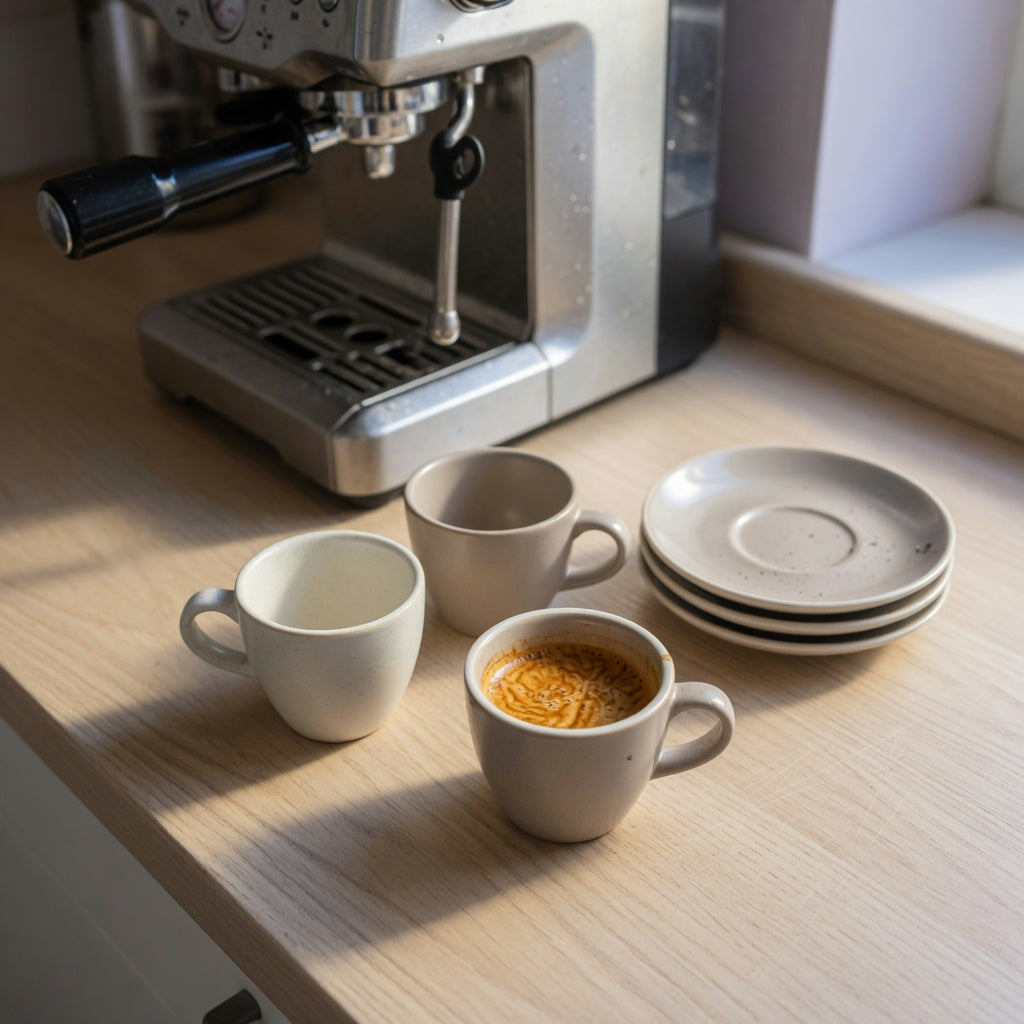
Cute Espresso Cups Buying Priorities: Capacity, Shape, and Space
Reading time: about 9 minutes
A customer sent us a photo of a pretty espresso cup with a double shot touching the rim. The handle pinched her fingers, and the cup sat too tall under her machine. Nothing was defective. The listing had used the word espresso loosely, as listings do. Our cute espresso cups buying priorities are deliberately boring: listed capacity first, visible shape second, and the space the cup needs third. Pattern and gift appeal come after those, because a cup that looks good but fights your morning routine ends up at the back of the cabinet.
We sell three compact ceramic cups: 170 ml, 200 ml, and 250 ml. None is a traditional demitasse. We will say that plainly here and again below. They are small-format ceramic vessels with room for a modern double shot, a splash of milk, or a top-up. If you want a true tasting cup for a ristretto, these are the wrong shape and size. If you pull doubles, cortados, or small milk drinks, they make more sense.
Cute espresso cups buying priorities: capacity before pattern
Capacity is the number that decides whether a cup works, but it is also the number shoppers read too fast. A 170 ml cup is not a large mug, yet it is much larger than a traditional single-shot cup. That is not a defect. It is a design choice for people who want more headroom than a demitasse gives them.
| Cup | Listed capacity | Approx. fl oz | Best fit |
|---|---|---|---|
| Retro cup at 170 ml | 170 ml | ~5.7 | Double shot with headroom; cortado; small milk drink |
| Pleated cup at 200 ml | 200 ml | ~6.8 | Double shot plus more milk; a wetter macchiato |
| Ball Handle mug at 250 ml | 250 ml | ~8.5 | Lungo with hot-water top-up; tea; milk-forward drinks |
The ounce figures are approximate conversions. The listed millilitres are the fact we stand behind. We are not quoting rim diameters, heights, or weights here because we have not verified them for this article. If a dimension decides your purchase, check the current product page or ask us before ordering. That is not a brush-off; it is the difference between a useful measurement and a guess.
170 ml, 200 ml, and 250 ml: which routine does each size actually fit?
Size only helps when you match it to a habit. Here is how the three cups sort out in a real kitchen.
- Straight double shot, quick rinse, back on the shelf: the 170 ml Retro cup is the least oversized of the three. The shot fills a useful portion of the cup, and the smaller body is easy to handle at the sink.
- Cortado or short milk drink: 170 ml leaves little spare room once you add milk, so 200 ml gives more margin. The Pleated cup is the safer pick if you like a wetter macchiato.
- Tea and espresso from one set: 200 ml covers both without making either drink look lost. The Pleated cup is the compromise cup in the best sense.
- Lungo, Americano-style top-up, or milk-forward drinks: 250 ml. The two smaller cups run out of room, and a top-up in a 170 ml cup is a spill waiting to happen.
- True cupping or a tiny ristretto: none of these. Buy a smaller demitasse if the cup needs to hug a very short shot.
A larger cup changes the drinking experience in a small way: the shot has more surface area and more empty space above it than it would in a tight demitasse, so it will not stay hot as long. That is a trade-off, not a flaw. If you sip slowly, use a smaller cup or drink the shot first and the tea second.
Shape and handle: what changes when the cup is in your hand
Form is not decoration. Three details matter at the machine and at the sink.
- Rim opening and stream capture. A double-spout portafilter sends two streams down. A wider opening is generally more forgiving of an off-centre cup, but we are not quoting rim diameter for these three cups. Check the current listing if your machine drips close to the edge.
- Handle geometry. The Ball Handle mug uses a ball-form handle as its visible signature. Whether that loop suits your fingers is personal. If grip comfort is the deciding factor, order one cup first instead of a set of four.
- Visible body shape. The Pleated cup has a pleated body, and the Retro cup has a retro profile. Those are form details, not heat-retention claims. We cannot infer wall thickness or heat performance from a photo, so we do not.
A handle that only takes a fingertip is fine for display and irritating on a weekday morning. If handle size matters more than cup volume to you, treat it as a separate purchase decision rather than assuming every cute cup will feel the same in use.
Will the cup clear your spout and your shelf? Run this space check
Small cups live in small spaces, and small spaces are where fit problems show up. Run this before you order.
- Put your current cup on the drip tray and measure the gap between the portafilter spout and the tray. That gap is your real clearance, not whatever the machine spec sheet implies.
- Find the listed height on the product page. If height is not published, ask us before buying. Capacity alone does not tell you how tall a cup is.
- Decide whether you need saucers. Saucers catch drips and add footprint. If saucers are part of your plan, confirm they are included and account for the extra width on the shelf.
- Plan storage. Stacked cups want a level shelf; a stand wants vertical clearance. Four bare cups and four cups with saucers are different propositions in a narrow cabinet.
At an office desk the constraint flips. The risk is knocking a small cup over mid-task, not cabinet height. The 250 ml Ball Handle mug takes more desk space than the 170 ml Retro cup, but it is also easier to find with your hand without looking.
Are you buying for a gift, a desk, or a daily sink cycle?
A gift set and a daily workhorse are not the same purchase. For a gift, match capacity across the set before you match the pattern. Mixed sizes look deliberate on a shelf and frustrating on a tray. If the set is meant for espresso after dinner, 170 ml or 200 ml is more useful than 250 ml. If the recipient drinks tea as often as coffee, the 250 ml Ball Handle mug earns its place.
For a desk, choose the cup you will not resent washing. For a daily sink cycle, choose the one whose size matches your actual drink. In our experience, the cup that gets used is the one whose capacity matches the habit, not the one with the busiest pattern.
If your daily coffee is a 10 oz mug, a cute espresso cup is the wrong purchase. We would rather lose the sale than send you a cup that lives in a cupboard. Browse the unique coffee mugs collection for the larger-format starting point.
Glaze, care, and the limits we will not hide
Decorated ceramics deserve a straight answer. The FDA guidance on lead-glazed pottery explains that lead in a glaze is bound when a piece is fired correctly, that improperly fired pottery can leave lead extractable, and that ceramicware intended only for decoration must be identified so it is not used with food. Practical translation: buy drinkware sold as drinkware, and treat purely ornamental pieces as ornamental.
Three limitations we would rather state than bury:
- Care guidance varies by glaze. We point people to the care section of the specific listing rather than promise that every decorated finish behaves identically in a dishwasher. If hand washing matters to you, confirm before the first cycle, not after.
- Rims chip. A small cup rim is exposed when cups are piled in a sink. Wash small cups separately where you can, and do not stack them rim to base.
- Crema visibility. A patterned or dark interior hides the crema layer. If reading the shot is part of why you are buying, choose a lighter interior; if the cup is for guests and photographs, the pattern earns its keep.
And one thing these cups are not: insulated travel vessels. They are open ceramic cups. They will not hold a shot hot for twenty minutes, and they are not meant to be tossed in a bag.
Frequently asked questions
Is 170 ml too big for a single espresso shot?
It is bigger than a traditional demitasse, yes. A single shot in a 170 ml cup leaves more empty space and cools faster than a tight-fitting cup. If you only ever pull singles and want the cup to hug the shot, buy a smaller demitasse; 170 ml suits doubles and short milk drinks.
Will these cups fit under my espresso machine's spout?
We cannot promise that for your machine, because clearance is set by the gap between the spout and the drip tray, not by capacity. Measure that gap with a cup in place, then compare it to the listed height on the product page before ordering.
How should cute espresso cups buying priorities change for a cortado or macchiato?
Capacity moves to the front. A cortado needs room for milk, so the 170 ml Retro cup works only if you keep the milk modest; the 200 ml Pleated cup gives more margin. For a wetter macchiato or a milk-forward drink, the 250 ml Ball Handle mug is the safer fit.
Do the cups come with saucers, and are they dishwasher safe?
Both answers live on the individual product listing and can differ between styles, so check the listing rather than assuming. If either point decides the purchase for you, message us before ordering and we will confirm the current details for that specific cup.
Are these the right cups if I mostly drink Americanos or tea?
The 250 ml cup handles a lungo with a hot-water top-up or a standard tea serving; 170 ml and 200 ml will run short for either. If your drinks are consistently that size, start with the largest of the three rather than buying small and upgrading later.
Before you add to cart, run the three-line check: does the listed capacity match the shot or drink you actually make, does the visible shape suit the way you hold a cup, and does it clear your spout and your shelf? If two of three are yes, order one cup, live with it for a week, then buy the set. Start with the 170 ml Retro cup for straight doubles, the 200 ml Pleated cup for milk and tea, or the 250 ml Ball Handle mug for larger drinks.
More from our blog
Ready to pick your mug? Two ways to save on today's order:
Ordering 1–3 mugs? Get an extra 10% off your 1st order with code 10_OFF Apply 10% Off & Shop Wooden-Handle Mugs →
Gifting 4+ mugs? Buy 3, Get the 4th Free applies automatically at checkout (no code needed; offers do not stack) · Free standard shipping (Nov pre-Christmas delivery: 15–20 calendar days US) · Free replacement if chipped in transit.
Popular mug buying guides: Ceramic Tea Cups & Infuser Mugs · Ceramic Mugs with Lids Compared · Wooden-Handle Tea Infuser Mugs Compared · Christmas & Secret Santa Mugs 2026 · Espresso & Cortado Cups Guide · Cup & Saucer Gift Sets · All 25 Mugs Spec Table · Mug Size Guide · Shipping & Promo FAQ
FIRST ORDER 10% OFF (CODE: 10_OFF) · OR BUY 3, GET THE 4TH FREE


Read more
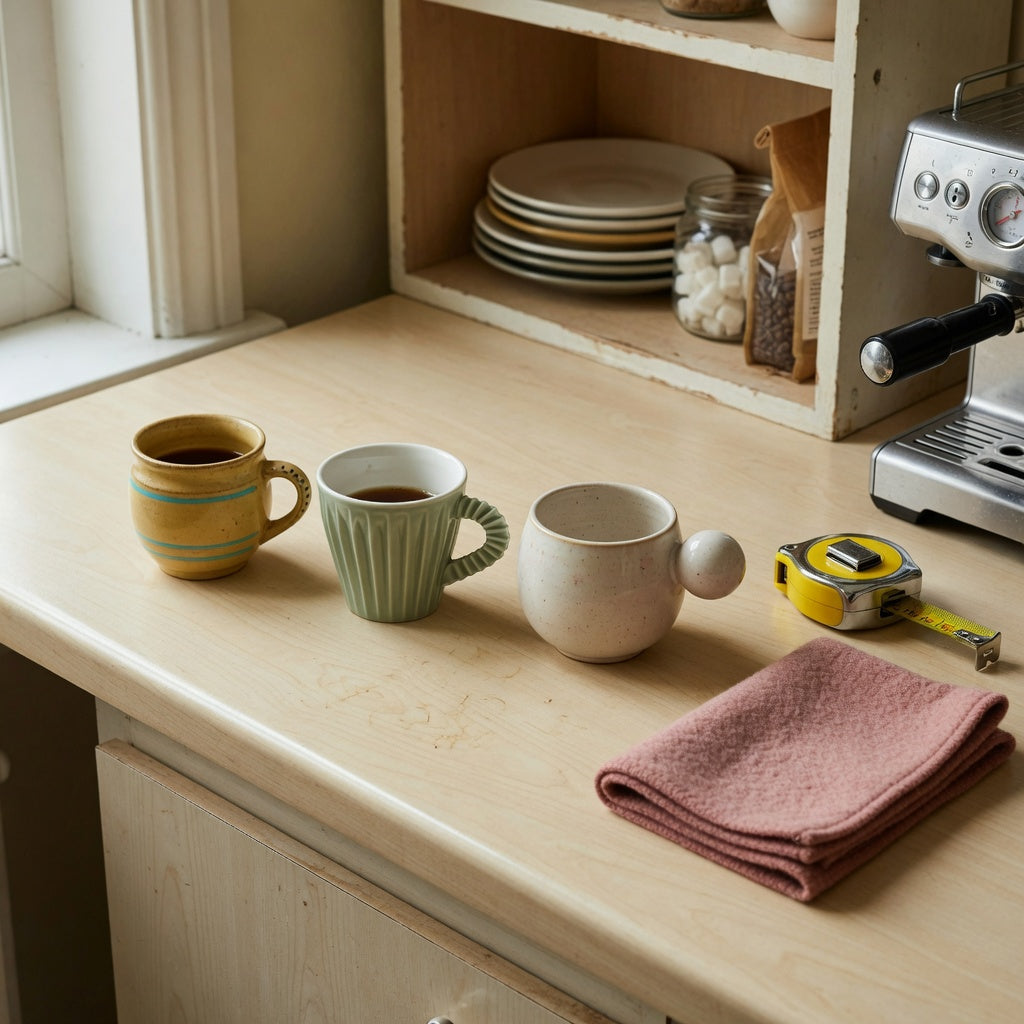
Cute Espresso Cups Storage Fit Guide: 3 Shapes, Real Shelf Space
Our three compact ceramic cups hold 170 ml, 200 ml and 250 ml, and each asks a different question of your shelf. This cute espresso cups storage fit guide shows how to measure depth, handle project...
Read more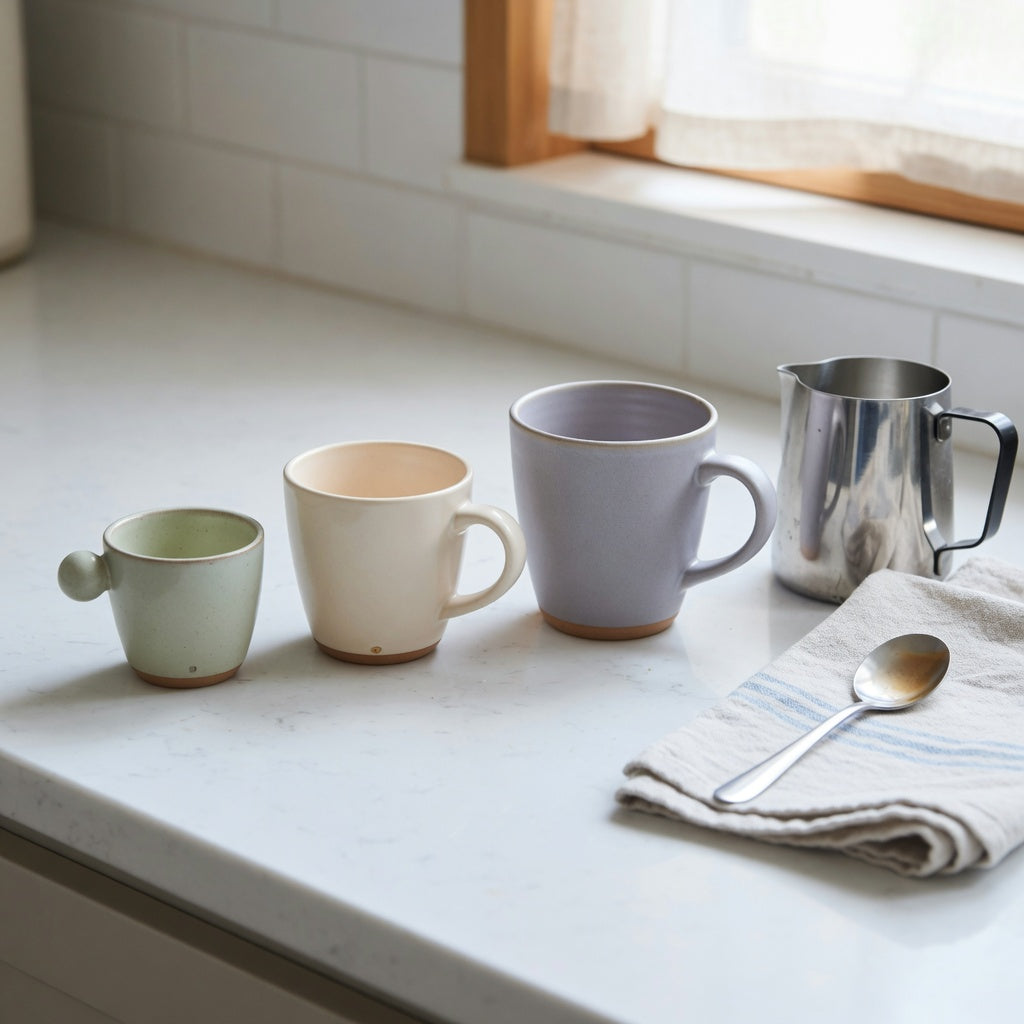
Ceramic Latte Cups Size Decision Guide: 250, 400 or 440 ml?
Three listed capacities — 250 ml, 400 ml, and 440 ml — and no universal right answer. We walk through which ceramic latte cup fits a short milk drink, a tight desk, or a long morning pour, plus the...
Read more
Leave a comment
This site is protected by hCaptcha and the hCaptcha Privacy Policy and Terms of Service apply.