

Ceramic Espresso Cup Buying Priorities: Capacity, Shape, Space
Reading time: about 8 minutes
A cup can look compact in a product photo and still become awkward once its handle meets a grinder, laptop, or low cabinet shelf. The mismatch often has little to do with color or decoration. Our ceramic espresso cup buying priorities start with the finished drink you actually pour, continue with the vessel's visible shape, and end with the space where you will use and store it.
In our store, we compare the current options using facts we can stand behind: ceramic material, listed capacity, and visible form. The Retro Coffee Tea Cup is listed at 170 ml, the Pleated Coffee Tea Cup at 200 ml, and the Ball Handled Coffee Tea Mug at 250 ml. All three may be larger than a traditional single-shot demitasse, so the word espresso should not be your only sizing cue.
Which listed capacity matches your finished drink?
A search label such as small espresso cup does not tell you how full the vessel will look or how close your drink will sit to the rim. Measure the complete drink after adding any milk or water. A simple home check is more reliable than estimating from a product photo:
- Make your usual drink in the cup you currently use and note its finished fill line.
- Afterward, refill that cup to the same line with cool water and pour the water into a graduated measuring jug.
- Compare that number with 170, 200, and 250 ml while allowing unused space below the rim for carrying and sipping.
| Current option | Verified catalog fact | Routine it may suit | Trade-off to consider |
|---|---|---|---|
| Retro Coffee Tea Cup | Ceramic, 170 ml, visible retro form | A short drink and the lowest listed capacity among these three | It may still feel roomy beside a traditional demitasse |
| Pleated Coffee Tea Cup | Ceramic, 200 ml, visible pleated exterior | A measured drink that falls between the smaller and larger options | A very short pour will occupy only part of the vessel |
| Ball Handled Coffee Tea Mug | Ceramic, 250 ml, visible ball-shaped handle | Added milk or water, or one coffee cup for espresso and other short drinks | The largest listed volume can look oversized for a single short pour |
Treat capacity as a comparison figure, not a reason to fill a cup to the brim. Usable headspace matters if you carry coffee from the kitchen to a desk. If your recipe already comes close to the listed capacity, moving up one size is more practical than accepting a spill-prone fill line.
Ceramic espresso cup buying priorities for counters, desks, and shelves
Capacity does not establish a cup's width, height, or total footprint. Our verified facts for these products do not include dimensions, so we will not turn 170 ml into an invented claim that the Retro has the smallest exterior footprint. Check the live product information for dimensions when listed, then compare them with your own space.
- Kitchen counter: Measure the clear width available beside the machine, grinder, spoon rest, and other items that remain on the counter.
- Under a coffee machine: Measure vertical clearance from the drip surface to the dispensing area. Capacity alone cannot confirm equipment fit.
- Office desk: Include space around the keyboard, charging cables, papers, and the path your hand takes when setting the cup down.
- Cabinet or open shelf: Check opening height, shelf depth, and the room required to turn a handle without striking another vessel.
The visible forms provide useful clues, but not measurements. The Ball Handle visibly extends to the side of the vessel, so lateral clearance deserves attention. The Pleated cup has exterior contours, while the Retro offers a more restrained retro profile. If exact fit is non-negotiable and dimensions are not listed, do not make the decision from capacity alone.
Which visible shape fits your hand and cleanup routine?
Shape affects more than appearance. It changes where your fingers meet the cup, how much exterior detail needs wiping, and how the vessel sits among other items. We keep those observations separate from unverified performance claims.
- Retro form: Consider it if you prefer a quieter silhouette with less visible exterior relief. We do not claim that this automatically makes it easier to clean or stack.
- Pleated exterior: The surface detail is visually distinctive and may appeal to shoppers who want texture. During hand washing, run a soft sponge along the recesses rather than wiping only across the raised areas. The pleating is not a certified anti-slip feature.
- Ball-shaped handle: This is the most immediately recognizable handle form of the three. Confirm that its shape suits your hand and available side clearance; a distinctive handle is not universally more ergonomic.
During our category handling checks, we look closely at the rim for chips, the base for rocking on a dry flat surface, and any handle-to-body junction for a visible hairline crack. Repeat that inspection after gift unboxing and before first use. The verified product facts supplied here do not include microwave ratings, dishwasher ratings, or dishwasher-cycle counts. Follow the current product instructions; if machine washing is not addressed, the conservative option is mild detergent, a soft sponge, and hand washing without abrupt temperature changes. A chipped or cracked ceramic vessel should not be used for a hot drink.
Which current cup fits a straight espresso, a mixed drink, or a gift?
Smaller listed volume: Retro, 170 ml
If your routine centers on straight espresso or another short pour and you want the lowest listed capacity in this group, start with the 170 ml Retro cup. Its relevant facts are the ceramic material, 170 ml capacity, and visible retro form. It is not a confirmed traditional demitasse size, and the capacity does not prove that it will fit beneath a particular machine.
Middle capacity and visible texture: Pleated, 200 ml
If 170 ml feels restrictive but 250 ml leaves more unused volume than you want, the 200 ml Pleated cup is the numerical midpoint. It holds 30 ml more than the Retro and 50 ml less than the Ball Handle. Choose it when that capacity and the visible pleated form suit the recipient or setting, not because of an unlisted grip or thermal-performance claim.
Largest listed capacity and statement handle: Ball Handle, 250 ml
If your measured drink includes enough milk or water to make 200 ml feel close, consider the 250 ml Ball Handled mug. It provides the largest listed volume of the three and has a clearly visible ball-shaped handle. It is less suitable if you want a single short pour to visually fill the cup or if side clearance is uncertain.
Gift buyers should still start with the recipient's routine. The Pleated and Ball Handle forms make a stronger visual statement at unboxing, while the Retro form is more restrained. None is automatically the better gift if the capacity conflicts with the recipient's normal drink. If these three do not resolve the choice, compare more visible forms in our unique coffee mugs collection.
Where do these compact ceramic cups stop making sense?
A different vessel category will serve you better in several common situations:
- You want traditional demitasse proportions: These listed capacities may be larger than the single-shot presentation you have in mind. Look for a smaller, explicitly listed capacity.
- You make a large latte or Americano: Measure the finished recipe. Even 250 ml may be insufficient, making a larger ceramic mug the better option.
- You need a commute cup: No lid, insulation, or travel accessory is included in the verified claims here. Choose a travel vessel with those features explicitly listed.
- You require exact machine clearance: Select only after comparing listed dimensions with your equipment. We do not claim universal espresso-machine compatibility.
- You need guaranteed stacking: Do not infer stackability from a product image. Choose a style that states this feature directly.
What should you verify before checkout?
Our practical ceramic espresso cup buying priorities reduce to six checks:
- Measure the milliliters in your usual finished drink.
- Allow headspace rather than matching your drink to the brim capacity.
- Measure the counter, desk, machine, and shelf clearances that matter.
- Compare the visible Retro, Pleated, and Ball Handle forms with your grip and cleaning preferences.
- Read the current product page for dimensions and care instructions when listed.
- Rule out these vessels if you need a lid, insulation, certified drink performance, or confirmed equipment fit.
Frequently asked questions
Which ceramic espresso cup buying priorities matter most for a small desk?
Start with your finished drink volume, then measure the clear desk area around your keyboard, cables, and papers. Check total width including the handle when dimensions are listed. Capacity is useful for choosing between 170, 200, and 250 ml, but it cannot confirm the external footprint.
Is a 170 ml ceramic cup too large for a single espresso?
It may be larger than a traditional single-shot demitasse, so a short espresso will occupy only part of the cup. That can be acceptable if you value headspace or occasionally add milk or water. Choose a smaller capacity elsewhere if a close-fitting demitasse presentation is your priority.
Should I choose 200 ml or 250 ml for espresso with milk?
Measure your usual finished drink rather than choosing from the label alone. The Pleated cup is listed at 200 ml, while the Ball Handled mug provides 50 ml more at 250 ml. If your recipe approaches 200 ml before allowing headspace, the 250 ml option is the more practical capacity match.
Can these ceramic cups go in a dishwasher or microwave?
Dishwasher and microwave ratings are not part of the verified facts used for this comparison. Check the current product page and any care information supplied with the vessel. If machine washing is not addressed, use a soft sponge, mild detergent, and conservative hand washing.
Can capacity tell me whether a cup fits under my espresso machine?
No. A 170 ml cup can have different external proportions from another vessel with the same capacity. Confirm the cup height and width when listed, then compare those dimensions with the clearance available on your specific equipment.
Measure your finished drink, record the clear width and height where the cup will live, and compare those numbers with the three product listings. If none is a clean match, use the CoffeifyMug mug collection to continue by capacity and visible form rather than compromising on a cup that crowds your routine.
More from our blog
Read more

Coffee mug gift idea current product facts: 3 mugs compared
Compare the listed 400, 440, and 480 ml capacities, ceramic construction, visible silhouettes, and unresolved care or dimension questions for three CoffeifyMug gift options.
Read more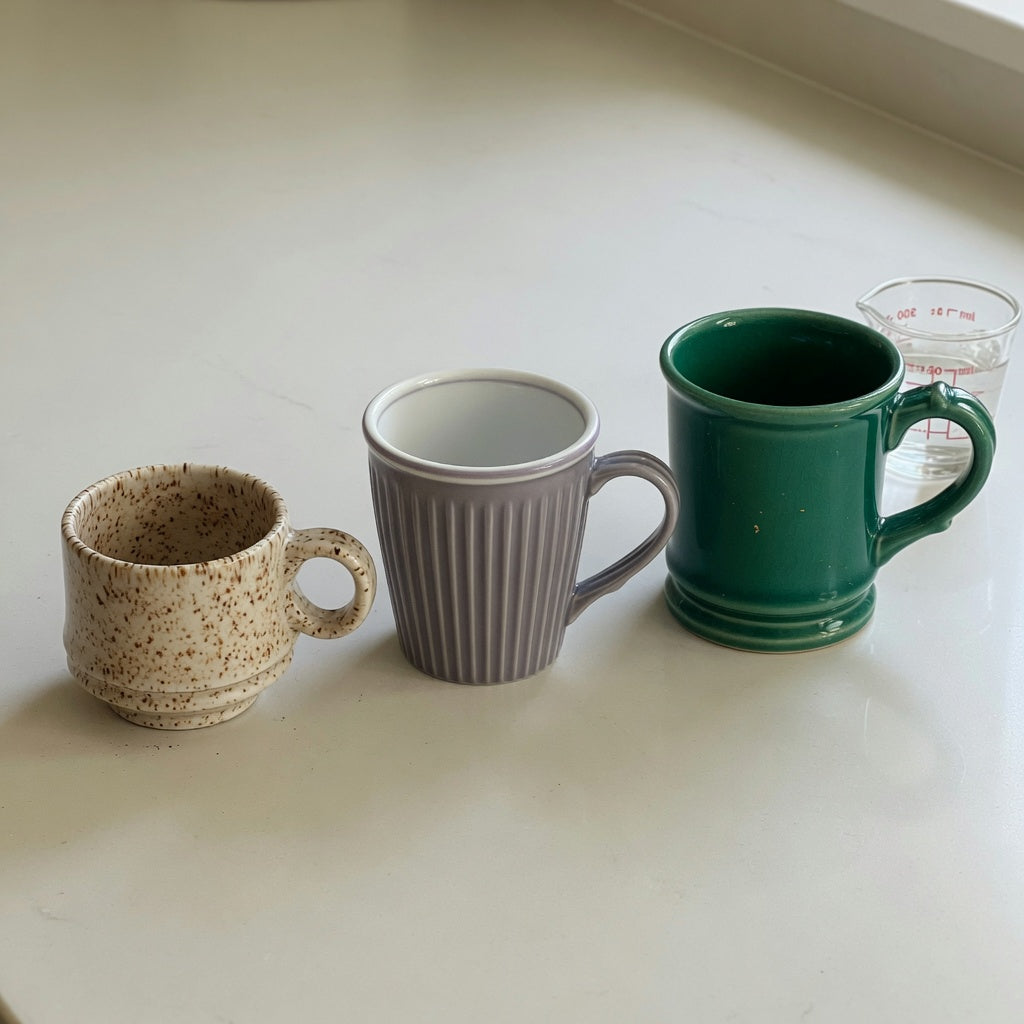
Ceramic Cortado Cup Current Product Facts: 3 Sizes Compared
Compare the verified capacity details in our current compact-cup listings: Retro 170 ml, Pleated 200 ml, and Emerald 270 ml. See the nominal pour margin each size offers, who each option fits, and ...
Read more
Leave a comment
This site is protected by hCaptcha and the hCaptcha Privacy Policy and Terms of Service apply.