

Ceramic vs Porcelain Coffee Mugs: Replacement Purchase Checklist
Reading time: about 10 minutes
A chipped rim catches the dishcloth, the handle feels less secure after every wash, or the mug no longer fits beneath a new coffee maker. The ceramic vs porcelain coffee mugs replacement purchase practical purchase checklist below starts with that specific failure, not a broad argument about which material is universally better.
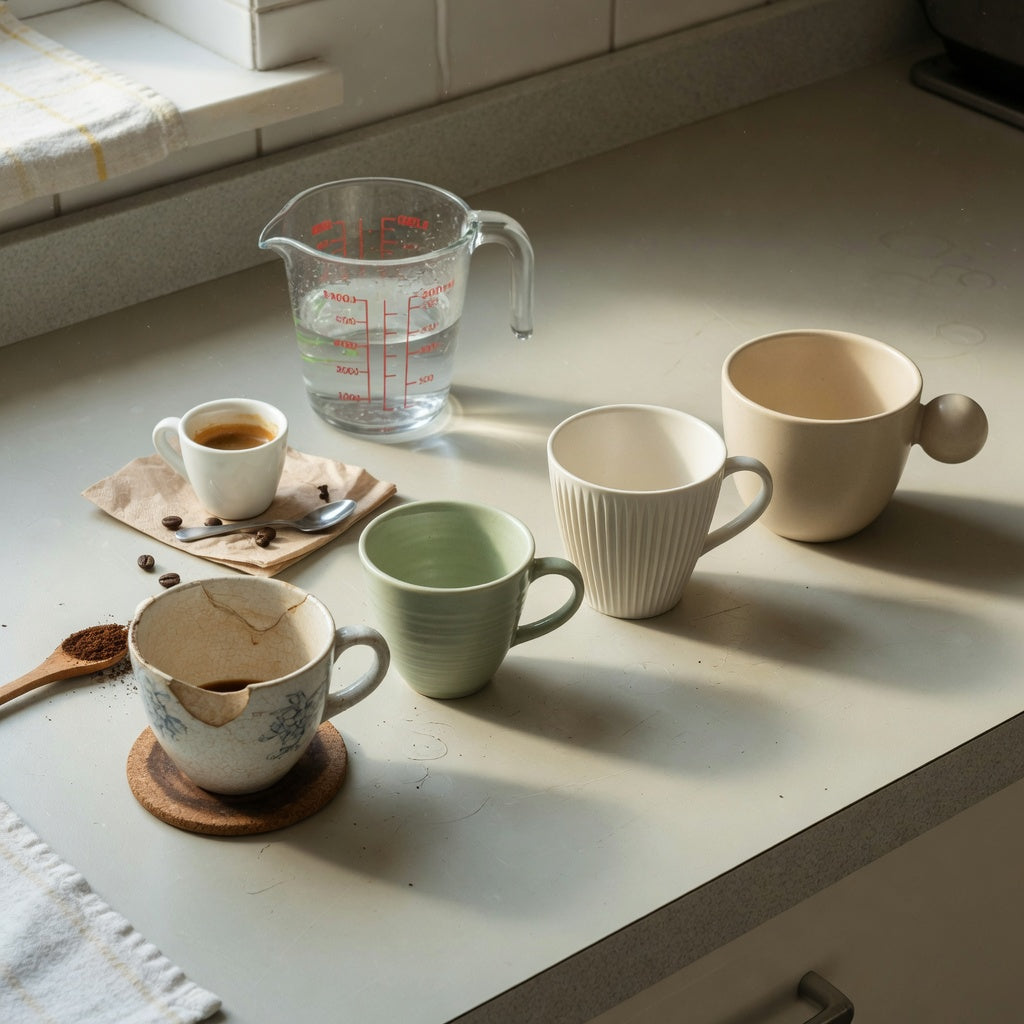
In our store, we find that replacement shoppers make better decisions when they keep the old mug nearby. It provides a direct reference for usable capacity, handle opening, base diameter, balance, and cupboard clearance. Those details often matter more than the material name printed in a listing.
We also separate general material guidance from product-specific facts. A live product page should confirm the material, dimensions, capacity, available options, and care instructions. If it does not state a detail, we treat that detail as unknown rather than estimating it from a photograph.
Which limitation are you actually paying to replace?
Write down the old mug's main problem before browsing. Otherwise, an attractive shape can distract from the reason you need a replacement in the first place.
- Chipped rim or cracked body: Note whether the damage followed a known impact, crowded stacking, or repeated contact in the sink. No ceramic or porcelain mug should be treated as unbreakable.
- Uncomfortable handle: Record how many fingers fit through the opening, where the handle presses against your hand, and whether the full mug pulls forward. A handle can look generous in a photo and still have the wrong internal clearance.
- Wrong drinking volume: Measure the amount you normally pour, not the amount the mug could hold at the brim. Coffee needs carrying room, while iced coffee also needs space for ice.
- Poor kitchen fit: Check brewer clearance, cupboard height, storage width including the handle, and spacing between dishwasher tines. These are separate measurements.
- Desk or gift mismatch: A mug may work physically but feel too plain for a gift, too wide beside a keyboard, or too visually busy for daily office use. Style is a valid replacement criterion, but it should not override required dimensions.
Inspect the old mug under side light before discarding it. A single crack through the body is different from crazing, which appears as a network of fine lines in the glaze. A sharp rim chip, loose handle, or structural crack is a reason to remove the mug from drinkware use rather than continue testing it.
Does porcelain solve the old mug's actual problem?
Porcelain is a type of ceramic. The broader ceramic label may refer to porcelain, stoneware, earthenware, or a ceramic body whose subtype is not identified. That classification is useful, but it does not by itself tell you the finished mug's empty weight, wall thickness, handle comfort, chip resistance, or care requirements.
General category guidance: Read porcelain as a specific ceramic classification and ceramic as a broader term. Product-specific rule: Use only the statements on the current listing for the mug you are considering.
| Problem with the old mug | Evidence needed for the replacement | Why the material label is not enough |
|---|---|---|
| It felt too heavy | Listed empty weight or direct handling | Neither porcelain nor ceramic wording confirms the finished weight. |
| The rim chipped | Rim profile, storage clearance, and careful handling | Impact point, shape, and use conditions affect damage. |
| Coffee cooled too quickly | Capacity, wall construction, opening size, and an actual use comparison | The material name alone does not establish heat retention. |
| The surface showed lines or marks | Glaze condition, care directions, and inspection after use | A glossy listing image cannot prove long-term glaze behavior. |
| Dishwasher or microwave use is essential | An explicit care statement for the exact product or option | Dishwasher and microwave suitability are separate claims. |
If the old mug's only problem was excessive weight, prioritize an actual weight specification. If it failed because it did not fit the brewer, prioritize height. Switching from a broadly labeled ceramic mug to porcelain does not solve either problem unless the replacement also passes the relevant measurement check.
Which measurements must match your brewer, cupboard, and hand?
Place a safe, dry reference mug beside a measuring cup, ruler, and kitchen scale. Record numbers rather than relying on retail labels such as small, regular, or large.
- Usable capacity: Fill the mug to your normal drinking level and transfer the water to a measuring cup. Keep this separate from any brim-capacity figure.
- Overall height: Measure from the work surface to the highest point of the rim. Compare it with the space beneath the brewer and between cupboard shelves.
- Widest body diameter: This affects spacing in a cupboard, dishwasher rack, or crowded office kitchen.
- Base diameter: Measure the foot that contacts the counter or desk. The widest body and the supporting base are not necessarily the same width.
- Total width with handle: This catches storage conflicts that a body-only measurement misses.
- Internal handle opening: Measure its height and width, then record whether you prefer a two-, three-, or four-finger hold.
- Empty weight: Use a kitchen scale if lifting comfort or balance caused the replacement purchase.
Tea drinkers should also compare the opening with an infuser they already use. Iced coffee drinkers need usable capacity after adding ice, not just a large-looking body. For an office desk mug, test the reference mug beside the keyboard, mouse, notebook, and charging cable so the new option does not occupy the same problem space.
Which CoffeifyMug option fits each replacement scenario?
Our product names and images can help narrow the visual profile, but the live listing remains the source for any stated material, capacity, dimensions, options, and care information. Open the relevant page beside your measurement notes and reject an option if a non-negotiable detail is missing.
- Your old rounded profile worked and you want a familiar starting point: Review the Round Coffee Tea Mug replacement candidate. The product name identifies the round design direction, making it a logical first comparison. Next, verify the current listing against your required capacity, height, handle clearance, and care routine.
- Your old mug felt visually flat and you want a more pronounced body shape: Open the Pleated Coffee Tea Cup listing. Its named pleated form directly addresses that style preference. Check the photos and listed facts to decide whether the exterior contours, handle, and cleaning routine suit daily use rather than assuming the shape guarantees a better grip.
- The practical fit was acceptable, but the old mug was too plain for a desk or gift: Compare the Landscape Coffee Tea Mug for a decorative replacement. The landscape design direction gives the purchase a more specific visual purpose. Confirm the recipient's likely size and handle preferences before treating appearance as enough reason to buy.
- None of those profiles solves the main limitation: Browse the unique coffee mugs collection for other replacement options. Carry the same three must-have requirements into the collection so a novel design does not reintroduce poor capacity, storage, or grip.
This is commercial comparison logic in its simplest form: identify the shopper situation, choose the page most likely to address it, and verify the deciding facts. We would rather leave an unlisted specification unresolved than turn a visual impression into a product promise.
Ceramic vs porcelain coffee mugs replacement purchase practical purchase checklist
Use this list with the old mug on one side and the live product page on the other. Mark each item as pass, fail, or unknown.
- Name the one failure or inconvenience that must not return.
- Record two qualities worth preserving, such as usable capacity, rim feel, balance, or handle opening.
- Measure height, widest body diameter, base diameter, total width, and internal handle clearance.
- Measure the normal drinking volume and empty weight if either affects the purchase.
- Read the material wording literally. Do not convert unspecified ceramic into porcelain or stoneware.
- Verify dishwasher and microwave statements separately for the exact product or selected option.
- Inspect listing photos for rim shape, both handle junctions, exterior contours, interior glaze, and foot ring.
- Mark any missing must-have specification as unknown. Do not estimate scale from a standalone product photograph.
- Replay the real use case: under the coffee maker, inside the cupboard, beside a keyboard, around a tea infuser, or during gift unboxing.
- Buy only if the option fixes the old limitation without sacrificing a feature you use every day.
The ceramic-versus-porcelain question should remain one line on the decision sheet, not the whole decision. A replacement mug earns its place by fitting the drink, hand, space, and care routine that it will encounter repeatedly.
What must pass the unboxing and care check?
Before the first drink, compare the received option with the order and examine it under clear side light. We use this angle because it makes the rim, glaze surface, foot ring, and upper and lower handle junctions easier to inspect than flat overhead light.
- Check the rim for a sharp chip and the body for a crack that continues through the ceramic.
- Look at both handle attachment points before lifting a full mug.
- Place the empty mug on a dry, level surface and check whether the foot sits as expected.
- Photograph any transit damage before washing or using the item.
- Follow the care directions supplied on the current page or packaging.
- Prevent rims and handles from knocking against other drinkware during washing and storage.
- Avoid abrupt movement between very hot and cold conditions, and inspect the mug again after a hard impact.
Daily dishwasher cycles, repeated reheating, hand washing, and crowded office sinks create different demands. If one care method is essential, an explicit product statement matters more than a general assumption about porcelain or ceramic.
When should ceramic and porcelain leave the shortlist?
A ceramic or porcelain cup is not the best replacement if the main need is a sealed commuting vessel, resistance to repeated drops, or extended temperature holding away from a kitchen. An insulated travel mug or another purpose-built vessel is a better category to compare in those situations. Decorative coffee and tea mugs remain breakable, regardless of which ceramic classification appears in the listing.
Frequently asked questions
How do I use a ceramic vs porcelain coffee mugs replacement purchase practical purchase checklist?
Start with the old mug's single biggest limitation, then measure its usable capacity, dimensions, handle opening, and empty weight. Compare those requirements with facts stated on the live product page and leave omitted details marked as unknown. Choose only after the material, fit, care, and use-case checks all pass.
Is porcelain always a better replacement for a chipped ceramic mug?
No. Porcelain is a ceramic type, and its name alone does not guarantee that a finished mug will resist chips or breaks. Rim shape, wall construction, handle junctions, storage, and the point of impact also affect what happens in normal use.
How do I match coffee mug capacity without trusting a size label?
Fill a safe reference mug to the level you normally drink from, then pour that water into a measuring cup. Record this usable capacity alongside height, base diameter, total width, and handle opening. A similar volume does not guarantee a similar kitchen or hand fit.
Can I assume ceramic or porcelain coffee mugs are dishwasher and microwave safe?
No. Dishwasher suitability and microwave suitability are separate product claims and do not follow automatically from either material name. Check the exact product and option, then follow the instructions shown on the current page or supplied with the mug.
Which CoffeifyMug replacement option should I compare first?
Start with the Round Coffee Tea Mug if a familiar rounded direction matches what already worked, the Pleated Coffee Tea Cup if a more pronounced form is the goal, or the Landscape Coffee Tea Mug if decorative presentation is the missing feature. Move to the wider collection when none of those starting points addresses the old mug's main limitation. In every case, verify the live specifications before ordering.
Your next step: Put the old mug beside a measuring cup, ruler, and kitchen scale, then write down three non-negotiables. Open the product candidate that best matches the replacement scenario and proceed only if its current listing clears those checks without relying on an unknown.
More from our blog
Read more
Macchiato Cup Replacement Purchase Product Shortlist Guide: 170-250 ml
Use the old cup's capacity, damage pattern, care routine, and storage limits to compare CoffeifyMug's 170 ml Retro, 200 ml Pleated, and 250 ml Ball Handle ceramic options.
Read more
Coffee Mug Gift Idea Home Coffee Station Product Shortlist Guide
Use counter clearance, workflow, design fit, and verified care details to compare three CoffeifyMug options. Each recommendation explains who it suits, why it earns a place on the station, and when...
Read more
Leave a comment
This site is protected by hCaptcha and the hCaptcha Privacy Policy and Terms of Service apply.