

Ceramic vs Porcelain Coffee Mugs: Practical Compact Kitchen Checklist
Reading time: about 9 minutes
A mug can clear a cabinet opening and still fail the space test: the handle catches the hinge, the base crowds the mug beside it, or the rim sits directly under the shelf above. Our ceramic vs porcelain coffee mugs compact kitchen practical purchase checklist starts with those collisions because they are what shoppers notice after delivery, not while viewing a front-facing product photo.
We handle and sell ceramic mug designs, so we look at the full storage envelope, the grip, the rim, and the care instructions before recommending a shape. The CoffeifyMug products linked here are presented on their product pages as ceramic; we are not relabeling them as porcelain. Any dimensions, capacity, or care claim should come from the live listing. If a required detail is not stated there, treat it as unknown rather than estimating from a photo.
Which cabinet measurement rules a mug out first?
Start by measuring the place where the mug will spend most of its time. The useful figure is not body diameter alone. It is the complete space occupied by the body, base, rim, and handle, plus enough clearance for your fingers to lift the mug without knocking its neighbor.
| Storage or use area | Measure in your kitchen | Common failure point |
|---|---|---|
| Cabinet shelf | Usable height, shelf depth, and total width including the handle | The door clips the handle, or the mug will not sit beside another cup |
| Narrow counter | Widest point of the mug and clearance from the kettle, faucet, or wall | The handle projects into the working area |
| Dishwasher rack | Rack height, tine spacing, and space between neighboring items | The rim or handle knocks another hard surface during a cycle |
| Mug hook or rail | Opening inside the handle and distance from the wall | The handle will not pass over the hook, or the mug swings against the wall |
Capacity is not a reliable shortcut for footprint. Two mugs can hold a similar serving while having different wall thicknesses, base flares, heights, and handle projections. We recommend comparing your kitchen measurements only with dimensions explicitly stated on the product page.
What does ceramic versus porcelain change at daily-use scale?
Porcelain is a type of ceramic, but retail listings often use ceramic to describe a non-porcelain body such as stoneware or earthenware. Porcelain is formulated and fired to become highly vitrified, which can allow a thinner body. That does not mean every porcelain mug is light or every other ceramic mug is thick.
| Buyer variable | General ceramic pattern | General porcelain pattern | Compact-kitchen implication |
|---|---|---|---|
| Wall and rim | Often substantial, although construction varies | Can be made thinner with a fine rim | Check actual outside dimensions and rim clearance |
| Weight | A thick body may feel heavier | A thin body may reduce bulk, but density still matters | Compare stated weight if available and consider filled weight |
| Heat retention | Greater wall thickness and mass can slow cooling | A thin design may cool differently from a heavy porcelain mug | Material name alone does not predict how long coffee stays hot |
| Impact points | Rims, handles, and glazed edges can chip | Thin rims and handles need clearance from hard surfaces | Storage and washing space matter as much as material |
| Care | Depends on the body, glaze, and decoration | Also depends on the glaze and decoration | Use the maker's stated dishwasher and microwave guidance |
When we inspect a mug, we check the drinking rim under side light, both handle joints, the foot that contacts the shelf, and the glaze for unexpected pinholes, sharp spots, or fine lines. A rough foot may scratch a shelf even when the mug body is sound. A rim chip or a crack developing at a handle joint is more serious and should not be dismissed as a cosmetic mark.
Porcelain is not automatically fragile, and a mug labeled ceramic is not automatically rugged. In a compact kitchen, the better material is the one paired with suitable geometry, verified care instructions, and enough clearance to prevent repeated contact.
How should you use a ceramic vs porcelain coffee mugs compact kitchen practical purchase checklist?
Use a mug you already own as a physical reference. Put it in the intended cabinet, note how much room the handle consumes, and check whether your fingers can lift it without tilting the next cup. Then use the ceramic vs porcelain coffee mugs compact kitchen practical purchase checklist as a rejection tool: one failed essential requirement should remove a mug from the shortlist.
- Define the serving. Decide whether the mug is for short coffee, a longer coffee, tea, or an iced drink. Compare that need with the capacity stated on the listing rather than judging from photographs.
- Set the storage envelope. Record the maximum usable height, depth, and complete width including the handle. Account for cabinet hinges, shelf lips, and the closed door.
- Read measurements literally. Use only dimensions the seller provides. If the handle-to-body width, base size, or another essential measurement is missing, mark it as unknown.
- Trace the daily route. Picture the movement from cabinet to kettle, then to sink or dishwasher. On an office desk, check clearance beside a laptop, monitor stand, or notebook.
- Decide whether stacking is mandatory. Do not assume two mugs will stack securely because their bodies look similar. If stackability is essential and the listing does not confirm it, choose another option.
- Verify care before checkout. Look for explicit dishwasher and microwave instructions. Ceramic and porcelain are material families, not automatic care certifications.
- Inspect the delivered mug before use. Check the rim, handle joints, base, and glaze during unboxing. Follow the listed washing instructions before putting it into the normal kitchen routine.
This process keeps style from overruling a hard cabinet limit. It also prevents a common online-shopping mistake: choosing a compact-looking body while overlooking a long handle or wide base.
Which CoffeifyMug shape fits a tight shelf, visible counter, or gift?
The three linked CoffeifyMug options are ceramic products, so use them to compare shapes within that material category. We do not claim that any one is compact enough for your kitchen until its listed details have been checked against your measurements.
- Familiar everyday profile: If you want a conventional starting point for coffee or tea, review the Round Coffee Tea Mug specifications and photos. Its round form makes it a useful baseline for comparing height, capacity, and overall handle-to-body width. It is not a porcelain option, and a round body should not be assumed to stack.
- Texture on an open shelf or office desk: If the mug will remain visible and you prefer a more detailed exterior, examine the Pleated Coffee Tea Cup listing. The pleated form supplies the visual texture. It is not the best direction for someone who specifically wants a smooth, neutral exterior, and its required clearance still needs to come from the listed details.
- Gift or display-led purchase: If the mug will double as a decorative object, the Landscape Coffee Tea Mug page is the relevant next comparison. The landscape treatment gives the design a display role beyond holding a drink. A shopper building a plain matching set or seeking the smallest verified footprint may prefer a simpler style.
- No fixed style preference: Compare the current unique coffee mugs collection and remove any design whose listing leaves an essential measurement or care requirement unanswered. That creates a shorter, more defensible shortlist than choosing by glaze alone.
What care checks matter beside a small sink or crowded dishwasher?
A compact washing area puts rims and handles close to cutlery, cookware, faucets, and neighboring cups. Both ceramic and porcelain can chip through hard contact, so a durable routine depends on spacing and verified care instructions rather than the material name alone.
- Before the first wash: Read the live product care directions. If dishwasher or microwave use is not stated, do not assume it is approved.
- If dishwasher use is allowed: Position the mug so the rim and handle cannot knock another item as the rack moves.
- During hand washing: Keep metal utensils and heavy cookware away from the drinking rim, and avoid leaving the mug hidden under other dishes.
- During temperature changes: Avoid abrupt movement between very hot and very cold conditions unless the maker's instructions support that use.
- After washing: Recheck the rim and handle joints if the mug has suffered a knock. Stop using a mug with a chipped drinking edge or a cracked handle.
For a gift, inspect the mug during unboxing and keep the care information with it. That is more useful to the recipient than assuming all glazed mugs can follow the same dishwasher routine.
Who should choose porcelain, and who is better served by ceramic?
| Reader situation | Priority to verify | Practical direction |
|---|---|---|
| Very limited shelf space or reduced hand strength | Actual outside dimensions, handle opening, and empty and filled weight | A thin porcelain design may be worth comparing, but only listed measurements settle the decision |
| Busy shared kitchen with frequent sink contact | Substantial geometry, rim clearance, and approved care routine | A thicker ceramic mug may suit the routine, but the label does not guarantee impact resistance |
| Slow coffee or tea drinker | Wall thickness, mug mass, capacity, and preheating habit | Compare the actual mug design rather than expecting one material to retain heat better in every case |
| Open-shelf display or gifting | Decoration, finish, cabinet clearance, and recipient care habits | The linked CoffeifyMug ceramic designs provide shape-led options |
| Shopper specifically requiring porcelain | An explicit porcelain material statement | The ceramic products linked in this article are not substitutes for that requirement |
No linked mug is the right purchase if you require a feature the page does not confirm, such as secure stacking, compatibility with a particular lid, or a specific dishwasher or microwave rating. We would rather leave an item off a shortlist than convert an unknown into a promise.
Frequently asked questions
What belongs on a ceramic vs porcelain coffee mugs compact kitchen practical purchase checklist?
Record usable cabinet height and depth, complete mug width including the handle, base footprint, listed capacity, care instructions, and any stacking requirement. Add the route between the cabinet, counter, sink, and dishwasher. If an essential product detail is missing from the listing, treat it as unknown.
Is porcelain always thinner and lighter than ceramic?
No. Porcelain can be made with thin walls, but the final weight depends on the complete design, body density, handle, and capacity. Compare stated dimensions and weight where available instead of relying on the material label.
Can every ceramic or porcelain mug go in the dishwasher and microwave?
No. The body, glaze, decoration, and production method all affect care suitability. Follow the exact instructions on the product page, and do not infer dishwasher or microwave approval from the word ceramic or porcelain.
Which CoffeifyMug should I compare first for a small cabinet?
Use the Round Coffee Tea Mug as a conventional shape baseline, then compare the Pleated Coffee Tea Cup if exterior texture matters or the Landscape Coffee Tea Mug if display and gifting are stronger priorities. None should be assumed to fit until the live listing details have been checked against your cabinet envelope.
What should I do immediately before ordering?
Write down your maximum shelf height, depth, and full mug width, then revisit each product page and reject any option that fails an essential requirement. Use the side-by-side collection view to compare the remaining ceramic designs and choose the one that fits both the space and the daily routine.
More from our blog
Read more
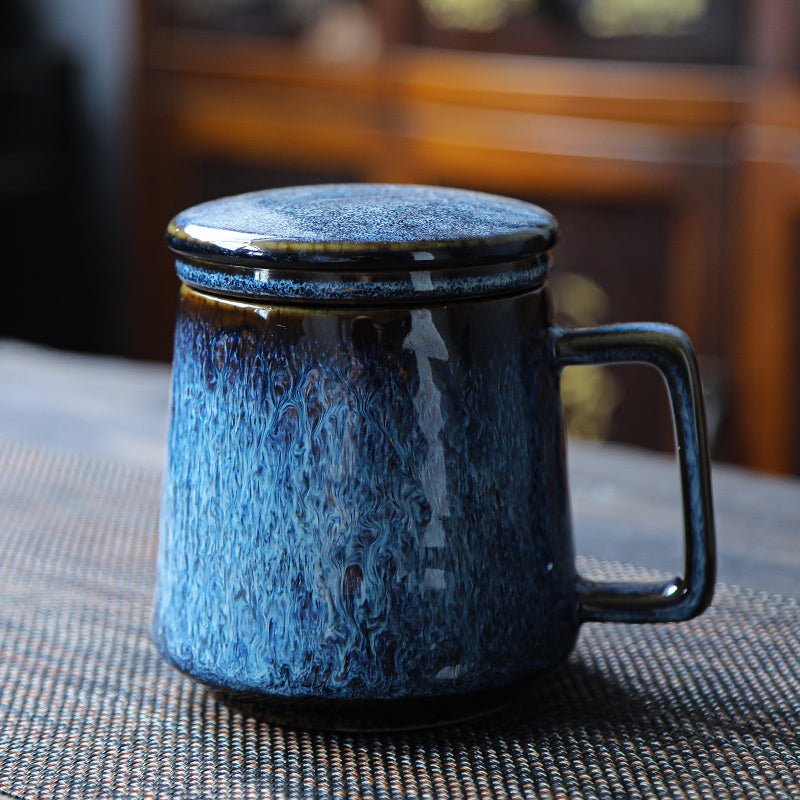
Heavy Ceramic Coffee Mugs Home Office Practical Purchase Checklist
Compare filled weight, desk footprint, handle comfort, capacity, and care instructions before choosing a heavy ceramic mug. The checklist also shows when a lighter or lidded style is the better buy.
Read more
High Quality Ceramic Coffee Mugs: Home Office Practical Buying Checklist
Compare ceramic terminology, glaze condition, handle clearance, base finish, dimensions, and care needs before choosing a home-office mug. We map three CoffeifyMug designs to real desk, meeting, br...
Read more
Leave a comment
This site is protected by hCaptcha and the hCaptcha Privacy Policy and Terms of Service apply.