
Ceramic Espresso Cup Weekend Coffee Product Shortlist Guide: 170–250 ml
Reading time: about 8 minutes
Saturday coffee exposes a mismatch that a rushed weekday shot can hide: a tiny cup feels sensible until you add water or milk, carry it from the kitchen counter to the table, and realize your usual pour sits too close to the rim. This ceramic espresso cup weekend coffee product shortlist guide narrows the decision to three ceramic vessels we sell: the Retro at 170 ml, the Pleated at 200 ml, and the Ball Handle at 250 ml.
In our store, we ask shoppers to separate listed capacity from physical dimensions and advertised performance. The facts we can stand behind here are the ceramic material, listed capacity, and visible form of each vessel. These capacities may be larger than a traditional single-shot demitasse, and we are not making claims about heat retention, dishwasher or microwave compatibility, machine clearance, unlisted accessories, or drink-specific performance.
Use the ceramic espresso cup weekend coffee product shortlist guide by volume, headspace, and form
Start with the drink you actually serve on Saturday, not the word espresso on its own. Three checks will usually reduce this shortlist to one option.
- Measure the finished drink. Pour your normal espresso, water, milk, or other additions into a marked measuring jug and record the total volume. Estimating by eye is unreliable, especially if your current cup has a different shape.
- Allow room below the rim. Treat listed capacity as a comparison number rather than a target fill line. If your finished drink measures 165 ml, we would not rely on five milliliters of theoretical space in a 170 ml vessel without knowing how its capacity was measured.
- Choose the visible form deliberately. Decide between a retro profile, a pleated exterior, and a pronounced ball handle. Capacity does not reveal height, width, rim diameter, handle clearance, or under-spout fit, so verify those separately if they determine your purchase.
| Weekend situation | Best starting point | Reason to choose | Reason to skip |
|---|---|---|---|
| Shorter final drink and a retro look | Retro, 170 ml | Lowest listed capacity in this three-product shortlist | Your drink sits near 170 ml or you want traditional demitasse proportions |
| More room than 170 ml and visible exterior texture | Pleated, 200 ml | Middle capacity with a pleated form | You require a smooth exterior or your drink sits near 200 ml |
| Longer drink and a distinctive handle | Ball Handle, 250 ml | Largest listed capacity with a visible ball-handle form | You prefer the smallest presentation or have not checked storage and handle clearance |
If none of these combinations suits your routine, browse our unique coffee mugs collection rather than forcing a choice. The collection is most useful after you know your target volume and non-negotiable form.
170 ml Retro: is your final weekend pour well below 170 ml?
The Retro Coffee Tea Cup is ceramic and lists a 170 ml capacity, making it the lowest-capacity option here. It fits the solo weekend reader whose finished drink remains comfortably below that figure and who prefers the visible retro styling.
- Choose it if: you want the smallest listed capacity of the three, your measured drink leaves reasonable room below 170 ml, and the retro form suits your tableware.
- Skip it if: your measured drink approaches 170 ml, you expect generous room for additions, or you really mean a traditional single-shot demitasse when you search for a small espresso cup.
A 170 ml listing also does not prove that the cup will fit beneath a particular espresso machine. Low capacity and low external height are not the same specification. If machine clearance is decisive, confirm the current dimensions against your equipment before ordering.
200 ml Pleated: do you want middle capacity and visible texture?
The ceramic Pleated Coffee Tea Cup lists a 200 ml capacity. That is 30 ml more than the Retro and 50 ml less than the Ball Handle, giving it a clear middle position rather than an ambiguous one.
- Choose it if: your weekend drink outgrows the practical range of the 170 ml option, you do not need the full 250 ml capacity, and you actively like the pleated exterior.
- Skip it if: you prefer an uninterrupted smooth surface, your usual pour sits close to 200 ml, or compact demitasse presentation matters more than extra volume.
We treat the pleats as a visible design and handling preference, not evidence of superior grip or certified performance. For a slower breakfast or shared coffee at the kitchen table, the sound buying reason is still the combination of measured volume and preferred form.
250 ml Ball Handle: does your weekend drink need the largest option?
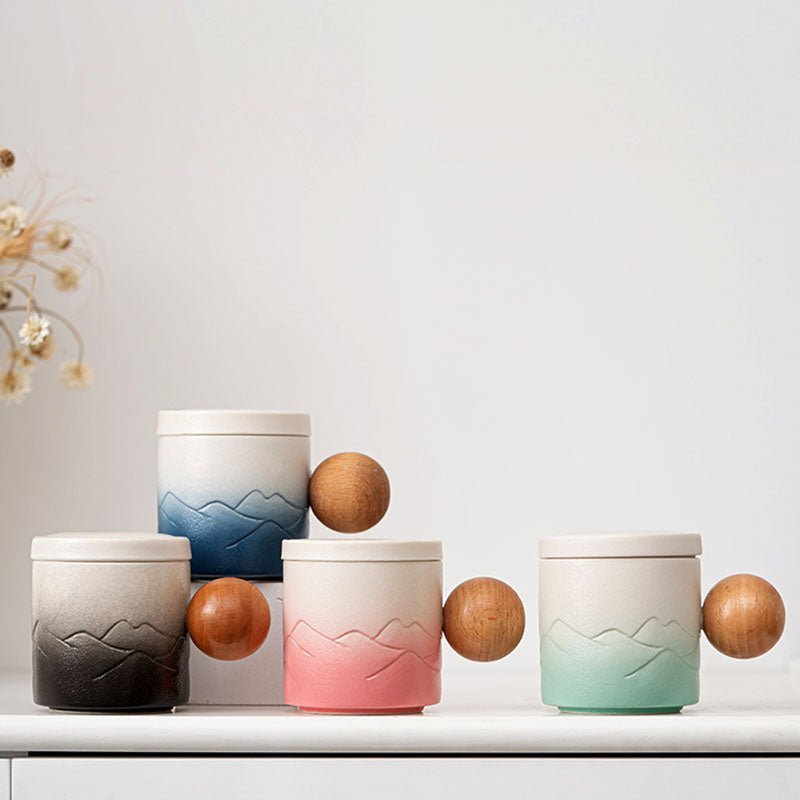
The ceramic Ball Handled Coffee Tea Mug lists a 250 ml capacity, which is 50 ml above the Pleated and 80 ml above the Retro. Its other defining visible feature is the pronounced ball-handle form.
- Choose it if: your finished weekend drink needs more room than the smaller options provide, you want the largest listed capacity, and the ball handle is part of the appeal.
- Skip it if: you drink only a compact shot, want traditional demitasse proportions, dislike the visible handle form, or have tight storage that you have not measured.
We do not claim that the handle is more ergonomic or secure for every hand. Handle comfort is personal, and product photography cannot reproduce a physical grip test. If finger clearance or a particular hold is essential, verify the relevant dimensions before buying.
Ceramic care and condition: what should you verify before Sunday brunch?
All three options are ceramic, but the material name alone does not settle care compatibility or condition. Our team recommends a short inspection at unboxing and a separate check of the current care information.
- Inspect the rim in bright light. Look for chips or rough damage before drinking. Do not run a fingertip across an edge that appears chipped.
- Check the body and handle area. On any handled ceramic vessel, look closely where the handle meets the body for a visible hairline crack or separation.
- Set the empty cup on a flat, dry counter. Check whether the base rocks unexpectedly before filling the vessel.
- Verify appliance compatibility. Do not assume that ceramic automatically means dishwasher-safe or microwave-safe. If every weekend breakfast dish goes directly into the dishwasher, confirm that requirement before checkout.
- Measure storage and equipment space. Capacity does not provide cup height, overall width, or handle projection. Check cabinet clearance and espresso-machine space using current product dimensions rather than the 170 ml, 200 ml, or 250 ml figure.
For a gift, inspect the ceramic vessel before wrapping it and keep the packing materials until that check is complete. A careful gift unboxing is more useful than discovering a rim or handle issue after the recipient has already tried to use the cup.
Who should skip all three ceramic options?
This shortlist is intentionally narrow. A different vessel will serve you better if any of these requirements applies:
- You want a traditional single-shot demitasse and consider 170 ml too large.
- You need a lidded travel cup, insulation, or another feature not listed for these vessels.
- You require verified fit beneath specific espresso equipment but have not confirmed external dimensions.
- You need a non-breakable cup for a bag, vehicle, or busy shared workspace.
- Dishwasher or microwave compatibility is mandatory and the current product information does not confirm it.
In those situations, choose a smaller demitasse, a purpose-listed travel vessel, a less breakable material, or a cup with the exact dimensions and care instructions you require. A product that misses a non-negotiable should not stay on the shortlist because its styling is appealing.
A five-minute counter check before choosing one cup
Use this ceramic espresso cup weekend coffee product shortlist guide as a short decision record, not a reason to buy all three capacities. Write down the answers while your usual Saturday drink is in front of you.
- Finished drink: Record the total in milliliters after adding everything you normally serve.
- Headspace: Remove any option that sits too close to your measured total for comfortable carrying and sipping.
- Preferred form: Pick retro, pleated, or ball handle based on the visible design you genuinely want to use and store.
- Required verification: Note any must-have care status, cabinet measurement, machine clearance, or handle dimension that still needs confirmation.
The result should point to one starting product: Retro for the lowest listed capacity, Pleated for the middle capacity and textured form, or Ball Handle for the largest capacity and distinctive handle. If no option clears all four checks, return to the full unique mug selection and compare only vessels that meet the missing requirement.
Frequently asked questions
What size ceramic espresso cup is best for a slow weekend coffee?
Our ceramic espresso cup weekend coffee product shortlist guide starts with the volume of your finished drink. Consider the Retro at 170 ml, Pleated at 200 ml, or Ball Handle at 250 ml, but leave practical room below the rim. If your drink sits close to a listed capacity, move up or select another vessel.
Are 170 ml, 200 ml, and 250 ml cups traditional demitasse sizes?
These capacities may be larger than a traditional single-shot demitasse. They are better shortlisted by total weekend beverage volume than by the word espresso alone. If you want a compact demitasse presentation, a smaller cup outside these three options will suit you better.
Can I assume these ceramic cups are dishwasher-safe or microwave-safe?
No. Ceramic material by itself does not confirm dishwasher or microwave compatibility. Check the current care information for the specific product, and ask our store before ordering if that compatibility is mandatory.
Will one of these ceramic cups fit under my espresso machine?
Capacity does not confirm external height or under-spout clearance. We do not make an equipment-fit claim for these products based only on their 170 ml, 200 ml, and 250 ml capacities. Compare current cup dimensions with your machine clearance before choosing.
Which CoffeifyMug option should I shortlist first?
Start with the Retro if your drink is comfortably below 170 ml and you like its retro form, the Pleated if 200 ml and exterior texture match your routine, or the Ball Handle if you need 250 ml and prefer its handle design. Then compare your choice in our unique coffee mugs collection, verify the care and dimensions that matter, and buy only the option that clears your checklist.
More from our blog
Read more
Oversized Ceramic Coffee Mugs: Compact Kitchen Purchase Checklist
The oversized ceramic coffee mugs compact kitchen practical purchase checklist covers shelf height, closed-cabinet depth, handle projection, appliance clearance, care, and filled handling. It also ...
Read moreDandelion Coffee Mug Compact Kitchen Practical Purchase Checklist
Measure cabinet clearance, shelf depth, handle room, and cleaning fit before choosing the 400 ml Gradient or Flow or the 480 ml Rock. This checklist separates verified capacities from details you s...
Read more
Leave a comment
This site is protected by hCaptcha and the hCaptcha Privacy Policy and Terms of Service apply.