
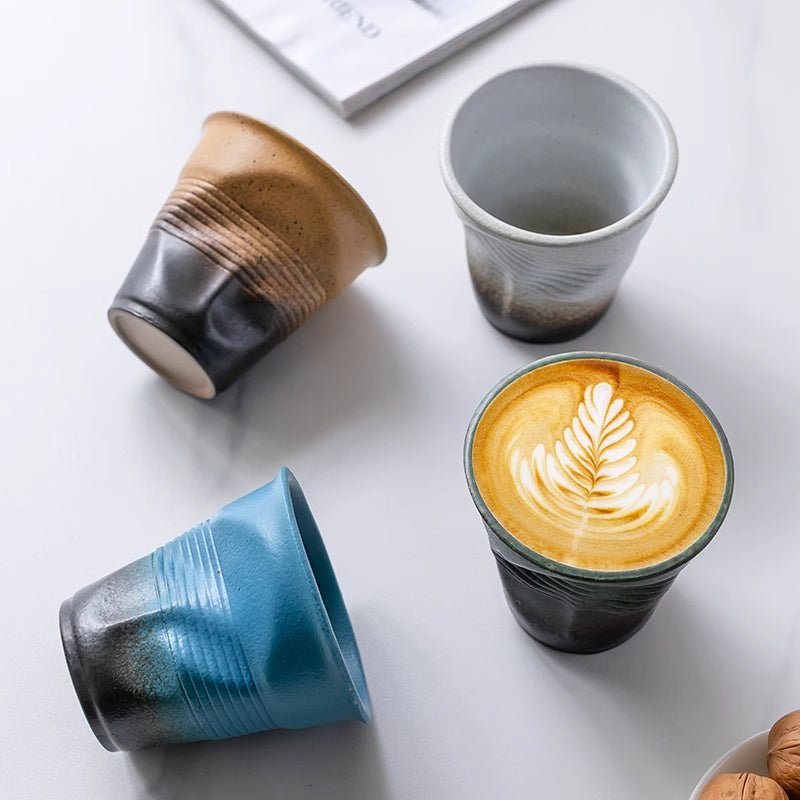
Ceramic espresso cup compact kitchen product shortlist guide: 170–250 ml
Reading time: about 9 minutes
A cabinet door that catches a mug handle every time it closes can turn an attractive cup into dead storage. Our ceramic espresso cup compact kitchen product shortlist guide starts with that familiar problem: one busy coffee corner, a shelf partly blocked by hinges, and no spare counter area for a cup that cannot be put away.
In our store, we separate listed facts from impressions created by product photos. The three candidates here are ceramic vessels with listed capacities of 170 ml for Retro, 200 ml for Pleated, and 250 ml for Ball Handled. These capacities may be larger than a traditional single-shot demitasse. The supplied facts do not include exterior dimensions, weight, dishwasher guidance, accessory details, or espresso-machine clearance, so this shortlist does not invent them.
What should a ceramic espresso cup compact kitchen product shortlist guide measure first?
Start with the storage location, not the product name. Search results may call something a small espresso cup, yet capacity alone does not tell you how much cabinet width, shelf height, or handle clearance it consumes. Before buying, inspect the exact path the cup must take from storage to counter.
- Cabinet opening: Measure the usable space after accounting for hinge hardware, the shelf lip, and cups already beside it. Check the door path too; a cup can sit inside the cabinet yet still be struck as the door closes.
- Working counter: Mark the landing place used while making coffee. Leave the grinder, kettle, or other everyday items in position rather than judging an empty staged counter.
- Visible form: Do not assume Pleated sides nest, Retro styling stacks, or a ball handle rotates neatly into every gap. None of those storage claims is listed.
- Cleaning route: Decide where the cup will drain and dry. A compact cabinet plan is less useful if the vessel routinely stays on a crowded drying rack because its care routine was overlooked.
Capacity remains useful, but only as a first filter. It identifies the listed volume of each option; it does not rank their exterior footprints.
Which listed capacity earns a place on a tight shelf?
| Option | Listed facts | Choose it when | Skip it when |
|---|---|---|---|
| Retro Coffee Tea Cup | Ceramic vessel; 170 ml; Retro form | You want the lowest listed capacity of these three and accept that it may still be larger than a traditional single-shot demitasse. | You need a truly tiny demitasse, the largest serving volume, or confirmed exterior dimensions. |
| Pleated Coffee Tea Cup | Ceramic vessel; 200 ml; Pleated form | You want the middle listed capacity and prefer the visible pleated form. | You need either the lowest or highest listed capacity, or you prefer an untextured exterior. |
| Ball Handled Coffee Tea Mug | Ceramic vessel; 250 ml; visible ball handle | You want the highest listed capacity and more volume for a longer or milk-added coffee. | Your cabinet has restricted side clearance or your goal is a traditional single-shot demitasse. |
The safest comparison is relative: 170 ml is the lowest listed capacity, 200 ml is the middle, and 250 ml is the highest. It is not safe to call the 170 ml Retro the smallest outside or the 250 ml Ball Handled the tallest. If visual form is part of your storage decision, open our unique coffee mugs collection and compare current product images for form rather than trying to estimate dimensions from photography.
These are coffee and tea vessels being shortlisted as a coffee cup for espresso based on listed capacity, ceramic material, and visible form. We are not claiming a saucer, lid, spoon, machine compatibility, professional testing, or certified espresso-specific performance.
Which cup fits three common compact-kitchen scenarios?
One shelf position for espresso-first mornings
Reader situation: Most drinks are modest, and you want to inspect the lowest-capacity option first. Why it fits: The Retro 170 ml cup has the lowest listed capacity in this group. Choose it: If 170 ml suits what you pour and the Retro form works with your kitchen. Skip it: If you want a truly tiny demitasse or need verified outer dimensions. If cabinet fit is already settled but morning timing drives the decision, our ceramic espresso cup morning-routine shortlist approaches the category from a workflow angle.
One cup shared between espresso and milk-added coffee
Reader situation: You do not want the lowest or highest capacity and need a middle option. Why it fits: The Pleated 200 ml cup sits between the 170 ml and 250 ml choices while offering a visibly different form. Choose it: If a middle volume reduces the need to keep another cup nearby. Skip it: If the pleated exterior is not to your taste or if confirmed stackability is essential. Shoppers comparing milk-coffee volumes can also use our ceramic cortado cup guide by volume.
One vessel with the most listed volume headroom
Reader situation: You want the largest listed capacity in this shortlist and do not mind giving the handle extra attention during the fit check. Why it fits: The Ball Handled 250 ml mug offers the most listed volume of the three. Choose it: If longer or milk-added drinks make 170 ml or 200 ml feel restrictive. Skip it: If the cabinet door, neighboring cups, or storage orientation leave little lateral space for a visible ball handle. For another milk-coffee comparison, see our flat white cup morning-routine shortlist.
What do ceramic and visible form tell you—and what do they not?
All three options are listed as ceramic, but material alone does not prove heat performance, commercial durability, or dishwasher compatibility. Ceramic is rigid and can chip under impact. When we handle ceramic drinkware, our first checks are the rim, base, body, and any handle-to-body junction rather than an unverified performance claim.
- Rim and body: Inspect the clean, dry cup under strong light for chips, sharp spots, or hairline cracks. Do not use a damaged ceramic drinking vessel.
- Handle junction: On any handled cup, inspect the points where the handle meets the body. The Ball Handled form also deserves a dry test in its intended cabinet orientation because the handle can meet a neighboring cup or door.
- Base: Set the empty cup on a flat, dry counter and check for unexpected rocking. If it does not sit reliably, stop and contact the store before use.
- First wash: Follow current product-page or packaging instructions. If dishwasher compatibility is not explicitly stated, do not infer it; hand-washing with a non-abrasive sponge is the conservative routine.
- Pleated surface: Run the sponge along the visible contours and rinse them fully. This is a form-based cleaning step, not a claim that the cup is difficult to maintain.
Never infer stackability from a photo. Nesting rigid ceramic pieces can put pressure on rims or bases, so store them separately unless current product information specifically says the form is designed to stack.
How do you check counter, shelf, and machine clearance without guessed dimensions?
- Use your current cup as a reference. Place it in the intended cabinet and measure the remaining usable opening, including any space lost to the shelf lip or hinge hardware.
- Choose a handle orientation. Test whether a handle must face forward, sideways, or away from the door. Give the Ball Handled option special attention because its visible handle form is central to the design.
- Check the live counter. Return the grinder, kettle, and other permanent items to their normal positions. Confirm that the cup has a stable landing place during preparation.
- Verify machine clearance separately. A listed capacity in millilitres says nothing about cup height or diameter. If the vessel must sit under a fixed espresso spout, obtain current external measurements before ordering; this guide makes no equipment-fit claim.
- Plan the cleaning and drying space. Check that the cup can be washed, drained, dried, and returned to storage without becoming a permanent counter item.
We would rather have a shopper pause than force a capacity number to answer a geometry question. If shelf or machine clearance is non-negotiable and the current product page does not provide the needed external measurements, ask before buying or choose a style with confirmed dimensions elsewhere.
Which option should you remove from the shortlist first?
- Remove Retro 170 ml if you specifically want a traditional tiny demitasse or need the largest listed volume. Its lower capacity does not guarantee the smallest exterior footprint.
- Remove Pleated 200 ml if the middle capacity solves no problem for you or if you prefer a plain exterior. Do not select it based on an assumption that it nests or stacks.
- Remove Ball Handled 250 ml if low capacity and minimal handle interference are priorities. The visible ball handle is a form choice, not proof of comfort, balance, or cabinet fit.
- Remove all three if you need verified dishwasher compatibility, included accessories, exact exterior dimensions, certified drink-specific behavior, or guaranteed machine clearance. Those facts are outside this comparison.
What is the final compact-kitchen add-to-cart check?
Use the ceramic espresso cup compact kitchen product shortlist guide as a stop-or-go sequence rather than a ranking based on appearance alone:
- Choose 170 ml, 200 ml, or 250 ml based on the drink volume you actually expect to pour.
- Accept that every listed option may be larger than a traditional single-shot demitasse.
- Measure the real cabinet opening, door path, shelf space, and occupied counter.
- Check that the Retro, Pleated, or Ball Handled form suits the available storage orientation.
- Verify current care directions if dishwasher cycles are part of your daily routine.
- Do not assume accessories, stackability, or espresso-machine fit unless the current listing states them.
If one candidate passes every check, return to its linked product page and verify the current listing before ordering. If none passes, use the collection to compare a different visible form rather than forcing an unsuitable cup into a tight cabinet.
Frequently asked questions
Which option should lead a ceramic espresso cup compact kitchen product shortlist guide?
Lead with the Retro 170 ml cup if the lowest listed capacity is your main filter. Use the Pleated 200 ml cup for the middle capacity and the Ball Handled 250 ml mug for the highest. Then verify exterior fit separately because capacity does not establish physical size.
Is a 170 ml ceramic cup the same as a traditional single-shot demitasse?
No, not necessarily. The 170 ml Retro may be larger than a traditional single-shot demitasse, even though it is the lowest-capacity option in this comparison. A shopper wanting a truly tiny espresso vessel should compare a different size category.
Can I assume the 170 ml Retro cup is physically the smallest?
No. It has the lowest listed capacity, but no verified height, diameter, or footprint is supplied here. Do not use capacity or product photos as a substitute for external dimensions.
Will the 250 ml Ball Handled mug fit under my espresso machine?
This shortlist cannot confirm that. Machine fit depends on exterior height, width, handle position, and the clearance beneath your specific spout, none of which can be established from the listed 250 ml capacity. Obtain current measurements before ordering if machine clearance is a hard requirement.
Are these ceramic cups suitable for daily dishwasher cycles?
The supplied facts do not establish dishwasher compatibility, so we would not promise it. Check the current product page or packaging; if no dishwasher instruction is stated, use a conservative hand-wash routine with a non-abrasive sponge. Before ordering, confirm care and fit on your chosen page, then compare other forms in the unique coffee mugs collection if the choice still does not work.
Read more
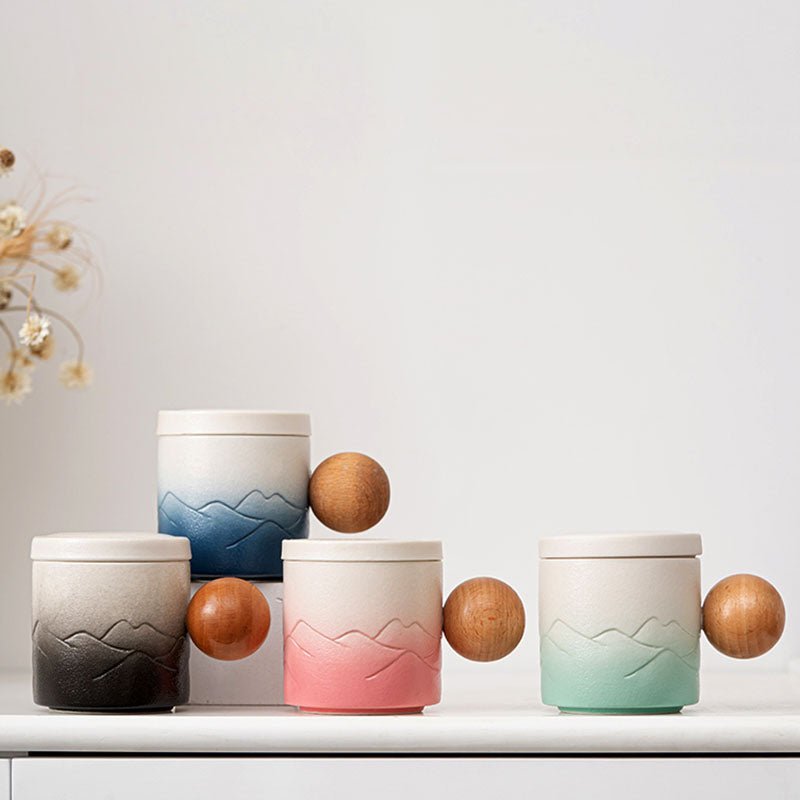
Flat White Cup Compact Kitchen Product Shortlist Guide: 200–270 ml
Compare CoffeifyMug’s 200, 250, and 270 ml options against narrow counters, crowded shelves, handle clearance, and serving headroom. Each pick includes a clear reason to choose it or skip it.
Read more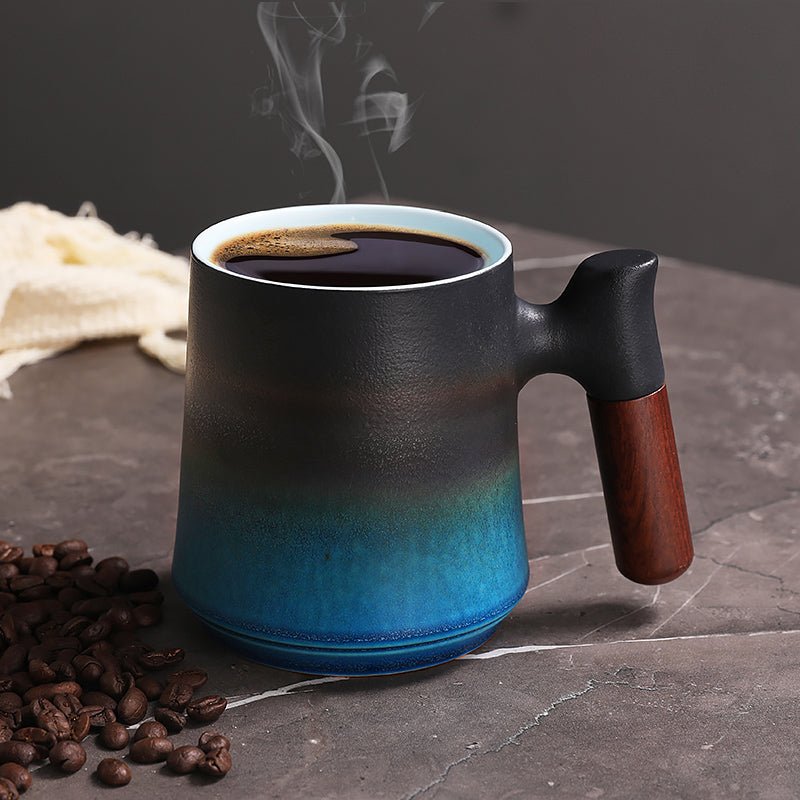
The hot cocoa mug compact kitchen product shortlist guide: 3 picks
Compare The Gradient and The Flow at 400 ml with The Rock at 480 ml. This compact-kitchen shortlist explains cabinet, counter, cleanup, and capacity trade-offs without assuming unlisted dimensions ...
Read more
Leave a comment
This site is protected by hCaptcha and the hCaptcha Privacy Policy and Terms of Service apply.