
Ceramic Espresso Cup Shared Household Practical Purchase Checklist
Reading time: about 8 minutes
At 7 a.m., one person pulls a short espresso, another adds milk, and a third wants enough headroom to carry a drink without filling the cup to its rim. The espresso cup label alone does not settle that shared-kitchen decision. That is why our ceramic espresso cup shared household practical purchase checklist starts with each person's actual serving, available storage, and cleanup expectations.
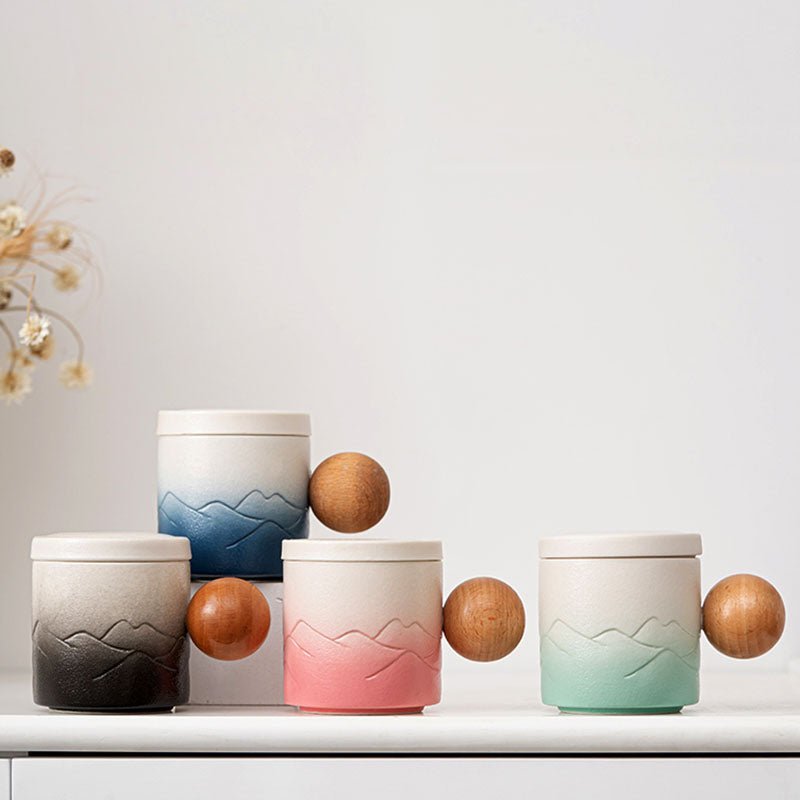
In our store, we compare these compact espresso-style cups using only details we can confirm: ceramic material, listed capacity, and visible form. The choices covered here are the Retro at 170 ml, the Pleated at 200 ml, and the Ball Handle at 250 ml. All three listed capacities may be larger than a traditional single-shot demitasse, so they suit shoppers seeking more room than a very small espresso cup.
Capacity does not establish comfortable working volume, external dimensions, machine clearance, stackability, or care compatibility. Those details should be confirmed rather than inferred from a photo or product name.
Use this ceramic espresso cup shared household practical purchase checklist
Run this household audit before comparing designs. It prevents the most common mismatch: choosing one vessel for everyone even though the drinks, hands, shelves, and washing habits differ.
- Measure each normal serving. Make the drink in the current vessel and transfer it to a marked measuring jug. Record the liquid volume rather than estimating by eye.
- Add intentional headroom. A person who carries coffee between rooms may want more unused space than someone who drinks beside the machine. Listed capacity is not a required fill level.
- Measure physical constraints. Check the gap from drip tray to brew head, cabinet height, shelf depth, and the space occupied by nearby handles.
- Assign ownership. Decide if each cup belongs to one person or enters a communal rotation. Different visible forms can make individual assignments easier.
- Agree on care requirements. If everything must survive an automatic dishwasher cycle, do not assume ceramic material alone confirms that compatibility.
Which listed capacity matches each person's usual serving?
The useful comparison is not small, medium, and large in the abstract. Match the measured serving to a listed capacity, then decide how much unused room that person wants. These are vessel comparisons, not drink recipes or performance claims.
| Reader situation | Confirmed option | Why it belongs on the shortlist | Trade-off to check |
|---|---|---|---|
| A household member usually makes the shortest serving and wants the least capacity of these three options | Retro Coffee Tea Cup, ceramic, 170 ml | It has the smallest listed capacity in this comparison and a visible retro form | At 170 ml, it may still be larger than the traditional demitasse the shopper has in mind |
| A measured drink needs more room than 170 ml but does not call for the highest listed capacity | Pleated Coffee Tea Cup, ceramic, 200 ml | Its listed capacity sits between the other two, with a visible pleated form | The pleated appearance does not confirm grip comfort, dimensions, or stackability |
| A household member wants the most capacity headroom among these three vessels | Ball Handled Coffee Tea Mug, ceramic, 250 ml | It provides the highest listed capacity here and has a visible ball-handle form | It is the furthest of the three from a very small demitasse-style capacity |
If the household cannot settle on one form or capacity, compare the wider unique coffee mug collection. Treat each product listing as its own purchase decision; do not assume the featured cups form a matching set or include unlisted accessories.
Will the cup clear the espresso machine, shelf, and neighboring handles?
Milliliters describe volume, not exterior geometry. A 170 ml coffee cup for espresso is not automatically shorter or narrower than every 200 ml alternative. The supplied facts do not give exact dimensions for these three vessels, so capacity cannot confirm equipment or cabinet fit.
- At the machine: measure vertically from the drip tray to the lowest fixed part above it. Also check the path used to place and remove a cup.
- In the cabinet: record usable shelf height and depth. Leave room for neighboring handles rather than measuring an empty shelf.
- For stacking: do not infer nestability from a photograph. If stacking is mandatory, obtain an explicit product confirmation before ordering.
- For grip: compare the visible retro, pleated, and ball-handle forms with each person's preference. A distinctive handle does not by itself guarantee comfort for every hand.
Households with very limited cabinet space can use our compact-kitchen ceramic espresso cup checklist for a more storage-focused measuring routine.
What ceramic care rules work in a busy shared kitchen?
Ceramic is confirmed for each featured vessel, but that material label does not independently verify dishwasher, microwave, oven, freezer, or sudden-temperature-change compatibility. Because those care claims are not among the supplied product facts, our practical default is to check the current listing and any packaging before first use.
- Inspect before use. Check the rim and body for chips or hairline cracks. Where a handle is present, inspect its attachment and stop using the vessel if the joint moves.
- Use a conservative wash method when compatibility is unclear. Hand wash with mild dish soap and a nonabrasive sponge instead of treating an unverified dishwasher setting as safe.
- Avoid abrupt temperature changes until limits are known. Do not move an unverified ceramic vessel directly between extreme hot and cold conditions.
- Dry before storage. Keep rims and handles from being forced against neighboring ceramics, which can create contact points during daily cabinet use.
A communal dishwasher turns one unsupported assumption into a repeated routine. If automatic washing is non-negotiable and the current product information does not explicitly address it, a different vessel with clearly stated care instructions is the more practical purchase.
Should every household member use the same capacity?
No. Shared ownership does not require identical serving preferences. A useful allocation can follow the drink rather than the desire for visual uniformity:
- Shorter measured servings with modest headroom point first to the 170 ml Retro option.
- Servings that fall between the lowest and highest listed capacities point to the 200 ml Pleated option.
- The person seeking the most listed capacity among these three should compare the 250 ml Ball Handle option.
This comparison does not mean the products are supplied together. Check each separate product page, selected quantity, and cart line before checkout. A household coordinating early schedules may also find the serving prompts in our morning-routine espresso cup checklist useful.
Which household needs call for a different cup style?
These options are not a strong match for every buyer. Choose another style if any of these requirements controls the purchase:
- You want a traditional, very small single-shot demitasse; all three listed capacities may be larger than that expectation.
- You need verified clearance under a particular machine but cannot confirm exterior dimensions.
- You require confirmed stacking, dishwasher, microwave, or other equipment compatibility.
- Your normal serving exceeds 250 ml and you do not want to refill.
- You need a bundled matching set or included saucers; neither should be inferred from these individual vessel listings.
- A broad base profile matters more than espresso-style capacity. In that case, use the shared-household wide-bottom mug checklist to compare that different priority.
Acknowledging these limits is more useful than forcing every household routine into the same category. The right next step may be a smaller demitasse, a larger mug, or a vessel with more complete dimension and care specifications.
Frequently asked questions
Is a 170 ml ceramic cup too large for a single espresso?
It may be larger than a traditional single-shot demitasse, but the listed capacity does not require you to fill the vessel. The practical question is whether you want that extra headroom and whether the cup's confirmed exterior dimensions fit your equipment and storage.
Can these ceramic espresso cups go in a dishwasher or microwave?
The supplied product facts confirm ceramic material but do not confirm dishwasher or microwave compatibility. Check the current product listing and packaging before use; if no explicit instruction is available, do not assume the appliance is suitable.
Will the 250 ml Ball Handle vessel fit under my espresso machine?
Capacity alone cannot answer that question. Measure the available clearance at the drip tray and compare it with confirmed product dimensions before ordering; no machine-fit claim is made here.
Are the Retro, Pleated, and Ball Handle cups sold as a set?
They are presented here as three separate product listings, not as a bundled set. Review the quantity and individual cart lines during checkout, and do not assume saucers, spoons, or other accessories are included unless the relevant listing states that explicitly.
What belongs on a ceramic espresso cup shared household practical purchase checklist?
Record each person's measured serving, preferred headroom, machine clearance, cabinet space, grip preference, and mandatory care method. Then compare those needs only with confirmed capacity, material, form, dimensions, and care information.
Run this 60-second cart check
- Match each person to 170 ml, 200 ml, 250 ml, or another capacity.
- Confirm exterior dimensions wherever fit is critical.
- Check care instructions instead of relying on the ceramic label.
- Verify each product quantity and avoid assuming a set.
- Remove any option that fails a non-negotiable household requirement.
With those answers recorded, revisit the CoffeifyMug unique coffee mug collection and compare only the vessels that suit the people, space, and cleanup routine in your shared home.
Read more
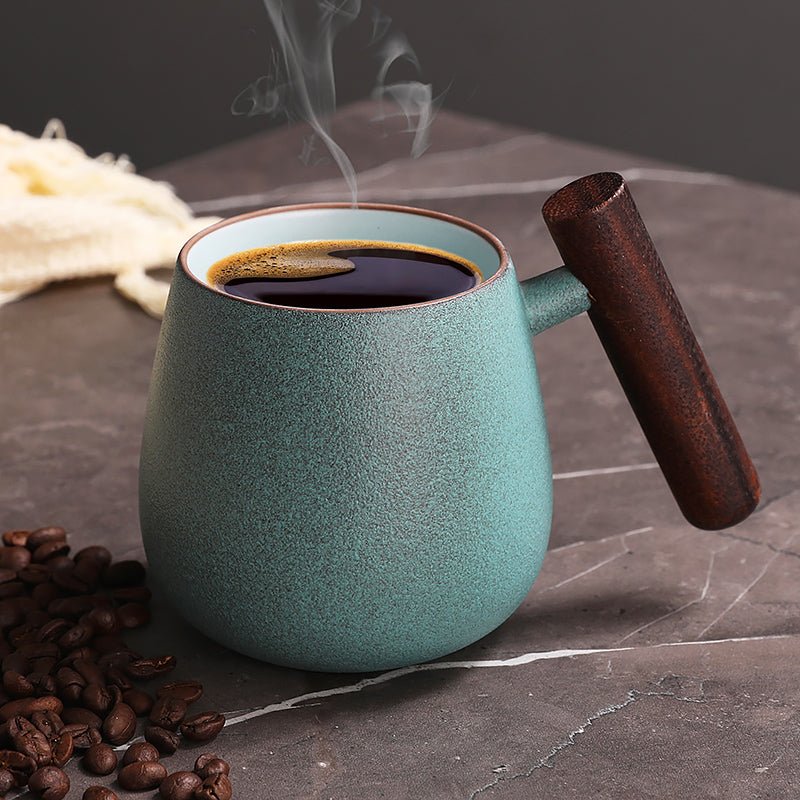
Loose Leaf Tea Mug Shared Household Practical Purchase Checklist
Compare three individually sold mugs by listed capacity, visible opening, storage fit, brewing setup, and care questions. This checklist separates confirmed product details from specifications that...
Read more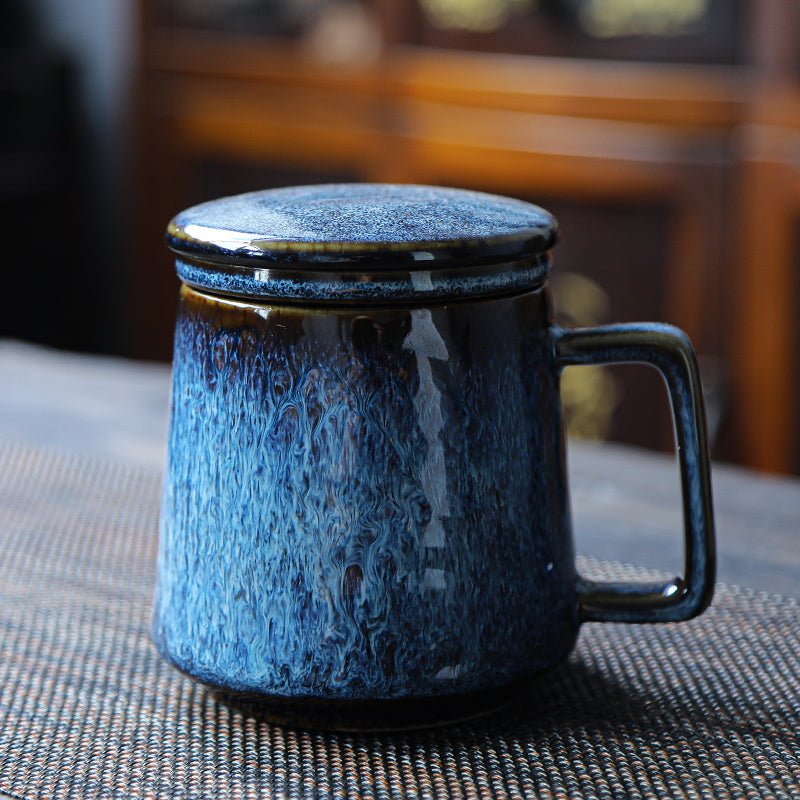
Mocha Mug Shared Household Practical Purchase Checklist: 400-480 ml
Compare the verified 400, 440, and 480 ml options by each housemate's normal pour, headspace needs, storage, handling, and still-unverified care details. This checklist separates known catalog fact...
Read more
Leave a comment
This site is protected by hCaptcha and the hCaptcha Privacy Policy and Terms of Service apply.