
Ceramic Espresso Cup Morning Routine Practical Purchase Checklist
Reading time: about 10 minutes
At 7:12 a.m., a cup that looked charming online can become the wrong tool: the espresso sits at the bottom, added milk pushes the drink close to the rim, or a refill interrupts the dash out the door. A ceramic espresso cup morning routine practical purchase checklist prevents that mismatch by starting with three facts: your available minutes, your normal finished drink volume, and your tolerance for refilling.
In our store, we keep this comparison to facts we can verify. The current compact ceramic options are the Retro at 170 ml, Pleated at 200 ml, and Ball Handle at 250 ml. Those are listed vessel capacities, and each may be larger than a traditional single-shot demitasse. Capacity alone does not confirm outside dimensions, espresso-machine clearance, included accessories, dishwasher or microwave suitability, or certified drink-specific performance.
Your ceramic espresso cup morning routine practical purchase checklist
Run this check on an ordinary weekday, not a relaxed Sunday. One measured morning is more useful than choosing from the word espresso alone.
- Time the routine: Note the pour time, last sip, and when you leave the counter. A five-minute drink creates a different need from a 30-minute desk coffee.
- Measure the finished drink: Use a marked kitchen jug once. Count the espresso, added water, and milk. For an iced recipe, remember that ice also occupies cup space.
- Allow headroom: Do not plan to carry a cup filled to the brim. If your measured recipe nearly equals the listed capacity, move up or accept a smaller pour.
- Set your refill tolerance: Decide whether zero, one, or several refills feel reasonable before the morning becomes busy.
- Measure the placement: Check shelf height, under-spout space, drip-tray width, and available desk area. Listed milliliters cannot answer those fit questions.
If coffee and tea share one cup, measure the larger usual serving. This prevents buying a small espresso cup that works for one shot but not the beverage you actually prepare most mornings.
170, 200, or 250 ml: which listed capacity matches your usual pour?
A coffee cup for espresso should be matched to the complete beverage, not just the shot. Use this table as a capacity filter, then verify dimensions and care information on the current product page.
| Current option | Facts we can verify | Routine it may suit | Trade-off to check |
|---|---|---|---|
| Retro Coffee Tea Cup | Ceramic vessel, listed at 170 ml, with a visible retro form. | Your finished drink sits comfortably below 170 ml, you want the smallest listed option, and a later refill is acceptable. | It may still look spacious around a neat single shot. Capacity does not establish machine clearance. |
| Pleated Coffee Tea Cup | Ceramic vessel, listed at 200 ml, with a visible pleated form. | Your drink is too close to the 170 ml limit but stays comfortably under 200 ml, or you want a middle capacity. | The pleated exterior has more contours to wipe than a plain wall. It is not necessarily a tiny demitasse. |
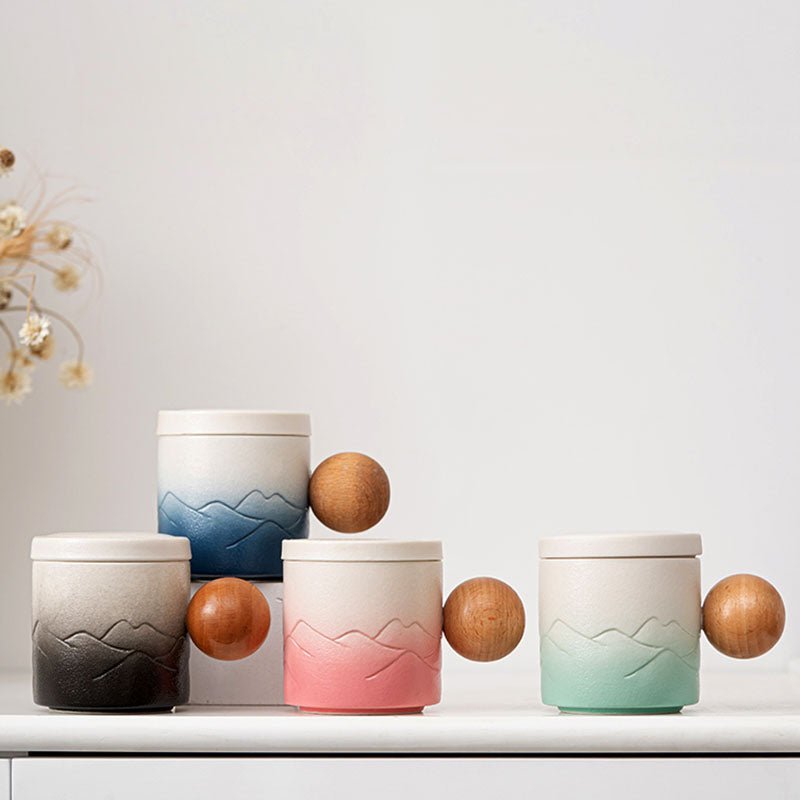
| Ball-Handled Coffee Tea Mug | Ceramic vessel, listed at 250 ml, with a visible ball-handle form. | Your measured drink is above 200 ml but comfortably below 250 ml, and avoiding a refill matters more than classic demitasse scale. | It is the largest current option. Handle preference and equipment clearance must be checked separately. |
The listed capacities are plain: 170, 200, and 250 ml. None should be treated as proof of a comfortable brim-free fill, because the capacity figure does not tell us the preferred serving level. If you picture a very small espresso cup, even the 170 ml Retro may be more spacious than a traditional single-shot demitasse.
If shape matters as much as volume, compare the broader unique coffee mugs collection after writing down your measured drink size.
For a deeper side-by-side on these three capacities, our ceramic espresso cup daily-use guide for 170, 200, and 250 ml covers the trade-offs without assuming a particular machine or recipe.
Does a five-minute coffee need the same cup as a desk drink?
No. Timing changes how disruptive a refill feels and how much spare capacity is useful. It does not, by itself, establish heat retention or other drink-specific performance.
- Five-minute counter drink: If the complete drink is comfortably below 170 ml, the Retro offers the smallest listed capacity. Buying 250 ml solely for spare room may give you a larger vessel than you wanted.
- Breakfast at the table: A 200 ml cup can provide a middle step if you add milk or water but do not need the full 250 ml listing.
- Office desk drink: If your beverage is above 200 ml and below 250 ml, the Ball Handle is the only current option with a listed capacity above that range. Check its footprint and keep the handle clear of cables.
- Drink for the commute: These listings do not establish a lid, seal, or travel-cup function. A purpose-built lidded travel vessel is a better choice if spill containment is essential.
We do not claim that one of these cups keeps coffee hot longer than another. Recipe temperature, fill level, room conditions, and vessel construction all matter, and the verified catalog facts do not establish that comparison.
How many refills will you tolerate before the morning gets busy?
Use your finished beverage volume rather than bean dose or shot count. Treat each listed capacity as an upper comparison number, not as a guaranteed working fill line.
- Comfortably below 170 ml: All three options exceed the measured volume on paper. Choose according to desired spare room, visible form, and refill plans.
- More than 170 ml but below 200 ml: Compare the Pleated and Ball Handle options. If your drink is close to 200 ml, the 250 ml option provides more numerical margin.
- More than 200 ml but below 250 ml: Only the Ball Handle has a listed capacity above the measured amount. Leave enough room to lift and carry it comfortably.
- At or above 250 ml: None of these three provides clear spare room based on the listed numbers. Accept a refill or move to a larger mug category.
A refill can feel pleasant during a slow breakfast and irritating between getting everyone ready and joining an early call. Choose the smallest capacity that comfortably clears your complete drink if compact proportions matter. Choose a larger candidate only when reducing refill friction matters more than the classic demitasse look.
Retro, pleated, or ball handle: which visible form suits your setup?
Capacity establishes the basic volume match. Visible form affects cleaning habits, display, gifting, and how the cup fits into an already crowded counter or shelf.
- Retro form: Consider it if you want visual character on an open shelf or in a gift box. Do not assume a matching saucer or other accessory is included unless the current listing says so.
- Pleated form: The exterior contours create a distinct look, but grooves can require a more deliberate pass with a sponge when coffee or milk drips dry on the outside.
- Ball-handle form: The handle is the defining visible feature. If you strongly prefer a conventional loop handle, study the images before ordering; comfort is personal, and capacity cannot predict it.
For buyers who leave drinkware in view, our guide to an open-shelf ceramic mug morning routine explains why appearance, shelf clearance, and everyday reach matter together.
What should you inspect before the first wash or gift wrap?
When our team handles ceramic drinkware, we focus on the rim, handle junction, and foot or base. Problems in those areas affect daily use more quickly than a styling preference.
- Keep the packaging temporarily: Inspect the cup before discarding the box, especially if it will be given as a gift.
- Check the drinking rim: Rotate it under angled light and look for a chip or hairline crack. Do not use a cup with a damaged drinking edge.
- Inspect the handle junction: Look where the handle meets the vessel. Give the visible attachment areas extra attention on the ball-handle form.
- Test the base on a flat counter: An unstable cup or pronounced rocking should be reported before use rather than tested with a hot drink.
- Look at the foot and surface finish: Check for a sharp or unusually rough point that could catch a cloth or scratch a surface when dragged.
- Verify care directions: Before the first dishwasher cycle or microwave use, read the exact product page. We are not making a blanket dishwasher or microwave claim for these cups. If no method is stated, a conservative fallback is hand washing with mild detergent and a non-abrasive sponge while avoiding abrupt hot-to-cold temperature changes.
Capacity is not the same as dimensions. Before placing a cup under an espresso machine, measure the vertical clearance with the drip tray in its normal position and compare it with published product dimensions if available. If dimensions are not shown, ask before ordering. Our ceramic espresso cup capacity, size, and honest-fit guide explains why volume cannot confirm equipment compatibility.
Which CoffeifyMug option fits each routine?
These are purchase paths based on listed capacity and visible form, not performance certifications.
| Your situation | Why it may fit | Relevant next step |
|---|---|---|
| Your complete drink is comfortably below 170 ml, you prefer the smallest current capacity, and a later refill is acceptable. | The Retro is the lowest listed capacity of the three and has a visible retro form. | Review the 170 ml Retro Coffee Tea Cup. |
| Your drink is above 170 ml but comfortably below 200 ml, or you want a middle option. | The Pleated sits between the other two listed capacities and adds a visibly textured form. | Review the 200 ml Pleated Coffee Tea Cup. |
| Your drink is above 200 ml but comfortably below 250 ml, and you dislike refilling during a busy morning. | The Ball Handle has the largest listed capacity in this group and a distinctive visible handle form. | Review the 250 ml Ball-Handled Coffee Tea Mug. |
| You need a classic tiny demitasse, matching saucer, sealed travel cup, or guaranteed machine fit. | The verified facts for these three vessels do not establish those requirements. | Compare a different style in the unique coffee mugs collection and verify the missing details before checkout. |
If your measured recipe is very close to a listed capacity, do not force the match. Move to a larger option or ask how the capacity and dimensions are measured before purchasing.
Frequently asked questions
Is 170 ml too large for a single espresso?
It may be larger than the traditional single-shot demitasse you have in mind and can leave visible space around a neat espresso. Choose it for its listed capacity and retro form, not on the assumption that it has classic demitasse dimensions.
Is 200 ml or 250 ml better for a milk-based morning coffee?
Measure the complete drink after adding milk. If it sits comfortably below 200 ml, the Pleated is the middle-capacity option; if it is above 200 ml but below 250 ml, the Ball Handle is the only current option with a higher listed capacity.
Will these ceramic cups fit under my espresso machine?
Capacity cannot confirm that. Machine fit depends on cup height, outside width, handle clearance, drip-tray layout, and available space below the spout, so compare actual dimensions or ask before buying.
Can I put these ceramic cups in the dishwasher or microwave?
Do not assume either care method from the ceramic material alone. Check the current care instructions on the exact product page; if they are not stated, use a conservative hand-washing routine until you receive confirmation.
What should I record before buying a cup for my morning routine?
Use the ceramic espresso cup morning routine practical purchase checklist to record your finished drink volume, drinking window, acceptable refill count, desired headroom, storage space, and machine clearance. Then compare those notes with the listed 170, 200, and 250 ml capacities.
Your 60-second checkout check
- Drink volume: Have you measured the complete beverage in milliliters?
- Timing: Will you finish it at the counter, over breakfast, or at a desk?
- Refills: How many are acceptable on a normal weekday?
- Headroom: Does your recipe sit comfortably below the listed capacity?
- Placement: Have you checked shelf, desk, and machine clearance?
- Visible form: Do you prefer retro, pleated, or ball-handle styling?
- Care: Have you confirmed the washing and microwave guidance on the current listing?
If those answers point clearly to 170, 200, or 250 ml, use the relevant product page above and recheck its current details. If capacity or form is still undecided, compare the CoffeifyMug unique coffee mugs collection side by side only after measuring the drink you make most often.
Read more
Clay Pottery Coffee Mugs Daily Use Guide: Practical Trade-Offs
Use this daily-use guide to separate landscape design preferences from capacity, care, thermal-shock, and gift-readiness questions. Compare three CoffeifyMug coffee and tea mug themes, then verify ...
Read more
Loose Leaf Tea Mug Morning Routine Practical Purchase Checklist
Match a morning mug to the amount you actually finish, the time you have, and your willingness to refill. We compare CoffeifyMug's verified 250 ml, 390 ml, and 400 ml options without assuming unlis...
Read more
Leave a comment
This site is protected by hCaptcha and the hCaptcha Privacy Policy and Terms of Service apply.