
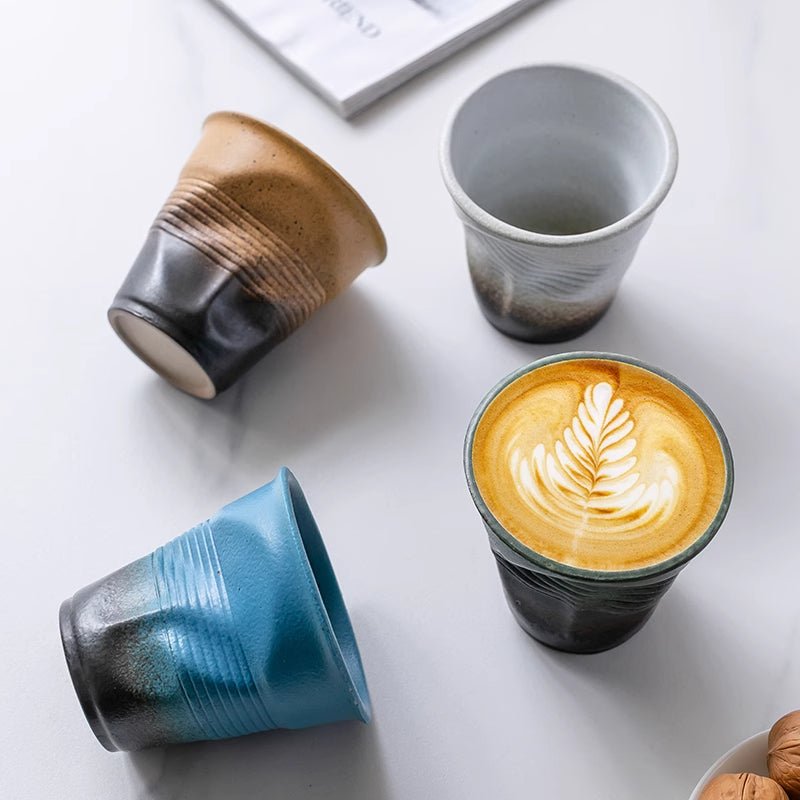
Ceramic Cortado Cup Weekend Coffee Practical Purchase Checklist
Reading time: about 10 minutes
Saturday coffee often leaves a grinder, milk pitcher, spoon, breakfast plate, and a second drink competing for the same stretch of counter. A cup that only just contains the recipe can become awkward on the walk to the table. Our ceramic cortado cup weekend coffee practical purchase checklist starts with the finished pour and the space you need above it, because the drink name alone does not settle either question.
At CoffeifyMug, we handle and sell ceramic drinkware, and capacity questions are among the most practical ones shoppers bring to us. For this comparison, the verified catalog facts are limited and clear: the Retro is 170 ml, the Pleated is 200 ml, and the Emerald is 270 ml. We do not treat those numbers as proof of a comfortable fill line, exterior dimensions, heat retention, extraction performance, microwave or dishwasher safety, or suitability for cafe service. We also do not claim that any of these products was purpose-built, tested, or certified for cortado.
Use the ceramic cortado cup weekend coffee practical purchase checklist to measure your pour
Start with the drink you actually make, not a recipe volume found elsewhere. Milk quantity, foam, and personal serving habits can change the finished total, particularly on weekends when there is time for a second pour or a more milk-forward version.
- Fill your current cup with water to the level reached by your usual finished drink.
- Transfer that water to a marked measuring jug and record the result in milliliters.
- Repeat the measurement for the largest version you make regularly, including any milk added at the table.
- Note where the cup travels: beside the machine, across the kitchen, to a breakfast table, or through the house to a sofa or patio.
Use the larger recurring measurement as your purchase reference. If your drink measures 170 ml and a cup is listed at 170 ml, there is no arithmetic margin at all. The available facts do not establish whether a listed capacity is measured at the brim or at a recommended everyday level, so an exact numerical match should not be treated as guaranteed usable space.
170 ml, 200 ml, or 270 ml: which capacity leaves a workable margin?
The right comparison is the gap between your measured serving and each listed capacity. That gap is not guaranteed headroom because internal shape and the method used to state capacity remain relevant unknowns, but it gives you a more useful starting point than choosing by product name alone.
| Option | Verified capacity | Reader situation | Fit and trade-off |
|---|---|---|---|
| Retro Coffee Tea Cup | 170 ml | Your normal and largest weekend pours both remain clearly below 170 ml. | It is the smallest listed capacity in this group and may be the closest numerical match for a short serving. It also gives you the least arithmetic margin for stirring, milk adjustments, and carrying. |
| Pleated Coffee Tea Cup | 200 ml | Your serving varies, or the finished drink gets too close to the Retro's 170 ml capacity. | It adds 30 ml of listed capacity over the Retro. That middle position can accommodate more variation without moving directly to the largest option, but a drink near 200 ml would still leave little numerical margin. |
| Emerald Coffee Tea Mug | 270 ml | You make a larger milk-forward drink or need more numerical space above a measured serving. | It provides 70 ml more listed capacity than the Pleated and 100 ml more than the Retro. For a very short drink, it may leave substantially more unused capacity than you prefer. |
Capacity is only one part of the decision. If none of these three combinations suits your measured pour, storage space, or preferred appearance, continue through our unique coffee mugs collection rather than forcing a close capacity match.
How much headroom helps on the walk from counter to table?
A slower weekend routine often involves more movement than a quick drink beside the machine. You may stir at the counter, add milk at the table, or carry coffee beside a plate. These examples show the numerical gap below each verified capacity:
- 140 ml serving: 30 ml below the Retro, 60 ml below the Pleated, and 130 ml below the Emerald.
- 160 ml serving: 10 ml below the Retro, 40 ml below the Pleated, and 110 ml below the Emerald.
- 190 ml serving: 20 ml above the Retro, 10 ml below the Pleated, and 80 ml below the Emerald.
- 220 ml serving: 50 ml above the Retro, 20 ml above the Pleated, and 50 ml below the Emerald.
Read those figures as arithmetic comparisons, not promises about the real fill line. A 10 ml difference is a close match on paper and may not provide the space you want for a spoon, a final milk pour, or a walk across the room. A cup that stays on the coffee counter can tolerate a closer capacity match than one regularly carried with breakfast.
Will the cup fit your machine, shelf, tray, and hand?
Milliliters describe internal volume, not the cup's exterior footprint. The verified capacities do not tell us height, body diameter, base diameter, handle projection, weight, rim thickness, or stackability. Those details matter in a small kitchen and should not be estimated from a styled photograph.
- Machine clearance: If you brew directly into the cup, compare the available space beneath your coffee outlet with the product's stated height.
- Shelf clearance: Measure both vertical space and the width available for the handle. A handle can be the first part to collide with a neighboring cup.
- Tray and coaster fit: Check the base diameter if the cup must sit on a small coaster, saucer, armrest tray, or breakfast tray.
- Grip: If handle clearance or cup weight affects comfort, look for stated measurements or ask our store rather than relying on capacity as a proxy.
- Gift fit: For a gift, compare the recipient's most-used cup and inspect the new piece before the planned gift date.
If a necessary dimension is absent from the current product page, treat it as unknown. A 170 ml cup is not automatically shorter or easier to store than every 200 ml design because exterior geometry can differ.
What should you inspect during a ceramic cup unboxing?
Our team checks ceramic pieces under clear side lighting because small rim and glaze issues can be difficult to see in a dim kitchen. Do this before the first drink, and do it promptly if the cup is a gift that might otherwise stay boxed for several weeks.
- Rim condition: Look first for chips, cracks, or a sharp glaze ridge. Only run a fingertip gently around the rim after confirming there is no obvious sharp damage.
- Handle joints: Examine both points where the handle meets the cup body. Hairline cracks or impact marks at these joints deserve attention before use.
- Base and foot ring: Place the empty cup on a level counter and check for pronounced rocking. A visible unglazed foot ring can be an intentional ceramic construction detail, so compare it with the listing photographs rather than assuming it is damage.
- Glazed areas: Inspect drink-contact surfaces for chips, cracks, or rough raised points. Natural-looking variation and physical damage are different issues; ask the store if the distinction is unclear.
- Listing match: Confirm that the received item corresponds to the product ordered before washing or discarding its packaging.
Do not use a cup with a significant rim chip, a visible structural crack, or an unstable base while the issue is unresolved. This inspection does not replace the product's supplied care guidance, but it catches the common physical problems that matter at the first pour.
What must be confirmed before a microwave or dishwasher cycle?
The word ceramic does not establish appliance compatibility. Glaze, decoration, construction, and manufacturer instructions can affect care requirements, so microwave and dishwasher suitability must each be confirmed for the exact product.
- Read the current product page and any care card or label included with the cup.
- Check microwave and dishwasher guidance separately. Approval for one appliance does not automatically answer the other question.
- If the guidance is missing or unclear, ask CoffeifyMug before using the appliance.
- Until care instructions are confirmed, hand washing with ordinary dish soap and a soft, non-abrasive sponge is the cautious option.
If loading every cup into the dishwasher is essential to your weekend routine, an option with explicit dishwasher guidance may suit you better than one with unanswered care questions. The same principle applies to buyers who require documented stackability or cafe-duty performance: this capacity comparison does not establish either feature.
Which CoffeifyMug option matches your weekend pattern?
Match the largest drink you make regularly to a cup that still leaves a sensible numerical gap. Then account for carrying distance, storage, and any care requirement that could rule the product out.
- Short and consistent serving: If both your normal and larger weekend pours remain comfortably below 170 ml, start with the 170 ml Retro cup. It is the closest listed capacity among these three, but it is not a practical selection for a drink already approaching 170 ml.
- Milk quantity changes from cup to cup: If your total sometimes gets close to 170 ml but remains comfortably below 200 ml, compare the 200 ml Pleated cup. Its extra 30 ml of listed capacity provides more arithmetic flexibility than the Retro.
- Larger milk-forward weekend drink: If your measured total is above 200 ml but remains clearly below 270 ml, the 270 ml Emerald mug is the only one of these three with a listed capacity above your serving. Its trade-off is more unused capacity for shorter drinks.
- Serving above 270 ml: None of these three is a sensible capacity match. Drinks with substantial added milk or ice can also outgrow this group, so browse the wider ceramic mug collection for a larger listed capacity.
- Appliance or commercial requirements: If confirmed microwave use, dishwasher use, stacking, or documented cafe suitability is non-negotiable, verify those specifications directly or select a different style that states them explicitly.
The largest cup is not automatically the better purchase. It offers more numerical room, but a buyer who prefers a close capacity match may not want a 270 ml mug for a very short serving. Likewise, the smallest cup is not automatically the most appropriate cortado choice if your actual pour leaves almost no space below the rim.
Frequently asked questions
How do I use the ceramic cortado cup weekend coffee practical purchase checklist?
Measure your normal finished drink and the largest version you make regularly, then compare both numbers with the listed cup capacity. Account for stirring, final milk additions, and the distance you carry the cup. Verify dimensions and care instructions separately because capacity cannot answer those questions.
Is a 170 ml ceramic cup practical for a 150 ml drink?
A 150 ml serving is 20 ml below a 170 ml listed capacity. That is a fairly close numerical match, and the available facts do not confirm how much real space would remain below the rim. If you carry the drink or add milk after pouring, the 200 ml option may offer a more useful arithmetic margin.
Which CoffeifyMug cup has the largest verified capacity?
The Emerald Coffee Tea Mug has the largest verified capacity at 270 ml. The Pleated is 200 ml and the Retro is 170 ml, so the Emerald gives the widest numerical margin for the same measured drink.
Can the Retro, Pleated, or Emerald go in a microwave or dishwasher?
This comparison does not verify microwave or dishwasher safety for any of the three products. Check the current listing and supplied care instructions, or ask CoffeifyMug before using either appliance.
Are these cups tested or certified specifically for cortado?
We are not making that claim. The recommendations here compare verified catalog capacities and practical headroom only; they do not infer purpose-built cortado design, testing, certification, extraction performance, heat retention, or cafe suitability.
Run this 60-second check before ordering
- Measure your normal and largest recurring weekend serving.
- Reject any option with a listed capacity below that serving.
- Allow additional numerical margin if you stir, add milk, or carry the cup.
- Verify height, base diameter, handle clearance, and weight if they affect fit.
- Confirm microwave and dishwasher guidance instead of assuming it from the material.
- Plan to inspect the rim, handle joints, glaze, and base soon after delivery.
Take your measured serving to the Retro, Pleated, and Emerald product pages first. If the capacity margin, style, dimensions, or care information does not suit your routine, move to CoffeifyMug's unique coffee mugs collection and choose a better-documented fit rather than settling for a cup that is only close on paper.
More from our blog
Read more
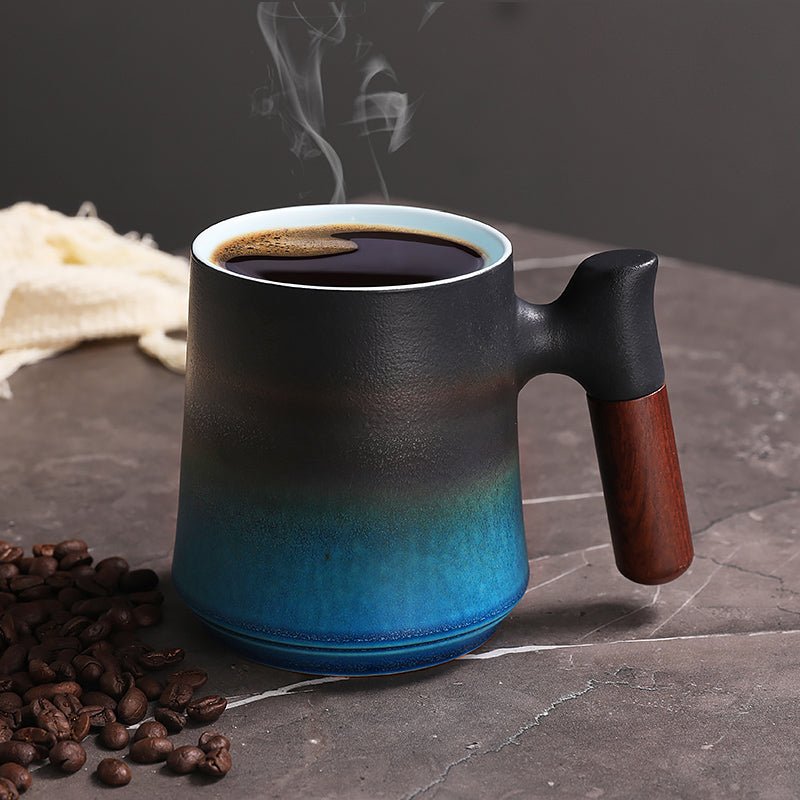
Hot Toddy Mug Shared Household Product Shortlist Guide: 3 Picks
Compare The Gradient and The Flow at 400 ml with The Rock at 480 ml. We match each mug to a shared-household serving habit and explain the handle, storage, and ceramic care trade-offs to check befo...
Read more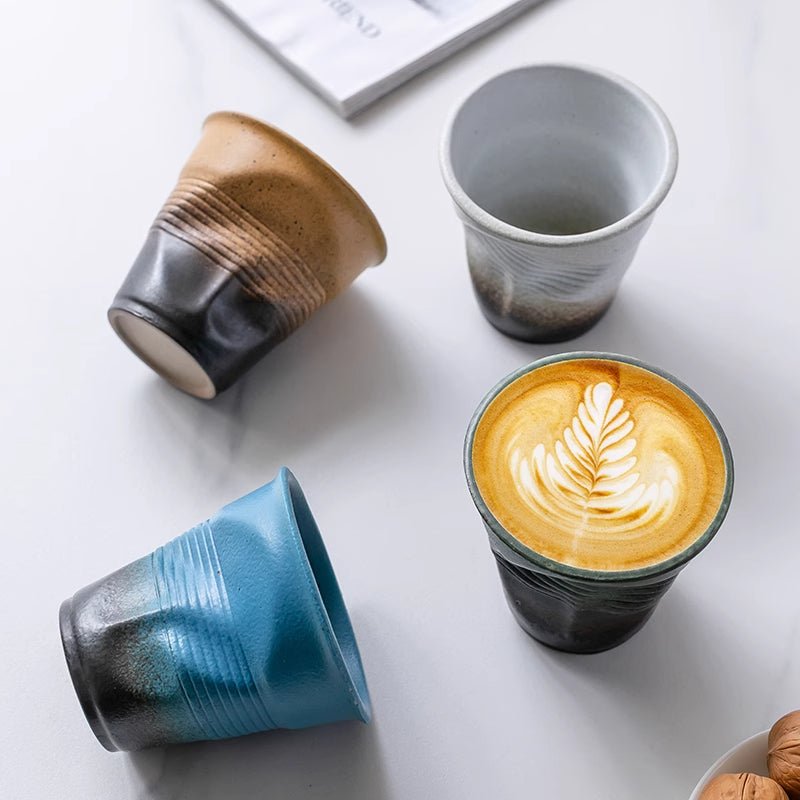
Ceramic Espresso Cup Weekend Coffee Practical Purchase Checklist
Compare the 170 ml Retro, 200 ml Pleated, and 250 ml Ball Handle ceramic cups by actual pour size, visible form, machine and cabinet fit, and care unknowns. This checklist also explains when a trad...
Read more
Leave a comment
This site is protected by hCaptcha and the hCaptcha Privacy Policy and Terms of Service apply.