
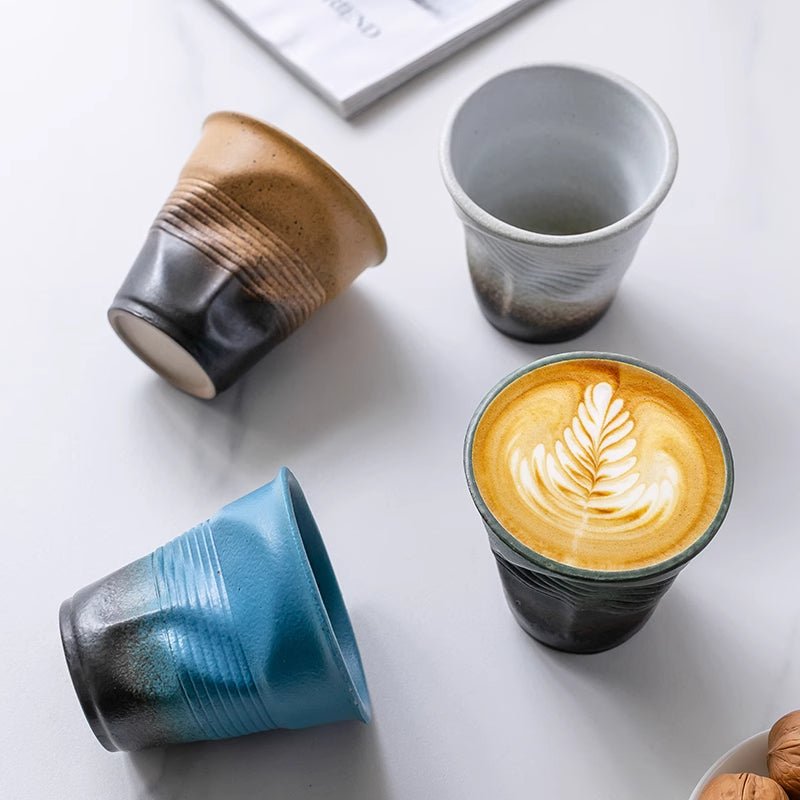
The ceramic cortado cup home office practical purchase checklist
Reading time: about 8 minutes
A cup that looks compact on a product page can feel crowded once it sits between a laptop, notebook, phone, and charging cable. Our ceramic cortado cup home office practical purchase checklist begins with the measurement that clarifies the decision: the milliliters in the finished drink you prepare at the kitchen counter before sitting at your desk.
At CoffeifyMug, we can verify three current listed capacities: Retro 170 ml, Pleated 200 ml, and Emerald 270 ml. We compare those capacities and practical headroom only. We do not present any of these products as purpose-built, tested, or certified for cortado, and we do not infer extraction performance, heat retention, microwave or dishwasher safety, or café use.
Which listed capacity leaves the headroom you prefer?
Nominal headroom is the listed capacity minus your prepared drink volume. If you make 150 ml, the simple differences are 20 ml in a 170 ml cup, 50 ml in a 200 ml cup, and 120 ml in a 270 ml cup. That calculation is useful for comparison, not a manufacturer fill line.
| Current option | Verified listed capacity | 150 ml drink example | Practical fit |
|---|---|---|---|
| Retro coffee and tea cup | 170 ml | 20 ml nominal headroom | Closest listed-capacity match of the three. Shortlist it if your finished drink stays under 170 ml and you want little surplus capacity. |
| Pleated coffee and tea cup | 200 ml | 50 ml nominal headroom | The middle choice, with 30 ml more capacity than Retro and 70 ml less than Emerald. |
| Emerald coffee and tea mug | 270 ml | 120 ml nominal headroom | The largest choice, suited to a larger prepared drink or a preference for more empty capacity above it. |
Capacity does not reveal exterior width, height, base diameter, handle clearance, or where the liquid surface sits inside the cup. The verified facts also do not establish a recommended working fill. More headroom simply means more unfilled listed capacity; it is not a lid, a travel feature, or a spill-resistance claim.
If all three capacities miss your routine, compare other forms in our unique coffee mugs collection rather than forcing a compact option to do a larger mug's job.
Use this ceramic cortado cup home office practical purchase checklist before checkout
We use this sequence to separate a real requirement from an attractive product photo.
- Measure one finished drink. Use a measuring cup after the coffee, milk, foam, sweetener, or water you normally add are combined. Sizing from the coffee base alone understates the final volume.
- Choose headroom deliberately. Subtract your finished volume from 170 ml, 200 ml, and 270 ml. Cross out any option with a negative result, then decide how much empty capacity you prefer above the drink.
- Measure the desk, not just the drink. Check the clear rectangle beside your keyboard or mouse pad and the height below any monitor shelf. If a product page does not provide external dimensions, do not estimate them from capacity.
- Match volume to the routine. A five-minute break, a video meeting, and a longer focus block may involve different drink quantities. Meeting length by itself is not evidence that a larger ceramic cup will keep coffee hot longer.
- Verify care in writing. Look for explicit microwave and dishwasher guidance on the current product page or packaging. The material word ceramic does not confirm either feature.
- Inspect the delivery before first use. Look closely at the rim, body, base, and handle joint if a handle is present. Rim chips, hairline body cracks, or a loose attachment are reasons to stop and contact us instead of testing the cup with a hot drink.
- Separate needs from nice-to-haves. If you require a lid, insulation, stackability, commute-ready construction, or commercial-service documentation, confirm it explicitly. None of those features follows from capacity alone.
How do short breaks, meetings, and longer work blocks change the shortlist?
The same listed capacity can be right for one desk and wrong for another. These situations turn the arithmetic into a shortlist without pretending the products were designed around a specific cortado recipe.
A quick break with a measured drink below 170 ml
If your prepared drink is consistently below 170 ml and you prefer the closest capacity match, start with the Retro 170 ml cup. A 150 ml drink leaves 20 ml of nominal headroom. The trade-off is limited room for additions made after measuring, so count the entire drink before ordering.
A video meeting with a 150 ml prepared drink
If 150 ml is typical but you do not want the closest fit, review the Pleated 200 ml cup. It leaves 50 ml of nominal headroom in that example and sits in the middle of the current capacity range. This recommendation is based on volume, not a portability, meeting-use, or spill claim.
A larger drink or a cup used for both coffee and tea routines
If your finished drink goes above 200 ml, or you deliberately want the most spare capacity, consider the Emerald 270 ml mug. At 150 ml, it leaves 120 ml of nominal headroom. The trade-off is that 270 ml may not satisfy someone seeking the smallest compact-cup experience, and it carries no heat-retention promise.
If your decision is more about keyboard clearance, coasters, and desk layout than beverage volume, our home-office ceramic coffee mug desk guide covers that broader setup.
Which ceramic care details need confirmation?
Ceramic is a material category, not a complete care specification. The word alone does not identify the clay body, glaze formulation, decorative finish, or appliance compatibility. In our experience, this is where shoppers can accidentally turn an unknown into an assumption.
- Follow the exact listing and package insert. Product-specific instructions take priority over general ceramic advice.
- Do not infer appliance compatibility. If microwave or dishwasher use is not stated explicitly, do not assume it from the material. A single uneventful dishwasher cycle does not create a written care guarantee.
- Avoid abrupt temperature changes as a general precaution. Moving a very cold ceramic cup directly to a very hot fill can create thermal stress, regardless of the listed capacity.
- Check the rim and glaze visually. Fine glaze lines can be an intentional finish or unexpected crazing, so compare them with current product photos and ask us if uncertain. Do not use ceramic with a rim chip or body crack.
- Look at the base before placing it on a desk. Remove grit from the foot ring, if present, and use a coaster when the desk finish is sensitive.
Our rule is simple: an unverified feature stays unverified until the product page, packaging, or our support team confirms it.
For a separate geometry check, use our ceramic cortado cup shape and handle guide. It helps separate visible form from capacity without assuming dimensions that are not listed.
Where this compact ceramic shortlist is the wrong fit
This shortlist should not be stretched beyond the facts we have. Choose a different vessel style if any of these needs controls the purchase:
- Sealed transport or commuting: choose a travel mug with explicit lid and spill-resistance specifications.
- Guaranteed heat retention: choose an insulated vessel with a published performance claim rather than assuming ceramic provides a particular result.
- High-volume iced drinks: if the finished drink, ice, and additions exceed the listed capacity, a larger tumbler is the more practical choice.
- Mandatory microwave or dishwasher compatibility: buy only after the exact listing or packaging confirms the required care method.
- Café or commercial-service requirements: the current verified facts do not establish commercial testing, certification, or stackability.
- A guaranteed tiny footprint: milliliters cannot replace external width, height, base, and handle measurements.
A two-minute desk decision before you buy
Put a measuring cup beside your usual ingredients and work through four lines:
- Write down the volume of your normal finished drink.
- Subtract it from 170 ml, 200 ml, and 270 ml; reject negative results and compare the remaining headroom.
- Verify external dimensions, care instructions, and required features from the listing or packaging rather than capacity.
- Open the closest product page, or return to the collection if a must-have detail is missing.
Keep the ceramic cortado cup home office practical purchase checklist beside your measured volume while you compare. It turns the decision into verified capacity, known care information, and clearly labeled unknowns.
For additional capacity examples, read our 170 ml, 200 ml, and 270 ml ceramic cortado cup capacity guide.
Frequently asked questions
What belongs on a ceramic cortado cup home office practical purchase checklist?
Start with your measured finished drink, then compare it with the verified 170 ml, 200 ml, and 270 ml capacities. Add checks for desired headroom, external dimensions if supplied, written care instructions, and any must-have feature such as a lid or insulation. Treat an unstated feature as unknown.
Is a 170 ml ceramic cup large enough for a home-office cortado?
Yes, if your finished drink stays under 170 ml and the remaining headroom suits you. A 150 ml drink leaves 20 ml of nominal headroom in a 170 ml capacity. That is arithmetic, not a standard cortado recipe or guaranteed fill line.
Is 200 ml or 270 ml better for video meetings?
For a 150 ml drink, 200 ml leaves 50 ml of nominal headroom, while 270 ml leaves 120 ml. Choose 200 ml for the middle capacity or 270 ml for a larger prepared drink and more unused volume. Meeting duration alone does not prove that either option will retain heat longer.
Can I put these ceramic cups in a dishwasher or microwave?
Not from the verified facts used here. Check the exact current product page and packaging for explicit care instructions before using either appliance. If compatibility is not stated, use conservative hand washing rather than guessing.
Are Retro, Pleated, and Emerald made specifically for cortado?
No. We are not claiming any of these products was purpose-built, tested, or certified for cortado. We compare them only by listed capacity and practical headroom.
Measure one real drink at the kitchen counter, write down the total, and compare it with 170 ml, 200 ml, and 270 ml before shopping. Then open our unique coffee mugs collection and choose only the option whose verified capacity and confirmed care details match your desk routine.
Read more
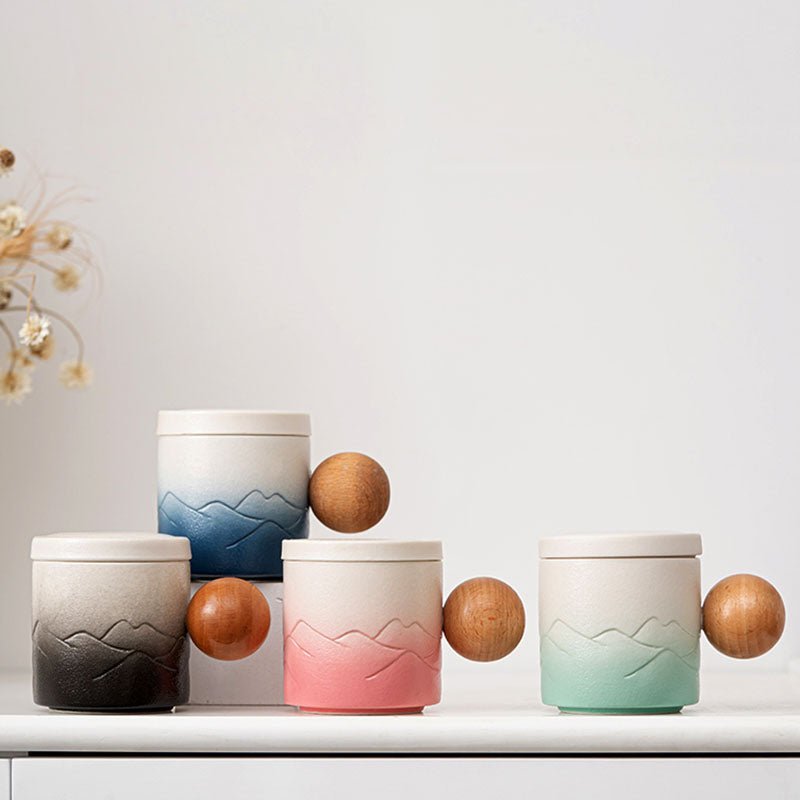
Ceramic Espresso Cup Home Office Practical Purchase Checklist
Compare the listed Retro 170 ml, Pleated 200 ml, and Ball Handle 250 ml ceramic vessels against your desk pour, meeting routine, care habits, and must-confirm product details.
Read more
170–250 ml: macchiato cup morning routine product shortlist guide
Compare 170, 200, and 250 ml cups around your actual first drink, the headroom needed for milk or stirring, and how much you dislike refilling. Each option includes a clear reason to choose it and ...
Read more
Leave a comment
This site is protected by hCaptcha and the hCaptcha Privacy Policy and Terms of Service apply.