
Hot Toddy Mug Shared Household Product Shortlist Guide: 3 Picks
Reading time: about 10 minutes
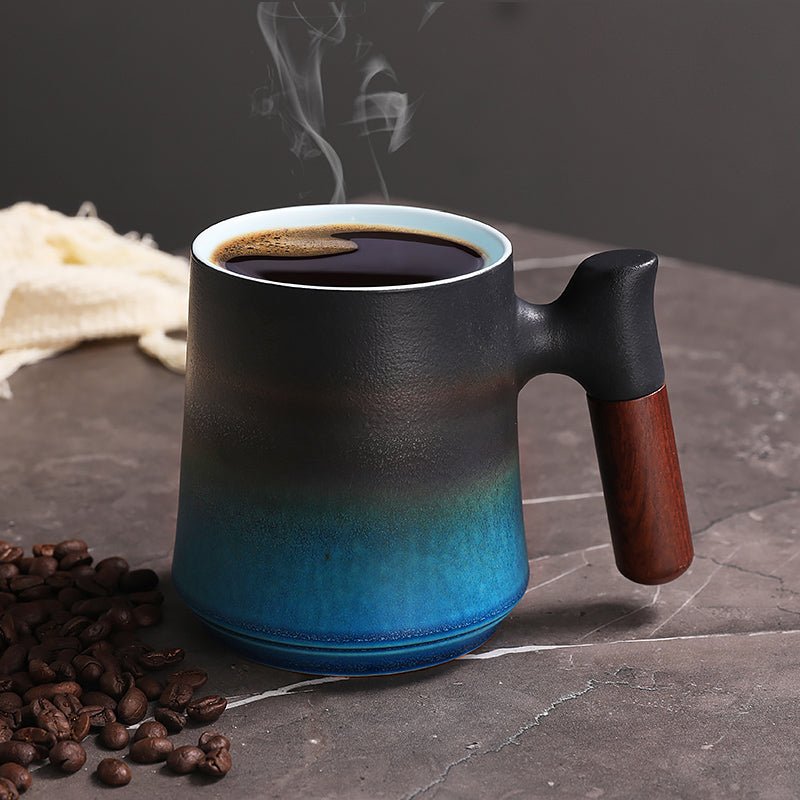
At a shared kitchen counter, one person stops well below the rim while another goes back for a top-up. Then they pick up the same mug and disagree about the handle. This hot toddy mug shared household product shortlist guide turns those ordinary moments into a practical decision: compare the verified 400 ml and 480 ml capacities, examine the pictured handle shapes, and decide how each mug would fit the household's washing and storage routine.
In our store, the most useful mug conversations start with what each person already uses. We ask how high they fill it, how many fingers they place through the handle, and where the mug lives after washing. Those details reveal more than choosing a design based only on a front-facing photograph.
The options below are everyday ceramic drinkware sold through individual product pages. This shortlist does not represent a bundled set, and ingredients or preparation accessories are not included. You can first scan our unique coffee mugs collection, then compare each candidate against the specific household scenarios below.
Hot toddy mug shared household product shortlist guide: three practical fits
The clearest verified difference is capacity. The Gradient and The Flow are each listed at 400 ml, while The Rock is listed at 480 ml. That gives the larger option 80 ml of additional nominal capacity. Handle measurements are not part of the supplied catalog facts, so handle fit should be judged from current product photographs and any dimensions shown on the product page, not from assumptions about the product name.
| Household situation | Shortlist option | Why it fits | Reason to skip it |
|---|---|---|---|
| Both people prefer a similar serving size | The Gradient, 400 ml | Provides a clear everyday capacity baseline for coffee, tea, or an evening drink | One person regularly wants more room or cannot confirm suitable handle clearance |
| The household agrees on 400 ml but wants another pictured shape | The Flow, 400 ml | Keeps capacity consistent while offering a different product design to compare | The actual problem is limited capacity rather than appearance or handle shape |
| One person consistently prepares the larger serving | The Rock, 480 ml | Adds 80 ml of listed capacity over the two 400 ml options | A smaller filled weight, compact storage, or modest serving matters more |
The Gradient at 400 ml: a baseline for similar serving habits
Reader situation: Two household members usually prepare comparable amounts, or one person wants a mug that can move between an evening drink, daytime coffee, and tea. Why it fits: The Gradient's verified 400 ml capacity provides a useful middle reference for this three-product comparison. Choosing different mug designs at the same capacity can also help household members identify their own drinkware without changing the nominal serving room.
Handle and skip check: Compare the side-view photographs with a mug the intended user already finds comfortable. Look at the finger opening, the distance from the opening to the ceramic body, and the upper and lower handle attachment points. Skip this option if 400 ml already feels limiting or if essential handle measurements cannot be confirmed. Review the current photographs and product information for The Gradient 400 ml coffee and tea mug before ordering.
The Flow at 400 ml: the same capacity with another design choice
Reader situation: The household has settled on 400 ml, but The Gradient is not every user's preferred pictured shape. Why it fits: The Flow has the same verified capacity, allowing shoppers to compare design and handle appearance without introducing a volume difference. This is particularly practical when two people want similar serving room but do not need identical mugs.
Handle and skip check: View The Flow and The Gradient at the same screen size, ideally using side-facing images. A photograph can help compare relative contours, but it cannot prove finger or knuckle clearance. Skip The Flow if the shopper's main complaint is needing more liquid room; changing from one 400 ml option to another will not solve that. The next step is to inspect The Flow 400 ml ceramic mug for its current product details.
The Rock at 480 ml: more room for the larger-serving person
Reader situation: One person repeatedly refills a smaller mug, prefers more headspace, or simply prepares a larger drink than everyone else in the household. Why it fits: The Rock is listed at 480 ml, giving it 80 ml more nominal capacity than The Gradient and The Flow. It does not have to be filled to the rim; the extra room can also make stirring and carrying less cramped.
Handle and skip check: More capacity means the mug can hold more liquid, which also means more carrying weight when it is filled higher. Skip it for someone who prefers a deliberately small serving, finds heavier filled mugs uncomfortable, or needs a compact cupboard fit that has not been verified from external dimensions. Check The Rock 480 ml coffee and tea mug as the larger-capacity next step.
400 ml or 480 ml: which capacity matches the drinks you actually pour?
Listed capacity is a comparison figure, not an instruction to fill the mug to its limit. A comfortable pour normally leaves room for carrying and stirring. Recipes and personal serving habits vary, so the most reliable reference is the amount each household member already uses.
- Fill a favorite existing mug with cool water to the level the person would normally carry.
- Pour that water into a kitchen measuring jug and note the approximate amount.
- Repeat the check for the other intended user rather than assuming both servings match.
- Compare those amounts with 400 ml and 480 ml while allowing some unused space near the rim.
If both measured servings sit comfortably within a 400 ml mug, The Gradient and The Flow remain the direct comparison. If one person regularly wants additional room, The Rock belongs on that person's shortlist. This method is more useful than describing one capacity as universally better.
Capacity still does not reveal exterior height, base diameter, overall width, or handle projection. Those measurements determine whether a mug fits beneath a low cupboard shelf or between dishwasher-rack supports. Verify current dimensions on the relevant product page whenever storage clearance is tight.
How can two people compare handle shape while shopping online?
Handle comfort depends on hand size and grip style. Some people place two fingers through a handle, some use three, and others support the mug body with the opposite hand. We do not treat a product photograph as evidence of universal ergonomic fit, and this comparison is not based on professional grip testing.
- Start with a known comfortable mug. Have each person hold the mug naturally and count how many fingers enter the handle.
- Check knuckle clearance. Notice whether the fingers touch the ceramic body and whether that contact becomes annoying once the mug is full.
- Look at handle projection. Side-view images are more useful than front views for judging how far the handle appears to extend from the body.
- Notice the attachment points. The upper and lower junctions affect the space available for the user's preferred grip.
- Do not estimate exact dimensions from screen size. Product images may be displayed or cropped differently.
For one mug that everyone will share, use the requirements of the person who is least flexible about grip. For individual mugs, let each person choose separately. That may mean selecting The Gradient and The Flow at the same capacity or pairing one 400 ml choice with The Rock at 480 ml. The products do not need to match to work well in the same kitchen.
Which ceramic care checks matter in a shared kitchen?
Shared sinks, full dishwasher racks, and crowded cupboards create more risk than a quiet product photograph suggests. During ceramic drinkware unboxings, we look first at the rim, base, interior, and both handle junctions. Visible rim chips, sharp edges, hairline cracks, or handle damage are reasons to stop before first use and contact the seller.
- Check care instructions by product. Do not assume every ceramic mug has identical dishwasher or microwave guidance.
- Protect the handle during washing. If dishwasher use is permitted, position the mug so the handle cannot strike a heavy plate, pan, or nearby mug during the cycle.
- Avoid abrupt temperature changes. Let hot ceramic cool before placing it under very cold rinse water.
- Store without pressure on the rim. Do not force mugs into an unstable stack or wedge a handle against the cupboard wall.
- Remove damaged drinkware from service. A crack, loose handle, or sharp chip is not an everyday cosmetic trade-off.
These checks matter after repeated kitchen use, not just at gift unboxing. A mug that fits the intended dishwasher position and cupboard space is more practical than one that must be moved around every time the household unloads a rack.
Who should skip these everyday ceramic mugs?
This shortlist is intentionally limited to open ceramic drinkware. We are not presenting these mugs as insulated travel vessels, lidded spill-resistant cups, or products with specialized temperature-retention performance. A different drinkware style is the better choice in several situations.
- Choose a lidded travel mug if the drink regularly moves between rooms, goes into a vehicle, or sits beside a keyboard where spill resistance is the priority.
- Choose a smaller cup if the intended serving is deliberately modest and a 400 ml body would feel unnecessarily large.
- Choose transparent drinkware if seeing the drink's color and presentation is central to the experience.
- Pause the purchase if exact handle-opening or exterior measurements are essential and cannot be confirmed.
- Shop by a dedicated set listing if a packaged matching set is a firm requirement. The links in this article lead to individual product pages.
Hot toddy ingredients, garnishes, and preparation tools are separate from the mugs. The selection logic here covers capacity, photographed handle shape, and ordinary ceramic use only.
A five-minute household check before placing an order
The point of this hot toddy mug shared household product shortlist guide is to remove unsuitable options quickly. Use this final check with every intended user present.
- Decide whether the household will share one mug or choose individual mugs.
- Measure each person's normal serving using cool water and a measuring jug.
- Keep The Gradient and The Flow for 400 ml preferences; keep The Rock for a 480 ml preference.
- Compare side-view handle photographs with mugs each person already uses comfortably.
- Confirm current care instructions and any exterior dimensions needed for the cupboard or dishwasher rack.
A household with matching serving habits may narrow the decision to the two 400 ml designs. A household with different serving habits can choose different individual products instead of forcing one capacity to suit everyone.
Frequently asked questions
Which mug is largest in this hot toddy mug shared household product shortlist guide?
The Rock is the largest of the three by listed capacity at 480 ml. The Gradient and The Flow are each listed at 400 ml, so The Rock provides 80 ml of additional nominal room.
Is a 400 ml mug large enough for a hot toddy?
It depends on the person's actual serving and the headspace they prefer. Measure a normal serving in an existing mug with cool water; if it fits comfortably below 400 ml, The Gradient and The Flow are reasonable candidates. Recipes and serving habits vary, so 400 ml is not a universal target.
Are The Gradient, The Flow, and The Rock sold together as a set?
This article compares three individual product pages and does not present the mugs as an included set. Shoppers can choose one option or combine individual choices according to each household member's capacity and handle preferences.
How do I judge hot toddy mug handle fit online?
Compare side-view product photographs with a mug the intended user already finds comfortable. Look at finger count, knuckle clearance, handle projection, and attachment position, but do not treat photographs as exact measurements. Verify dimensions before ordering if handle clearance is a firm requirement.
Can I assume these ceramic mugs are dishwasher and microwave safe?
No blanket assumption should be made from the material alone. Follow the current care guidance on the specific product page, and contact the store before ordering if the instructions do not answer an essential dishwasher or microwave question.
Next step: Decide on 400 ml or 480 ml first, then compare handle photographs and care information. If none of the three options fits the household's grip, storage, or design needs, return to the CoffeifyMug ceramic mug collection and apply the same five-point checklist.
More from our blog
Read more
Mocha Mug Weekend Coffee Practical Purchase Checklist: 400-480 ml
Compare The Flow 400 ml, Morning and Night 440 ml, and The Rock 480 ml using measured serving volume, headspace, cabinet fit, handling, and care details.
Read more
Ceramic Cortado Cup Weekend Coffee Practical Purchase Checklist
Measure your usual weekend pour, compare it with CoffeifyMug's verified 170 ml, 200 ml, and 270 ml capacities, and allow practical room for stirring and carrying. This checklist also covers counter...
Read more
Leave a comment
This site is protected by hCaptcha and the hCaptcha Privacy Policy and Terms of Service apply.