

170–270 ml: ceramic cortado cup compact kitchen product shortlist guide
Reading time: about 8 minutes
A cup can look small beside an espresso machine and still be the item that catches on a cabinet frame or crowds the drying strip beside the sink. This ceramic cortado cup compact kitchen product shortlist guide starts with the only verified catalog figures used in this comparison: Retro at 170 ml, Pleated at 200 ml, and Emerald at 270 ml.
Those figures describe capacity, not exterior dimensions. They do not tell us overall height, widest width, base diameter, shelf depth needed, or handle projection, so we will not pretend that 170 ml automatically occupies the least cabinet space. In our experience selling ceramic drinkware, the practical order is to match capacity to your actual pour, calculate headroom, then verify physical clearance on the current listing or with our store before buying.
Which capacity leaves enough headroom for the drink you actually make?
A drink name is less useful than your own recipe. Nominal headroom for shortlisting equals the listed cup capacity minus your finished drink volume. This is planning math, not a claim about brim fill, spill resistance, or a universal cortado serving size.
- Make the drink as you normally serve it, including the milk or foam you actually add.
- Record the finished volume in milliliters. If the recipe varies, use your largest normal pour.
- Subtract that figure from 170 ml, 200 ml, and 270 ml.
- Reject any result that leaves less carrying or stirring room than you personally accept.
| Option | Verified capacity | Nominal headroom for a 150 ml pour | Reason to choose | Reason to skip |
|---|---|---|---|---|
| Retro Coffee Tea Cup | 170 ml | 20 ml | Your finished pour stays comfortably below 170 ml and you prefer little unused internal capacity. | Your recipe often approaches 170 ml or you want a generous buffer. |
| Pleated Coffee Tea Cup | 200 ml | 50 ml | You want 30 ml more capacity than Retro without moving up to 270 ml. | Your drink regularly approaches 200 ml, or Retro already provides enough room. |
| Emerald Coffee Tea Mug | 270 ml | 120 ml | Your pour varies or the same vessel needs to cover a larger coffee or tea serving. | You dislike putting a short serving in a much larger-capacity vessel. |
The 150 ml example is illustrative, not a recommended cortado recipe. Capacity may also be stated using different fill conventions, so use the subtraction to eliminate obvious mismatches rather than treating it as a guaranteed freeboard measurement.
If none of these capacity bands suits your routine, browse the unique coffee mugs collection and compare the current listing details. Product photos help with style, but photos without a reliable scale reference should not be used as cabinet measurements.
What does this ceramic cortado cup compact kitchen product shortlist guide recommend?
Scenario 1: A repeatable short pour with little unused capacity
Shortlist the 170 ml Retro Coffee Tea Cup when your measured serving stays comfortably below its listed capacity. It holds 30 ml less than Pleated and 100 ml less than Emerald, making it the clearest capacity-first choice for a small pour. Skip it if you add milk by eye, your recipe varies upward, or you want generous stirring room. Its lower capacity is not proof of the smallest exterior footprint.
Scenario 2: One middle-capacity cup instead of several serving sizes
Shortlist the 200 ml Pleated Coffee Tea Cup if Retro feels too exact but Emerald leaves more internal room than you want. Its capacity sits 30 ml above Retro and 70 ml below Emerald. That middle position can be practical when a small kitchen discourages keeping several cup sizes, but skip it if your normal drink is close to 200 ml or if a verified narrow footprint is essential.
Scenario 3: Variable recipes and the largest capacity buffer
Shortlist the 270 ml Emerald Coffee Tea Mug when your largest normal pour needs more headroom or one vessel must cover both short and longer drinks. It provides 70 ml more capacity than Pleated and 100 ml more than Retro. Skip it if your everyday serving is much smaller and you dislike that capacity mismatch. Also pause before ordering if a shallow shelf or narrow cabinet opening is non-negotiable and external measurements have not been confirmed.
Claim boundary: We are comparing verified capacities and practical headroom. We are not saying any of these products was purpose-built, tested, or certified for cortado, and we are not inferring extraction performance, heat retention, microwave safety, dishwasher safety, or cafe use.
How do you check a narrow shelf when milliliters cannot show fit?
Compact-kitchen fit often fails at an obstruction rather than in the open middle of a shelf. We see shoppers measure the empty cabinet interior but miss the front frame, a hinge, the door path, or the handle orientation. Measure the route into storage as well as the final resting place.
- Cabinet opening: Check the narrowest point, including any face frame and hinge intrusion.
- Usable height: Measure clearance at the front edge and at the intended shelf position.
- Widest stored width: Include any handle or side projection shown on the current listing, oriented as you plan to store it.
- Shelf depth with the door closed: A cup can sit on the shelf and still prevent the door from shutting if a projection faces forward.
- Counter landing zone: Account for the coffee machine, grinder, kettle, drying mat, and the sweep of any overhead cabinet door.
Use a cup you already own as a physical template. Identify which measurement limits your space, compare it with any current product-page dimensions, and ask our store if a required figure is not stated. Do not assume nesting or stackability. Balancing one ceramic cup inside another can place pressure on rims and finished surfaces, and stackability is not among the verified facts used here.
Which ceramic checks matter at unboxing and during daily care?
Capacity gets a product onto the shortlist; condition and care determine whether it remains practical. When we handle ceramic drinkware, we check the contact points first because damage at the drinking rim or base matters more than a minor visual variation.
- Inspect the rim: Use side lighting to look for a chip, sharp rough spot, or hairline crack. Do not drink from a visibly damaged rim; photograph the issue and contact the seller.
- Check the foot and base: Set the empty cup on a clean, dry, flat counter. Remove any packaging debris before deciding that the base rocks. If the foot ring is unglazed, keep it clean and dry before placing it on a mark-sensitive surface.
- Review the ceramic surface: Look for an unexpected crack line, flaking area, or sharp raised point rather than judging condition from color variation alone.
- Read the current care guidance: Ceramic material by itself does not confirm dishwasher or microwave safety. Follow the product page and included instructions; if they are silent, ask our store rather than assuming.
- Store without forced contact: Do not push cups into a tight stack solely to gain shelf space. Confirm that the shapes nest without pressure before making stacking part of your kitchen plan.
For a gift, perform the condition check before discarding the shipping materials, but keep the protective packaging until the recipient confirms cabinet fit. Attractive ceramic drinkware is still the wrong purchase if it cannot clear the cabinet opening or its stated care needs do not match the household routine.
When is a different shortlist more honest than forcing one of these cups?
We would rather point a shopper toward the right category than stretch the meaning of a cup label. These are the situations where another comparison is more useful:
- If the 170–270 ml range works but repeatable morning workflow matters more than cabinet storage, use our ceramic cortado cup morning-routine shortlist by volume.
- If your measured drink is consistently much smaller than the 170 ml option, the ceramic espresso cup morning-routine shortlist is a more relevant next check.
- If your regular drink falls in the 200–270 ml range and is milk-forward, compare the flat white cup shortlist for 200–270 ml instead of relying on the cortado label.
- If your normal serving exceeds 270 ml, or a verified care or stacking feature is mandatory, these three options are not enough. Review current details in our unique coffee mugs collection and confirm the required fact before ordering.
Frequently asked questions
What size ceramic cortado cup is best for a compact kitchen?
There is no universal best size. A ceramic cortado cup compact kitchen product shortlist guide should first match your finished drink to the verified 170 ml, 200 ml, or 270 ml capacity, then check exterior height, width, depth, and handle clearance separately.
How much headroom does a 170 ml cup leave for a 150 ml drink?
The nominal difference is 20 ml. Treat that as shortlist math rather than a guaranteed spill buffer because the catalog capacity does not tell us the exact fill convention or brim position.
Does the 170 ml Retro cup take up the least cabinet space?
Not necessarily. Retro has the lowest verified capacity of the three, but capacity cannot establish its exterior height, width, base footprint, or handle projection relative to Pleated and Emerald.
Can I stack these ceramic cups to save shelf space?
Stackability has not been verified for these options, so do not build your cabinet plan around it. Confirm the shapes and current product details before nesting them, and avoid forcing ceramic rims or finished surfaces together.
Are the Retro, Pleated, and Emerald options microwave-safe or dishwasher-safe?
We do not infer either feature from ceramic material or product capacity. Check the current listing and included care instructions for each option, or contact our store before using a microwave or dishwasher.
What should you write down before opening the three product pages?
- Your largest normal finished pour in milliliters.
- Your nominal headroom at 170 ml, 200 ml, and 270 ml.
- Your limiting storage measurement: cabinet opening, usable height, widest stored width, shelf depth, or door clearance.
- Any care or stacking requirement that must be explicitly confirmed.
- Your capacity match: Retro for the lowest listed capacity, Pleated for the middle option, or Emerald for the largest headroom.
Open Retro, Pleated, and Emerald side by side, then eliminate any option that fails your recipe or verified fit requirement. If all three miss, return to the unique coffee mugs collection rather than treating capacity or a product photo as proof of cabinet fit.
Read more
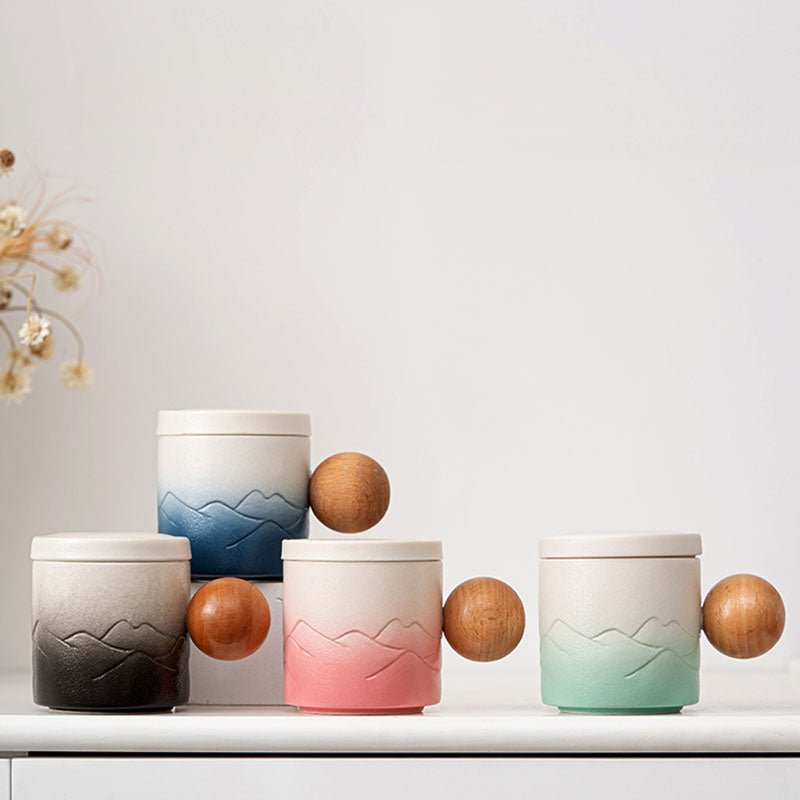
Loose leaf tea mug compact kitchen product shortlist guide: 3 picks
Compare the 250 ml Ball Handle with its listed 11.2 cm diameter against the 390 ml Round and 400 ml Spittoon. See what fits, what to skip, and what a compact kitchen demands before checkout.
Read more
White Pottery Coffee Mugs Morning Routine Practical Purchase Checklist
Measure your morning pour, decide how many refills you will tolerate, check brewer and shelf clearance, then verify material, glaze, rim, foot, and care details on each live listing.
Read more
Leave a comment
This site is protected by hCaptcha and the hCaptcha Privacy Policy and Terms of Service apply.