
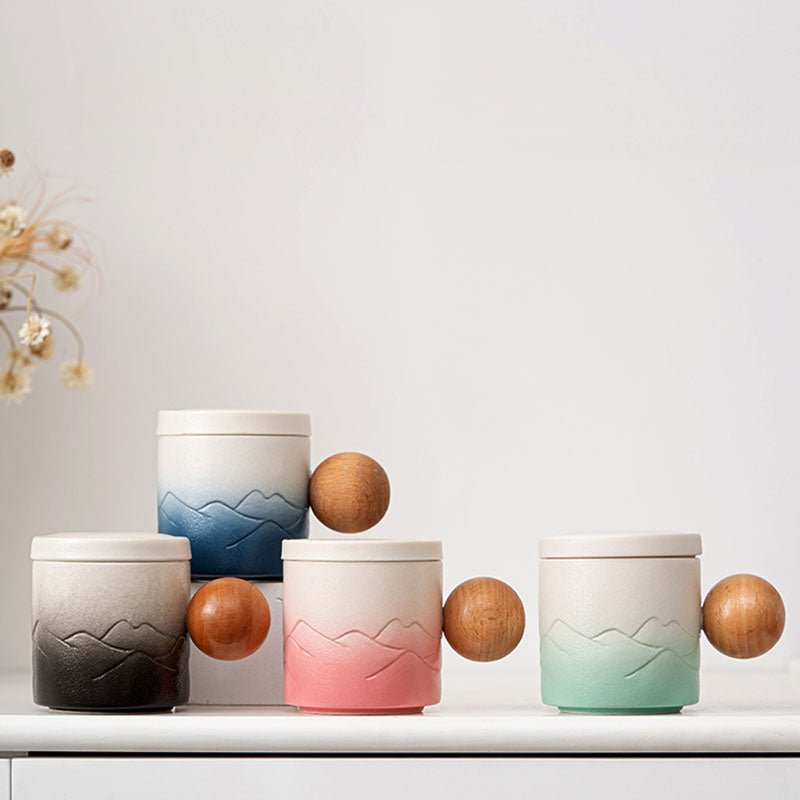
Loose leaf tea mug compact kitchen product shortlist guide: 3 picks
Reading time: about 9 minutes
A mug can clear the front edge of a cabinet shelf and still stop the door from closing because its handle turns into the hinge path. On a narrow counter, that same mug can occupy the only dry spot beside the kettle. This loose leaf tea mug compact kitchen product shortlist guide narrows the decision to three listed capacities—250 ml, 390 ml, and 400 ml—and uses only the Ball Handle's listed 11.2 cm diameter and each product's visible opening as comparison points.
In our store, shoppers often begin with the smallest-looking cup. We begin with the storage failure that would be most annoying. Capacity does not establish overall width, height, handle reach, or stackability, so we will not infer those details for the Round or Spittoon from their names or photos.
Scope check: The linked products are drinkware only and do not include unlisted brewing accessories or filters. If your loose-leaf method uses a basket infuser, tea ball, or separate strainer, plan for that item separately and verify its fit. If a built-in filter is mandatory, a purpose-made infuser mug is a better product style.
Which compact-kitchen constraint should remove a mug first?
Start with where the mug will spend most of its time, not where it looks best in a product photo.
- Closed cabinet: For the Ball Handle 250 ml mug, trace an 11.2 cm circle on paper and place it on the intended shelf. Treat this as a first-pass test because the listed diameter may not define the complete span, including the handle.
- Door and neighbor clearance: Put the template beside your current mugs, then open and close the cabinet. If one mug must be moved every time the door swings, the placement is not practical.
- Counter station: Set out the mug, tea container, teaspoon, and your separate brewing accessory. A modest mug can still create clutter if the whole setup remains beside the kettle.
- Drying area: If you expect to hand wash, consider how the visible opening and form will sit in your existing rack. Do not assume dishwasher compatibility from appearance.
- Stacking plan: Do not budget for a second tier of mugs unless the current listing confirms stackability. A visible opening does not prove that rims and bases nest securely.
If the 11.2 cm template fails, do not force a choice based on capacity alone. Review the current silhouettes in our unique coffee mugs collection, then confirm the complete listing details for any option that reaches your shortlist.
Loose leaf tea mug compact kitchen product shortlist guide: three scenarios
These three picks cover distinct serving situations. Each also has a clear reason to leave it out of a space-conscious kitchen.
| Reader situation | Shortlist pick | Why choose it | Why skip it |
|---|---|---|---|
| You prefer a 250 ml serving and can test one listed diameter. | Ball Handle, 250 ml | Its listed 11.2 cm diameter gives you a concrete paper-template check before ordering. | Skip it if 250 ml means unwanted refills, the template crowds neighboring items, or total handle span is critical but unconfirmed. |
| You want a clear capacity step up from 250 ml without selecting only by the largest number. | Round, 390 ml | The listed 390 ml capacity suits a longer tea session. Use the current imagery to screen the visible opening. | The verified facts used here do not include its exterior footprint. Do not assume that the Round name means compact or stackable. |
| You want the highest listed capacity of the three and its visible opening suits your routine. | Spittoon, 400 ml | At 400 ml, it has the largest listed capacity in this shortlist. | It is only 10 ml above the Round. Capacity alone cannot settle cabinet fit or compatibility with a separate infuser. |
This shortlist is intentionally narrow. None of these choices becomes an all-in-one brewer simply because it is used for loose-leaf tea; reserve storage space for your separate brewing tool.
Does 250 ml and an 11.2 cm diameter make the Ball Handle easier to place?
The Ball Handle is the easiest option to pre-screen because its listing supplies a diameter of 11.2 cm. That is one useful size number, but it is not a guarantee that the complete mug fits your cabinet.
- Choose it if: A 250 ml serving matches your routine, the paper template clears the door and neighboring drinkware, and lower capacity is an intentional choice.
- Skip it if: You prefer a long tea session without refilling, your basket infuser requires a confirmed rim measurement, or the cabinet is too unforgiving to accept an unverified total span.
Our practical shelf test is simple: place the 11.2 cm template in position, leave room to grasp the mug, and swing the cabinet door. Then check how the current product page defines that diameter. The lowest listed capacity does not automatically prove the smallest exterior footprint.
390 ml versus 400 ml: does the extra 10 ml earn space?
The listed capacity difference between the Round and Spittoon is 10 ml. That tells you the difference in stated beverage volume; it does not tell you which mug is shorter, narrower, or easier to place beside another cup.
- Choose the Round 390 ml if you want more listed capacity than the Ball Handle and its visible opening looks better suited to your existing tea setup.
- Skip the Round if you are assuming that 390 ml must have a smaller exterior than 400 ml. The capacity figures do not support that conclusion.
- Choose the Spittoon 400 ml if the highest listed capacity matters and the opening shown in the current product imagery works for your intended use.
- Skip the Spittoon if you are selecting it solely for the additional 10 ml or need guaranteed cabinet fit without confirming more product details.
If serving volume is your main decision rather than shelf placement, our 250 ml, 390 ml, or 400 ml loose leaf tea mug comparison examines those daily-use trade-offs more closely.
How much can the visible opening tell you about brewing and cleanup?
A product photo can help you judge whether an opening looks accessible relative to the mug body. It cannot supply an exact opening diameter or guarantee that your existing brewer will fit.
- Basket infuser fit: If an infuser must rest on the rim, confirm the mug opening rather than judging compatibility from perspective-heavy photos. We would not promise that fit from an image alone.
- Cleaning access: Consider whether your normal cleaning tool can reach the inner surface. Rinse the mug soon after tea before residue dries, then follow the current product care instructions.
- Side-by-side storage: A visible opening that appears to flare may affect how the mug sits near other drinkware, but photographic perspective can exaggerate the shape. Request confirmation when the clearance is tight.
- Arrival inspection: Before first use, inspect the rim for chips, the body for cracks, the base for unexpected rocking, and any handle for movement. Do not use damaged drinkware for hot beverages.
We do not assign material, dishwasher, or microwave claims to these products because those details are not among the verified comparison facts used here. Check the current listing and any included care directions before choosing a wash or heating method.
Cabinet, counter, drying rack, or desk: where will the mug live?
A compact kitchen becomes easier to plan once you assign the mug a permanent home. Test the most likely location rather than imagining that it will move out of the way after every brew.
- Cabinet-first kitchen: Prioritize confirmed exterior details. The Ball Handle offers the 11.2 cm diameter test, while the Round and Spittoon should not be ranked by capacity as a substitute for dimensions.
- Counter-first kitchen: The 390 ml and 400 ml choices provide more listed volume than the 250 ml mug, but neither removes the footprint of a separate filter, strainer rest, tea container, or spoon.
- Drying-rack-first kitchen: Opening access matters more if you hand wash after each use. Plan for the mug in its wet, drying state rather than only its neat cabinet position.
- Desk-first routine: Moving the mug to a regular workstation can free kitchen storage, but it changes the spill and cleaning calculation. Our loose leaf tea mug desk-use guide covers that separate scenario.
What should be verified at the shelf, sink, and checkout?
The loose leaf tea mug compact kitchen product shortlist guide works best as an elimination tool: one failed storage condition can remove a product, while an appealing silhouette cannot prove fit.
- Pick the serving band: Decide whether 250 ml is enough or whether the 390–400 ml range better matches your routine.
- Run the known template: Test the Ball Handle's listed 11.2 cm diameter and verify what that measurement covers.
- Screen the visible opening: Check current imagery, then request confirmation if rim width affects your separate infuser or cleaning tool.
- Account for separate equipment: Do not budget cabinet space as if a filter or infuser is included inside the mug.
- Read current care details: Confirm material and permitted washing or heating methods rather than assuming them.
- Inspect after delivery: Check the rim, body, base, and handle where present before making the mug part of a hot-drink routine.
If your main constraint is getting everything ready during a busy first brew, pair this shortlist with our loose leaf tea mug morning routine purchase checklist.
Frequently asked questions
Do the linked mugs include a loose-leaf tea infuser or filter?
No. This loose leaf tea mug compact kitchen product shortlist guide covers drinkware only; the linked products do not include unlisted brewing accessories or filters. Plan to use and store a separate brewing tool if your method requires one.
Is the 250 ml Ball Handle automatically the smallest mug?
You cannot confirm that from capacity alone. It has the lowest listed capacity and a listed 11.2 cm diameter, but total exterior span and handle clearance still need to be checked against the current product details.
Is there a practical capacity difference between 390 ml and 400 ml?
The listed difference is 10 ml. That may matter to a shopper who wants the highest available number, but it does not establish which option takes less cabinet or counter space.
Can I assume these mugs are dishwasher or microwave safe?
No. Use a dishwasher or microwave only when the current product listing or included care instructions explicitly permits it. This comparison does not assign unlisted material or care properties.
What if my basket infuser must sit securely on the mug rim?
Confirm the opening measurement or compatibility before purchasing because a visible opening in a photo is not a measured fit. The infuser is a separate accessory and is not included unless the current listing explicitly says otherwise.
One shelf test, then a clear next step
- Choose the Ball Handle if 250 ml suits your serving and its 11.2 cm template passes the cabinet test.
- Choose the Round if 390 ml suits your routine and its visible opening works better with your separate setup after verification.
- Choose the Spittoon if you want the highest listed capacity and its visible opening suits the intended storage and use.
If none passes both the serving and storage checks, do not compromise just to keep a three-item shortlist. Return to the CoffeifyMug unique mug collection, measure the intended spot, and purchase only after one option earns its cabinet or counter space.
Read more
The hot cocoa mug compact kitchen product shortlist guide: 3 picks
Compare The Gradient and The Flow at 400 ml with The Rock at 480 ml. This compact-kitchen shortlist explains cabinet, counter, cleanup, and capacity trade-offs without assuming unlisted dimensions ...
Read more
170–270 ml: ceramic cortado cup compact kitchen product shortlist guide
Compare Retro 170 ml, Pleated 200 ml, and Emerald 270 ml using your actual drink volume, required headroom, and cabinet constraints. Capacity narrows the shortlist; it does not prove shelf fit.
Read more
Leave a comment
This site is protected by hCaptcha and the hCaptcha Privacy Policy and Terms of Service apply.