



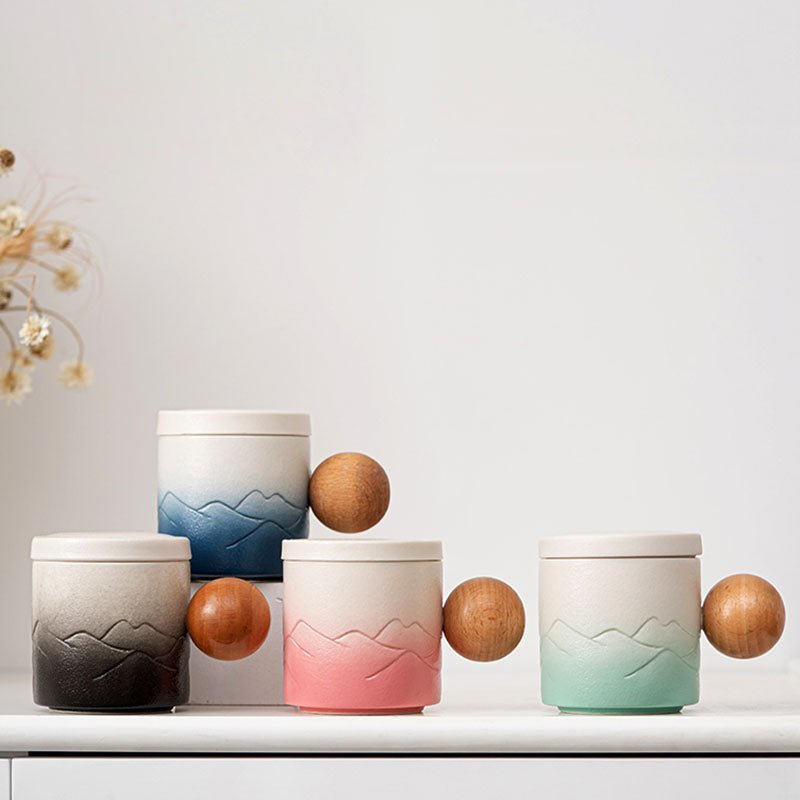
Wide Based Coffee Mugs Replacement Purchase Practical Purchase Checklist
Reading time: about 11 minutes
A mug usually announces its retirement in small ways: a hairline chip on the rim, a foot that rocks when a laptop cable brushes it, a handle that fits two fingers instead of three, or a capacity that runs dry before the first meeting. When shoppers ask us for wide based coffee mugs, the real request is usually narrower — make the next mug stop wobbling, fit the brewer, and feel right when it is full. This wide based coffee mugs replacement purchase practical purchase checklist starts with the failure of the old mug and only then compares current options. “Wide base” is buyer language, not a standard, so treat it as a starting description rather than a performance guarantee.
Why did the old mug fail in the first place?
Write the failure in one sentence before you browse. That sentence becomes the filter for every product page. A replacement should fix a specific problem, not merely look more stable in a photograph.
- It tips after a small bump: compare the old mug’s footprint and height. A tall mug filled near the rim can go over even when the base looks broad.
- It rocks on a flat counter: check the contact ring for a warp, chip, or trapped grit. A new mug that rocks empty will not improve once it holds hot coffee.
- It runs out too soon: start with listed capacity, then check outer dimensions. A larger interior can still arrive in a body that crowds the brewer or shelf.
- The handle pinches: measure the opening and note how many fingers you use. Full weight changes the answer; a handle that feels fine empty can dig in at 400 ml.
- It will not sit under the machine: measure total height and the clearance beneath the spout, not just the base.
- The underside stays wet: look at the foot geometry and the care instructions. A recessed or concave underside can hold water after a wash cycle.
Two buyers can use the same phrase and need opposite mugs. One needs a lower, broader footprint for a desk; another needs a taller body for a longer drink. Naming the failure keeps those needs from collapsing into “something wider.”
Does a wide foot actually stop a coffee mug from tipping?
Partly. A wider base of support gives the center of gravity more room to move before it crosses the edge of that support, and a lower center of gravity helps in the same direction. That is the useful physics behind the shape. It is not a promise. Height, weight distribution, fill level, handle leverage, and the flatness of the foot all change the outcome.
A broad foot that contacts the counter on only part of its ring can rock. A tall mug with a broad foot can still tip if the handle catches on a cable. And a mug filled almost to the rim raises its center of gravity, which is why the same vessel can feel steady at half full and nervous at the top.
There is no agreed minimum diameter that makes a mug “wide base,” and we could not find a public benchmark that ranks commercial mugs by tip angle while controlling for height, fill level, and weight. Use the phrase to find candidate shapes, then judge the specific listing.
A wide foot and a wide mouth are separate features. The foot controls contact with the desk; the opening affects sipping, aroma, cooling, ice, foam, and whether a brewer fits. One can exist without the other, so do not let a broad rim sell you on stability that the base does not provide.
- Compare the old mug’s base diameter, if you can measure it, with the replacement’s listed dimensions.
- Look for an even, continuous contact ring rather than a base that is merely wide at its widest point.
- Check handle placement. A handle that sticks out far to one side gives a bump more leverage.
- Think about your normal fill level, not the brim. Most tipping happens with a nearly full mug.
- Do not assume a wide base is non-slip unless the current listing says so in writing.
Which measurements does a wide based coffee mugs replacement purchase practical purchase checklist need?
Measure the old mug and its usual landing spot before opening a product page. Ten minutes with a tape measure eliminates more bad options than another round of reviews.
- Base footprint: the widest part of the foot, plus the coaster or desk space you can spare.
- Total height: the distance from counter to the underside of your drip machine, espresso spout, shelf, or cabinet.
- Handle opening and side clearance: how many fingers fit comfortably, and how much room the handle needs beside a monitor or wall.
- Usual pour: the volume you actually drink, not the mug’s rated capacity.
- Cup holder: the narrowest point inside the holder, not the rim. Tapered holders support the mug lower down.
- Storage: shelf depth, overhead clearance, and whether neighboring mugs collide with the handle.
Capacity and footprint are independent more often than buyers expect. A broad lower section can still hold a modest amount, while a tall mug can hold more and become more top-heavy. Treat capacity as one decision and base geometry as another; then check height, handle, and care as separate filters.
How do the three CoffeifyMug capacities compare for a replacement?
The current catalog gives us three verified listed capacities: Ball Handle at 250 ml, The Flow at 400 ml, and The Rock at 480 ml. Those numbers are a sensible first filter when the old mug was too small, too large, or about right. They are not a substitute for dimensions, material, handle geometry, or care instructions. We cannot confirm base diameter or total height from capacity alone, so the product page remains the source for those details.
| Replacement situation | Current listed option | Why it may fit | Verify before ordering |
|---|---|---|---|
| A smaller everyday serving, or a mug you often leave unfinished | Ball Handle — 250 ml listed capacity | The smallest of the three listed capacities, so it is a logical starting point when the old mug felt oversized. | Base diameter, total height, handle opening, material, and care. |
| A regular coffee or tea serving with more room than 250 ml | The Flow — 400 ml listed capacity | The middle listed capacity, which may suit a shopper replacing a routine daily mug. | Footprint, brewer clearance, full weight, and whether the opening suits your drink. |
| A larger serving, or a mug that previously needed constant refills | The Rock — 480 ml listed capacity | The largest listed capacity in this comparison, which may better match a bigger coffee or tea routine. | Overall dimensions, cup-holder fit, handle comfort when full, and storage clearance. |
If your old mug sits between two capacities, choose the closer usual pour rather than the larger number. Buying extra capacity is only useful if you actually finish the drink; otherwise the mug gets heavier, takes more counter space, and may not fit the brewer or cabinet that the old one did.
To compare shapes beyond capacity, browse the unique coffee mugs collection. If the replacement question is specifically about ceramic bodies and foot shape, our ceramic wide-bottom mug shape and fit guide goes deeper into rim, foot, and everyday handling.
What should the product page tell you about material, lids, and the underside?
Base shape cannot answer appliance safety or heat retention. Do not infer microwave or dishwasher compatibility from a photograph, and do not assume that a wide ceramic base keeps coffee hot longer. Heat retention depends on material, wall construction, lid, starting temperature, and fill level; only a manufacturer specification can settle it for a given mug.
- Material and wall construction: an open ceramic mug and a double-wall vacuum stainless mug solve different problems. If retained heat matters, look for a stated insulation specification, not base width.
- Lid language: splash-resistant and leakproof are not the same. A splash-resistant lid may help during a short carry; it is not protection for a bag turned upside down.
- Underside: a recessed or concave foot can pool water after washing. Dry it before storage, and recheck for rocking on a level counter.
- Rim and glaze: inspect for chips, sharp spots, cracks, or crazing when the mug arrives. Small rim damage is easy to miss in packaging and obvious in daily use.
- Food-contact labeling: prefer clear food-use information, especially for handmade, antique, damaged, or brightly decorated pottery.
The FDA explains that lead in improperly fired pottery glazes can leach into food or drink, and household washing or boiling does not remove it. For cups and mugs, the FDA action level is 0.5 micrograms of lead per milliliter of leaching solution in any one of six units, using methods that include ASTM C738. Handmade, antique, damaged, and brightly orange-, red-, or yellow-decorated pieces are higher-concern categories; ordinary commercial factory tableware is described as much less likely to have this problem. None of that means every colorful mug is unsafe. It does mean an item labeled not for food use should stay out of the coffee rotation.
Which setting changes the answer: desk, brewer, gift, or commute?
- Office desk: the mug needs a footprint that fits the coaster and a capacity you finish. Ball Handle at 250 ml is the smallest listed option; The Flow at 400 ml is the middle. Check base diameter and handle side clearance on the listing rather than assuming a desk mug is automatically stable.
- Kitchen counter or brewer: height clearance comes before capacity. A 480 ml mug is no help if it will not sit under the spout, and a wide rim can be wrong for some pour-over drippers. Check the brewer’s own guidance and measure the opening you need.
- Gift: capacity is the safest clue when you do not know the recipient’s routine. A 400 ml mug is a middle-of-the-road starting point, but confirm material and care before you describe it as microwave- or dishwasher-safe.
- Commute, boat, or dashboard: a wide base is a possible stability feature, not a transport guarantee. If the mug will ride in a bag or beside active controls, choose a purpose-built travel mug with a documented lid. A desk mug is the wrong tool for that job.
- Iced coffee or tea: ice takes usable room. Check the opening and interior shape, because a large listed capacity can still leave less room than expected once ice and foam go in.
One mug rarely wins everywhere. A broad desk mug can be awkward in a cup holder; a sealed travel mug can be the wrong shape for a slow morning at the kitchen table. If the replacement has to serve both, consider two purpose-specific mugs instead of one compromise.
What should you check in the first five minutes after unboxing?
- Set the empty mug on a level counter and press gently on opposite sides of the rim. Listen and feel for rocking.
- Run a finger around the rim and inside the handle opening. Stop on chips, sharp seams, or rough glaze.
- Fill it with cool water to your normal level and lift it by the handle. Check wrist angle, finger clearance, and balance.
- Test the landing spot: coaster, brewer, shelf, or measured cup holder. Do this before hot coffee is involved.
- Read the care instructions on the listing or insert. Do not microwave or dishwasher-test a mug that has not been confirmed for those appliances.
- After the first wash, dry the underside and check again for trapped water and rocking.
If the mug is stable but too tall for the machine, comfortable but too wide for the cabinet, or attractive but cramped when full, it is not the right replacement for your setup. Return it before it becomes another mug at the back of the shelf.
Frequently asked questions
Are wide base coffee mugs actually harder to tip over?
A broader, even base gives a mug more room before its center of gravity passes the edge of support, so it can be harder to tip. Height, fill level, handle leverage, and surface still matter. No base width makes a mug tip-proof.
Will a wide-base mug fit a standard car cup holder?
There is no single standard fit across vehicles. Measure the holder at its narrowest point and compare that with the mug’s listed base diameter. A mug that is steady on a desk can still be too wide for a car.
Does a wide bottom mean the mug holds more coffee?
No. Footprint and interior volume are separate. Use the listed capacities — 250 ml for Ball Handle, 400 ml for The Flow, and 480 ml for The Rock — as a first filter, then verify dimensions and usable room for ice or foam on the product page.
Can a wide-base mug go in the microwave or dishwasher?
Only if the current product listing or maker’s instructions say so. Base shape does not answer appliance compatibility, and a recessed underside may hold water after washing.
What belongs on a wide based coffee mugs replacement purchase practical purchase checklist?
Start with the old mug’s failure, then compare base footprint, total height, usual pour, handle clearance, brewer or cup-holder fit, material, lid type, and care instructions. Confirm the current listing before ordering, especially for dimensions and appliance use.
Your next step is mechanical: empty the old mug, measure its base, height, handle opening, and usual pour, then compare those notes with the listed 250 ml, 400 ml, and 480 ml options in the CoffeifyMug unique coffee mugs collection. Open the individual listing for dimensions and care, and ask about any missing detail before you buy. A useful replacement fixes the old problem without creating a new one at the brewer, the coaster, or the cabinet shelf.
More from our blog
Ready to pick your mug? Two ways to save on today's order:
Ordering 1–3 mugs? Get an extra 10% off your 1st order with code 10_OFF Apply 10% Off & Shop Wooden-Handle Mugs →
Gifting 4+ mugs? Buy 3, Get the 4th Free applies automatically at checkout (no code needed; offers do not stack) · Free standard shipping (Nov pre-Christmas delivery: 15–20 calendar days US) · Free replacement if chipped in transit.
Popular mug buying guides: Ceramic Tea Cups & Infuser Mugs · Ceramic Mugs with Lids Compared · Wooden-Handle Tea Infuser Mugs Compared · Christmas & Secret Santa Mugs 2026 · Espresso & Cortado Cups Guide · Cup & Saucer Gift Sets · All 25 Mugs Spec Table · Mug Size Guide · Shipping & Promo FAQ
FIRST ORDER 10% OFF (CODE: 10_OFF) · OR BUY 3, GET THE 4TH FREE


Read more
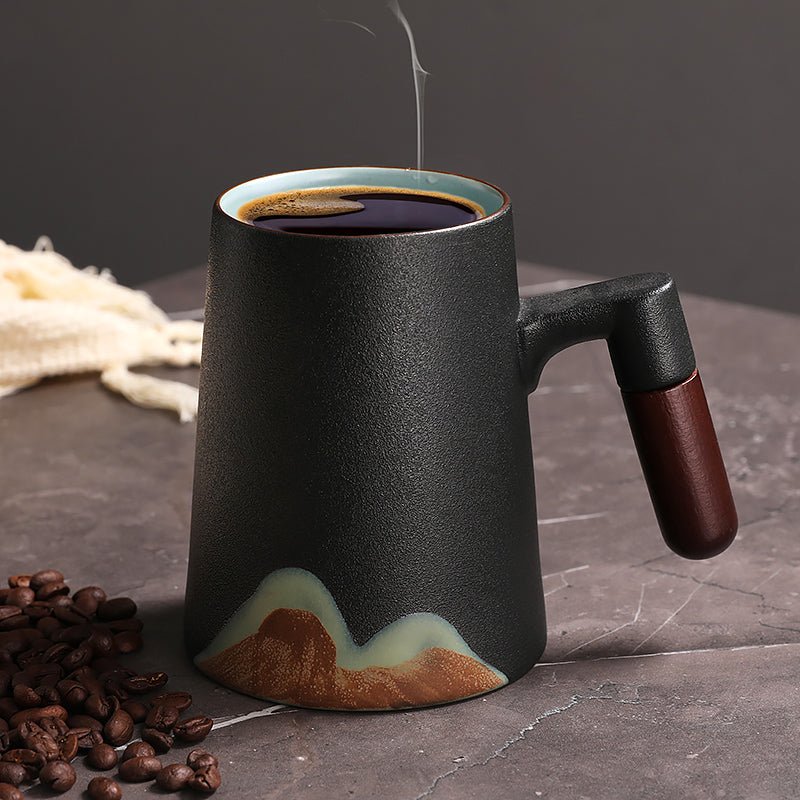
Latte Mugs Tall Replacement Purchase Practical Purchase Checklist
A replacement checklist built around the mug you already own: measure height, rim, base, and handle opening, convert milliliters to ounces, confirm machine clearance, and verify care and food-conta...
Read more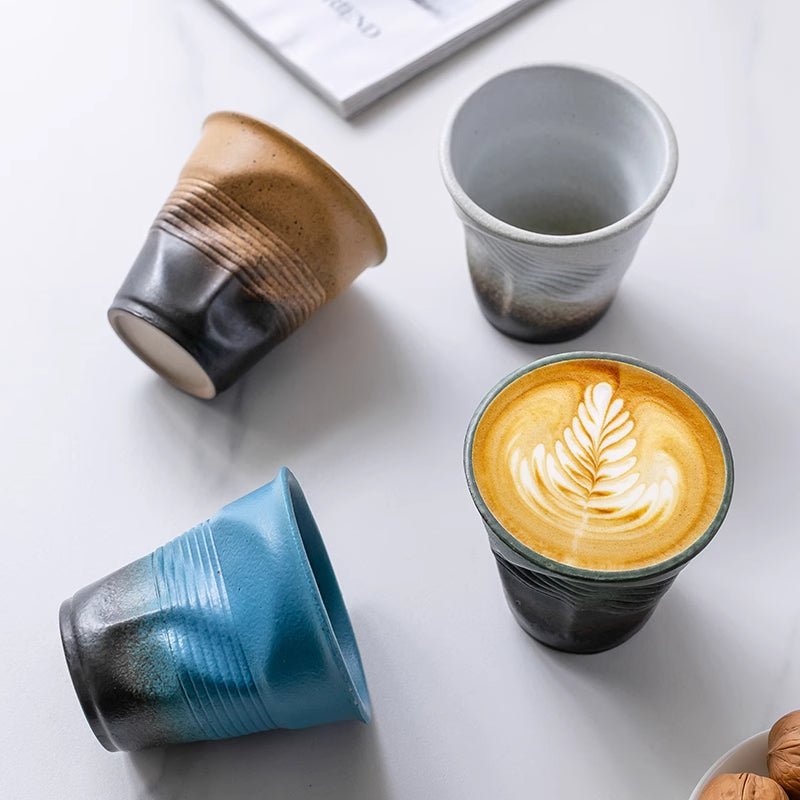
Pottery Tea Cups Replacement Purchase Product Shortlist Guide
Replace a cup based on what the old one actually failed at. We compare our 170, 200, and 250 ml ceramic cups, give explicit choose-or-skip reasons, and flag the glaze, grip, and appliance questions...
Read more
Leave a comment
This site is protected by hCaptcha and the hCaptcha Privacy Policy and Terms of Service apply.