

Art Coffee Mugs Replacement Purchase Practical Purchase Checklist
Reading time: about 10 minutes
A mug can look like the right replacement and still fail in daily use. The handle crowds your knuckles, the base misses the coaster beside your keyboard, or the listed capacity does not match the drink you pour each morning. Our art coffee mugs replacement purchase practical purchase checklist starts with those friction points so the new mug solves the old one's limitations instead of merely replacing its picture.
From handling and packing ceramic mugs in our store, we know product pages and photographs can establish visible imagery, material, listed capacity, and photographed form. They cannot confirm how a handle will feel in your hand or whether a mug will fit below your coffee maker. We keep those knowns and unknowns separate throughout this comparison. We also avoid assigning artists, art movements, provenance, production methods, edition status, or institutional connections that the listings do not state.
Which problem from the old mug must the replacement solve?
Start with the reason the old mug stopped working. A chipped rim is a different problem from insufficient capacity, and a mug that cannot fit under a brewer requires a different replacement decision from one whose motif simply faded from view.
Before discarding the old mug, record the details that affected its daily use:
- Rim and body: Look for chips, surface scratches, and hairline cracks. Note whether the damage came from stacking, contact with a sink, or an accidental drop.
- Handle junctions: Inspect both points where the handle meets the body. A visible crack means the mug should be retired, but a product photograph alone cannot establish the strength of a replacement handle.
- Base and foot ring: Place the empty mug on a flat counter and press lightly on opposite sides. Rocking can come from damage or an uneven base.
- Daily serving: Fill the old mug to your normal drinking level, then pour that water into a marked measuring jug. This gives you a useful serving measurement rather than a brim-full estimate.
- Storage and equipment fit: Measure the mug's total height, widest point, base diameter, and handle opening. These numbers matter under a brewer, on a cupboard shelf, and on a small office coaster.
Customers replacing a favorite mug often begin with the image they miss. In our experience, writing down these functional details first produces a more useful shortlist. The art still matters, but it should not hide the same capacity or fit problem that made the previous mug frustrating.
Art coffee mugs replacement purchase practical purchase checklist
Use this checklist on each current product page. Treat any detail that is not shown or stated as unknown rather than filling the gap with an assumption.
- Record usable volume. Measure the amount you actually drink, including milk or creamer. For iced coffee, measure after adding the normal amount of ice because ice reduces the remaining drink volume.
- Confirm the listed capacity. Read the figure on the individual listing at the time of purchase. Do not assume mugs in the same collection all hold the same amount.
- Verify the listed material. The relevant art mugs are ceramic coffee and tea forms, but the live product page should remain your source for the current material description.
- Compare photographed proportions. Look at the rim, body, base, and handle from every available angle. Camera perspective can distort size, so use listed dimensions whenever they are provided.
- Check handle clearance. Measure the width and height of the opening on a comfortable mug you already own. Finger clearance is more useful than judging a handle by appearance alone.
- Match the motif deliberately. Decide whether the lost mug's appeal came from landscape imagery, aquatic movement, a bird figure, or another visible subject.
- Check image orientation. If you want the motif facing outward while holding the mug in a particular hand, look for photographs of both sides. Mark orientation as unknown if only one side is shown.
- Read the care information. Confirm dishwasher or microwave compatibility only if the listing explicitly states it. Absence of a care claim is not confirmation.
- Name one acceptable trade-off. You may accept a different motif to obtain the right capacity, or accept a smaller serving to gain a better cupboard fit. Do not compromise on every variable at once.
This art coffee mugs replacement purchase practical purchase checklist is intentionally narrower than a broad mug guide. Its job is to compare current candidates against one known routine and one known failed mug.
How should listed capacity and shape match coffee, tea, or iced drinks?
Listed capacity is a starting point, not a description of how you fill a mug. Most people leave space below the rim, while milk, a tea infuser, or ice changes the usable volume. Measure your normal prepared drink and compare that figure with the current listing rather than buying from memory.
Shape affects where the mug works. Total height matters below a pod machine or coffee brewer. Base diameter matters on a coaster, warming plate, or narrow desk shelf. Maximum width matters in a crowded cupboard, while handle clearance matters when the mug is full and your grip tightens under the extra weight.
Photographs can help you compare silhouettes, but they do not replace measurements. If a critical dimension is not listed, decide before checkout whether that uncertainty is acceptable. A close motif match is not useful if the mug cannot occupy its intended place on the kitchen counter.
Which visible motif is the closest replacement?
Treat art as a visible style preference rather than an art-history claim. The practical question is which current image restores what you enjoyed seeing on the old mug.
| Reader situation | Why the option fits | Relevant next step |
|---|---|---|
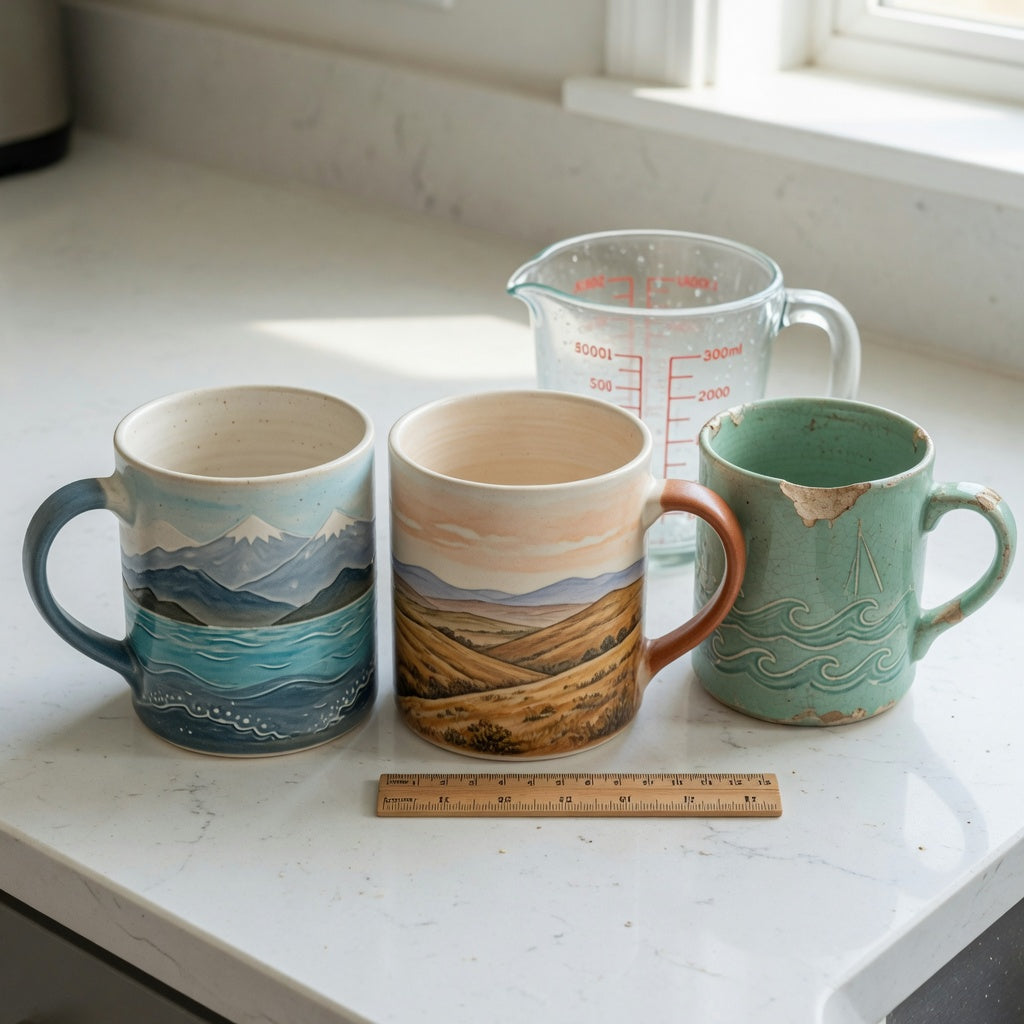
| The lost mug featured water, peaks, or a scenic view. | Mountain and sea imagery keeps the replacement within a landscape-focused visual category. | Open the Mountain Sea coffee and tea mug, then confirm its current material, listed capacity, and photographed form. |
| You want visible movement and an aquatic subject. | The fish imagery provides a closer subject match than a landscape or bird design. | Compare the Koi Fish coffee and tea mug with your measured serving and storage limits. |
| The old mug used a bird as its main visual focus. | The crane image preserves a recognizable bird motif without inventing a specific artist or artistic tradition. | Review The Crane coffee and tea mug, paying attention to motif orientation and photographed proportions. |
| None of those subjects replaces what you miss. | A broader scan is more sensible than forcing a weak motif match. | Browse the unique coffee mugs collection and apply the same capacity, material, shape, and imagery checks. |
Each recommendation connects a specific visual preference to a relevant listing, but imagery should be the final filter rather than the only one. Confirm the functional details first, especially if the mug will be used beside electronics, beneath a brewer, or several times a day.
What can product photos confirm, and what remains unknown?
Product photographs support observations about visible imagery, apparent proportions, handle placement, and which sides of the design are shown. Listing text can support material, capacity, dimensions, and care claims when those details are explicitly provided.
Photos do not prove exact weight, hand comfort, chip resistance, long-term surface durability, or compatibility with appliances. They can also make colors look different because of lighting and screen settings. We would not describe any of the three motifs as an edition, attribute one to an artist, or claim a production process unless the relevant page supplies that information.
An unknown detail is not automatically a defect. It is simply a detail that should not carry your purchase decision.
This distinction matters for replacement purchases. If dishwasher compatibility is essential to your routine and the listing does not address it, choose an option with explicit care information rather than hoping the missing detail works in your favor.
What should you inspect during unboxing and the first wash?
Unbox the mug over a clear counter rather than directly above a hard sink. Before washing or filling it, rotate it in bright side light and inspect the rim, body, both handle attachment points, and foot ring. A hairline crack can be easier to see when light travels across the surface instead of shining straight at it.
- Set the empty mug on a flat, dry counter and check for unexpected rocking.
- Compare the delivered motif, material description, and form with the product page and your order.
- Run a fingertip carefully around the rim and handle junctions to detect rough spots. Do not continue using a mug with a sharp chip or visible crack.
- For the first fill, use room-temperature water over the sink. Confirm the handle feels comfortable at your normal fill level and check for any leakage.
- Follow the listed washing directions. If no dishwasher claim is provided, hand washing with mild detergent and a soft, nonabrasive sponge is the conservative choice.
For a gift replacement, keep the packaging until the recipient has completed the same check. Gift unboxing is often focused on the image, but capacity, handle comfort, and cupboard fit determine whether the mug enters regular use.
Which routines make an art ceramic mug the wrong replacement?
An open ceramic mug is not the best answer for leakproof commuting, rough outdoor use, or a workspace where cups are frequently knocked over. A lidded travel mug or impact-resistant option will suit those routines better, even if it offers less decorative imagery.
It is also a weak fit when compact stacking is mandatory unless the listing clearly shows a stackable form. If you require automatic dishwasher or microwave use, do not infer compatibility from the ceramic material alone. Select a product whose current care information explicitly supports the appliance you plan to use.
Finally, these listings should not be used to replace a collectible based on artist attribution, museum connection, provenance, or edition number. They are practical art-motif coffee and tea mugs. Buyers seeking a documented collectible need a seller that supplies that documentation.
Frequently asked questions
How do I use the art coffee mugs replacement purchase practical purchase checklist if my old mug is already gone?
Measure a comfortable mug you still own and record its normal serving volume, height, base diameter, and handle opening. Then write down what was different about the lost mug, including its visible motif and where you used it. Compare current listings against that baseline and treat any missing specification as unknown.
Are the Mountain Sea, Koi Fish, and Crane mugs all the same capacity?
Do not assume they are. Check the listed capacity on each live product page before ordering, especially if your coffee recipe, tea infuser, or iced drink requires a particular volume.
Can I assume an art ceramic mug is dishwasher and microwave safe?
No. Ceramic material by itself does not confirm appliance compatibility. Follow the care details on the individual listing; if a dishwasher or microwave claim is absent, hand washing and separate reheating are the lower-risk choices.
Which motif works best for a replacement gift?
Choose Mountain Sea for someone who misses landscape and water imagery, Koi Fish for an aquatic subject, or The Crane for a bird-focused design. Confirm the recipient's usual drink volume and available storage space before treating the motif as the deciding factor.
What defects should I check before using a replacement mug?
Inspect the rim for chips, both handle attachment points for hairline cracks, and the foot ring for damage or unexpected rocking. Stop if you find a sharp edge, a visible crack, or leakage during a room-temperature water check.
Before buying, write down four pass-or-fail details: usable volume, maximum height, base diameter, and handle clearance. Compare the three relevant product pages against those numbers; if the visible motif is not right, continue through the current unique coffee mugs collection and reject any option that leaves a must-have fact unconfirmed.
More from our blog
Read more
Ocean Coffee Mug Replacement Purchase Practical Purchase Checklist
Use the mug you are replacing as the specification: measure usable capacity and handle clearance, compare visible nature imagery, verify material and care details, and reject options that repeat th...
Read more
Geometric Coffee Mug Gift Choice Product Shortlist Guide
Compare three geometric ceramic mugs by the recipient's normal pour, grip, storage space, and cleanup routine. Each shortlist pick includes a practical reason to choose it, a reason to skip it, and...
Read more
Leave a comment
This site is protected by hCaptcha and the hCaptcha Privacy Policy and Terms of Service apply.