

Thick Ceramic Coffee Mugs Shared Household Practical Purchase Checklist
Reading time: about 8 minutes
At 7 a.m., one housemate slides a mug under the coffee machine, another lowers a tea infuser into a cup, and a third carries coffee to a desk. The mug left in the cabinet is often not the least attractive one. It is the one that is too tall, awkward when full, or difficult to place in the dishwasher. This thick ceramic coffee mugs shared household practical purchase checklist starts with those daily points of friction, because a shared kitchen needs more than one person's idea of a comfortable cup.
Why does one thick mug rarely suit everyone in the house?
A shared household is not automatically a matching-mug household. One person may make a short coffee, another may add milk and need more headroom, and a tea drinker may require an opening wide enough for an infuser. Someone who carries a drink between rooms may prioritize a secure handle, while a two-handed sipper may care more about the shape and surface of the mug body.
In our store, we find that the useful question is not simply which mug looks best. We ask who will use it, what they will pour into it, and where it will be stored. We also do not assume that separate product pages represent a set. Treat each linked CoffeifyMug design as an individual option and confirm the quantity and included items on its current product page before ordering.
Thick ceramic coffee mugs shared household practical purchase checklist
Keep general mug tests separate from product-specific facts. A photograph can show a profile, handle, and finish, but it cannot confirm an exact wall gauge, usable capacity, appliance compatibility, or full weight unless the page supplies that information.
- Name the primary user and drink. Record the amount that person normally pours, including milk, ice, or the space needed for a tea infuser.
- Confirm the material and thickness claim. Ceramic describes a broad material category. If wall thickness is essential and the listing does not specify it, treat that detail as unknown rather than estimating it from a photo.
- Compare usable capacity. Check whether a listed capacity represents a brim-full measurement or a practical serving. Leave enough headroom to carry the mug without spilling.
- Measure the complete exterior. Height, body diameter, base diameter, and handle projection can affect coffee-machine clearance, shelf space, and dishwasher loading.
- Match the grip to the user. Compare handle opening, finger count, knuckle clearance, and balance when the mug contains a normal serving.
- Plan individual storage. Never assume a sculpted or wide-handled mug will stack. Check where the rim, foot ring, and handle would contact neighboring pieces.
- Read the stated care instructions. Do not infer dishwasher or microwave suitability from ceramic material or wall thickness alone.
- Verify quantity. If several people want different designs, build the household selection one product page at a time rather than assuming the mugs are bundled.
Capacity, coffee-machine clearance, and grip: what should you measure?
We get a more reliable answer by comparing a new mug with one already used in the kitchen. Fill the current favorite to its normal level, then pour that liquid into a measuring jug. That gives you a real serving volume, including the headroom the user naturally leaves, instead of relying only on a nominal capacity.
| Household routine | Measurement to take | Reason |
|---|---|---|
| Pod or drip coffee | Drip tray to outlet, plus mug height | Confirms that the mug can be positioned without tilting |
| Loose-leaf tea | Rim opening and infuser diameter | Checks that the basket can sit level and be removed cleanly |
| Desk or mug-warmer use | Base diameter, full weight, and coaster area | Shows whether the filled mug has a stable place to sit |
| Compact cabinet | Shelf height and total width including handle | Reveals the actual storage footprint without assuming stackability |
Full weight deserves a test too. Add the intended drink volume to a mug with a similar build and hold it for a minute. A substantial ceramic body may feel reassuring to one person and tiring to another, especially when the handle allows only one or two fingers.
Which CoffeifyMug design gives each housemate a sensible next step?
The current product pages are the source of truth for product-specific materials, dimensions, capacity, care, and included quantity. Our recommendations below are therefore based on shopping situations and visible design choice, not unlisted performance claims.
- A bold mug that is easy to identify: A housemate who wants a clearly personal design can start with The Rock Coffee Tea Mug. Compare the page photos and any listed specifications with that person's grip, machine clearance, and shelf measurements.
- A different visual direction for a coffee or tea drinker: If one person prefers the form shown for The Flow Coffee Tea Mug, inspect its rim, handle proportions, and base in the available images. Use listed measurements where provided rather than judging scale from styling alone.
- A novelty-minded gift recipient: If the unconventional styling is the reason for buying, review the Spittoon Coffee Tea Mug. Before treating it as a daily kitchen mug, confirm its footprint, cleaning access, capacity, and care details on the page.
- A household with mixed tastes: Browse the unique coffee mugs collection and give each person a separate shortlist. This works better than forcing one shape on coffee drinkers, tea drinkers, desk users, and gift buyers with different priorities.
Which parts deserve inspection after delivery and dishwasher cycles?
At unboxing, our team pays attention to three high-contact areas: the drinking rim, the handle-to-body junctions, and the foot ring underneath. Check them in bright, angled light before the first use. Look for sharp chips, a handle that moves, cracks that continue through the ceramic body, or fine glaze lines known as crazing. A product-specific care instruction should guide how any uncertain finish condition is handled.
- Follow the listing: Use a dishwasher or microwave only when the current product instructions allow it.
- Prevent rack contact: Position mugs so the rim and handle cannot knock against another ceramic piece during a dishwasher cycle.
- Avoid forced stacking: If the foot ring rests on another mug's glazed interior or the handles interfere, store the mugs individually.
- Limit abrupt temperature changes: Do not move a very cold ceramic mug directly into intense heat unless its instructions specifically support that use.
- Remove damaged mugs from drink service: A sharp rim chip, structural crack, or loosening handle is not a cosmetic inconvenience.
Thickness does not make ceramic impact-proof. A substantial wall may change the feel of a mug, but durability also depends on the rim profile, handle construction, glaze condition, storage, and the surfaces it contacts every day.
When is thick ceramic the wrong household choice?
A different mug style is the better purchase when thickness creates more inconvenience than value. Be direct about these limitations before assigning a mug to someone.
- Lightweight preference: Anyone who finds a full ceramic mug tiring may be happier with a lighter cup and a smaller serving.
- Very tight storage: A compact cabinet that requires uniform stacking may not suit individual sculpted designs or projecting handles.
- Commuting: A ceramic mug is not a replacement for a lidded travel vessel designed for bags, vehicles, or cup holders.
- Small espresso servings: A person who prefers a compact porcelain cup may find a thick full-size mug unnecessarily bulky.
- Coordinated place settings: Shoppers seeking an identical, confirmed multi-piece set should not assume that separate novelty-mug pages meet that requirement.
Thicker ceramic also does not guarantee slower cooling, freedom from chips, or compatibility with every appliance. Those claims need support from the individual listing. If the page leaves a deciding specification unclear, ask before buying rather than filling the gap with an assumption.
Five minutes at the kitchen counter before checkout
Use the thick ceramic coffee mugs shared household practical purchase checklist as a shared note, with one line for each intended user.
- Measure that person's usual drink using the mug they already prefer.
- Record coffee-machine height, tea-infuser width, or desk-coaster size as relevant.
- Measure the cabinet space available for one mug, including its handle.
- Ask the user to describe the grip and full weight they find comfortable.
- Open the chosen CoffeifyMug page and confirm listed material, size, capacity, care, quantity, and product photos against those measurements.
Frequently asked questions
What should a thick ceramic coffee mugs shared household practical purchase checklist cover?
It should cover the intended user, actual drink volume, handle fit, complete exterior dimensions, coffee-machine or infuser clearance, cabinet footprint, care instructions, and included quantity. It should also record any missing specification that needs to be confirmed before ordering.
Are The Rock, The Flow, and Spittoon mugs sold as a set?
Do not assume that they are. Each link leads to an individual product page, so check the current quantity, options, and included items on each page before checkout. A shared household can compare the designs separately and choose according to each person's routine.
How can I tell if a thick mug will fit under our coffee machine?
Measure vertically from the drip tray to the lowest part of the coffee outlet, then compare that clearance with the mug's listed height. Account for any lip or raised edge on the tray, and do not rely on capacity alone because mugs with the same volume can have different proportions.
Can every thick ceramic mug go in a dishwasher or microwave?
No. Ceramic material and wall thickness do not establish dishwasher or microwave suitability. Follow the care information on the individual product page, and ask CoffeifyMug if the intended appliance use is not stated.
Does thicker ceramic mean a mug will not chip?
No ceramic mug is unbreakable, and thickness alone does not determine chip resistance. The rim, foot ring, and handle junction remain important contact points, especially in crowded cabinets, metal sinks, and dishwasher racks.
Take the measurements first, then return to the CoffeifyMug unique coffee mugs collection. Shortlist one design per person, verify every deciding specification on its page, and leave any option with unresolved care, size, or quantity questions out of the cart until those details are confirmed.
More from our blog
Read more
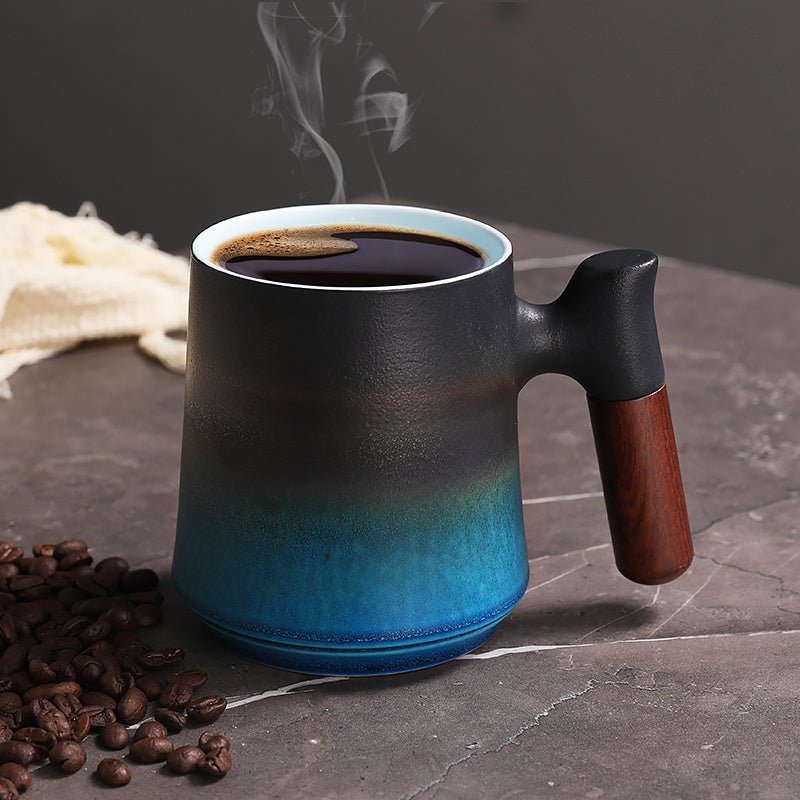
Hot Toddy Mug Shared Household Practical Purchase Checklist
Compare CoffeifyMug's 400 ml and 480 ml ceramic mugs by normal pour size, handle comfort, cabinet fit, and care requirements. This checklist separates verified product facts from details to confirm...
Read more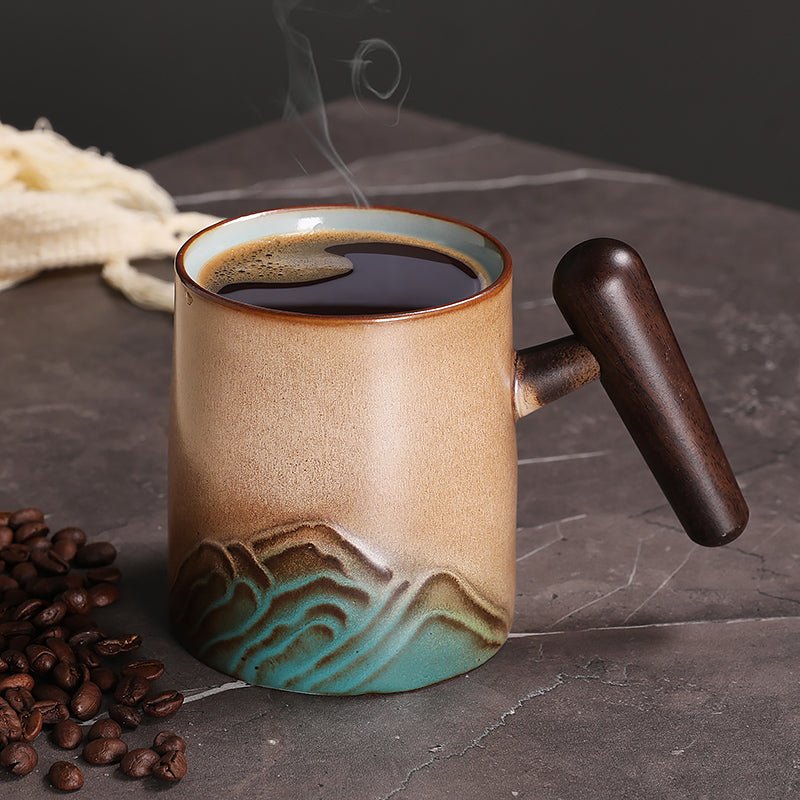
Vintage Pottery Coffee Mugs Home Office Product Shortlist Guide
Compare three CoffeifyMug designs by desk routine, visual style, measurements to verify, and care requirements. Each pick includes a clear reason to choose it or skip it.
Read more
Leave a comment
This site is protected by hCaptcha and the hCaptcha Privacy Policy and Terms of Service apply.