
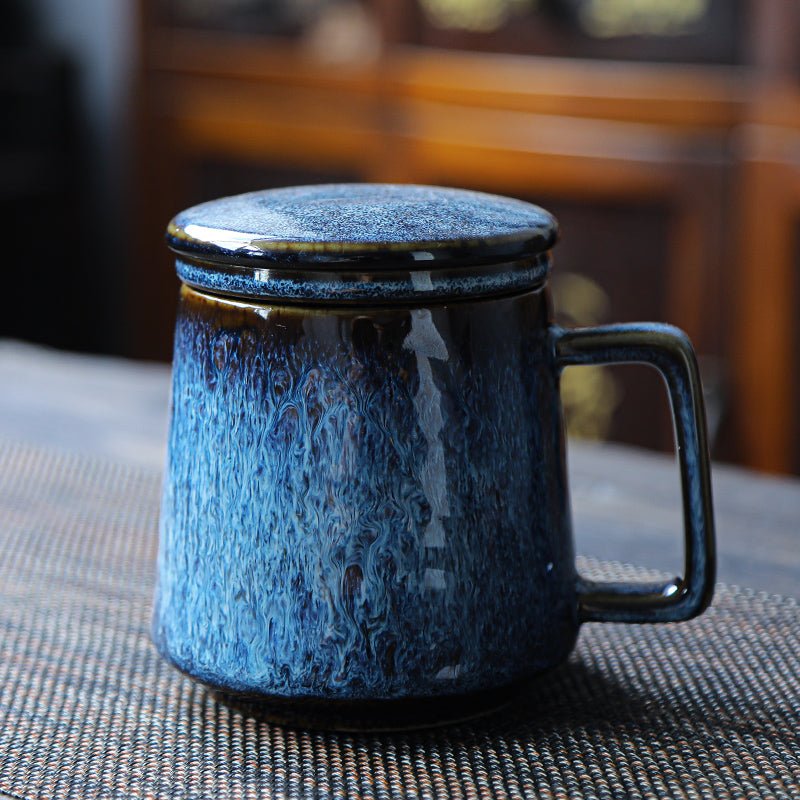
Thick Ceramic Coffee Mugs Home Office Practical Purchase Checklist
Reading time: about 9 minutes
A mug can feel reassuringly substantial at the kitchen counter and still become irritating after three hours beside a keyboard. The base may take over the mouse area, the handle may crowd a notebook, or a rough foot ring may catch on a desk mat. Our thick ceramic coffee mugs home office practical purchase checklist starts with those ordinary workday frictions, not with a claim that thicker is automatically better.
In our store, we see shoppers choose by silhouette first, then discover that capacity, exterior dimensions, handle clearance, foot finish, and care instructions determine whether a mug earns a permanent desk spot. We separate general category guidance from product-specific facts below. For any linked mug, the individual product page is the controlling source; do not infer an unlisted dimension, material detail, or care claim from a photograph.
Thick ceramic coffee mugs home office practical purchase checklist: what should you verify first?
Start with the parts that interact with your desk and hands. A product can look compact in an isolated photograph while its handle or widest body section requires more room than expected.
- Record the complete footprint. Check the base diameter, overall body width, and widest measurement including the handle. If those dimensions are listed, trace them on paper and place the outline beside your keyboard.
- Separate stated capacity from comfortable fill. A capacity figure may describe a brim-full measurement unless the page defines it differently. Allow your own headspace for walking from the kitchen and setting the mug down during meetings.
- Check handle clearance. Handle shape, opening height, opening width, and distance from the hot mug body all affect grip. Overall mug width does not tell you how much room your fingers have.
- Inspect the rim and interior. Look for an evenly finished drinking edge, clear interior photographs, and enough opening width for your usual spoon or cleaning brush. Do not assume a broad exterior has a broad mouth.
- Examine the foot ring. The unglazed ring on the bottom should appear even and flat. A rough or uneven foot can be managed with a coaster, but buyers with delicate desks may prefer a smoother base.
- Read each care statement literally. Dishwasher-safe and microwave-safe are separate claims. If only one is stated, it does not establish the other.
These checks are more useful than judging thickness by appearance alone. Exterior curves, dark glaze, and camera angle can all make a wall or rim look heavier than it is.
How much mug can your desk, shelf, and meeting routine support?
The right size depends on more than drink volume. Before ordering, measure the clear area where the mug will sit, the height of the cabinet or shelf where it will be stored, and any narrow dishwasher rack space you expect it to occupy.
- For a fixed desk day: A wider profile may be workable if you have a dedicated coaster away from your mouse, charging cables, and paper notes. Mark that position before choosing.
- For back-to-back meetings: More capacity may reduce refill breaks, but a larger filled mug also requires more lifting and more desk space. Choose the volume you normally finish, not the largest number available.
- For alternating coffee and tea: Prioritize an accessible interior that is easy to rinse between drinks. Check whether the listed shape leaves corners or a narrow lower section that may be harder to reach.
- For iced drinks: Compare opening width and usable capacity with the ice you normally add. A thick exterior does not tell you how much interior room remains after ice and headspace.
A paper footprint test takes less than a minute and is especially useful on compact desks. It also reveals whether the handle will point toward a monitor stand, notebook, or wall.
Which ceramic, glaze, and care details matter at a workstation?
General category guidance: Ceramic is a broad label that can include stoneware, porcelain, and earthenware. Those terms are not interchangeable, so use the material wording on the product page rather than guessing from color or texture. Wall thickness also does not establish firing method, durability, or exact heat performance.
| Detail | What to inspect | Why it matters at a desk |
|---|---|---|
| Glaze crazing | A network of fine lines in the glaze; confirm whether visible lines are an intentional finish or actual cracking. | Close viewing during daily use makes surface changes easier to notice. |
| Pinholes | Tiny pits in the glazed surface, especially inside the bowl and around the rim. | Clear close-up photographs help distinguish texture from a smooth finish. |
| Handle joints | Hairline cracks where the upper and lower handle attachments meet the mug body. | These areas take load every time a filled mug is lifted. |
| Foot ring | Flatness, roughness, and any glaze drips or raised points. | The foot is the part in repeated contact with a coaster, desk, or mat. |
| Glaze variation | Any listing language explaining that color, speckling, or pattern varies between pieces. | The delivered mug may not match the photographed pattern exactly. |
At unboxing, our team checks a ceramic mug on a flat counter before washing it. We rotate it to detect rocking, run a finger carefully around the rim and foot, and inspect both handle joints under good light. For a gift, do this before wrapping and retain the packaging until the mug has passed inspection. Follow the page's care directions for washing and heating; printed, metallic, matte, or reactive finishes can have care needs that are not visible from the main photograph.
Where do The Rock, The Flow, and Spittoon fit into the shortlist?
Product-specific boundary: The linked product names present each option as a coffee and tea mug. Exact material wording, dimensions, capacity, available variants, and care instructions should be taken from the live product page. The recommendations below are conditional so that an unlisted specification is never treated as a fact.
| Product page | Reader situation | Why it may fit | Check before ordering |
|---|---|---|---|
| The Rock Coffee Tea Mug | You want one dedicated desk mug and prefer The Rock's pictured form after comparing the available designs. | A mug that remains in view all day can reasonably be a style-led choice once its practical measurements pass your desk test. | Verify material, usable capacity, full width with handle, base size, rim shape, and stated care. |
| The Flow Coffee Tea Mug | Your break routine includes both coffee and tea, and The Flow's photographed interior and silhouette suit your setup. | The product is presented as a coffee and tea mug, giving you a direct listing to evaluate for a mixed-drink routine. | Check opening width, interior access for cleaning, listed dimensions, capacity, and separate dishwasher or microwave statements. |
| Spittoon Coffee Tea Mug | You are choosing by distinctive visual form for a visible desk or gift, and the recipient has approved the product photos. | A style-first purchase can work when the pictured design is intentional and the practical variables are checked afterward. | Confirm exterior size, base contact area, handle clearance, material description, finish variation, and care. |
If none is an immediate match, browse the unique coffee mugs collection before reopening individual listings. Compare silhouettes first, then apply the same footprint, handle, rim, base, and care checks to every finalist.
Which trade-offs show up after the first week?
Thickness is only one part of daily usability. Our thick ceramic coffee mugs daily use guide covers the wider category, while this checklist keeps the decision tied to a home-office routine.
- Weight versus substantial feel: Thicker walls generally add material, but actual empty weight still needs to come from the listing. If hand or wrist fatigue is a concern, a lighter cup may be the better choice.
- Heat expectations versus evidence: Thickness alone does not guarantee a specific heat-retention result. Mug shape, starting temperature, drink volume, room conditions, and preheating all affect the experience.
- Handle room versus total width: A generous opening may improve knuckle clearance while making the mug wider on a crowded desk. Use our practical guide to ceramic mugs with large handles if grip is your deciding variable.
- Sculpted shape versus storage: Irregular profiles can require more shelf space and may not stack. Measure storage height and width instead of assuming a standard mug footprint.
- Open desk mug versus commuting vessel: If your workday requires a closed vessel for commuting or regular travel, shop that product category instead of expecting an open ceramic mug to fill the same role.
For a broader workspace comparison, our guide to the best ceramic coffee mug for a home office desk helps connect mug size with desk layout and routine. The key limitation remains the same: no article can supply a product dimension or care permission that the live listing does not state.
What should be on screen before you click add to cart?
Use this thick ceramic coffee mugs home office practical purchase checklist with the product page open. A missing detail should remain an unknown, not become an optimistic assumption.
- Confirm the exact ceramic material wording shown on the listing.
- Record stated capacity and determine whether usable fill is explained.
- Compare base diameter and full exterior width with your desk outline.
- Check handle opening and knuckle clearance if dimensions are available.
- Inspect rim, interior glaze, handle joints, and foot-ring photographs.
- Read dishwasher and microwave statements separately.
- Check for disclosed glaze, color, or pattern variation.
- Measure shelf height, cabinet width, and likely dishwasher clearance.
- For gifts, confirm that the recipient likes the exact pictured form.
- Compare at least two listings using the same variables before ordering.
If a variable matters to your routine and the page does not answer it, pause before purchase. That is more reliable than filling the gap with a category-wide assumption.
Frequently asked questions
What belongs in a thick ceramic coffee mugs home office practical purchase checklist?
Check stated material, capacity, base diameter, full width with handle, handle clearance, rim finish, foot-ring condition, and care instructions. Also compare the mug's outline with the clear area beside your keyboard and confirm that it fits your storage shelf.
Are thick ceramic mugs always better at keeping coffee hot?
No. Wall thickness can affect thermal mass, but it does not establish a guaranteed result by itself. Shape, drink volume, starting temperature, room conditions, and preheating also matter, so rely on a product page only if it makes a specific supported claim.
How can I judge ceramic mug handle comfort online?
Look for handle-opening dimensions, side photographs, and the mug's total width. Compare those measurements with a mug you already find comfortable. If the page does not provide handle clearance, photographs can guide style preference but cannot guarantee fit.
Can The Rock, The Flow, or Spittoon go in a dishwasher or microwave?
Follow the separate care statements on each live product page. A dishwasher-safe statement does not automatically mean microwave-safe, and the absence of a warning should not be treated as approval. Finish or variant differences may also affect care.
Which CoffeifyMug page should I open first?
Open the individual product page first if you already prefer The Rock, The Flow, or Spittoon. If you are still choosing by shape, start with the CoffeifyMug unique coffee mugs collection, shortlist two designs, and run both through the same desk, handle, capacity, and care checks.
Read more

12 oz ceramic coffee mugs home office product shortlist guide: 3 options
A scenario-based comparison of three current 12 oz ceramic mugs for focused desk work, video meetings, coffee breaks, and gifting. See why each option makes the shortlist, when to skip it, and whic...
Read more
Ceramic Cortado Cup Compact Kitchen Practical Purchase Checklist
Compare the verified 170 ml, 200 ml, and 270 ml options against cabinet clearance, counter footprint, headroom, and unresolved care details before buying.
Read more
Leave a comment
This site is protected by hCaptcha and the hCaptcha Privacy Policy and Terms of Service apply.