
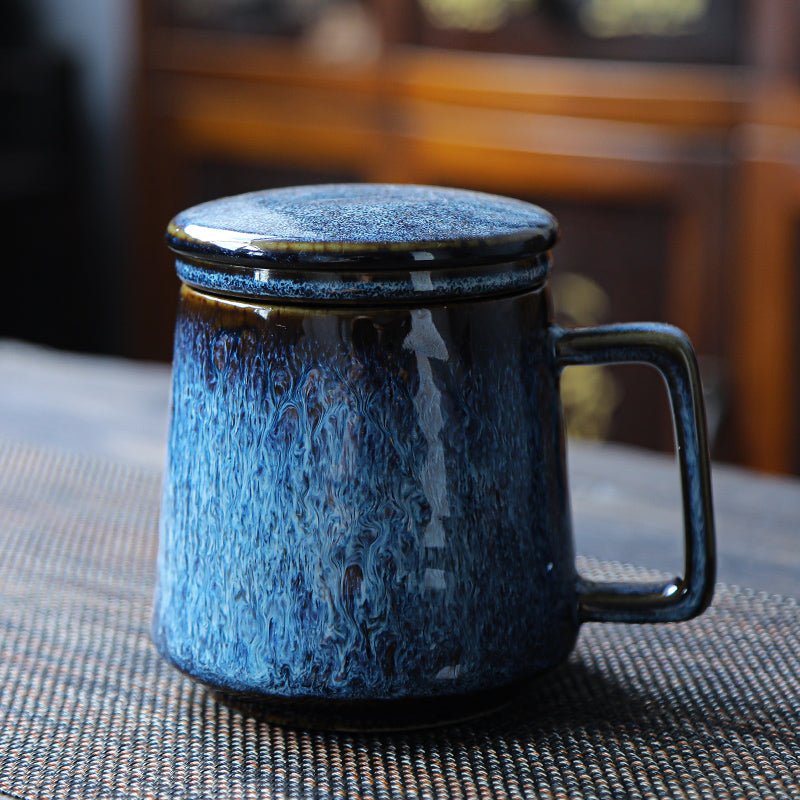
Thick Ceramic Coffee Mugs Compact Kitchen Practical Purchase Checklist
Reading time: about 8 minutes
A mug can clear an open countertop and still fail in the place that matters: the cabinet frame catches its rim, the door presses against its handle, or the coffee brewer leaves no room to lift it from the drip tray. Our thick ceramic coffee mugs compact kitchen practical purchase checklist starts with those ordinary pinch points rather than appearance alone.
In our store, we sell and handle visually distinctive ceramic mugs, and we see why compact-kitchen shoppers need firm claim boundaries. A product page can confirm its name, material, available options, photos, and any specifications it displays. It cannot support a dimension guessed from a styled image. We keep general ceramic guidance separate from product-specific facts below and treat every unlisted detail as unknown.
Where does the thick ceramic coffee mugs compact kitchen practical purchase checklist start?
Start with the mug's parking place. Measure the clear space that remains after doors, hinges, nearby cups, and appliances are in their normal positions. Cabinet interiors often look roomier than their usable openings.
- Clear opening height: Measure from the shelf surface to the lowest part of the cabinet frame, not merely to the shelf above.
- Usable shelf depth: Close the door while checking the space. A raised shelf lip, hinge barrel, or door panel can reduce the depth available to a handle.
- Handle path: Record the width through which the mug must pass and the room your fingers need to turn it into place.
- Counter parking zone: Include the swing of a kettle lid, the working area beside a grinder, and distance from the sink's splash zone.
- Brewer clearance: Measure from the drip tray to the outlet and check the upward or tilted path needed to remove a full mug.
Write down actual clearances rather than relying on standard cabinet dimensions. The numbers that decide fit are your available dimensions compared with the measurements stated on the live product page.
Which live product page matches your storage situation?
The product links below are the source of record for current descriptions, photos, options, and listed measurements. Each recommendation is conditional because a compact-kitchen fit cannot be guaranteed from a product name or photograph.
- No fixed silhouette yet: Browse our unique coffee mugs collection. It suits a broad comparison because you can open likely candidates in separate tabs, then remove any option that lacks a specification required for your space.
- One visible mug on an open shelf: Put The Rock Coffee/Tea Mug on the shortlist if the pictured design is something you want to leave on display. Its next test is practical: compare every listed external measurement with the shelf opening and leave the page out of contention if a decisive measurement is missing.
- A mug stored beside a brewer: Check The Flow Coffee/Tea Mug if its pictured body and handle arrangement suit your beverage station. Confirm overall height and maximum span from the listing before assuming it will pass under a spout or between neighboring equipment.
- An unconventional mug with a dedicated slot: Consider the Spittoon Coffee/Tea Mug when its distinctive visual form is the point of the purchase. This is a better situation than crowded, stack-dependent storage, but only the currently listed dimensions can establish actual fit.
Use three labels in your notes: Listed, observed, and not stated. A page-stated measurement is listed. A shape seen in a photo is observed but not measured. Dishwasher or microwave suitability that does not appear on the page is not stated, never an implied yes.
Which measurements decide cabinet, counter, and brewer fit?
Copy measurements exactly as displayed, including the unit and the selected option if the page offers more than one. Do not convert a capacity into an exterior size or estimate scale from a hand, saucer, coffee machine, or other photo prop.
| Measurement to record | Compact-kitchen decision it controls | How to use it |
|---|---|---|
| Overall height | Shelf opening and brewer outlet clearance | Compare it with the lowest fixed obstruction and include the mug's removal path. |
| Maximum width including handle | Cabinet opening, hinge clearance, and side-by-side storage | Use the widest span, not the body diameter alone. |
| Widest body diameter or depth | Shelf density and counter footprint | Check clearance at the mug's widest point, which may not be its base. |
| Base or foot-ring diameter | Drip-tray contact and resting stability | Confirm that the base sits fully on the intended surface rather than across an edge or raised rail. |
| Listed capacity | Drink size and refill frequency | Treat it as a separate variable from exterior fit; ask whether the page does not explain how capacity is measured. |
Leave a blank beside any measurement the page does not state. That blank is a buying question, not permission to estimate. Shoppers comparing body width with base contact can also use our compact-kitchen checklist for ceramic wide-bottom mugs.
How do thick walls change capacity and daily handling?
Thick describes construction, not usable drink volume. Within the same exterior envelope, more ceramic can leave less interior space, but the difference cannot be calculated without the relevant dimensions. A substantial wall can also add weight; actual lift comfort still depends on total size, balance, handle geometry, and how full the mug is.
- Capacity needs headspace: A listed volume may not tell you how much room remains for milk, stirring, or carrying the mug without spills.
- Rim profile affects the sip: Photos may show whether a rim appears rounded or straight, but do not turn that visual observation into an unlisted thickness measurement.
- Finger room matters: Maximum outer width does not reveal the handle opening. If your grip or knuckle clearance is a deal breaker, ask for that measurement when it is not stated.
Thicker ceramic is not automatically better at every task. It is a poor match for someone prioritizing the lightest possible one-handed cup or the greatest drink volume in the smallest exterior footprint. Our thick ceramic mug daily-use trade-off guide covers those handling questions in more detail.
How should glaze, foot rings, and care rules affect the decision?
The following is general ceramic receiving and care guidance, not a claim that any linked mug has a particular finish, care rating, or defect. Product-specific instructions must come from its live listing.
- Inspect the unboxed mug in direct light. Check the drinking rim, handle junctions, and base for chips or hairline cracks before using it.
- Test the resting surface. Place the empty mug on a clean, level counter and press gently at different sides. Rocking can come from an intentionally irregular form or an uneven foot, so compare it with the listing and contact our store if the condition is unclear.
- Check the foot ring. An exposed ceramic foot can feel rough without being broken. Look for sharp chips and use a coaster or shelf liner if the surface could scratch your counter or cabinet.
- Follow only stated appliance guidance. If dishwasher or microwave suitability is absent, do not assume it. Hand washing is the cautious default while you request confirmation.
- Confirm rack fit separately. Even a mug listed for dishwasher use still needs enough height and handle clearance to sit without striking a rack, spray arm, or neighboring dish.
When is a thick ceramic mug the wrong compact-kitchen purchase?
- Your only available shelf requires mugs to nest or stack, and the listing does not expressly show or state that they are stackable.
- Your brewer or cabinet has tight vertical clearance, but the product page omits overall height.
- You need a lightweight cup for frequent one-handed carrying.
- You want maximum beverage volume from the narrowest possible cabinet slot.
- Microwave or dishwasher use is mandatory, but the relevant care statement is missing.
In those situations, a straight-sided stackable cup or a smaller mug with fully documented external measurements may serve you better. Capacity-first shoppers can use our 12 oz ceramic mug shortlist guide to separate a stated drink size from the exterior dimensions that storage requires.
Frequently asked questions
What should I measure before buying a thick ceramic mug for a small cabinet?
Our thick ceramic coffee mugs compact kitchen practical purchase checklist uses clear opening height, usable shelf depth, maximum entry width, handle path, and appliance clearance. Measure around cabinet frames and hinges rather than using the larger interior dimensions. Then compare those limits only with measurements stated on the product page.
Does a thicker ceramic wall mean a mug holds less coffee?
It can reduce interior space compared with a thinner wall inside the same exterior dimensions, but thickness alone does not establish capacity. Use the listing's stated capacity and keep exterior fit as a separate check. If the page does not explain whether capacity is brimful or practical fill volume, treat that point as unknown.
Can The Rock, The Flow, or Spittoon mug go in a dishwasher or microwave?
Use the care wording on the current page for the exact mug and option you select. We do not infer dishwasher or microwave suitability from ceramic material alone. If the required instruction is not displayed, contact our store for confirmation and hand wash in the meantime.
Which CoffeifyMug design is best for a narrow shelf?
No design can be named the best fit without comparing its listed maximum width, depth, and height with your shelf opening. Start with the appearance you prefer, then reject any candidate that exceeds a limit or leaves a decisive measurement unstated. Remember that the handle may be the widest part even when the body looks compact.
Run this shelf-to-cart check
- Record the cabinet, counter, and brewer clearances with doors and nearby equipment in normal positions.
- Open the exact product page and copy only its listed material, dimensions, capacity, option, and care wording.
- Compare overall height, maximum handle span, widest body point, and base contact with the intended space.
- Mark missing deal-breaker details as not stated and ask us before ordering.
- Reject the mug if your storage requires stacking, low weight, or confirmed appliance use that the page does not support.
With those boxes checked, return to the CoffeifyMug unique coffee mugs collection and compare only the candidates that have earned a place in your cabinet.
Read more

Ceramic Wide Bottom Coffee Mugs Shared Household Product Shortlist Guide
A practical shortlist for shared kitchens, mixed coffee habits, and households where one mug has to work for more than one kind of drinker.
Read more
Macchiato Cup Compact Kitchen Practical Purchase Checklist
A practical checklist for choosing a compact macchiato cup when counter space, shelf height, cabinet depth, and drink volume all matter. Compare 170 ml, 200 ml, and 250 ml options without overbuyin...
Read more
Leave a comment
This site is protected by hCaptcha and the hCaptcha Privacy Policy and Terms of Service apply.