




the rock coffee tea mug for coffee lovers home decor: compare
Reading time: about 13 minutes
A housewarming box on our packing bench last month carried a sticky note that only said rock mug. The photo the buyer had saved showed a heavy, pitted cup. The tab they almost paid for was a smooth white mug with a coastline printed across it. Same search word, different object. If you are comparing the rock coffee tea mug for coffee lovers home decor, name the job before you trust the title: a textured cup you will drink from, a picture of stone, or a novelty print built on a nickname.
We sell drinkware that also sits on open shelves, so our team sees this mix-up in gift orders and in the replacements that show up after the first week of real use. A sculptural cup can look settled on a tray and still feel tiring as an everyday driver. A printed scene can look sharp in a hero photo and wear badly if you wash it the way you wash high-fired stoneware. Open the rock coffee tea mug and read what that listing currently says about material, capacity, and care. Those lines are the facts that count. A similarly named mug on another site does not fill a blank on this page.
Textured clay, a rock shape, or a picture of a rock?
Search results fold three intents into one phrase. Sorting them is the fastest way to avoid a return we then have to process.
| What you see | The job it actually does | What fails if you skip the check |
|---|---|---|
| Rough, volcanic, or rock-shaped ceramic | A tactile cup whose surface is part of the decor | You never learn capacity, empty weight, lip feel, food-use wording, or appliance marks |
| A coastline, sea stack, or garden scene | A printed mug; the rock is the image, not the clay | The print sits crooked at the handle, or a hot wash dulls the ink |
| A name, joke, or character built around rock | Novelty drinkware, often a punchline more than rustic decor | The joke is the whole product, and it fights a quiet shelf |
Rustic home-decor shoppers usually want the first row: clay with a stone texture, or a glaze that still reads from across the kitchen. If the rock direction is close but the handle, scale, or color on one listing is wrong, look through our unique coffee mugs collection for a different shape that still works as a gift.
If the screenshot you liked was a landscape, a scenic comparison is more honest than forcing a texture mug to do that job. Our buyer guide to the Great Mountain coffee tea mug walks through that decor brief. If you wanted color more than a stone surface, the emerald coffee tea mug guide is the closer read.
Is the rock coffee tea mug for coffee lovers home decor a daily cup or a shelf piece?
The buyers who stay happy with this kind of mug want one object to do two quiet jobs: hold coffee or tea, and look deliberate on a shelf, tray, or dining table. A housewarming gift. A desk a guest can see. A cabinet you leave open on purpose. That is the fit we hear about in our store when the order sticks.
It is a poor fit when you need a light commuter cup, a lidded travel mug, a perfectly matched set of four, or a piece you can knock around in a shared office dishwasher without a second thought. Heavy ceramic feels planted on a counter. That same weight gets old if you carry it from the kettle to the sofa every evening, or if the handle opening is tight for a larger hand. Rough texture that photographs well can catch on a sponge. It can also feel unfinished at the lip even when the outside is supposed to look raw.
In our experience, the disappointments are ordinary, not dramatic. The mug is smaller than the photo suggested. The empty cup feels like a doorstop once the coffee is gone. The rim is gritty against the mouth. Or a printed design was never meant for a hot wash. Picture the first week at the sink, not the unboxing.
A piece marked only for display is not a coffee mug, however the title is written. If the listing does not clearly present it as food-use drinkware, do not pour a hot drink in to test the idea.
Capacity, empty weight, and lip comfort for coffee versus tea
U.S. food-safety guidance describes cups and mugs as small ceramic hollowware commonly used for drinks such as coffee or tea served above room temperature. In that description they normally, though not always, hold about 240 milliliters, or 8 fluid ounces, and they are made with a handle. That is a category reference, not a measurement of any rock-look mug on our site. Treat 8 ounces as a benchmark, then read the page you are about to buy.
Look for both ounces and milliliters. A cup sized like a short tea or an espresso-style pour will disappoint someone who fills a filter-coffee serving. A larger, thicker mug can suit a long sit-down coffee and feel clumsy for a lighter tea ritual. Capacity on listings in this category is inconsistent, and the photo almost never shows the difference. If the number is missing, ask. Camera angle makes nearly every mug look like a normal pour.
While that page is open, settle four handling points a title will not answer:
- Empty weight. Thick walls and a rock-like body add grams you still feel after the drink is gone. Silence on the listing means unconfirmed, not light.
- Handle clearance. Two fingers versus a full grip decides whether the mug works at a desk. Texture crowding the handle join can pinch.
- Lip finish. The drinking rim should be smooth even when the outside is intentionally rough. This is where a lot of category complaints land, and a hero photo rarely shows the rim edge-on.
- Set matching. Reactive and handmade glazes vary from piece to piece. If you need four identical mugs for a table, do not assume a set means clones.
Heat is the other floating claim. We do not treat wall thickness as proof that coffee stays hotter. Retention depends on the specific body, the fill temperature, and whether you pre-warm the cup. A longer-warmth line without a stated test is marketing, not a spec. Buy the texture because you like the object, not because you expect it to behave like an insulated flask.
Glaze, lead, and why a rustic surface is not a safety test
Some ceramic foodware can leach lead from the surface that touches what you drink. With continued use, that exposure can contribute to chronic lead poisoning. Federal guidance states there is no known safe level of lead exposure. Lead is toxic at any age, and the most serious effects can occur during brain development, so an unverified glazed cup is a poor choice to hand to a child. In adults, chronic exposure is associated with kidney dysfunction, hypertension, and neurocognitive effects. A rustic photo does not tell you whether any of that applies. It also does not prove a modern commercial mug is free of lead.
The federal action level for lead leaching from ceramic cups and mugs is 0.5 micrograms of lead per milliliter of leaching solution, for any one of six units, using lab methods that include ASTM C738. That is a compliance benchmark for the category. It is not a sink test, and it is not a pass certificate for one textured mug.
What you can actually check at home is narrower:
- Lead may sit in a glaze or in decoration. If pottery is fired properly, lead used in the glaze is essentially bound in. If firing was poor, lead may enter food or drink. Washing or boiling does not remove it.
- Decor-only pieces may be marked Not for Food Use - May Poison Food. Do not cook, serve, or store food or drinks in those.
- You cannot see lead. An intact surface can still leach, and chips, cracks, or wear can increase exposure. Coffee and tea are acidic and can leach lead faster than non-acid drinks when lead is present. Heating or microwaving can speed that leaching. Dishwashing ware that contains lead can damage the glaze and sometimes affect other dishes.
- Higher-concern types in federal guidance on traditional pottery include handmade crude ware, antiques, damaged or worn pieces, uncertain sellers, and bright orange, red, or yellow decoration. Everyday commercial ware made for food use is much less likely to have a lead problem. A flea-market glaze is not the same conversation as a current factory mug sold as drinkware.
- Lead-free means no lead. In California public guidance, lead-safe means something narrower: any lead that can enter food does not exceed that state's Proposition 65 standards. The phrases are not interchangeable, and a product photo proves neither one.
If the current CoffeifyMug listing does not state food-contact status, leave the gap open. Do not copy a lead-free line from a similarly named stoneware page. Keep the interior glaze intact, and retire a cup that chips on the inside instead of continuing the morning coffee routine.
Older ware belongs in a separate lane. A 1996 study of pre-1950s U.S. ceramic dinnerware from antique shops and flea markets found that acid-filled pieces, microwaved for a few minutes, leached lead in amounts up to 5 milligrams per dish in that set of tests. A 24-hour room-temperature test did not predict those microwave results. That finding is about that old dinnerware, not about modern labeled stoneware. It is still a reason to keep unmarked antiques out of the microwave and off the daily coffee shelf.
Dishwasher cycles, microwave marks, and prints that prefer a hand wash
Care advice conflicts because the objects conflict. Kiln-fired stoneware sold for everyday drinking is often marked dishwasher and microwave safe. Printed photo mugs and novelty mugs are often said to keep their design longer when they are hand-washed, because heat, detergent, and rack contact can dull ink. Both statements can be true of different products. Neither is automatic for the mug in front of you.
Use the marks on this listing, or on the base of the mug once it arrives, and stop there:
- Microwave use should be explicit. Skip the microwave if you see metallic trim, a gold or silver lip, or no microwave statement at all.
- Dishwasher use should be explicit. A top-rack note, when the maker gives one, exists because heating elements and neighboring dishes knock glaze and prints.
- An unglazed or raw-clay exterior is a different question from a glossy interior. A matte photo does not prove the outside survives detergent. If the listing is silent, the answer is unconfirmed.
- On a printed mug, a soft hand wash is the conservative habit when the seller says the design can fade. Do not scrub the ink with an abrasive pad because the picture looks like stone.
Shipping is the other ordinary failure with heavy ceramic. Thick walls chip when the box is thin. On arrival, check the rim, the handle join, and the foot before you brew. A hairline crack is a breakage return, not a rustic detail. We would rather see a damaged piece come back than see someone drink from it.
Open-shelf styling, glaze variation, and a gift you can hand over
On an open shelf, a rock-look mug works when the texture is the accent and the rest of the shelf stays quiet: a tray, a small plant, maybe two other ceramics in a related earth tone. It fights a shelf already full of logos and bright prints. Used that way, the rock coffee tea mug for coffee lovers home decor is a shelf accent between pours, not a logo mug competing for attention. If your plan is a color story rather than a stone story, compare finishes instead of forcing one shape to do every job. Glaze that shifts from piece to piece is the point of some sets. Our gradient coffee tea mug comparison is the better lens when that variation is what you actually want.
For a coffee-lover gift, the first real pour matters more than the tissue paper. If you are shipping straight to the recipient, confirm four things yourself:
- Capacity, so a small cup is not a surprise on the first morning.
- Food-use status, so a display object never lands in the drink rotation by accident.
- Dishwasher and microwave wording, so the first wash does not wreck a print or ignore a maker's limit.
- What happens if heavy ceramic arrives chipped. A mug with no breakage path is a stressful gift.
Skip this style for someone who already dislikes heavy mugs, who needs a lid for the commute, or who wants every piece in a dinner set to match under showroom light. Point them toward a lighter shape in the unique-mug collection instead of talking them into texture they will resent by midweek.
What to verify on the current listing before you order
Run this pass with the product page open. A missing line means unconfirmed. It does not mean you should borrow the answer from another brand's stoneware.
- Is it described as drinkware for coffee and tea, or as decor only?
- What capacity is printed, in ounces and in milliliters?
- Is there any note on weight, dimensions, or the handle?
- Does the seller state food-contact or lead wording? A picture is not that wording.
- Are microwave and dishwasher uses stated, and is there metal trim?
- Is glaze expected to vary from piece to piece?
- What is the path if the mug arrives chipped or cracked?
When those answers match a daily cup you also want in the room, the rock coffee tea mug is a reasonable next step. When they do not, stay in the unique coffee mugs and choose the mug whose listing actually answers the questions this one leaves open.
Frequently asked questions
Is the rock coffee tea mug for coffee lovers home decor dishwasher and microwave safe?
Only the current listing can answer that for this mug. Across the wider market, high-fired stoneware is often labeled safe for both, while printed photo and novelty mugs often last longer if they are hand-washed. If you do not see a microwave statement, or if there is metallic trim, do not microwave it. If dishwasher use is not stated, wash it by hand until you can confirm.
Are rock-look ceramic mugs lead-free because the glaze looks rustic?
Appearance does not prove it. Federal guidance says lead may be in glazes or decoration, that improperly fired pottery can contaminate food or drink, and that everyday commercial ware made for food use is much less likely to have a problem. Lead-free and lead-safe are different claims. Read what this listing says, do not drink from pieces marked not for food use, and do not serve children from ware whose food-contact status you cannot confirm.
Will a thick, rock-textured mug keep coffee warm longer?
Not by thickness alone. We would not promise longer heat retention for a heavy or textured cup without a test on that exact body. Pre-warming, fill level, and a cool room change the drink as much as the clay does. Choose this style for feel and decor, not for an unstated insulation number.
What size is enough for coffee versus a shorter tea?
A useful reference is the regulatory description of a typical cup or mug at about 240 milliliters, or 8 fluid ounces, but real listings sit above and below that. Match the stated capacity to how you pour: a short tea or espresso-style serving versus a full coffee mug. If this product page does not list ounces or milliliters, ask before you order rather than judging the photo.
Can one textured mug work as daily drinkware and home decor?
It can, when it is sold as food-use drinkware and you accept the weight, handle, and lip in real use. It can sit on an open shelf between pours and still be the coffee or tea mug you reach for. It is the wrong tool if you need a travel lid, a featherweight cup, or a set of identical glazes. Start with the listing, then compare nearby options in our unique coffee mugs if the rock direction is right and the stated details are not.
Ready to pick your mug? Two ways to save on today's order:
Ordering 1–3 mugs? Get an extra 10% off your 1st order with code 10_OFF Apply 10% Off & Shop Wooden-Handle Mugs →
Gifting 4+ mugs? Buy 3, Get the 4th Free applies automatically at checkout (no code needed; offers do not stack) · Free standard shipping (Nov pre-Christmas delivery: 15–20 calendar days US) · Free replacement if chipped in transit.
Popular mug buying guides: Ceramic Tea Cups & Infuser Mugs · Ceramic Mugs with Lids Compared · Wooden-Handle Tea Infuser Mugs Compared · Christmas & Secret Santa Mugs 2026 · Espresso & Cortado Cups Guide · Cup & Saucer Gift Sets · All 25 Mugs Spec Table · Mug Size Guide · Shipping & Promo FAQ
FIRST ORDER 10% OFF (CODE: 10_OFF) · OR BUY 3, GET THE 4TH FREE


Read more
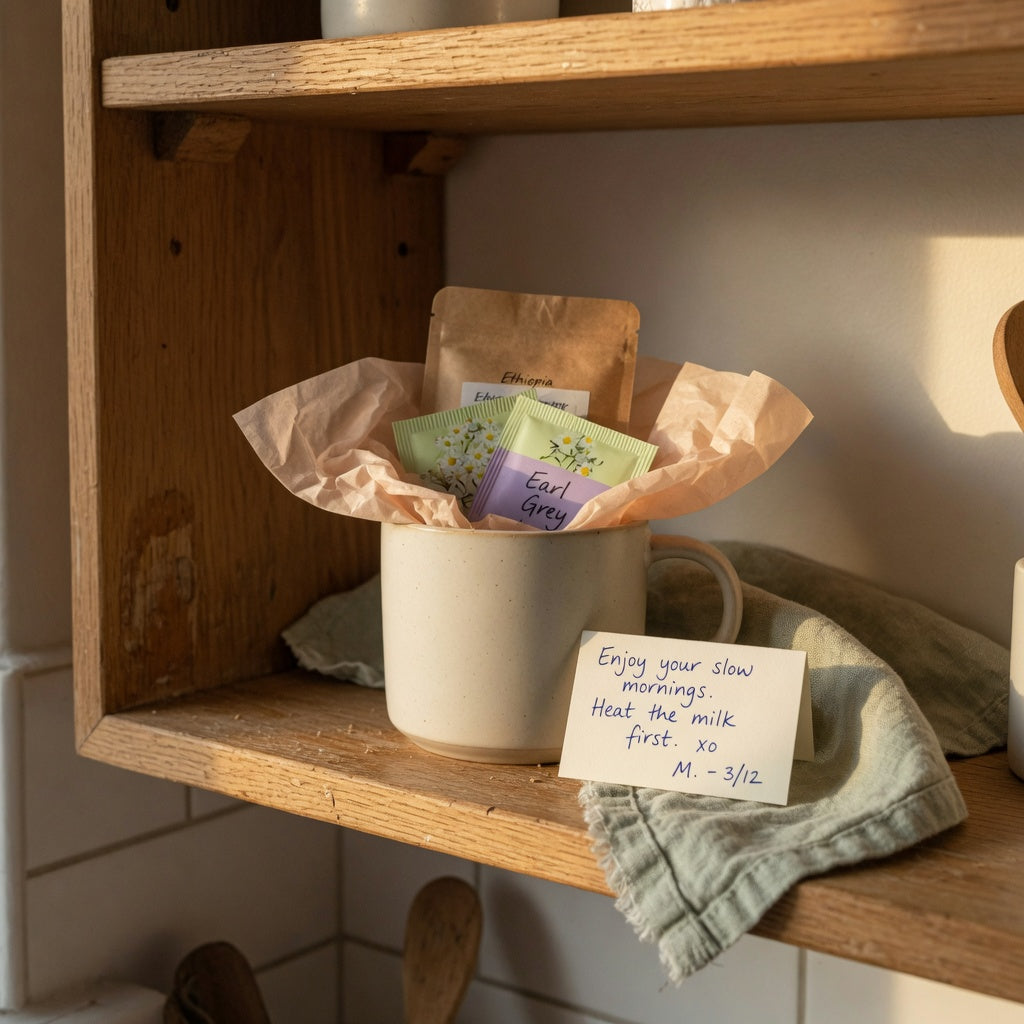
Coffee Mug Home Decor Gift: What Buyers Should Compare
Shoppers buying a coffee mug home decor gift need to separate a daily cup from a shelf piece. We cover usable size, food-contact glaze, metal trim, print wear, and how to pack the mug so it does no...
Read more
Round Coffee Tea Mug for Coffee Lovers Home Decor: What to Check
A round mug can look right on an open shelf and still drink smaller, sit wider, and weigh more than a cylinder. Compare drinkable fill, brewer clearance, handle comfort, glaze care, and food-use la...
Read more
Leave a comment
This site is protected by hCaptcha and the hCaptcha Privacy Policy and Terms of Service apply.